
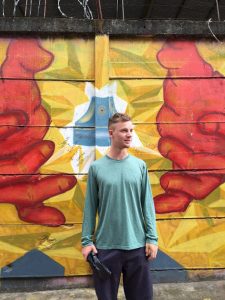
Esteli is known as the city of murals.
In a lot of ways, it feels like I’ve been back home for a long time already. While we were in the country, most of our attention was outwardly focused. Visits, interviews, conversations, samples, pictures, our motivations were all external. However, when we returned, our thinking was forced into the introspective. Two questions seem to be the theme of every conversation from late summer carrying on into the school year. “How was Nicaragua?” “What are you thinking about doing after you graduate?” Two good questions with no good answer still.
Many others in my situation have faced this dilemma, how to answer a serious question in casual conversation, and prepared well thought-out, concise answers ahead of time to drop at a moment’s notice like an elevator pitch. From a mix of laziness and distaste for elevator pitches, I did not. Different people, I reasoned, deserved different responses. For example, while a friend of my parents may be contented filling in the blanks on my summer for herself (“Amazing, I bet, wasn’t it? Gave you a whole new perspective on things?”), people who have invested themselves into my future deserve an organic answer that responds to them personally and what they would want to know most. Friends want to hear cool stories. Family wants to hear about what my daily life was like down south and what city I’ll end up in next year. Depending on the time, place, and person, these answers can be ten seconds or ten minutes long.
Poignant stories make for a nice answer sometimes, but it’s important to remember the daily routines as well. Driving out to the communities to do our interviews often took more than two hours, even though our base
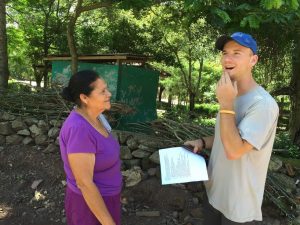
A genuine, authentic, candid interview photo in Bramadero.
of Estelí was already in the mountains. During the drive and upon our arrival, signs of extreme poverty, the $2 a day kind, were as clear and personal as the warm greetings we received as we were welcomed into people’s homes (with less hesitation than many Santa Clara students invite each other in). Most blogs or stories involving trips to the developing world involve being shocked by poverty. And it should shock us; we should be shocked to witness what some people live without. But to relate to these individuals on a human level, we had to get over being shocked.
Conversations with interview participants could range from opinions on the current price of water utilities to discussions on American politics or showing off their eight-year-old daughter’s English skills. Moments like these put in stark perspective our class sessions on investigative ethics, which were meant to remind us that individuals we interviewed were not research subjects, they had a vested interest in our work. The people we talked to spoke with incredible amounts of pride about their family and community. The damaging effects of drought had made them more environmentally conscious than your average Nalgene owner. They often had tangible ideas when asked about the dangers of their water supply. Sometimes, it was too easy to look at our list of survey questions and then at the circle of people sitting in the July heat and just want to get through it. But they weren’t there for vocational discernment, for lines on a resume, or even to further the goal of social entrepreneurship. These people showed up out of the hope that we could do something that would improve their rather dire situation, and their goodwill towards us cracked through the formal conversational outlines we had constructed. They reminded us why were there.
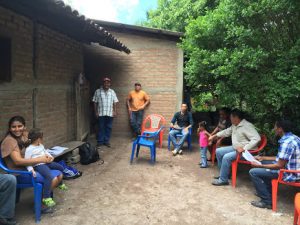
A group ready to fill out surveys and interview with us.
If inquiries about what I wanted to do after graduating had come last year, many of my answers would have mentioned the possibility of taking a job in a Latin American country to work in a developing economy and realize my goal of Spanish fluency. After a two-month test run, none of my responses include this, because this summer proved to me that I am not ready for the long term version of living in the developing world. However, it is equally hard for me to imagine working in a traditional job that lacks interaction or consciousness of marginalized communities, abroad or domestic. At career fairs, in conversations with parents and friends, I have had a hard time reconciling these two realizations. I cannot fully commit to ignoring nor pursuing the same types of experiences from last summer. For now, I am looking to find something here in the states that can lead me on a path toward facilitating global development. That’s not an answer that will satisfy most people who ask, but I can always let them fill in the blanks.