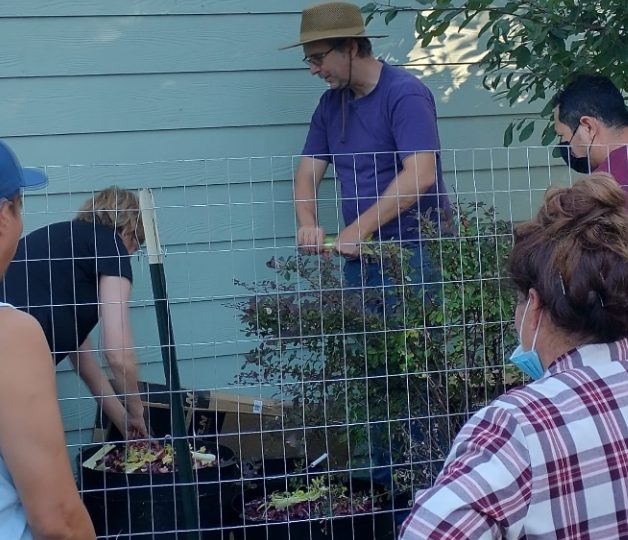
Sacred Heart’s Essential Services and La Mesa Verde (LMV) programs, are partnering with the Initiative’s Climate and Food Justice Program to advance food justice in the South Bay. The team recently led a workshop with La Mesa Verde gardeners, food pantry staff and volunteers to launch a composting pilot project. They invited Michele Young, a Master Composter with UC Extension and senior manager at the County of Santa Clara to offer technical training as part of six hours of workshop time that included, building the pilot facility, and hands-on worm composting. SHCS’ Food Pantry serves 25,000 members each year. As part of an ongoing study, SCU Researchers have found that, although the pantry recovers hundreds of thousands of pounds of edible food it also disposes of about 2,700 lbs per month, (2-10% of the total food received). This project aims to transform the pantry’s food waste into compost while promoting the human right to food. This workshop was co-organized by the Initiative’s Christopher Bacon, Isabelle Solórzano (student researcher) and Fernando Fernandez Levia (SHCS manager). To learn more about free workshops on vermicomposting check UC Extensions Composting Education Program.
Last week I had the amazing opportunity to attend Reclaiming the Commons 2023: a biannual conference held jointly for the first time this year by the Association for the Study of Literature and Environment (ASLE) and Association for Environmental Studies and Sciences (AESS) in Portland, Oregon! I had an amazing time participating in various sessions with influential speakers on different topics as well as presenting our lab’s research at a conference, and I am excited to share how this experience went for me.
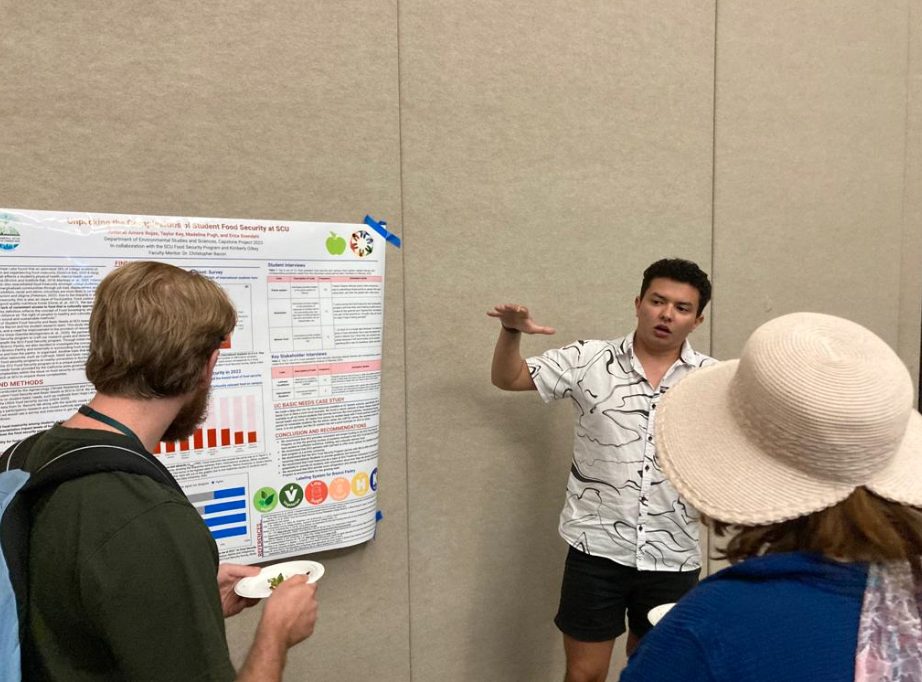
My favorite part of the conference was the opportunity to present my lab’s research. My Faculty Advisor Chris Bacon and I were on a panel, Food Security and Justice Challenges. Alongside Amy Teller from the Land Institute and the University of Minnesota and Karin Warren from Randolph College, we spoke on different issues of food security within our communities. Chris and I presented preliminary results from our survey showing 35% of Santa Clara University students suffer from food security as well as how this population is distributed among different racial, ethnic and student groups within the university. Warren talked about tree plantings and food justice work in the Lynchburg VA community where Randolph has an important role, and Teller analyzed the social side of sustainability in relation to the development and commercialization of Kernza, a new perennial wheat grown largely by small farmers. The panel was a positive space of open discussion that was special to experience for the first time. I also presented a poster explaining our lab’s work, it was visited by 30 – 40 people in a 2 hour span. This was a particularly rewarding experience since I love discussing issues of college food security with anyone who will listen.
The majority of my time at the conference was spent attending many interesting panel discussions. Chris and I started out by going to a session on Decolonization and Indigenous Food Sovereignty. In this session we learned about a real example of Land Back where a Japanese family that had been farming on the Yakama Reservation in WA had returned the Land to the Yakama tribe after having farmed it for over 100 years.The former owners worked with the tribe to keep the farm successful and improve food sovereignty on the Reservation. We also heard from indigenous leaders and forest service biologists who were working together on conservation efforts as well as returning First Food access to the Umatilla and Cayuse tribes of NE Oregon.
Later in the conference I attended the only session held completely in Spanish, a Panel on Latine Activism that had linguists, poets and artists. They discussed the legacies of Colonialism in Latin America, how this is causally related to environmental issues in the region, more specifically México; and showed art and poems in the poet’s indigenous language that reflected the pain and trauma suffered by these communities due to these effects. Lastly, I was able to attend a panel on Latine Bodies and Landscapes, where panelists discussed books that detailed Feminism in Venezuela, Eco Activism in Ecuador, the relationship between society and petroleum extraction and a children’s book about pollution in southern Puerto Rico. It was a pleasure to learn more about my region of the world from local activists improve my personal knowledge of the contexts of different countries. All of these talks had profound impacts on me and I loved the opportunity to be in the same room as all of the panelists.
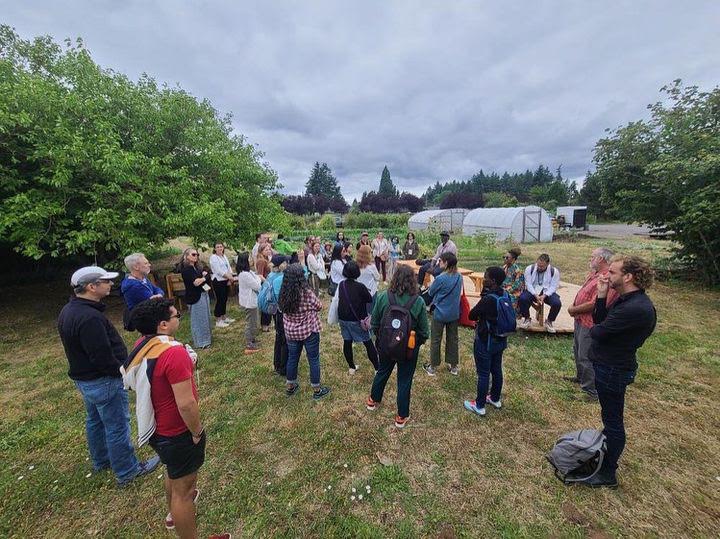
One of my favorite parts of the conference was being able to experience the city of Portland. Despite having briefly visited before, I feel like this trip allowed me to experience the city more deeply than my previous visit. In addition to a 30 mile bike ride around the city and an exploration of Portland’s incredible public transportation system, Chris and I were able to participate in an AESS sponsored field trip to visit Black Futures Farm in SW Portland. As someone who has been involved in Food Justice and Food Sovereignty around the South Bay community for a while, this experience was the highlight of the conference. We were led on a tour of the farm by founders Mirabai Collins and Malcolm Hoover, who talked about the fields, what was being farmed as well as their relationship with the community. The farm is located in a city park much like Veggielution in East San Jose and they also had an indefinite lease with the city which is crucial to maintaining its connection to the community. It was so inspiring to see community farming efforts being so successful in the Portland area and being used to support communities in need.
In conclusion, this conference was a life-changing experience for me. It opened my eyes to the incredible community work and research that is happening in the environmental community, and left me with a lot of hope in terms of the future of the climate crisis. I cannot thank the sponsors that made this trip possible for me enough: Santa Clara University’s College of Arts and Sciences, the Leavey School of Business, AESS, Bill Sundstrom, Carolyn Anthon, and above all Chris Bacon.
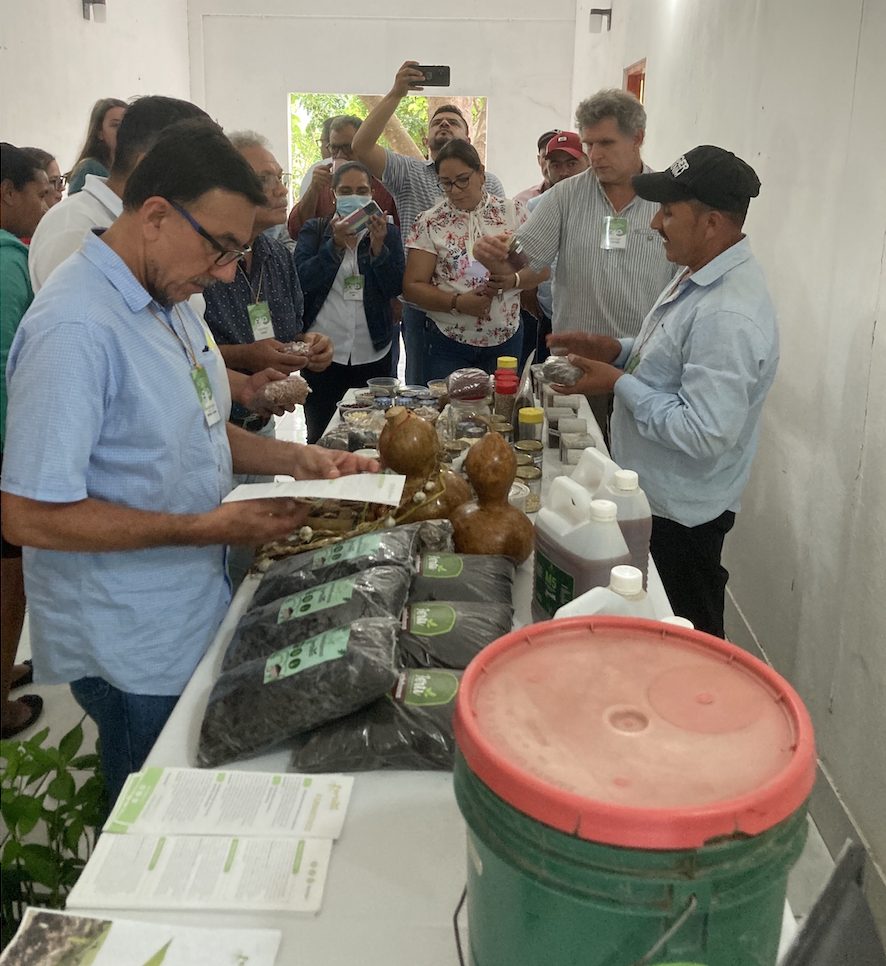
In partnership with ASDENIC and a cluster of cooperatives, food security funding agencies, farmer associations, cooperatives, and universities we co-organized the one day results sharing symposium on June 27, 2023. The objective was to reflect on the advances, challenges and future steps related to the practice of agroecology as a strategy to face the challenges of food security, climate change, diversification and resilience. Our team gave the keynote presentation sharing findings from the current study and relevant work from the last decade including the longitudinal study of smallholders. We also advanced an important discussion about the increasingly likely El Niño event and preparation for probable drought and food security impacts in the region.
The participants in the workshops included 50+ representatives from producer unions, UNAG, PRODECOOP, Nuevo Waslala and organizations that have been working for decades in sustainable agriculture, agroecology, and food security issues, such as the movement for organic agriculture in Nicaragua (MAONIC), the group for the promotion of agroecology (GPAE), and a ADDAC and FUNICA, from cooperation and universities. In addition to presentations, small group and full room dialogue, there was also a seed and materials / publications exchange.
Conversation and demonstration activities were very productive: participants shared resources and stated their commitments to continue with the promotion of agroecology-based diversification in alliances and with a greater inclusion of youth and a deeper engagement with gender and female farmers and rural leaders as well as continuing efforts to decolonize food systems and eliminate the stigma of consuming the diverse and nutrient dense wild foods that some have labeled “food for the poor.” Additional takeaways included: (1) increased interaction among the small yet persistent and dedicated group of farmer associations and civil society groups as well as municipal authorities working in the food security and sustainable agriculture space, (2) increased awareness and coordination to plan an integrated disaster risk reduction and agroecology informed response to the anticipated impacts of El Niño, and (3) commitments to continue developing collective strategies to address soil fertility and acidity issues through expanded testing, continued growth in the production of more sophisticated organic compost, and the development of integrated agroecology-based systems for managing nutrients and soil fertility.
Full 30-page report in Spanish summarizing event will be posted shortly