Author Archives: cbacon

Student Basic Needs Research and Action Continues

Student researchers Wanyu (Mary) Xiang and Amelia Koenig of the Agroecology, Climate Resilience, and Food Justice (ACRAF) Lab presented their work at the Sustainability & Environmental Justice Student Research Symposium on March 11, 2025. Their research highlighted critical disparities in food and housing security among Santa Clara University students, drawing from the 2023 Food Security and Basic Needs Survey (800+ respondents). Key findings include:

  • 28% of students experienced food insecurity, with disproportionately higher rates among marginalized groups:
    • African American/Black (30%), Latiné (28%), and first-generation students (44%).
    • First-generation students face twice the food insecurity rate of their peers and 1.5x higher housing insecurity.

These disparities underscore the urgent need for institutional action to create a more equitable, sustainable, and just campus—especially as marginalized communities bear the brunt of climate crises.

Progress & Challenges: The Basic Needs Committee
In response to ACRAF Lab’s earlier research, SCU established the Basic Needs Committee (2023–24), uniting students, staff, and faculty to develop an action plan. While progress has been made (e.g., hiring a Basic Needs Coordinator), the 2023 survey revealed critical gaps: (See here for Basic Needs Infographic)

  • Only 40% of students know about the Basic Needs Program (Bronco Food Pantry, etc.).
  • Among food-insecure students, awareness drops to 38% (vs. 42% of food-secure peers).

To address this, the Committee has formed three working groups this year to advance targeted outreach, policy recommendations, and institutional support.

Innovation in Action: Food Recovery & Advocacy

  • SCU Food Alert Slack Channel: Launched by ACRAF Lab member Mary Xiang, this platform centralizes food recovery and mutual aid efforts, mobilizing students, staff, and faculty. Join here!
  • ASG Resolution S.R. 8 (2025): Co-authored by Xiang, this resolution pushes to:
    • Expand resources for students in need.
    • Destigmatize conversations about basic needs insecurity.
    • Increase awareness of existing support systems.

At the ACRAF Lab, we turn research into action. Our findings expose systemic gaps in basic needs security—but we don’t stop there. We push for institutional change (Basic Needs Committee), build grassroots solutions (Food Alert Slack), and amplify student voices (ASG Resolution).

Here’s how you can be part of the movement:

  • Join the SCU Food Alert Slack to redistribute surplus food and support peers.
  • Demand institutional action: Read and share S.R. 8 with faculty and administrators.
  • Stay informed: Follow our work—because data without mobilization changes nothing.

Hunger is a policy choice. Together, we can rewrite the rules

ACRAF Lab Members Receive University Awards

Katie Duffy wins the Student Life Award, Jules Holland wins the Peter-Hans Kovlenbach, Social Justice Award and Kimber Wood wins Riordan Community Service Award. 

Group of Santa Clara University undergraduates stand with President Julie Sullivan after receiving awards at the Senior Toast.

Photo Caption: Santa Clara University undergraduates Katie Duffy (first from bottom left), Kimber Wood (fourth from bottom left) and Jules Holland (third from bottom right) stand with President Julie Sullivan and others after receiving awards at the Senior Toast on Friday, May 31st. 

Katie Duffy, Jules Holland, and Kimber Wood are research assistants with a significant portion of their work focused on addressing student food security and basic needs at SCU. 

Katie and Jules serve on the Basic Needs Committee, advocating for initiatives to support students facing food insecurity and other essential needs. Kimber works in coordination with the tUrn Project and supports basic needs aid, promoting sustainability on campus.

Their dedication and outstanding achievements have not gone unnoticed. Jules Holland, a double major in Environmental Studies and Sciences, received the prestigious Peter-Hans Kolvenbach Award. Katie Duffy, a Political Science major with a minor in Sustainable Food Systems and Public Health, was honored with the Student Life Award. Kimber Wood, a double major in Political Science and Dance, received the Riordan Community Service Award.

These accolades are a testament to their academic excellence, leadership roles, and commitment to addressing food insecurity, promoting environmental justice, and fostering sustainable practices on campus. The recognition they have received highlights their significant impact as student leaders and changemakers, inspiring others to follow in their footsteps and contribute to a more just and humane world.

Developing a Food Justice Curriculum for Sacred Heart Pantry Clients

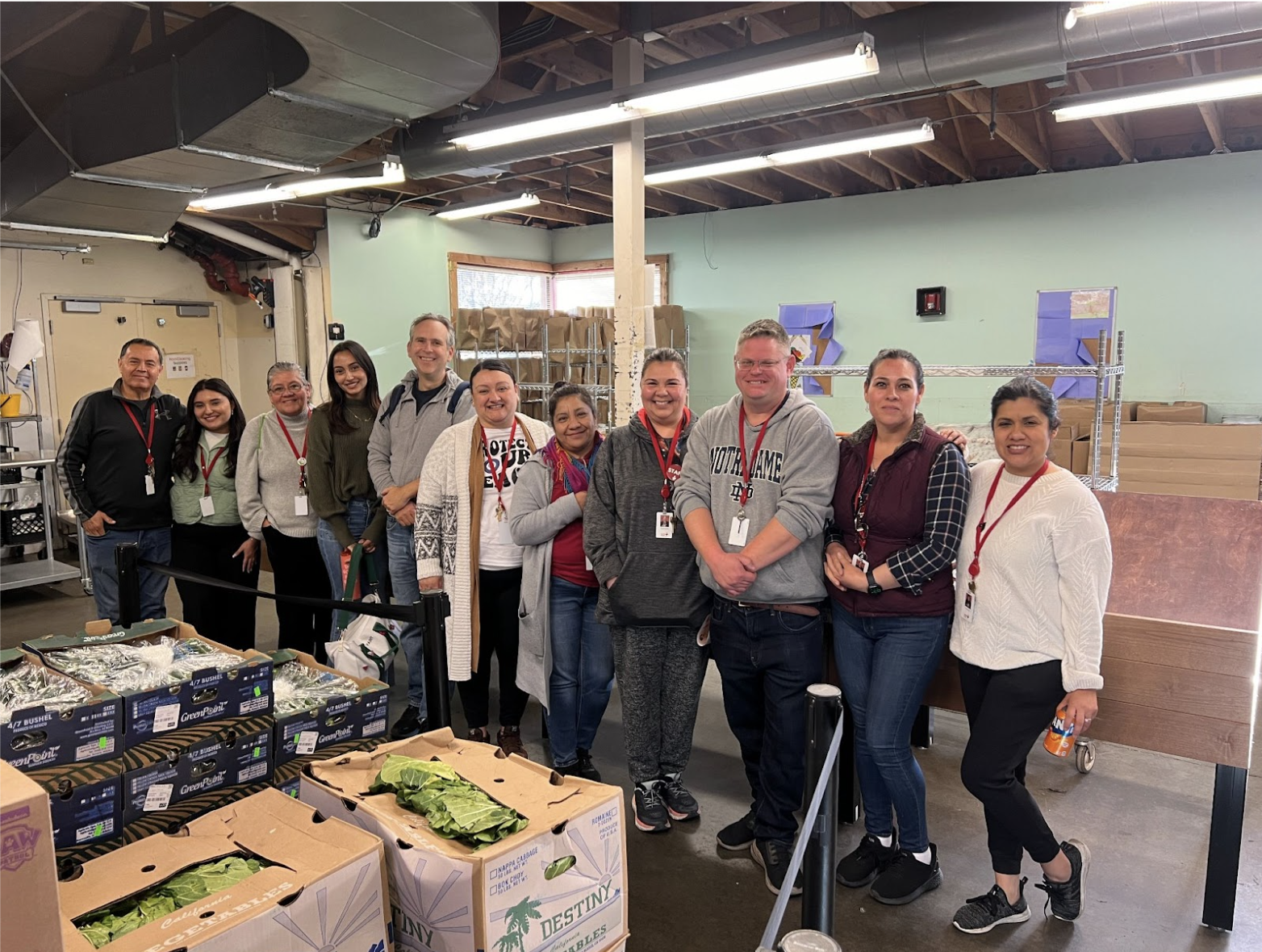
On February 9, an SCU research team presented preliminary research results to Sacred Heart Community Services food pantry staff, based on surveys and interviews that identified key themes for education materials and campaigns for pantry volunteers and clients. The feedback received during this workshop is being incorporated into a food justice curriculum and a replicable resource guide designed by the team, which other pantries and service organizations can consult to establish a food justice approach to food waste reduction. The SHCS Food Pantry serves 25,000 members each year. This workshop was co-organized by the Initiative’s Christopher Bacon and student researchers Isabelle Solórzano, Paulina Ursua Garcia, and Wanyu Xiang in coordination with Sacred Heart Essential Services Director Sofia Rocha. Paulina and Chris co-facilitated the workshop.

See the presentation slides

See photo of the event here Photo: Paulina Ursua Garcia.

Isabelle Solórzano secures NASA Internship 

Isabelle Solórzano (‘24, Environmental Science, Biology minor) recently secured a competitive NASA DEVELOP internship, and will soon start working with NASA Ames Research Center in Mountain View. She will join a project researching the impacts of wetland declinations and deforestation on urban heat in Cali, Colombia. They will leverage Earth observations from Landsat 8 and Landsat 9 and partnerships with Fundación Dinamizadores Ambientales and Departamento Administrativo de Gestión del Medio Ambiente to understand the urban heat island effect on Cali communities. Their analysis will combine remote sensing and community partnerships under an environmental justice framework. The team will also develop a tutorial on the methodologies to be transferred to the partners to increase their capacity to use NASA Earth observations and understand the heat disparity in local communities.

Isabelle’s interest in Latin America environmental change issues may have started with many trips back to visit family in Nicaragua and her work for the Environmental Justice and Common Good Initative’s Food and Climate Justice Program and in the Agroecology, Climate Resilience and Food Justice (ACRAF) Lab.  In the ACRAF Lab, she helped develop educational workshops, analyze the climate impacts of food consumption, co-author reports, and kick-start a vermiculture pilot program on a project partnering Sacred Heart Community Service. In addition to Professor Chris Bacon, mentors that have supported Isabelle’s work include Professor Jake Dialesandro, who taught her remote sensing, as well as Professor C.J. Gabbe, and Becca Nelson. Congratulations again, Isabelle. We look forward to seeing where this project takes you – the sky’s the limit.

Isabelle Solórzano headshot

New Grant to Help Start a Food Justice Cooperative in East San Jose, CA 

SCU’s Environmental Justice and Common Good Initiative (EJ & CGI) Food and Climate Justice Program lead, Chris Bacon (Associate Professor and Chair Environmental Studies and Sciences Department) Collaborated Veggielution to develop a $217,000 project funded by the County of Santa Clara. Veggielution is the lead agency for this project that aims to create a more diverse, equitable, and resilient regional food economy, and foster food justice through education and action to address inequities in East San Jose.  As the key partner in this project, the SCU team will manage a $67,000 subaward, as Bacon will work with student researchers, EJ & CGI’s research coordinator, and Veggielution staff to conduct a feasibility study and policy analysis about the potential to link small-scale food entrepreneurs to values-based purchasing efforts, such as the Good Food Purchasing Program, which is partnering with Santa Clara County Hospitals to offer more nutritions, lower-carbon, and sustainable meals. The SCU team will also co-produce an agroecology, urban agriculture and food policy summer short-course and help design a food systems dashboard with collaboration from C.J. Gabbe (ESS). To collect the data student researchers will help conduct interviews, surveys, and focus groups as well as compile, analyze, and display demographic and food systems data.   Veggielution recently hired SCU food justice lab alumnus, Antonio Amore Rojas (ESS and Management ‘23),  to work as the cooperative manager for a new enterprise they will be developing as part of this project. 

Veggielution Community Farm Stand

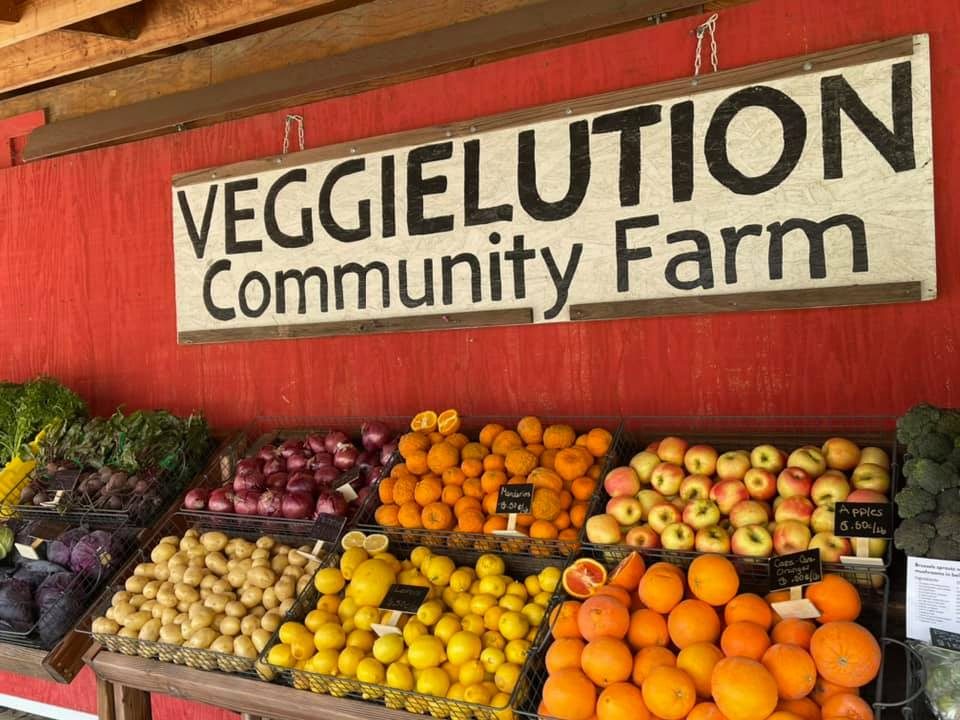
Caption: Veggielution’s Farm Stand offers farm fresh vegetables that are harvested every week by staff members and volunteers. Residents interested in volunteering to pick crops can sign up online at veggielution.org/farming. Photo Courtesy of Veggielution

In-depth news story on the struggle for food insecurity in the Silicon Valley

Feeding hope, serving dignity: How nonprofit groups fight food insecurity in Silicon Valley is one of the best news stories engaging the people, problems, paradoxes, and potential solutions to address the shockingly high levels of hunger, poverty, and social exclusion in Silicon Valley that I have read in my 13 years as a professor Santa Clara University. It’s in-depth and long form, so take your time reading it. Happy to provide background to journalist Prachi Singh.  

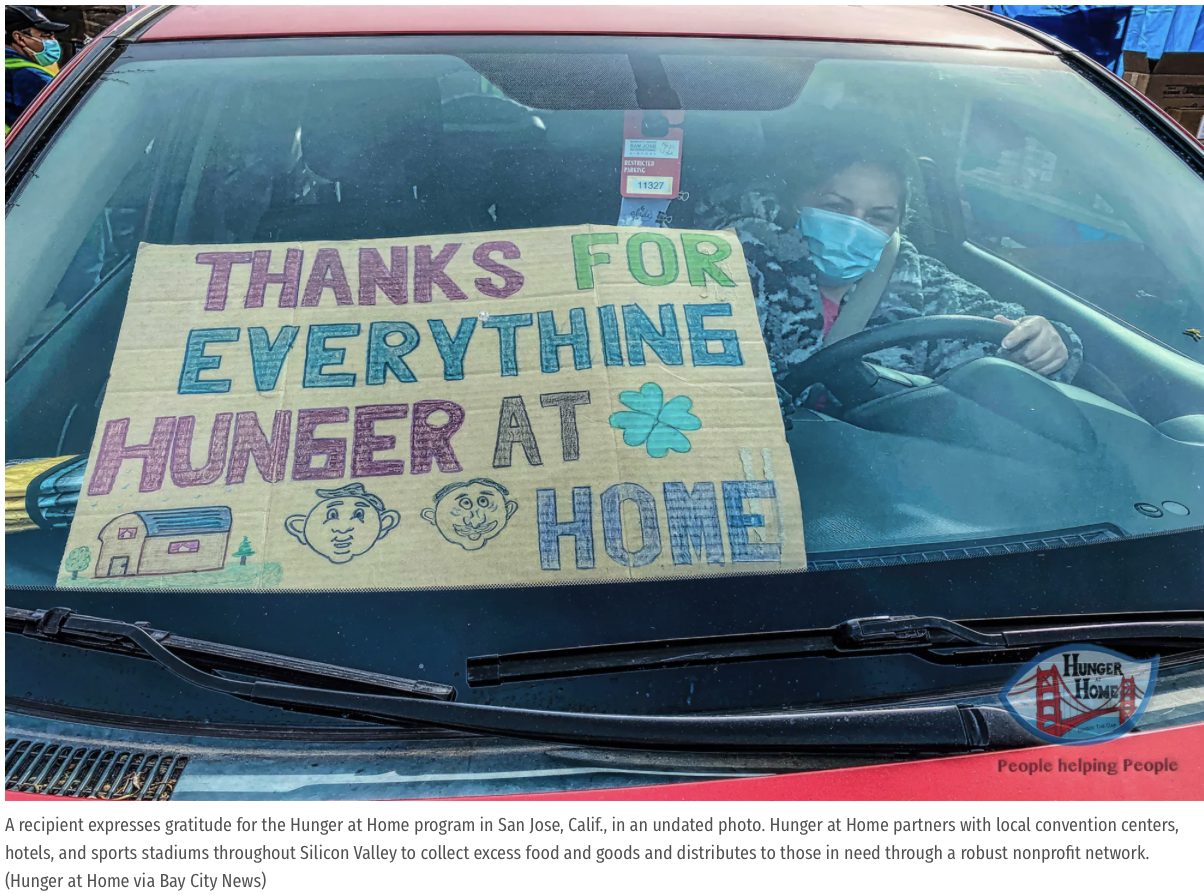
A recipient expresses gratitude for the Hunger at Home program in San Jose, California

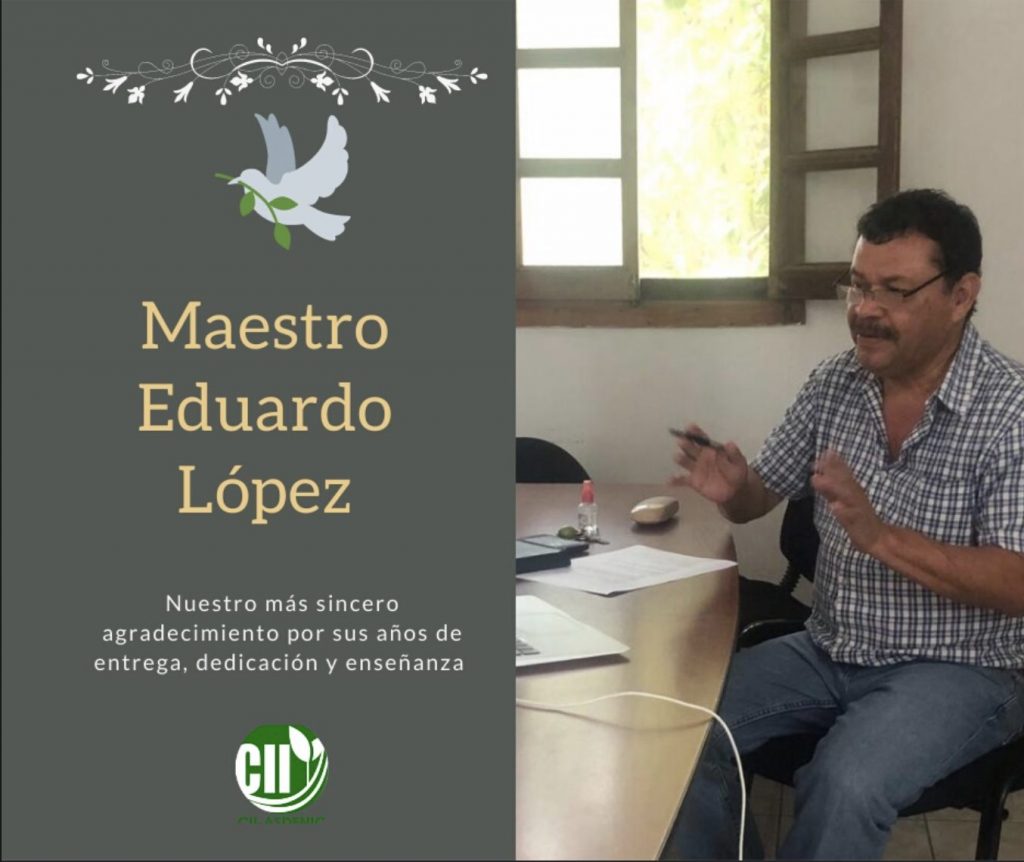
Remembering Professor Eduardo López Herrera

We recently learned that Professor Eduardo López Herrera, partner and mentor of Santa Clara University’s  Agroecology, Climate Resilience and Food Justice Lab faculty, staff, and students, passed away on October 23, 2021 in his native city of Estelí. Msc. Eduardo was president of the Nicaraguan Social Development Association (ASDENIC), an organization that has worked on knowledge management and local development in northern Nicaragua for more than 25 years and a community-based partner with us since its inception in 2001.  

We extend our sincere condolences to Professor Eduardo López Herrera’s family, and his second family at ASDENIC.  Professor López Herrera was also a professor of sociology and history at the National Autonomous University of Nicaragua (UNAN), and the recipient of several prestigious awards for his service. 

Thank you, Eduardo, for all the ways that you helped us collaborate with communities in northern Nicaragua and bridge our own academic disciplinary divides, as together we have organized workshops, organized international agroecology short courses, and conducted farmer surveys. Collectively and through our work with ASDENIC and many cooperative and community leaders, we have worked together to analyze how smallholder farmers and local communities are adapting to climate change and other hazards, to explain the links between food and water security, advance agroecology to address food insecurity, adapt to climate change and other hazards, and contribute to efforts to create a nationally recognized protected area in the Canta Gallo region.

Your legacy of dedicated work, values ​​in action, principles based on an example of an open heart will inspire our ongoing collaborations and continued work.  

In loving memory of Maestro Eduardo López