Growing up, I was always the “wild card” of my family. Much to the confusion of my hyper-rational, introverted family, I usually preferred friends to books, played music more than sports, the humanities as much as STEM and had an imagination that could run for days. Unlike my parents and sisters, I never had a clear-cut idea of what I wanted to do, which never stressed me out because I just assumed that I would figure it out as I went along. I had always thought of myself as different from the rest of my family and was intent on staying that way, always insistent on making a divergent path.
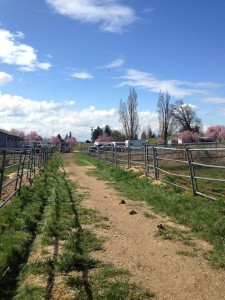
When my senior year of high school started I was still unsure of what I wanted to do. Through one of my sisters, I started volunteering at a therapeutic 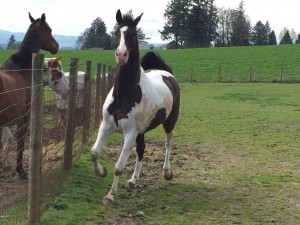 equine center, Forward Stride, which was the first of a series of events that have led me to where I am now. The first things that will likely catch your eye and heart at Forward Stride are the beautiful scenery and animals, but for me, it was the people. Forward Stride works with clients of all abilities and equine therapy helps with a vast range of disabilities including traumatic brain injuries, autism, cerebral palsy and PTSD.
  I was astounded by the positive change our clients were able to create in their lives with a little help from some volunteers and a very patient horse. One of my favorite clients was a three-year old boy with severe autism who wouldn’t look at us when he started therapy and three months later was running to give us hugs at every lesson. After volunteering for a year, I knew I wanted to find a career where I could help people help themselves, though I wasn’t sure just how I would do that.
During my senior year of high school I had another transformative experience; a trip to Palau. For eleven days, my classmates and I immersed ourselves in the unique culture of Palau. I fell in love with learning from people who have vastly different experiences than me and treasured making connections and sharing with each other. All of my extended family lives outside of the United States, so I had t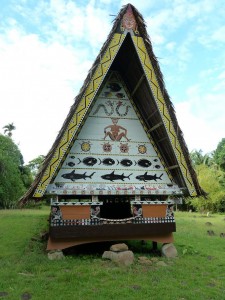 raveled a great deal before this, but never before had I experienced another culture with that intensity. Palauan culture is different from many others as it is a predominantly matriarchal society where women are consistently treated with the same respect as men. Unfortunately, this is not the reality in most places and having had the chance to learn about what life is like in that culture, I knew I wanted an in-depth experience in college where I could learn what the flip side of the coin is like and the resulting implications.
I decided to attend Santa Clara University for the amazing Public Health Science program, the Jesuit ideals of service, justice and educating the whole person, and frankly, the sun (after living in Portland, OR for 18 years, I was a bit tired of the rain and grey). Upon arrival, I had decided to be an occupational and physical therapist, which meant that I suddenly found myself taking all of the same science classes that I had watched my sisters breeze through. In my sophomore year I took Human Health & Disease and designed a mock intervention to help combat the stigma associated with mental illness and the roadblocks to treatment. As that year progressed I realized that I had a passion for mental health issues and working to improve mental health care in this country. This was ignited as several of my close friends developed severe mental health issues, and I watched them struggle to find adequate treatment and support. I was increasingly frustrated with their situations and decided to change my path to work towards improving the lives of others who were in similar situations.
Halfway through my sophomore year I also joined the Resilient Families Program (RFP) research team at SCU. Run through the Liberal Studies department, RFP is a community-based research initiative that works with high-risk families at multiple community sites to provide an intervention that seeks to build family resilience through increasing healthy attachment, executive functioning skills, stress management  skills and mindfulness. This has been one of the most influential activities I have joined at university as it has given me the opportunity to actively participate in developing and providing a public health intervention. In RFP I have learned more from our moms than I ever thought imaginable and they have stirred in me a desire to constantly improve and give my all to whatever I am working on. Our moms and my fellow team-members have taught me resilience, mindfulness and most importantly the ability to be flexible and make whatever I find myself in work. These skills tie into and aid my passions as anyone who has ever worked in a health-related field knows how important these qualities are.
The image of me as so different from the family who raised me seems comical to anyone who has met me since college started. I have quickly unfolded into a person who falls right in line with my hyper-rational, organized, and serious yet passionate family of engineers and scientists. I was actually confused when I realized just how similar to my family I am, and wondered how we had all ended up on such similar paths. However, it is now clear to me that my family raised my sisters and me to find our talents and use them to improve the lives of those around us in whatever ways we could. These principles have led us to related interests in the healthcare field and I take great pride in being able to align myself my sisters and their paths. Much of what I do is inspired by them and they help push me to be the best that I can.
I have been hearing about the Global Social Benefit Fellowship since my freshman year of college when one of my public health professors began mentioning that my friends and I should apply for it. Although unsure at first, when junior year finally rolled around and I learned more about the fellowship I realized that it would combine my love of learning, action research and travel that goes beyond tourism to provide me what will undoubtedly be an unbelievable opportunity and experience. Working with Operation ASHA will give me a chance to learn first-hand how high-quality health services can be provided in a low-resource, low-access situation. I am excited to partner with all of the amazing people who are involved with this fellowship and share my passion for its many aspects. This will be an incredible addition to my path thus far and I can’t wait to see where it takes me.