Reimagining Student Assignments

Undergraduate students contribute daily to online networks such as Facebook, Tumblr, Twitter, and Instragram, among other platforms. At Santa Clara University, these existing practices in media literacy are being harnessed for undergraduate coursework and research. Faculty are helping students reflect upon their experience in online environments, and connect those experiences to academic life at Santa Clara. Can you link us to your assignments that involve online writing? See below for student work at SCU in blogging, wikis, podcasts, and digital archives:

  • Start by considering “Silicon Valley Didact,” a reflection on blogging in the classroom and sample projects by Olin Bjork (English).
  • Consider student interpretations of a popular movie in a shared blog project called Interpreting Hunger Games, an assignment designed by Michelle Burnham (English) for Critical Thinking and Writing classes.
  • “By sharing your stories you help others learn.” Contribute your story or have students contribute stories via wwwrite.org, an initiative by Charlotta Kratz (Communication).
  • Listen up to Bruno Ruviaro (Music) and students in his “Intro to Electronic Music” class,who published pod-casts as final projects via the interface Soundcloud.
  • See how students learn to improve Wikipedia by contributing to the most frequently consulted encyclopedia in the world, in Technology & Communication, taught by Chad Raphael (Communication).
  • Similarly, Stephen Carroll’s (English) students use a wiki sandbox to create lasting entries on Wikipedia, such as this edit on artist William Keith.
  • Katharine Heinz (Communication) has a long tradition of collaborative wiki-assignments. The Spring 2013 Comm 12: Technology and Communication wiki is particularly awesome.
  • Could your students’ work contribute to an institutional archive? Students in Sharon Merritt’s (English) classes regularly post to the Digital Archive for Literacy Narratives, a project of The Ohio State University.

Multimodal Writing Contest (English)

Posted in Uncategorized | Leave a comment

Online Networks and Faculty Research

You probably write or create other media for online networks daily, whether for a blog, for Facebook, or another social media network. In growing numbers, faculty at Santa Clara University participate in online networks to speak about their research to public audiences, and to create together with other scholars in collaborative, open models.  How can online networks support SCU faculty research and teaching interests?  Follow the links below to learn more about Santa Clara’s mission in the digital age.

By Department or Units

University-Wide

  • The biggest news right on campus is Scholar Commons, a project of the University Library. This open respository will archive research of SCU faculty and students, and make it available publicly.
  • For the stream of blogs across Santa Clara, make sure to bookmark Santa Clara University Blogs & Podcasts.
Posted in Uncategorized | Tagged , , , , , , | Leave a comment

Digging Deep: An Opportunity to Learn Field Methods

[youtube]http://youtu.be/YwM6mVyntis[/youtube]

When imagining the ideal classroom, we might consider the interview above with Lee Panich and some of his anthropology students. In Panich’s field methods class, students experienced a dig on Santa Clara campus. Do you think students (often immersed in mobile computing) might find value in more embodied forms of learning? Does your course involve field work or applied learning?

Posted in Uncategorized | Leave a comment

What is an ideal classroom?

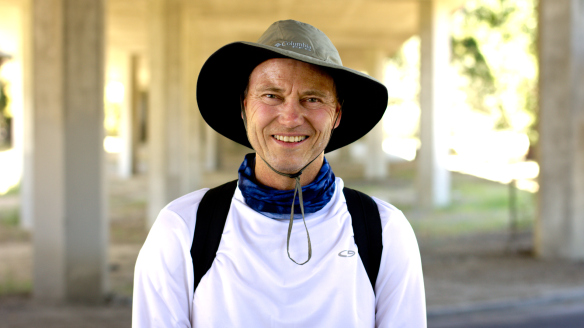
David Popalisky

Image Credit: “Our esteemed Professor” by Robert Boscacci Via Sacred Frames

For David Popalisky, professor of Theatre and Dance, the ideal classroom is California itself.  Popalisky drew our attention (and the SF Chronicle’s) with last summer’s course offering, “Walk Across California.” Popalisky and Rebekah Boyd (English) led Santa Clara undergraduates on a 225-mile journey that began in San Francisco and ended in Yosemite.

On the road, students were introduced to sites related to social justice, nature, and California history.

If you want to see the evidence of rich learning from the “Walk Across California” course, read Communication major Robert Boscacci’s account on his personal blog, Sacred Frames. students walking past the Stockton street signFor us at Teaching Scholar, Popalisky’s creative pedagogy and his students’ creative learning connects to the idea of the ideal classroom.
Popalisky thought beyond the four walls of the traditional classroom space.  Indeed, many faculty and staff members at Santa Clara work to provide rich experiences for SCU undergraduates: through study abroad, archaelogical digs, or community-based learning experiences.  As we envision what we want next for our learning environments at Santa Clara, we might ask the following questions:

  • If we want to engage students body, spirit, and mind, how do our structures support that engagement?
  • What is your ideal classroom?  Can you explain why you prefer one classroom architecture to another?
  • Rather than using the word ‘classroom,’ can we think of places we teach as learning environments?
Posted in Uncategorized | Leave a comment

Work/Life: An Open Door Policy?

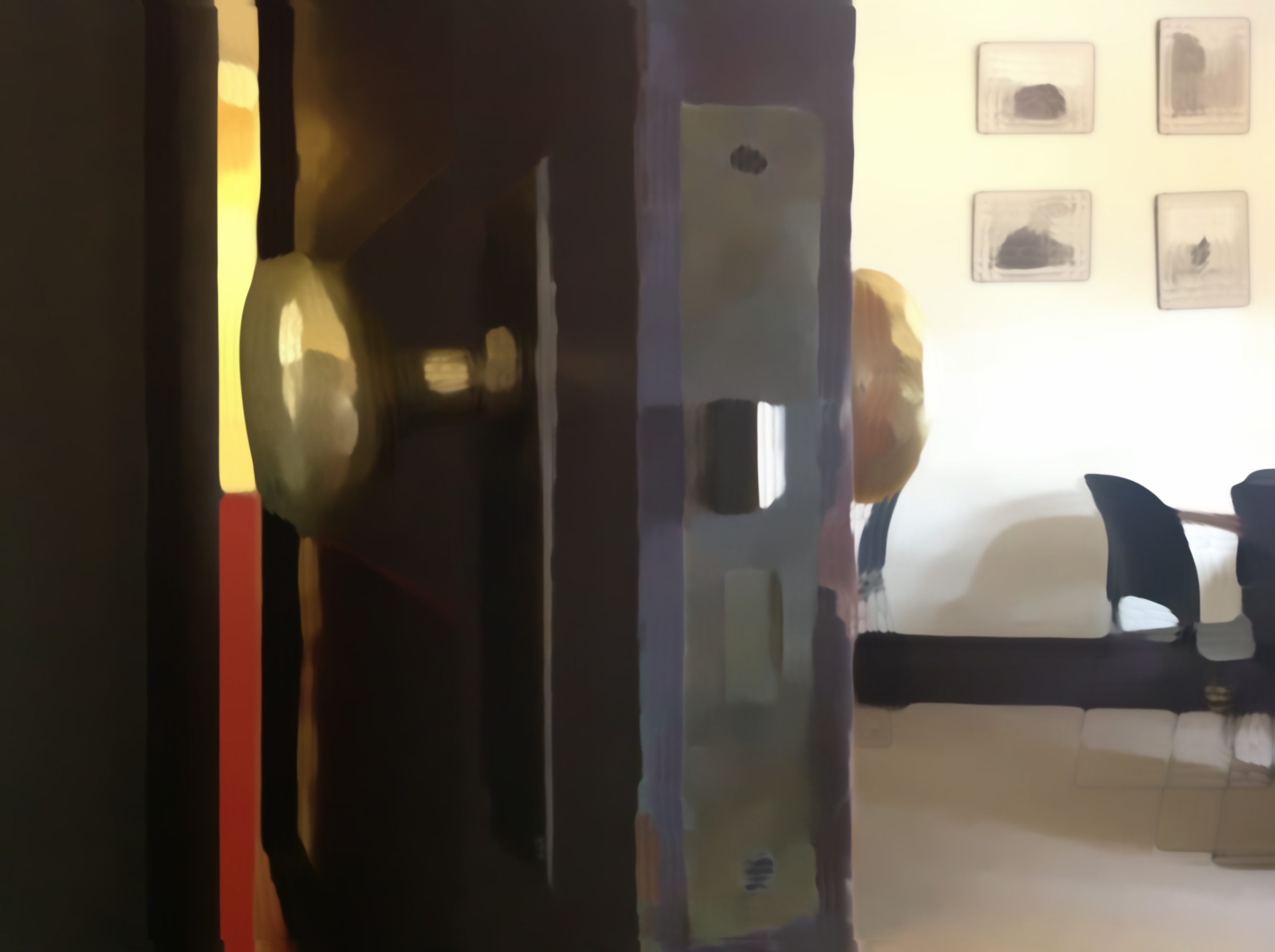
hinge of a door

Image Credit: “St. Joseph’s Hall” by Noel Radley

    While working at my computer last week, I heard the sound of knocking on the tall wooden door of my office in St. Joseph’s Hall. It was a fellow Lecturer in the English Department….just saying hello and exchanging the day’s update. Usually, I can disentangle my brain for a few minutes and have a conversation. But I wasn’t able,  last week, to hide how I felt about being interrupted. I mumbled something about not being able to talk, and my colleague winced as she read the stress written across my face.

The experience made me think whether or not one should have an open door policy.

Continue reading

Posted in Uncategorized | Tagged , , , , , , , | Leave a comment

Teach here. Teach there.

This week many of our students will learn about the range of programs and courses available for international education and experience during International Programs’ Study Abroad Week. Most of us have had the delight of seeing our students transformed by study abroad. We read their blogs or breathless e-mails as their world gets smaller (geographically) and much larger (culturally, intellectually, politically, socially, spiritually). They come back to us smarter, more reflective, more complicated folks than they were when they packed their bags.

What about the folks who had the pleasure of teaching those courses? Check out this post in Tomorrow’s Professor. Even if you don’t want to grab anyone by the seat of their pajamas (an image that troubled teachingscholar), you may want to do some more thinking about the globalized faculty and programs imagined in a new book, Faculty-Led 360, and accompanying blog.

Closer to home, you might have read the recent profile of SCU faculty Michael Kevane, Leslie Gray and their intrepid kids in this article in the Chronicle of Higher Education. Or you’ve chatted with SCU colleagues about their experiences with students.

So what about you?

Is international teaching and learning a part of your professional plan? Does it fit your research, pedagogical and personal goals? Join others and think some more about that as you hear a range of faculty talk about their experiences as global learners and teachers at this week’s lunchtime discussion (Wed, 10/19, noon, Weigand) of international teaching and learning. And you might want to introduce yourself to Susan Popko, new Associate Provost for International Programs.


Posted in Uncategorized | Leave a comment

Engaging Students with Active Learning

At today’s Pedagogy in Perspective panelists David Pinault (Religious Studies), Silvia Figueira (Computer Engineering) and Matt Bell (Psychology) each talked about how they engage student learners in their classes. David described the role of field trips, experience, reflection and the use of scholarly conflict and controversy. In response to a question he also talked about the role of emotion, and how fear/uncertainty (about a new, unscripted and out of the classroom experience) can situate students for particularly deep learning. Sylvia talked about positioning first-year students to take responsibility for their own learning (even/especially) in required intro courses, the value of regular homework, frequent opportunities for students to demonstrate their learning, and (like David) about the role of field trips that exposed students to engineering course content outside of the classroom context. Matt, whose research is in the field of learning, talked about his recent work in a learning class with a specific pedagogical technique, “interteaching,” where he asks students to demonstrate their reading comprehension and conceptual grasp (and gaps) by teaching each other, writing questions, and then determining the next day’s course content by their questions. Discussion following their presentations was lively. Many thanks to all participants, including, especially, our presenters: David, Silvia and Matt!

Want to do a little more thinking about how to engage your students?

  • Many SCU faculty are regular readers of Rick Reis’ Tomorrow’s Professor, so you may have seen this posting by Richard Felder a couple of months ago on Active Learning and Student Resistance.
  • September’s Teaching Carnival in ProfHacker provided a particularly useful (and quick and inviting) overview of recent conversation about teaching in college and university classrooms, including posts about active learning.
  • TLT:  We now have an institutional membership (thanks, Nancy Cutler!) in the TLT Group, a non-profit affiliated with the American Association for Higher Education. TLT helps university faculty take advantage of changing technology to improve teaching and learning. Our institutional membership means all faculty can use current and archived materials on the TLT site, including regular webinars such as the Friday Live program. A couple of us participated in TLT webinars last year to test them out, and we found them useful. For those of us not able to find time to get off campus to a teaching conference, a webinar (right there in the comfort (?)) of our offices allows interactive input on teaching and learning.  (If you can’t make their regular times–Fridays at 11 am our time–you can access them later via the institutional membership.) What’s that you say? You want lunch after? Invite a colleague to do a TLT webinar with you, email Eileen Elrod about that, and Teaching Scholar will spring for lunch.  Two upcoming topics are related to the idea of engaged, active learning: one on student resistance (which Felder addresses in the Tomorrow’s Professor Posting) and one on faculty resistance.
Posted in Uncategorized | 1 Comment