
Learning about the opioid crisis was insightful and a journey in itself. In the beginning, there was so little that I knew about this epidemic and had a very stereotyped image of a druggie that struggles with an addiction due to poor life choices. It was clear that I was wrong.
The Opioid Crisis started in the late 1980’s when big pharma decided that opioid were harmless and pushed, even highly encouraged, the use of painkillers and medicine for patients. As doctors began to overprescribed on opioids, patients would continue to take medicine despite the lack of pain, and slowly become dependent. Individuals would turn to look for heroin or fentanyl as variant of the drug to ease their addiction.
This snowballed into what is today’s opioid crisis. Drug abuse became the world’s leading cause of death due to overdosing. Suicide rates were high and alongside that, so were crime rates and the economic burden it took to “solve” this epidemic began to show. By 2017, 2.1 million people in American suffered from opioid use disorder, and cost be over $1 trillion by that time. It was clear this was not small fish to fry.
I chose the opioid crisis because of what I was studying in my Culture and Ideas class. Our class discussion revolved around the War on Drugs, and how the black community today faces a new form of Jim Crow laws due to the stigma that surrounds drug abuse and prison time. I was surprised to see the stark contrast of the way individuals are treated for substance abuse. In the Opioid Crisis, there is an encouragement for better addiction reform program, education to prevent opioid addiction and funding that is called by the government to implement safer practices. On the other hand, the War on Drugs led to the condemnation of black people for becoming dependent on drugs and selling in order to survive and make a living. The stigma that follows the black community pays a much heavier toll, and it is rather interesting that the Opioid Crisis is often associated with the image of a white man.
Therefore, my group and I decided to focus our efforts through a social media campaign in hopes to reach as much people as possible. I posted on my Snapchat story, giving facts about the Opoiod crisis, and giving the chance for people to ask me questions themselves, through a Q&A style were I would update my story with each answer.
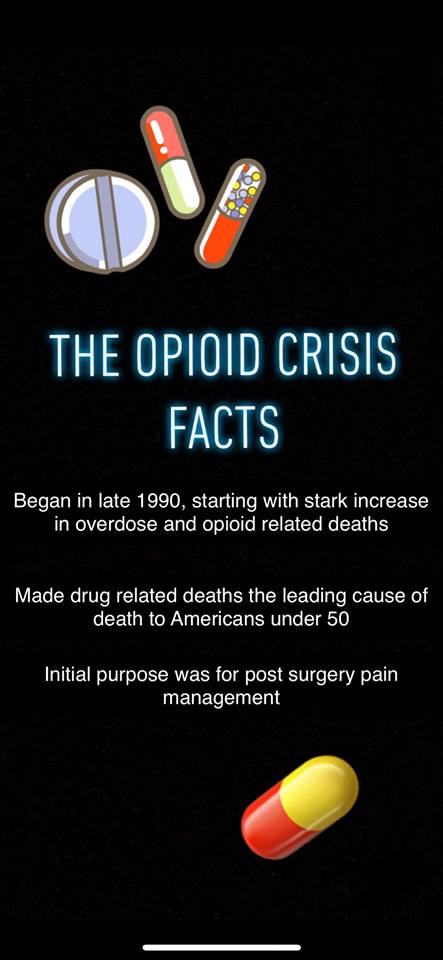
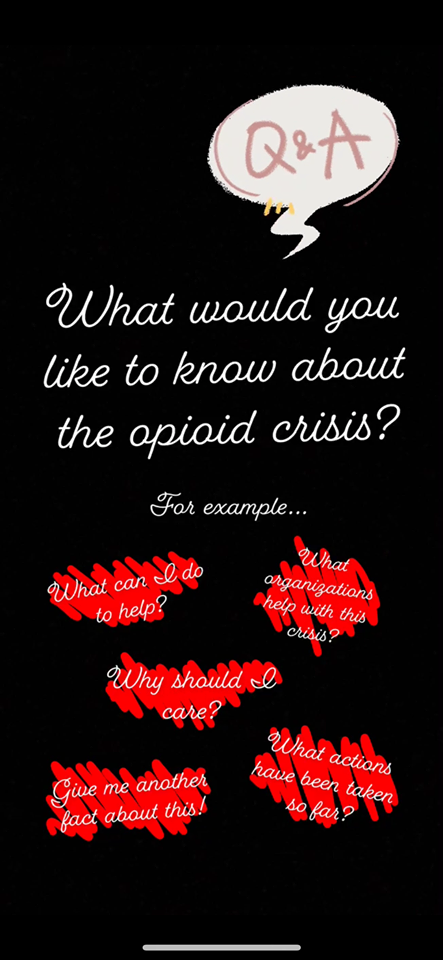
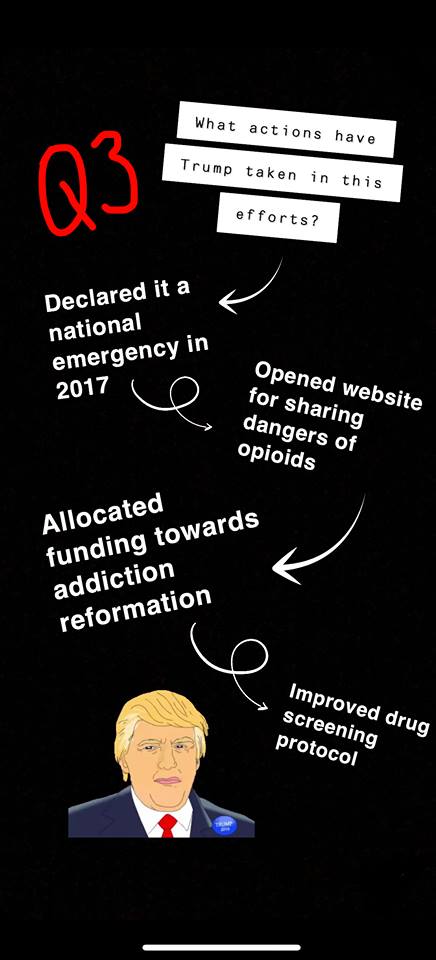
I was surprised at the questions my friends were asking. They ranged widely from the “Why are you doing this?” to deeper questions of “What do you see if the main obstacle that is keeping the government from solving this issue?” I had a fun time created the answers panels that had graphics and images themselves to make the answers more interesting and interactive.
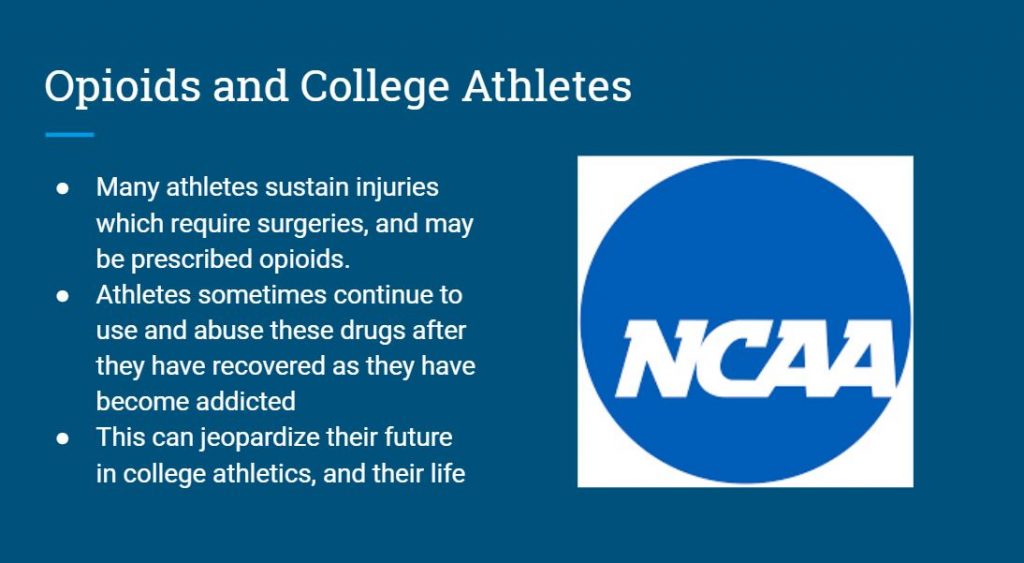
Furthermore, our group also decided to send a presentation to the athletes of Santa Clara University to teach them about the dangers of opioid use. We figured, being athletes that face the possibility of being injured will face the chance of using opioids to help with recovery.
Overall, this journey to spreading awareness of the opioid crisis has inspired me to continue doing so for other “forgotten” issues of America. This social media campaign is also something I would love to continue doing since I love the interactive aspect of it so much. Afterall, anyone can help to spread awareness.