
Heroism Runs In My Blood

My father kills more spiders than he does monsters. He doesn’t stay up as late as Batman, but it sure seems like it by the time he comes back from work. Yet, his efforts seem to match the heroes I’ve read in my elementary school days. A hero is someone who practices self-sacrifice, goes beyond the call of duty, and lives on the values, perseverance, and determination. A hero does not need to stand in the limelight of fame and appreciation. In fact, my hero is my dad: an immigrant from China with the vision of providing a better life for his future family. Through his constant sacrifice towards a better future, my dad has become the definition of a hero.
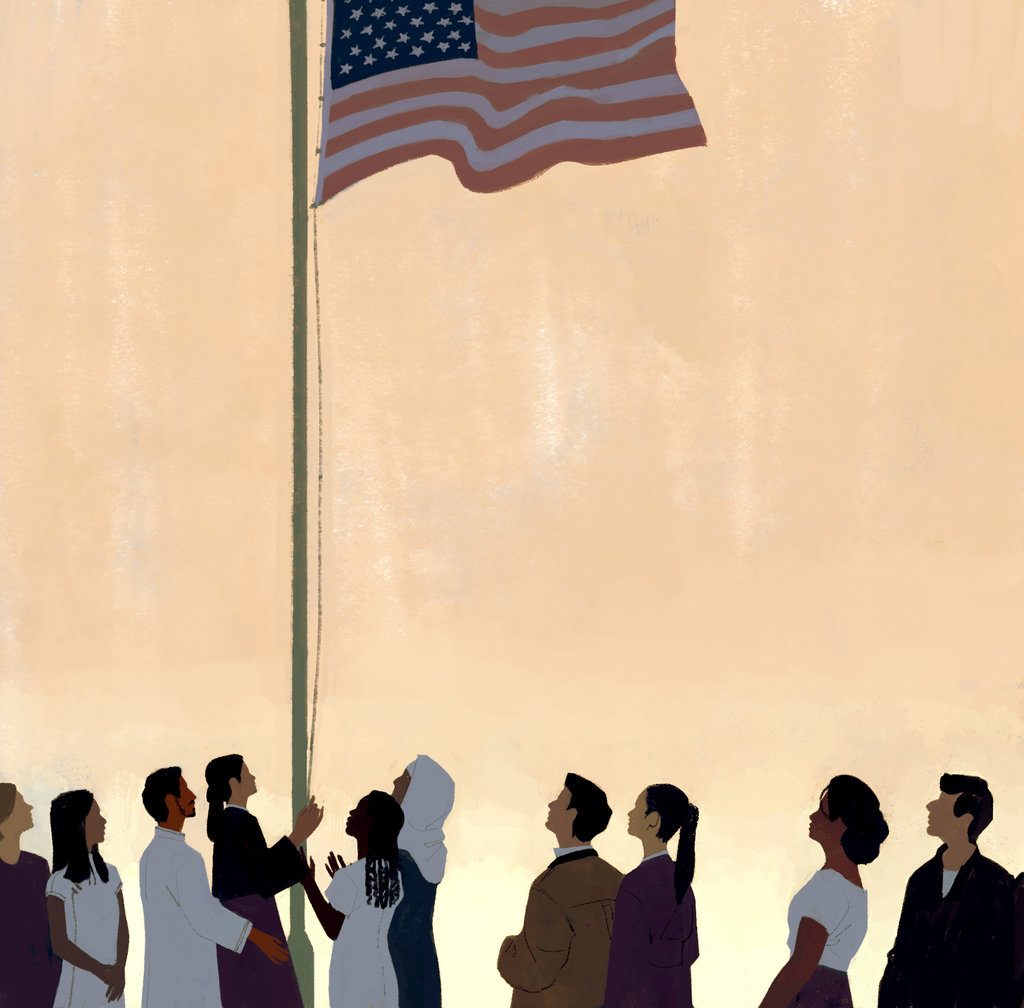
The most prominent sacrifice my father did was leave his comfortable life in China to pursue unguaranteed success in a foreign country with nothing but the money in his pockets and clothes in his luggage. My father believed in the idea of the American dream that was built on hard work and perseverance. To pursue a life in another culture and land was a leap of faith that builds me an image of my dad being a hero. Furthermore, throughout the years, his sacrifice of time and physical dexterity allowed him to succeed in his career path to provide for his family. In the beginning, when he started as an assistant in charge of doing the heavy lifting and painstaking labor, my dad sacrifices hours and his health to earn a living. His determination to learn English and to push himself into a higher position in the work industry continues to inspire not only me but the people who work for him. Now, when my dad is able to start his own engineering firm, he continues to give away his own personal resources and time again to provide the opportunities for everyone around him to live the same story he is living and preaches the good lessons of perseverance through his actions, not his words. His employees are able to learn the tricks of the trade from the boss himself, and he passes on the tips and tricks he has learned throughout the years.

There can be no doubt that these actions are just acts of biological callings. His actions hold more reason to simply pass on his genes to a future generation. There is a certain line that is drawn, and the amount of sacrifice my dad has put in thoroughly shows the true heroism in his action because of love and not because of the biological programming. The amount of sacrifice my father has given to his family and the people around him is unmeasurable. There is no doubt in my mind my father is not a hero. Time and time again he has proven how his sacrifices make him worthy to be called a hero.

Opioid Crisis 101

Learning about the opioid crisis was insightful and a journey in itself. In the beginning, there was so little that I knew about this epidemic and had a very stereotyped image of a druggie that struggles with an addiction due to poor life choices. It was clear that I was wrong.

The Opioid Crisis started in the late 1980’s when big pharma decided that opioid were harmless and pushed, even highly encouraged, the use of painkillers and medicine for patients. As doctors began to overprescribed on opioids, patients would continue to take medicine despite the lack of pain, and slowly become dependent. Individuals would turn to look for heroin or fentanyl as variant of the drug to ease their addiction.

This snowballed into what is today’s opioid crisis. Drug abuse became the world’s leading cause of death due to overdosing. Suicide rates were high and alongside that, so were crime rates and the economic burden it took to “solve” this epidemic began to show. By 2017, 2.1 million people in American suffered from opioid use disorder, and cost be over $1 trillion by that time. It was clear this was not small fish to fry.

I chose the opioid crisis because of what I was studying in my Culture and Ideas class. Our class discussion revolved around the War on Drugs, and how the black community today faces a new form of Jim Crow laws due to the stigma that surrounds drug abuse and prison time. I was surprised to see the stark contrast of the way individuals are treated for substance abuse. In the Opioid Crisis, there is an encouragement for better addiction reform program, education to prevent opioid addiction and funding that is called by the government to implement safer practices. On the other hand, the War on Drugs led to the condemnation of black people for becoming dependent on drugs and selling in order to survive and make a living. The stigma that follows the black community pays a much heavier toll, and it is rather interesting that the Opioid Crisis is often associated with the image of a white man.

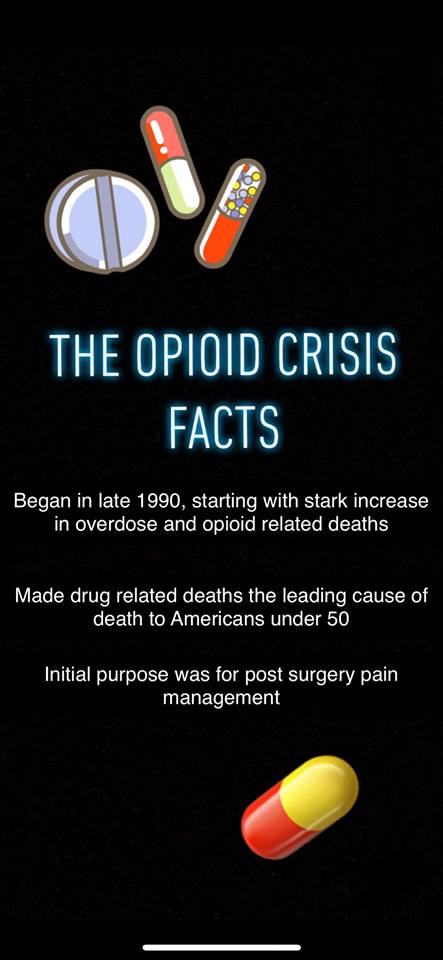
Therefore, my group and I decided to focus our efforts through a social media campaign in hopes to reach as much people as possible. I posted on my Snapchat story, giving facts about the Opoiod crisis, and giving the chance for people to ask me questions themselves, through a Q&A style were I would update my story with each answer.

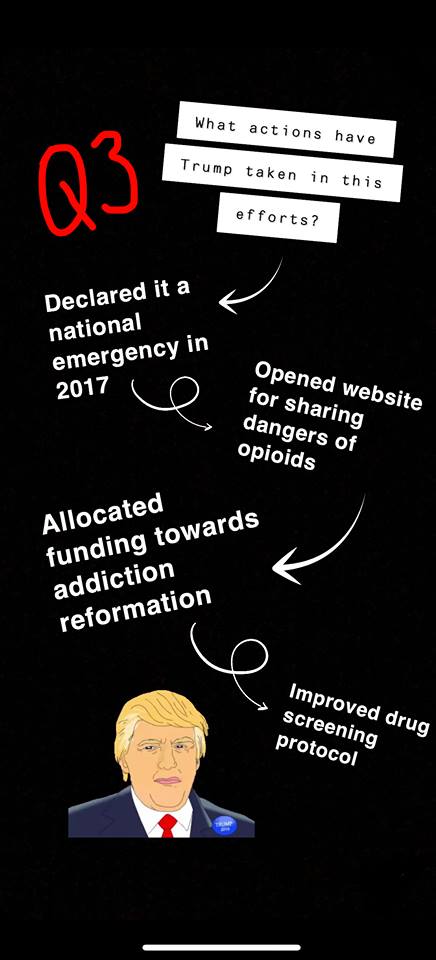
I was surprised at the questions my friends were asking. They ranged widely from the “Why are you doing this?” to deeper questions of “What do you see if the main obstacle that is keeping the government from solving this issue?” I had a fun time created the answers panels that had graphics and images themselves to make the answers more interesting and interactive.

Answer to question 3 out of 7 on my Snapchat Story.

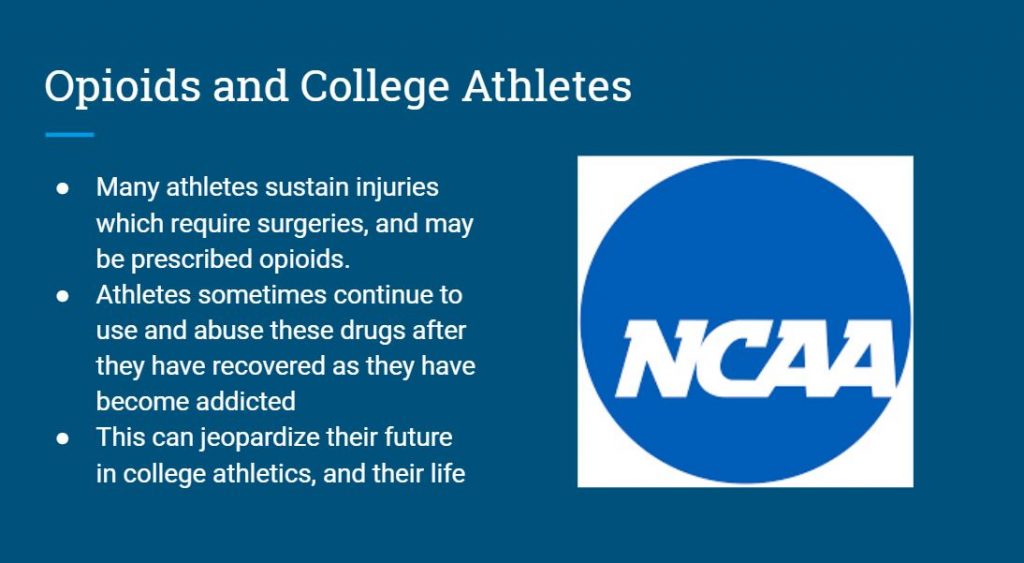
Furthermore, our group also decided to send a presentation to the athletes of Santa Clara University to teach them about the dangers of opioid use. We figured, being athletes that face the possibility of being injured will face the chance of using opioids to help with recovery.

Sample slide of our presentation to the athletes.

Overall, this journey to spreading awareness of the opioid crisis has inspired me to continue doing so for other “forgotten” issues of America. This social media campaign is also something I would love to continue doing since I love the interactive aspect of it so much. Afterall, anyone can help to spread awareness.

Black Panther Hidden Messages

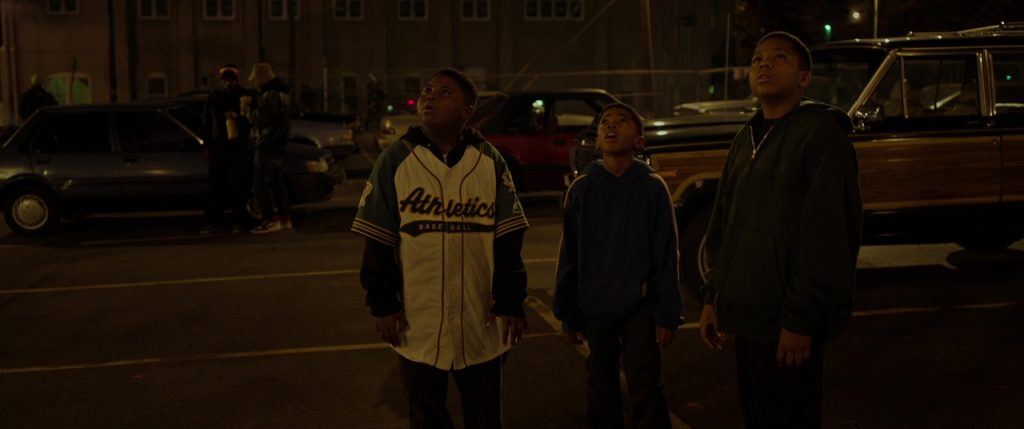
The making of Black Panther warranted major popularity with its racial representation and inspirational hero behind the story. However, my appreciation from the movie begins even from the opening scene, captioned “Oakland 1992.”

An example of the opening scene, panning to a broken down basketball hoop.

As a Bay Area kid, the implications that come from the location of Oakland speaks volumes and only adds to the beginning scene. The attention to detail that sets the scene perfectly includes the broken basketball hoop that has a crate to replace the hoop and the run down, yet looming apartment building. Oakland, California is known to be dangerous and a poor area. The location is associated with drive-by shootings, and thievery, and thus so, associated with racial bias against the black community. This idea is widely accepted by the people living in the Bay Area. Thus, Oakland becomes not only the background that shapes Killmonger but the motivator and explains the violent tendency he has given his childhood enviroment.

When the director chose Oakland, in a sense,it becomes the antagonist of the movie. Anyone familiar with Oakland understands how infused the location is with the black community and the stereotyped hate and violence that follows African Americans.

There is a sense of pride and silent understanding that comes with recognizing the Oakland “Easter egg” in Black Panther. Part of this stems from the recognition of Bay Area in major film, and the other comes from the nature behind the connected world between character and actions in the movie.