
Heroism Runs In My Blood

My father kills more spiders than he does monsters. He doesn’t stay up as late as Batman, but it sure seems like it by the time he comes back from work. Yet, his efforts seem to match the heroes I’ve read in my elementary school days. A hero is someone who practices self-sacrifice, goes beyond the call of duty, and lives on the values, perseverance, and determination. A hero does not need to stand in the limelight of fame and appreciation. In fact, my hero is my dad: an immigrant from China with the vision of providing a better life for his future family. Through his constant sacrifice towards a better future, my dad has become the definition of a hero.
The most prominent sacrifice my father did was leave his comfortable life in China to pursue unguaranteed success in a foreign country with nothing but the money in his pockets and clothes in his luggage. My father believed in the idea of the American dream that was built on hard work and perseverance. To pursue a life in another culture and land was a leap of faith that builds me an image of my dad being a hero. Furthermore, throughout the years, his sacrifice of time and physical dexterity allowed him to succeed in his career path to provide for his family. In the beginning, when he started as an assistant in charge of doing the heavy lifting and painstaking labor, my dad sacrifices hours and his health to earn a living. His determination to learn English and to push himself into a higher position in the work industry continues to inspire not only me but the people who work for him. Now, when my dad is able to start his own engineering firm, he continues to give away his own personal resources and time again to provide the opportunities for everyone around him to live the same story he is living and preaches the good lessons of perseverance through his actions, not his words. His employees are able to learn the tricks of the trade from the boss himself, and he passes on the tips and tricks he has learned throughout the years.

There can be no doubt that these actions are just acts of biological callings. His actions hold more reason to simply pass on his genes to a future generation. There is a certain line that is drawn, and the amount of sacrifice my dad has put in thoroughly shows the true heroism in his action because of love and not because of the biological programming. The amount of sacrifice my father has given to his family and the people around him is unmeasurable. There is no doubt in my mind my father is not a hero. Time and time again he has proven how his sacrifices make him worthy to be called a hero.

Opioid Crisis 101

Learning about the opioid crisis was insightful and a journey in itself. In the beginning, there was so little that I knew about this epidemic and had a very stereotyped image of a druggie that struggles with an addiction due to poor life choices. It was clear that I was wrong.

The Opioid Crisis started in the late 1980’s when big pharma decided that opioid were harmless and pushed, even highly encouraged, the use of painkillers and medicine for patients. As doctors began to overprescribed on opioids, patients would continue to take medicine despite the lack of pain, and slowly become dependent. Individuals would turn to look for heroin or fentanyl as variant of the drug to ease their addiction.

This snowballed into what is today’s opioid crisis. Drug abuse became the world’s leading cause of death due to overdosing. Suicide rates were high and alongside that, so were crime rates and the economic burden it took to “solve” this epidemic began to show. By 2017, 2.1 million people in American suffered from opioid use disorder, and cost be over $1 trillion by that time. It was clear this was not small fish to fry.

I chose the opioid crisis because of what I was studying in my Culture and Ideas class. Our class discussion revolved around the War on Drugs, and how the black community today faces a new form of Jim Crow laws due to the stigma that surrounds drug abuse and prison time. I was surprised to see the stark contrast of the way individuals are treated for substance abuse. In the Opioid Crisis, there is an encouragement for better addiction reform program, education to prevent opioid addiction and funding that is called by the government to implement safer practices. On the other hand, the War on Drugs led to the condemnation of black people for becoming dependent on drugs and selling in order to survive and make a living. The stigma that follows the black community pays a much heavier toll, and it is rather interesting that the Opioid Crisis is often associated with the image of a white man.

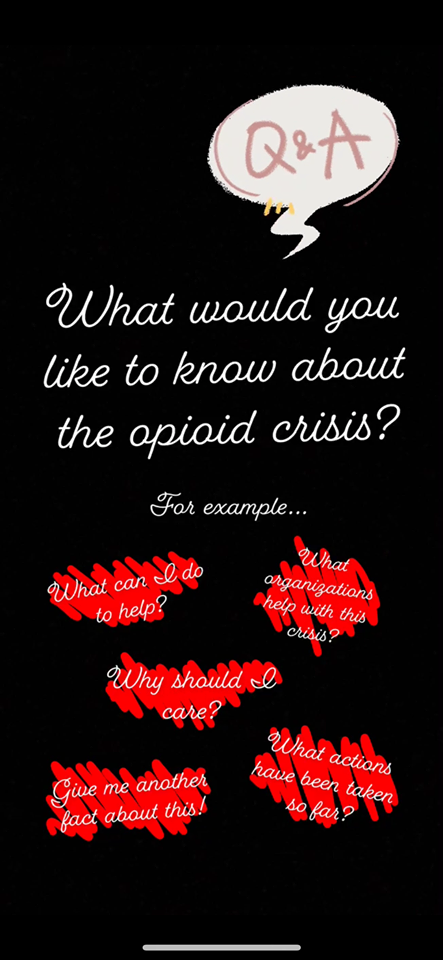
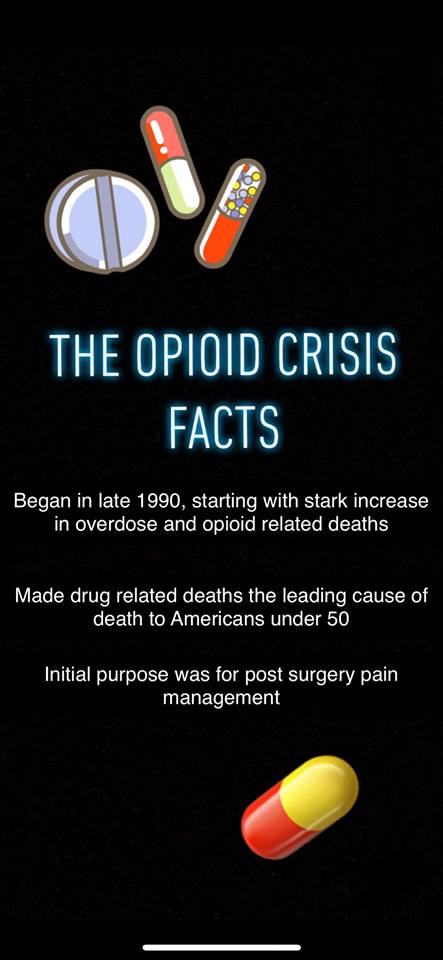
Therefore, my group and I decided to focus our efforts through a social media campaign in hopes to reach as much people as possible. I posted on my Snapchat story, giving facts about the Opoiod crisis, and giving the chance for people to ask me questions themselves, through a Q&A style were I would update my story with each answer.

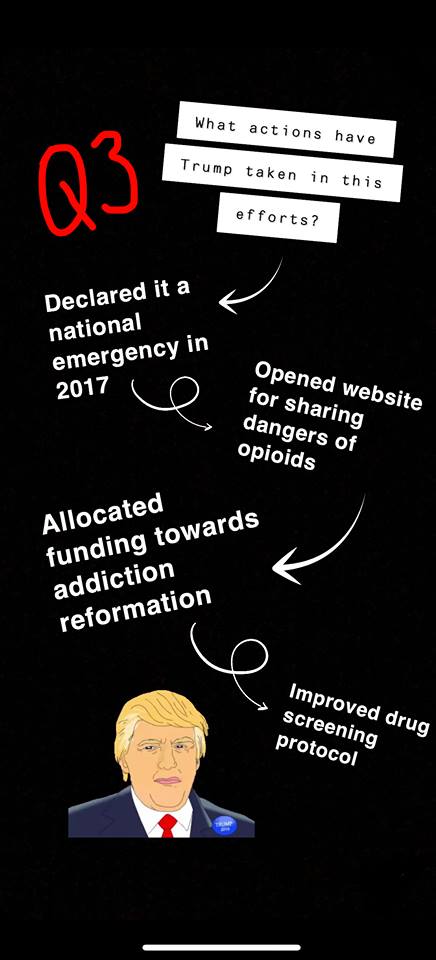
I was surprised at the questions my friends were asking. They ranged widely from the “Why are you doing this?” to deeper questions of “What do you see if the main obstacle that is keeping the government from solving this issue?” I had a fun time created the answers panels that had graphics and images themselves to make the answers more interesting and interactive.

Answer to question 3 out of 7 on my Snapchat Story.

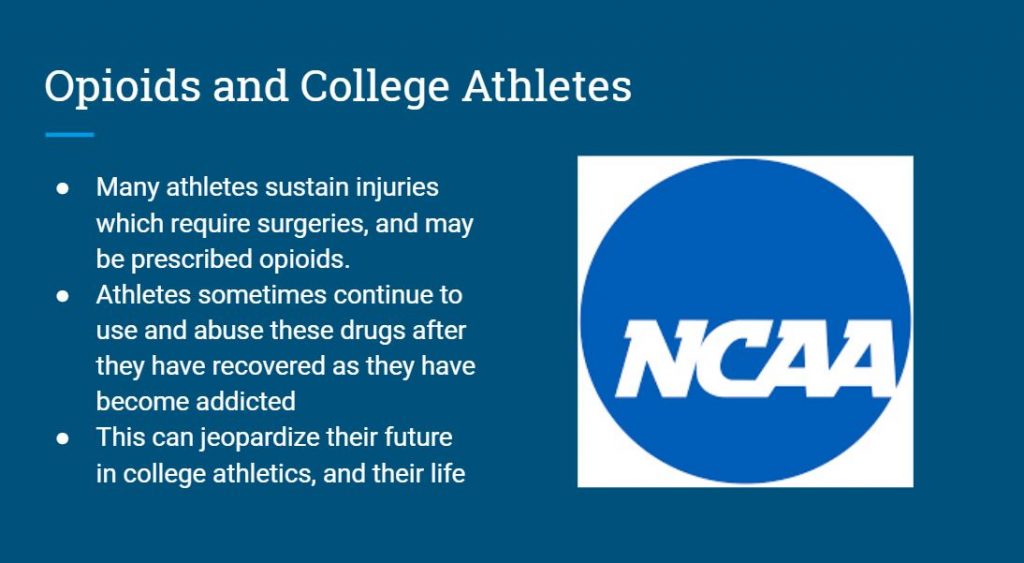
Furthermore, our group also decided to send a presentation to the athletes of Santa Clara University to teach them about the dangers of opioid use. We figured, being athletes that face the possibility of being injured will face the chance of using opioids to help with recovery.

Sample slide of our presentation to the athletes.

Overall, this journey to spreading awareness of the opioid crisis has inspired me to continue doing so for other “forgotten” issues of America. This social media campaign is also something I would love to continue doing since I love the interactive aspect of it so much. Afterall, anyone can help to spread awareness.

Black Panther Hidden Messages

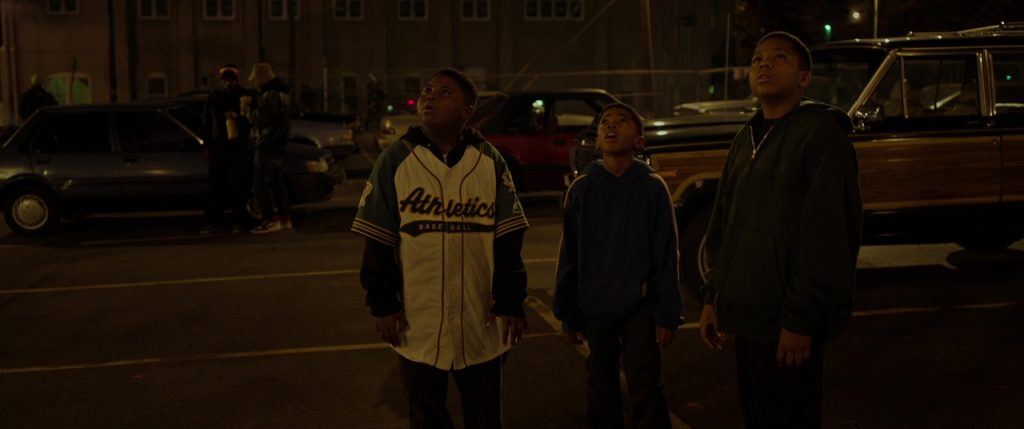
The making of Black Panther warranted major popularity with its racial representation and inspirational hero behind the story. However, my appreciation from the movie begins even from the opening scene, captioned “Oakland 1992.”

An example of the opening scene, panning to a broken down basketball hoop.

As a Bay Area kid, the implications that come from the location of Oakland speaks volumes and only adds to the beginning scene. The attention to detail that sets the scene perfectly includes the broken basketball hoop that has a crate to replace the hoop and the run down, yet looming apartment building. Oakland, California is known to be dangerous and a poor area. The location is associated with drive-by shootings, and thievery, and thus so, associated with racial bias against the black community. This idea is widely accepted by the people living in the Bay Area. Thus, Oakland becomes not only the background that shapes Killmonger but the motivator and explains the violent tendency he has given his childhood enviroment.

When the director chose Oakland, in a sense,it becomes the antagonist of the movie. Anyone familiar with Oakland understands how infused the location is with the black community and the stereotyped hate and violence that follows African Americans.

There is a sense of pride and silent understanding that comes with recognizing the Oakland “Easter egg” in Black Panther. Part of this stems from the recognition of Bay Area in major film, and the other comes from the nature behind the connected world between character and actions in the movie.

Book to Film Adpation

When the Hunger Games came out with the film adaption of the novel, box office were in the 700 millions, and the positive ratings were sky high. However, despite the amazing cinematography and action in the movie, the Hunger Games still faced its fair share of public criticism.

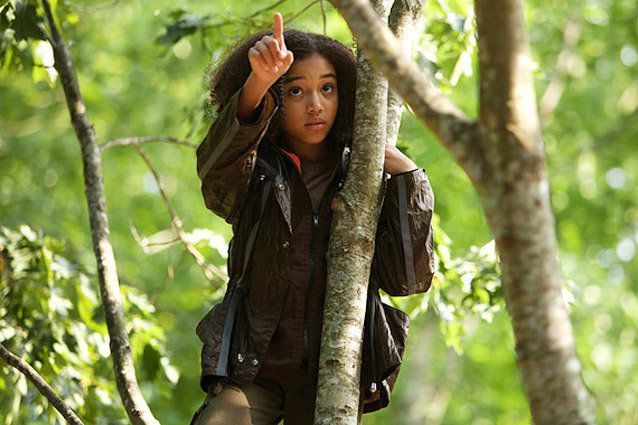
On Twitter, hateful comments towards the representation of Rue as a young black girl flooded the social platform. The racist audience mentioned opinions explaining their disappointment and an underlying disgust towards the portrayal of Rue in the film.

When I first read the news article compilation of the comments made, I couldn’t believe my eyes. The book had clear descriptions of Rue that hinted towards the race and color of her skin. From the description of her having “dark brown skin and eyes” and that agriculture district she comes from, it is easy to relate history with the connotative message Collins is trying to portray. Collins does a great job tackling relevant problems that plague society through her dystopian novel. From social hierarchy and the evergrowing wealth gap to hidden slavery, Collins is teaching an overarching lesson about the flaws in our government and authoritative figures through a hero’s journey and inner thoughts.

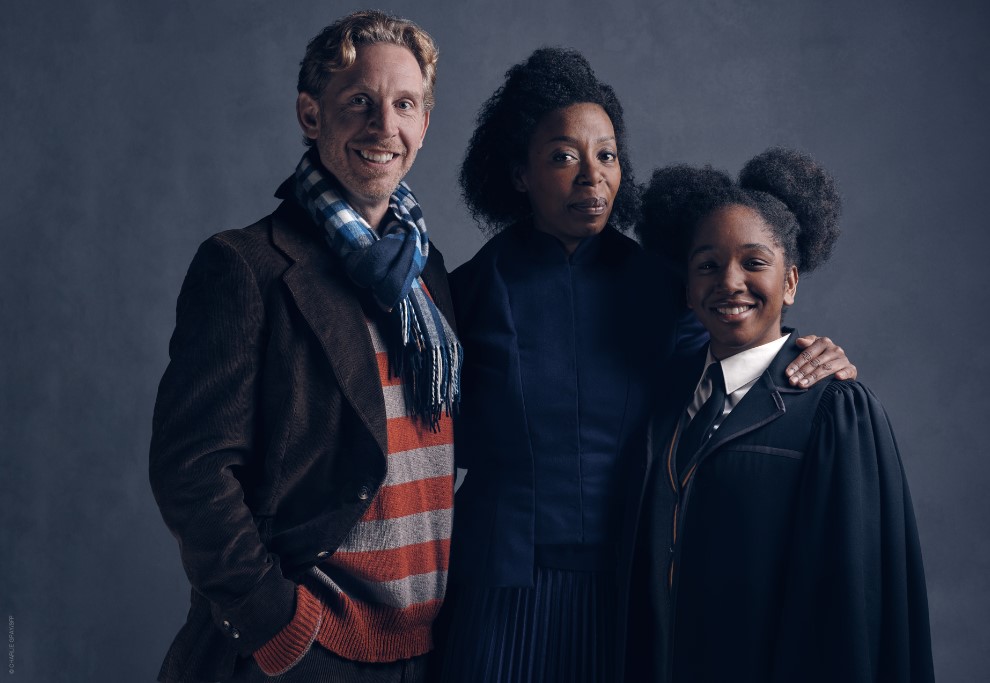
Book to film adaption will always continue to face criticism for casting certain individuals for the book’s roles. However, if race is the reason for this negative feedback towards a movie, then it is society that is in the wrong. The Harry Potter and the Cursed Child movie adaptation faced a similar problem.

Harry’s two best friends, Ron Weasley (Paul Thornley) and Hermione Granger (Noma Dumezweni) along with their daughter Rose Granger-Weasley (Cherrelle Skeete).

From Rowling herself, she “had a bunch of racists telling me that because Hermione ‘turned white’ – that is, lost colour from her face after a shock – that she must be a white woman, which I have a great deal of difficulty with. But [she] decided not to get too agitated about it and simply state quite firmly that Hermione can be a black woman with [her] absolute blessing and enthusiasm.” The anger from these “fans” is stemming from a racist undertone, not the desire for an accurate portrayal from book to film. Despite how progressive we claim our society to be, it is clear in times of controversy do we see the unjust perspectives that still exist to this day.

Hunger Games Cliche

Suzanne Collins’ “The Hunger Games,” begins the tale of Katniss Everdeen following the format of the hero’s journey, making it clear who the hero of our story is.

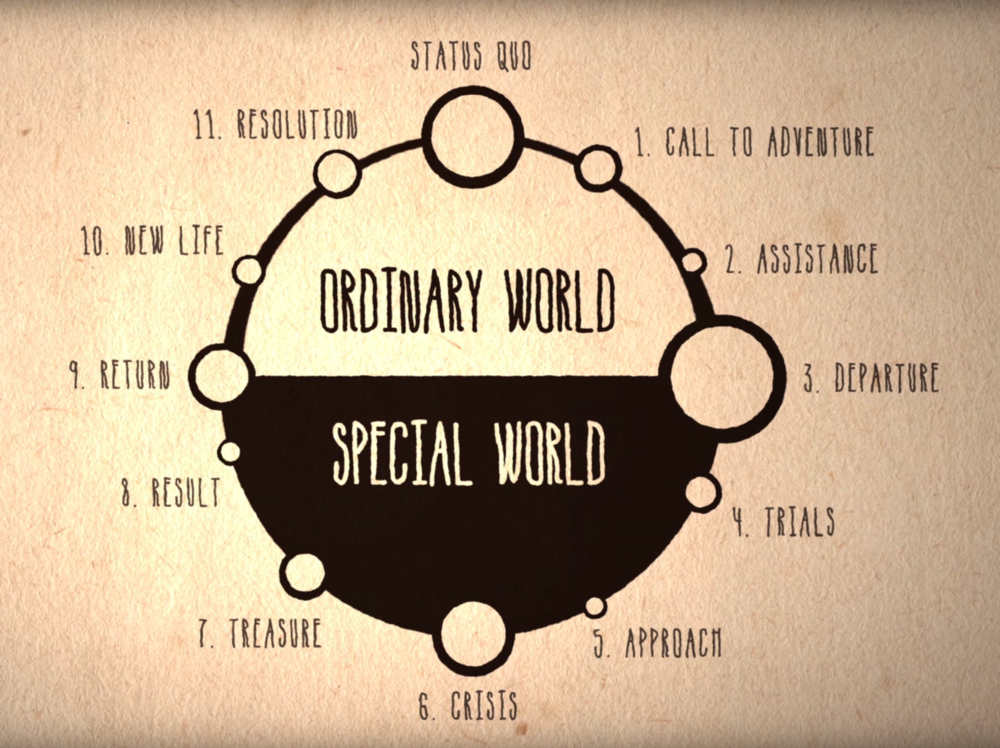
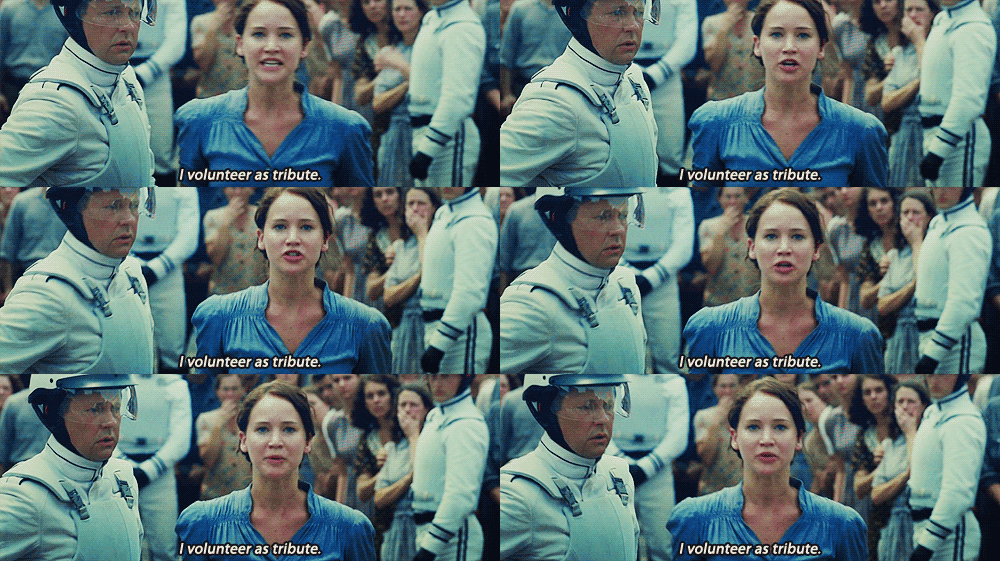
Her status quo is the first few chapters of the book, explaining the background and hierarchy of the districts. When the day of the Reaping comes, Katniss’s act of volunteering becomes her call to action, albeit is her sacrifice to save her sister, as opposed to an actual call. She receives assistance from the people of her own district through a three finger salute, and is given a Mockingjay pin, which becomes her symbol later on in the story. When her times comes to board the train to enter the Capitol, the scene marks her departure into the special world that marks the beginning of her journey to becoming a hero.

“The Hunger Games” is a uniquely interesting book that does a great job following the format of the hero’s journey. Depending on how closely you see the scenes of the book, different points of the story can stand in for the different points of the cycle. One could argue that Cinna and Haymitch is the assistance that Katniss receives and entering the arena is her departure to the special world. However, given the first six chapters, the current standing of what scene matches what point still stands.

Although it has been a while since the last time I read “The Hunger Games,” and it surprised me how easily I was able to fit the format of the cycle into the story. It almost makes me disappointed in the plot of “The Hunger Games,” because I remember it being such a popularized and seemingly revolution book. I would think that the plot would jump around at the points of the hero cycle to make it more interesting. Ever since the popularity of “The Hunger Games,” more novels continued to be published that focus on the dystopic, hierarchal world, such as books like “Divergent.”

The Importance of Citations

Chapter 13 in the craft of research emphasizes the importance of citation when making drafts, as well as different approaches one could take to ensuring the correct citation. Correctly referencing your sources are integral in keeping your arguments valid and strong, as well as providing tantamount support for your essay.

This week I would like to focus on citations and finding sources. In class, we have already learned about the trust Project and how reliable they are in upholding a standard to the truth to those affiliated with the project.

A fine example is my personal research presentation I had to do for my business 70 class. For my current event presentation about Sprint suing AT&T over 5G advertisement , it was crucial for me to find sources that were reliable, not only when providing my background information but also as research to predict the future outcome of the lawsuit.

In my presentation, I made sure to include many citations by mentioning the websites I obtained my information from as well as mentioning the author’s credentials. In fact, researching the authors actually helped with learning more about the topic because I was able to insight into the lawsuit through different perspectives.

Overall, for any research paper, I believe it is more important to focus on sources to create a well-rounded argument. instead of settling on a topic and searching for certain evidence to prove your point (which may skew source accountability). locating multiple sources to compare and contrast accuracy allows for an arguement that will have the best points of evidence.

The Beginning…

In “The Craft of Research” Chapter 16, Wayne C. Booth explains how to effectively use introductions and conclusions. The introduction is composed of a pattern that Booth calls, “Context + Problem + Response,” and setting the foundation of the introduction with “common ground.” This introduction is clearly effective in the examples made; however, I found that the introduction becomes bland insanely quick, especially when the same style is read consecutively.

Many of the introductions in “The Craft of Research” lack the attention-grabbing factor that I believe is integral in a successful introduction. I enjoy anecdotes that tell a personal and unique story that can put a special spin onto a piece of writing. Although the introduction provided by Booth uses questions to make it interesting, the purpose of the question as the context makes the questions lose the interesting factor that it could have had.

I agree that establishing common ground is important in an introduction as to not lose the reader’s attention in the first paragraph. Yet, there are many ways to make an introduction captivating that are not the mentioned methods in chapter 16.

You are Your Own Hero

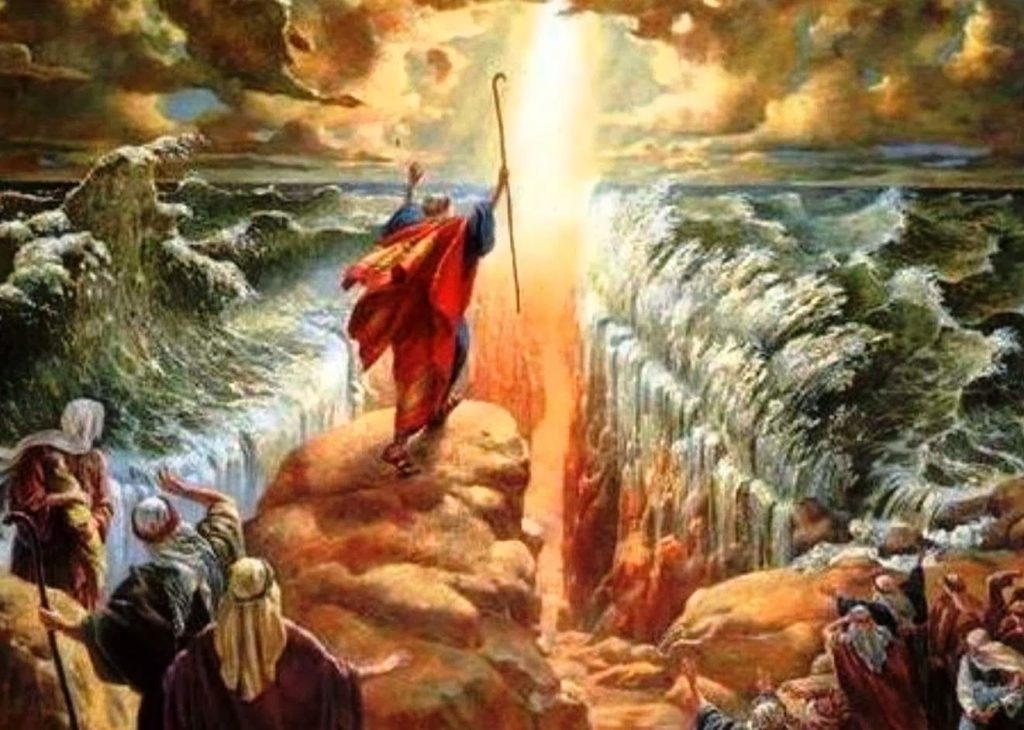
WWrinkler’s video, “What Makes a Hero” showcases the similarities in heroes throughout all mediums, whether it be books or movies. The video explains the cycle of a hero’s adventure and connecting the cycle to real life. The comparison opened my eyes to see this pattern in different types of media. Even relating back to my religion class, I see this cycle from the Bible in the story of Moses and his calling.

This definition of a hero by Wrinkler dives into the concept that everyone can be a hero. Art often mimics real life. I believe the mind sees the concept of the rising through challenges with a will to continue as an image of being a hero, and thus, the “hero myth” is born.

Throughout our past readings, we can see this hero cycle lived out in real life. Emma Gonzalez rose through the adversity that struck her high school. Yusra Mardini saved lives through fighting the cold waters. Each role model emerged through each obstacle with a new purpose and high understanding of life. Although I can definitely see the heroic merits that surround many of these extraordinary acts of bravery and perseverance, I cannot agree with the fact that everyday people are heroes because participate in “baseball tryouts” or “audition for a school play.”

There is value in seeing those acts as brave; however, I would not go as far as to call the individuals participating in them as heroes. They may be set on the path of becoming a hero, but they still have a while to go.

Shitty Firsts

Reading Anne Lamot’s “Shitty First Drafts” spoke wonders to me and my own personal conflict with not only writing, but with many aspects of my life in fact. At first glance, understanding the idea that even great authors “feel like [they] are pulling teeth” when writing” provided of a sense of assurance that I was not the only one in this struggle of forming masterpieces of literature. However, this lesson of multiple drafts seemed very obvious to me; after all, this concept is something that has been taught to me from the beginning of my academic education. Therefore, the point Lamot is trying to emphasize is the “word vomit” part of making first drafts, something I tend to avoid and neglect. It is important to simply pour out ideas that come to mind when writing to create a foundation full of potential.


“Every artist has thousands of bad drawings in them and the only way to get rid of them is to draw them out.”
-Chuck Jones

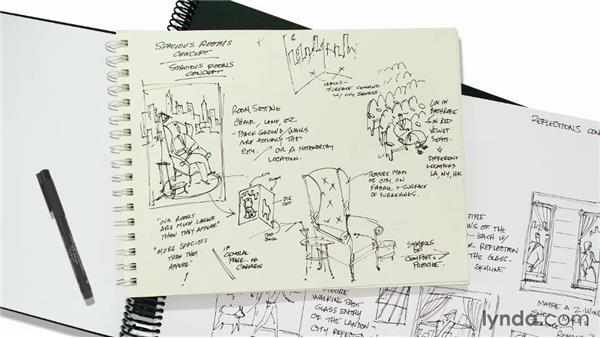
Reflecting, I realized that doing many things require a series of shitty firsts before anything. When in art, thumbnail sketches are essential to help artist visualize the overall composition and color scheme of a piece. In cooking and developing recipes, multiple failed attempts are bound to happen. Life itself is full of shitty firsts that need to be done before any real success begins to show itself.

In the end, it is what is learned from each horrible first draft that propels us to do better the next time. The significance that comes from messy drafts is that each one is one step closer to the final product in mind.

The Formula of Writing and Heros

Week 1 Response

“They Say

“They Say/ I Say” opens the idea of using templates within academic writing. The preface and the introduction itself even utilizes the format of a template to prove its point of increased creativity with the methods, including the summary of the benefits of writing models to contrasting it with the many well-known arguments against it (reflecting an “I say, they say” model). From the get-go, I was surprised by how much I was able to relate to the author’s comments. One particular sentence struck a chord within my experiences, from page xxii, on how “seasoned writers pick up these moves unconsciously through their reading.”

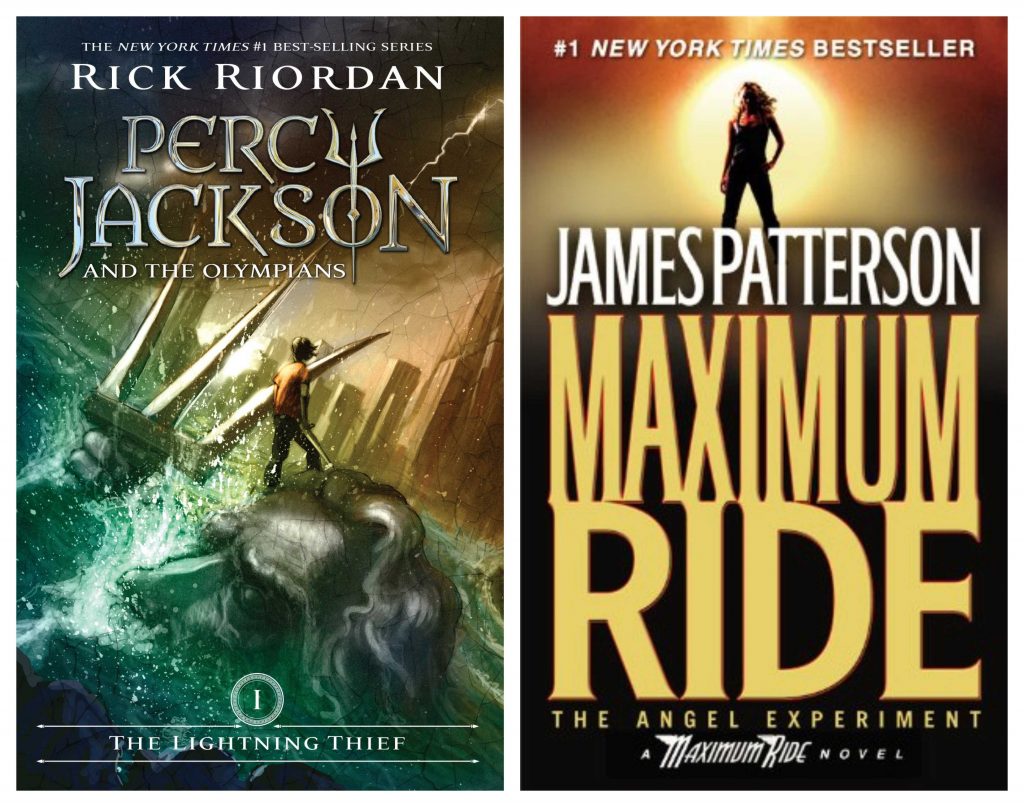
I reflected on my own style of writing when I was younger reading my beloved authors, Rick Riordan and James Patterson.

Both of these writers have similarly styled characters, all carrying the trait of using sarcastic humor. As I continued to delve into the story containing these characters, I noticed that in my process of creating fictitious characters for my own novels, each imaginative person began to closely resemble the heroes and villains of Riordan’s and Patterson’s books. This revelation is what Graff and Birkenstien is attempting to uncover in every person. However, it is difficult to say that this is a good thing. By making templates a habit, it can be difficult for writing pieces to break the mold and for writers to form unique writing styles. In fact, I find the act of relying on templates, although may be useful as guides, is a lazy person’s way of writing. Yes, personal analysis or thoughts may be unique, but using guides will limit how well your own viewpoints can transfer onto paper as words. Afterall, there isn’t a search bar that can find a specific fill-in-the-blank template that will fit with an argument you are trying to make in every essay situation.

“They Say/ I Say” highlights the formulaic nature of writing that allows for the organic thoughts to form naturally. Although this viewpoint merits good points, I find it hard to see any long term progress that can be made through such methods. At one point, this methodic nature idea is reflected in songwriting which reminds me of an interesting little number I stumbled upon on YouTube.

In fact, the idea that even songwriters follow templates to produce great hits makes me wonder what else in the world builds its foundation on modelling after others? Will anything in this world be unique anymore?