Research, the basis of any argument. It is impossible to make an educated stance on anything without having done some research into the subject at hand. This means, that in an academic setting, research is ubiquitous. This does not, however, mean that the research is good. My own personal research history is spotty, with many places that could be improved.
I think that the biggest problem with doing research is that it is all online. It is a rare occurrence that I go to the library and get physical books, so all my sources come from the internet. This makes it much less easy to tell if a source is valuable or reliable, as anyone can put anything on the internet and say it is truth. This is especially problematic when using wikipedia, which is almost always my first stop. As you can see below, the fact that anyone can edit wikipedia can mean that ridiculous pieces of information can be passed along as fact. This can be problematic, as you might imagine. 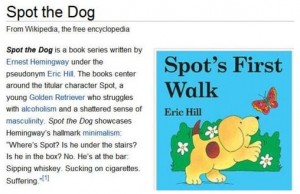
The next step in my research process is searching for websites that relate to my topic. This is an easy step, but I am always careful to make sure my sources are credible, as one time I failed a paper because of incorrect information. Ever since then, I have been extremely careful about my online sources.
For many papers, teachers require book sources, and this is where things get tricky. As I said earlier, I rarely ever go to the library and get physical books, so I usually turn to online books. However, it is rather difficult to get full online books or journals or periodicals without spending money, which I don’t do. I have to be careful that I understand the context of any online book I use, as I may only have access to a small portion of the book, and I would not want to misquote or misunderstand the text in the book. In William Badke’s article The Great Research Disaster, a student discusses his research stratagem, which is shockingly close to mine. It would be so easy for me to slide into the  errors that he makes with misquoting and filling in the blanks without double checking that that is what the article was about. However, since reading this article, I have been given an opportunity to asses my own research, and ensure that I stay on the right path. The most egregious error he makes involves quotes. He finds a quote he would like to use, but is unable to find the whole quote, just a fragment. Not to be dissuaded he presses forward and uses his own words to fill in the quote, but still attributes it to the author. This is absolutely unacceptable, and should be avoided at all costs. In summation, I must be more careful with my research projects so I do not fall into the traps that are so easy to trigger.
Nate Miller