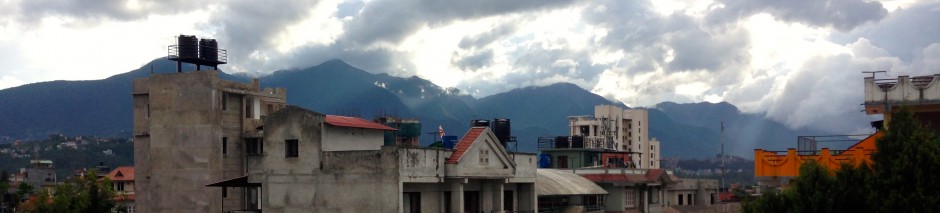
My lungs sting with unpolluted air, and my phone instantly connects to the Internet as I snuggle into my thick comforters. My siblings climb on top of me like the bugs that I don’t miss, and it’s so silent that I can hear my eyelashes rustle on the pillow. Home is warmly comforting. And yet when I close my eyes, I miss all the noise of Nepal that I just left behind.
It was difficult to leave, and as I’ve done with previous trips abroad, I postponed my reflective journaling because I did not want to mentally admit that I had left. Nonetheless, it has been a solid two months that I have been inching towards completion of this blog, and I am finally ready to share some delicious, rainy, and unexpected experiences.
Part 1: A New Routine
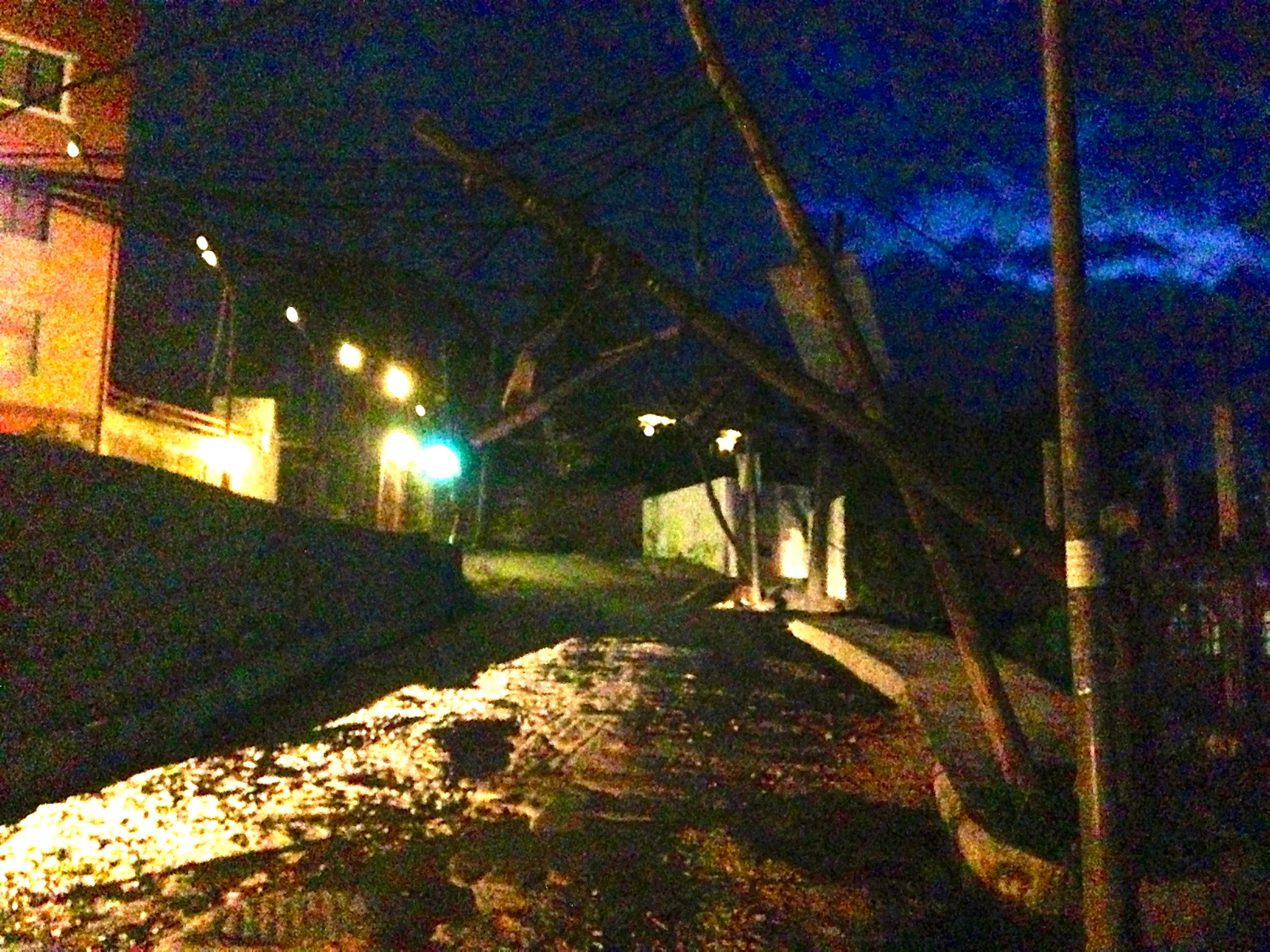
Death Road
My American colleague Lizzy and I arrived on a pretty cloudy day in Kathmandu and were immediately taken to Summit Hotel in the middle of freaking nowhere. Having spent 6 months in Delhi last year, I was fine with tight turns and strutting street dogs, but once Lizzy and I got to what we later called “Death Road,” we looked at each other in apprehension. Were we really trying to drive under a falling pole of electric wires? Yes.
It was only after seeing the hotel pool and having an absolutely delicious dinner that we realized we would be living in a thick, luxurious bubble in Kopundol.
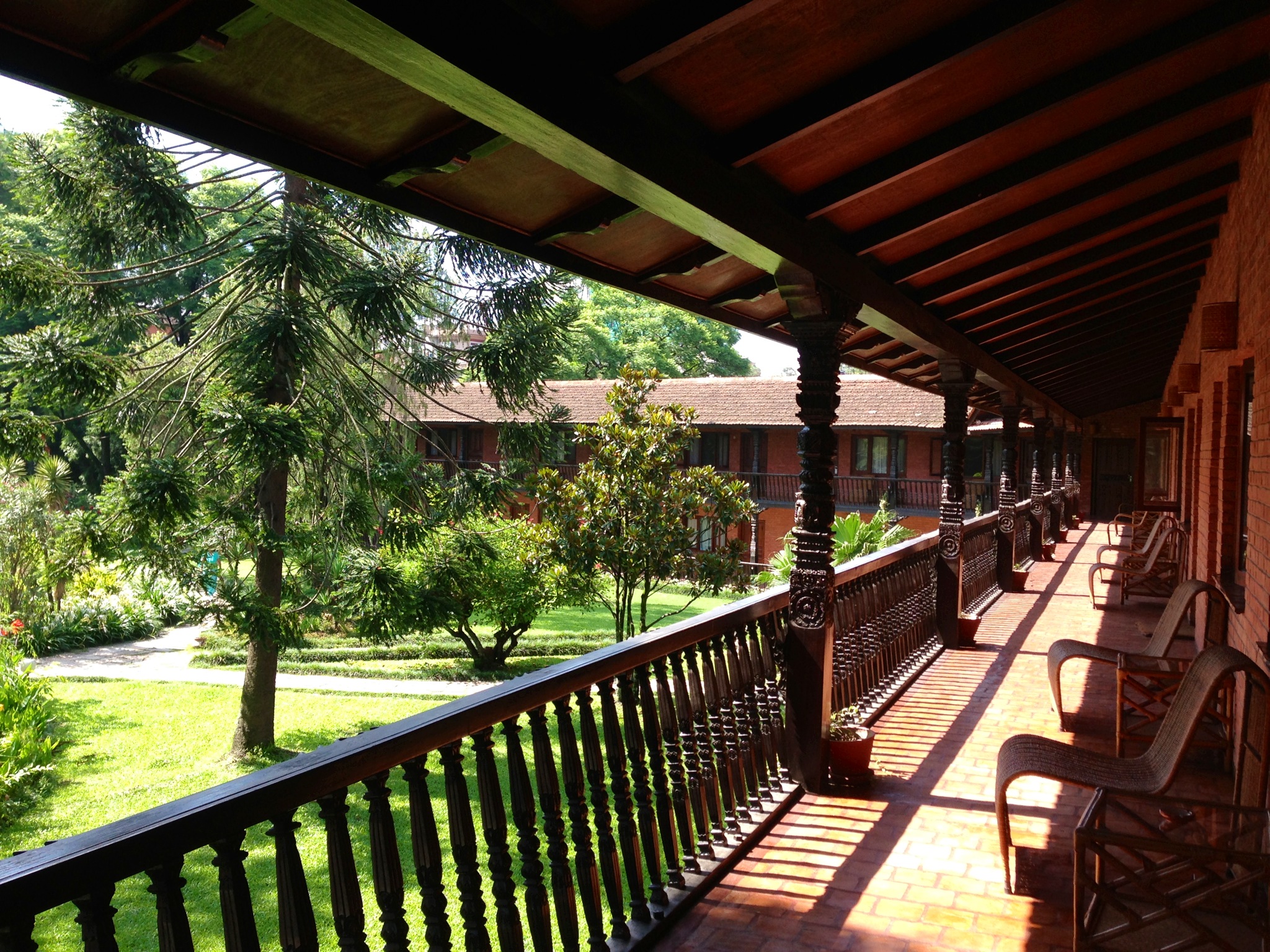
Summit Hotel
Work began immediately the next day. After coincidentally bumping into Dorothee (another American working for Equal Access), we took our first over-priced taxi to the office, which was only a 15-minute walk from the hotel, but a full-on shower if attempted in the rain. The people at the organization were welcoming, and Lizzy and I began our projects right away. While Lizzy (a techie) mainly resided on the 4th floor with the cool IT folk, I had the privilege of climbing and descending four flights of stairs regularly to attend meetings with various staff members.
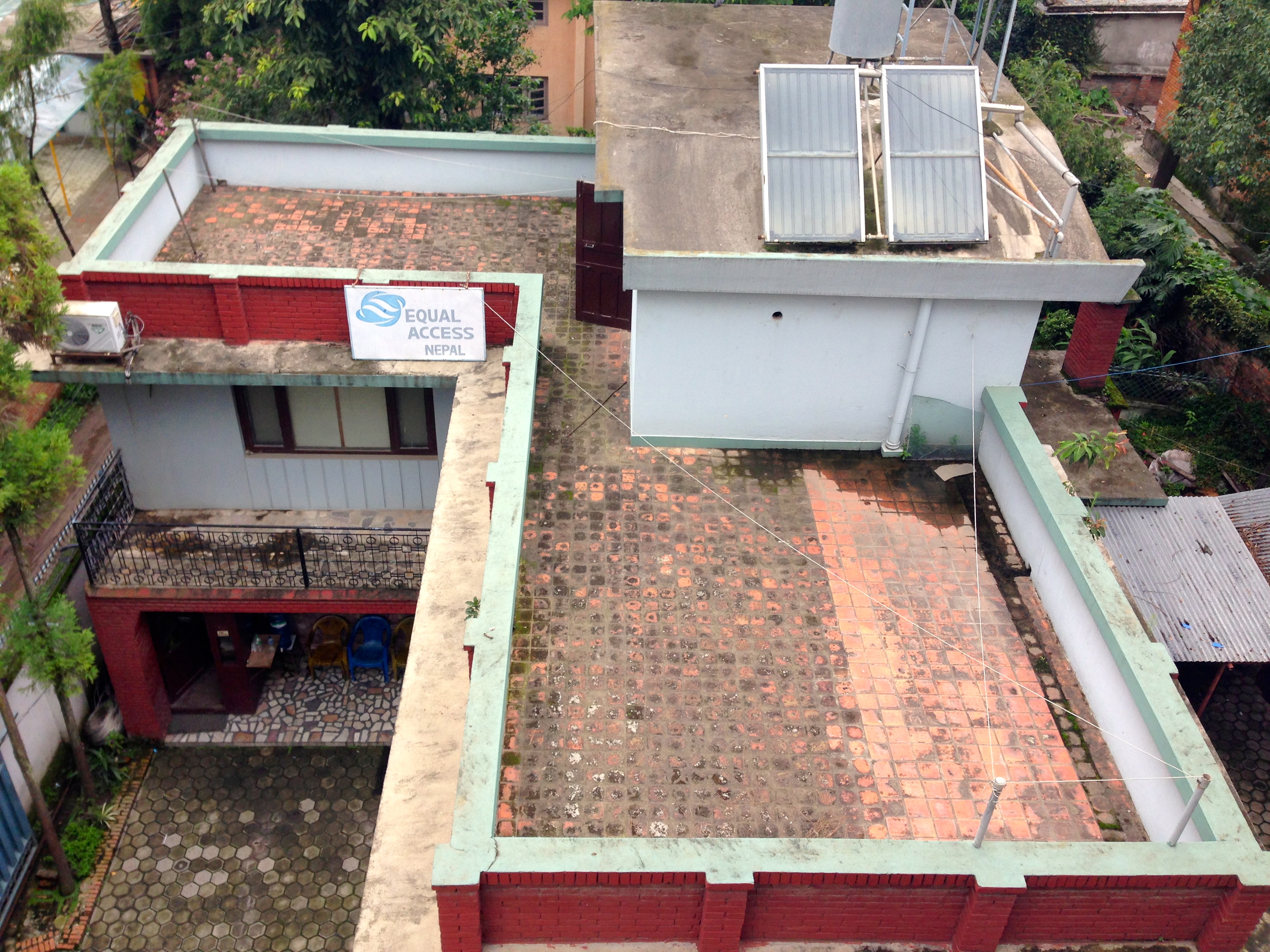
Equal Access Nepal
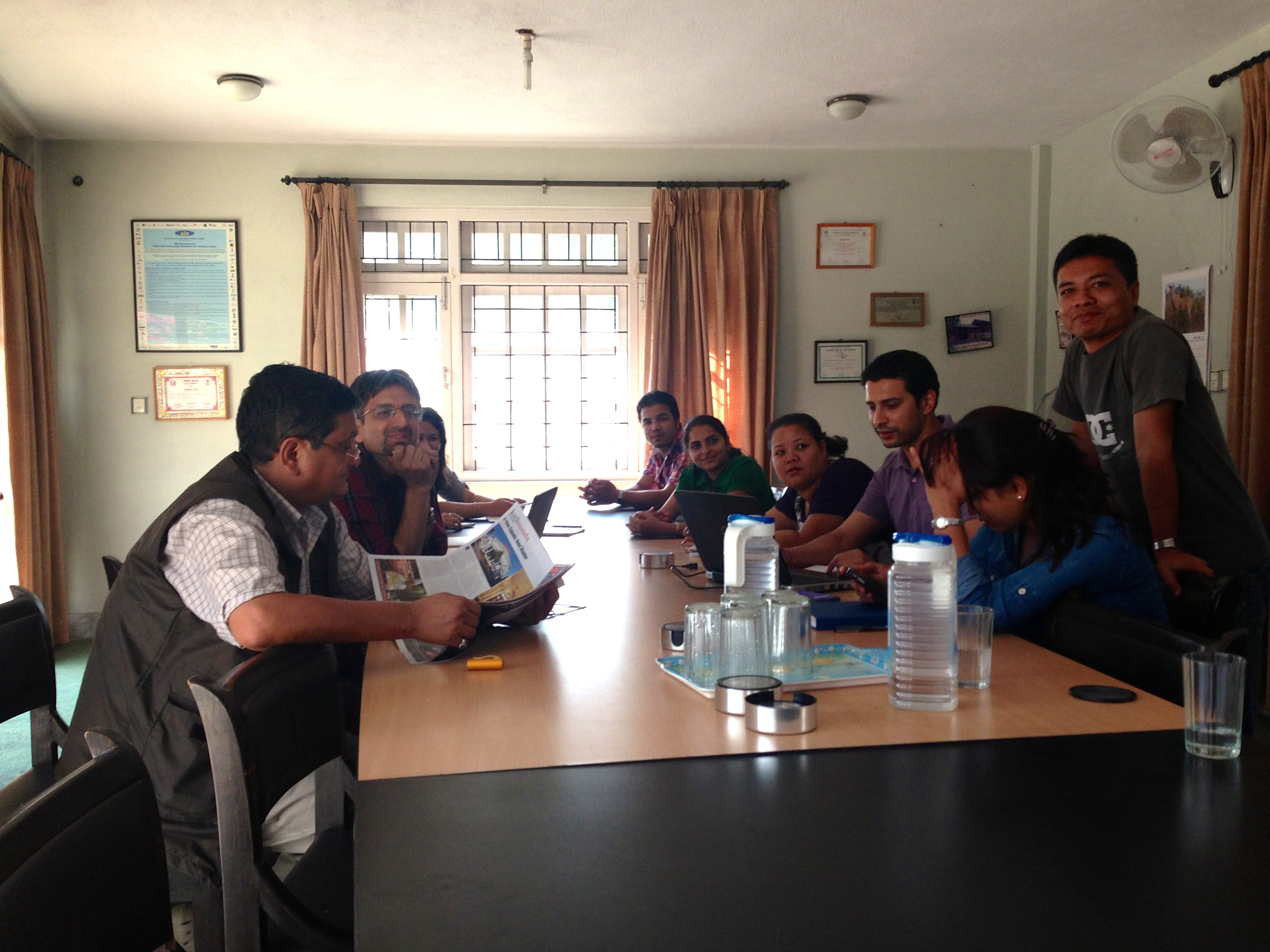
Meeting room
I particularly bonded with the creative youth team that produced one of the most popular radio programs in Nepal (Saathi Sanga Manka Kura) and with the IT team because, well, I sometimes like to pretend I can understand cool technology jargon.
The first few days of work were difficult because I became sleepy and hungry at random times of the day. And it was not because I was jet lagged! Rather, I was much too accustomed to the college lifestyle of napping and eating whenever I wanted. Now suddenly, I had to follow this thing called “routine,” one of the first warm welcomes to the real working world. Thus everyday, I longingly looked forward to 1 pm, when the IT people would pop into our room and say “ke khani?” (What do you want to eat?) in Nepali.
Now let me just say that food was a major reason I fell in love with Nepal. The food in Nepal is always in ample variety. You have India to the left and China to the right, so Nepal is squished between great naan and currys and thukpa noodles and chowmein when you want them.

Classic Nepali lunch
Additionally, you have Nepal’s own national dishes and Newari items, which my colleagues took me out to try frequently. Though I didn’t like the national Nepali dish of gundruk too much (it’s definitely a pungent and acquired taste), I did enjoy yomari, what looks like a fat dumpling with chocolate sauce inside! (*If you’re interested in my food experiences, ask me about the Nepali man who, after studying in Chicago, opened a Chicago-themed restaurant in Nepal.)
Momos top the list of my all-time favorite foods, and as they are a specialty in Nepal, I vowed to have momos everyday that I was in-country unless absolutely impossible. You think I’m joking? These are just some… C momos. Open momos. Green momos. Regular veg momos.
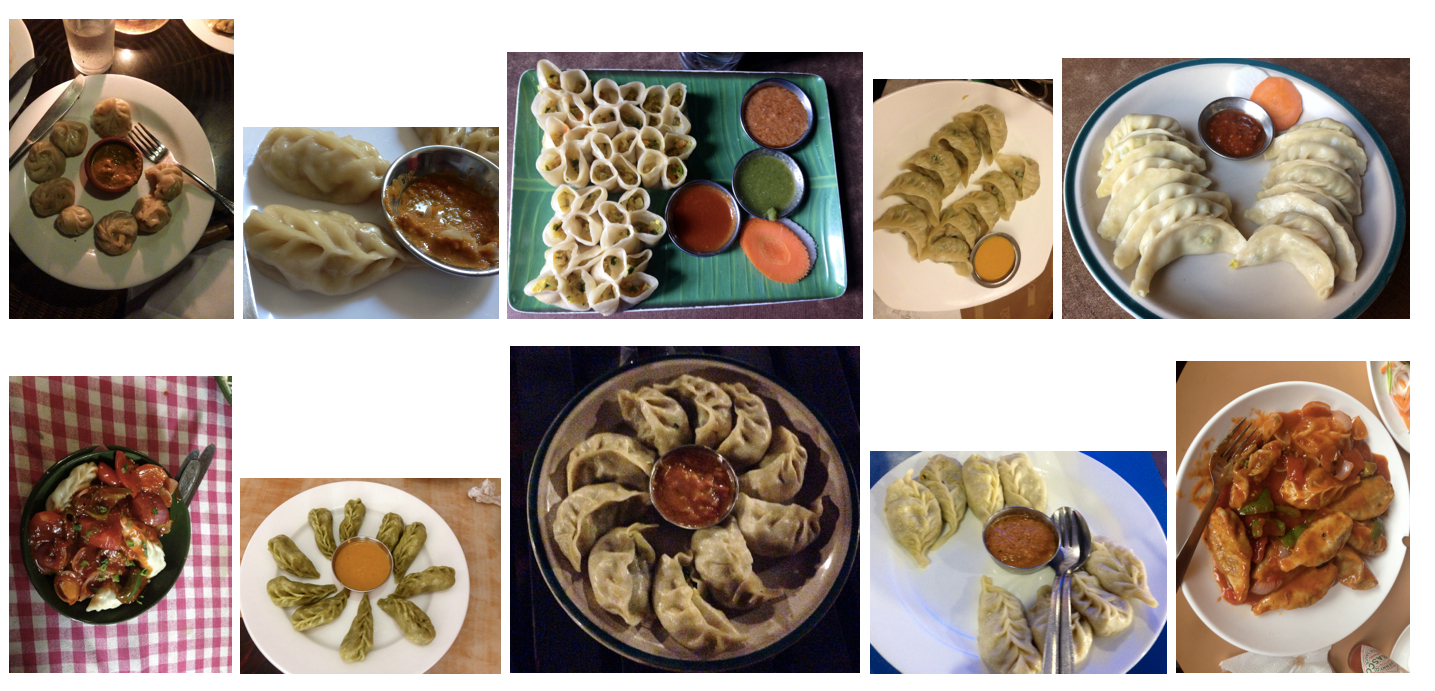
MOMOS
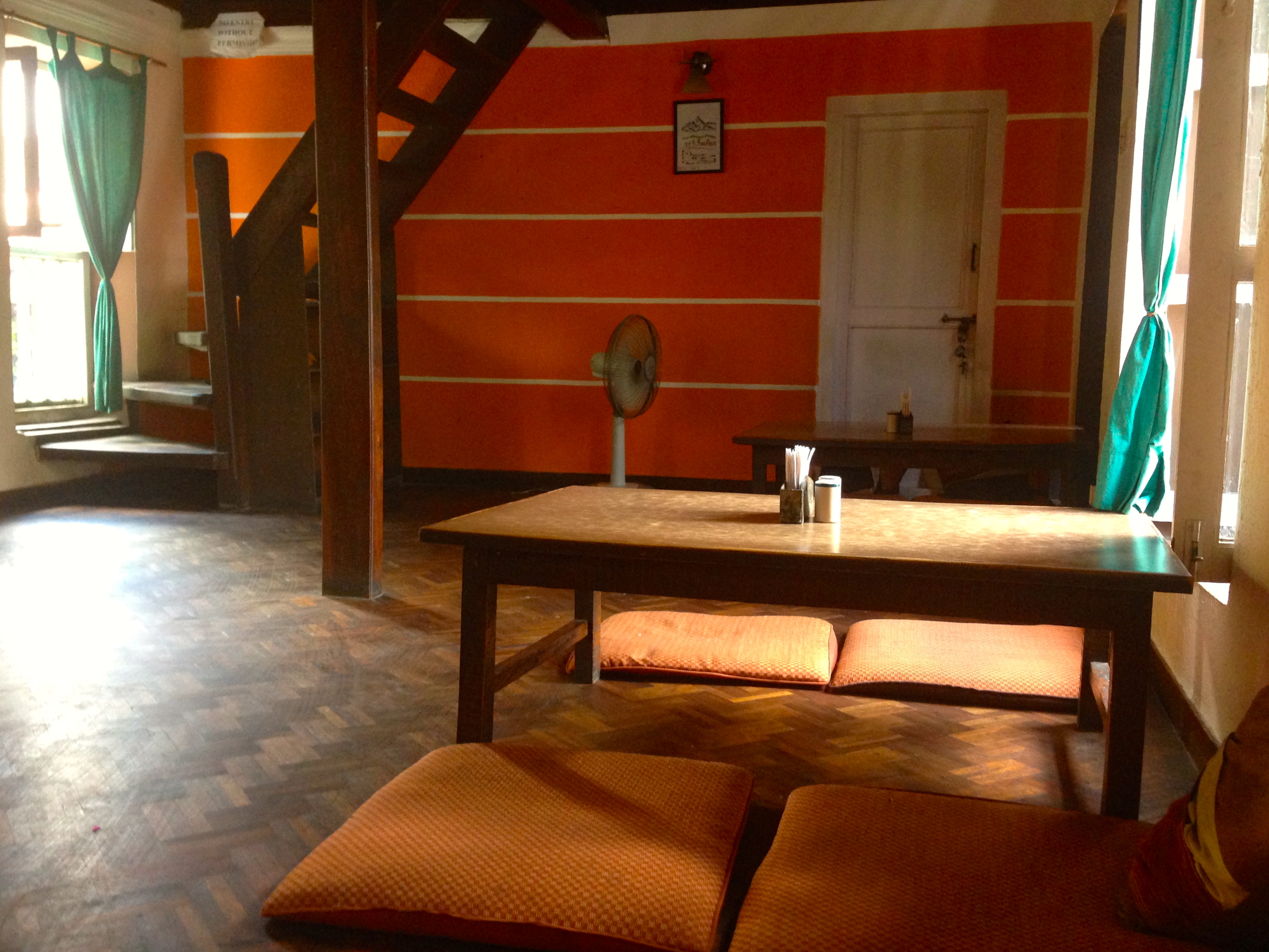
Eating Nepali style with cushions and low-lying tables
Food was always a comfort in Nepal, because with it came some of the most interesting conversations of my life. Sitting on the floor at a low-lying table and waiting for food to be served for abnormally long periods of time, I often found that lunches and dinners were the best parts of the day because of the people they brought together.
Part 2: The Weekends and the Weather
The weekends were our chance to do fun, touristy things. So naturally, Dorothee, Lizzy, and I visited Swayambhunath and Pashupatinath, the two most famous Buddhist and Hindu landmarks in Nepal, respectively.
Located on top of a large mountain, Swayambhu overlooks the beautiful city of Kathmandu and houses the shrine with the famous Buddhist eyes, which are found on t-shirts and keychains all over Nepal. Monkeys are as plentiful as humans at this temple, and when we ate breakfast at Swayambhu, I had a very close encounter with one primate that snatched away my boiled egg yolk. Nonetheless, if there were any one word to describe Swayambhu, it would be “peaceful.” The shrine and its beautiful surroundings was one of the most serene places I’ve ever visited.
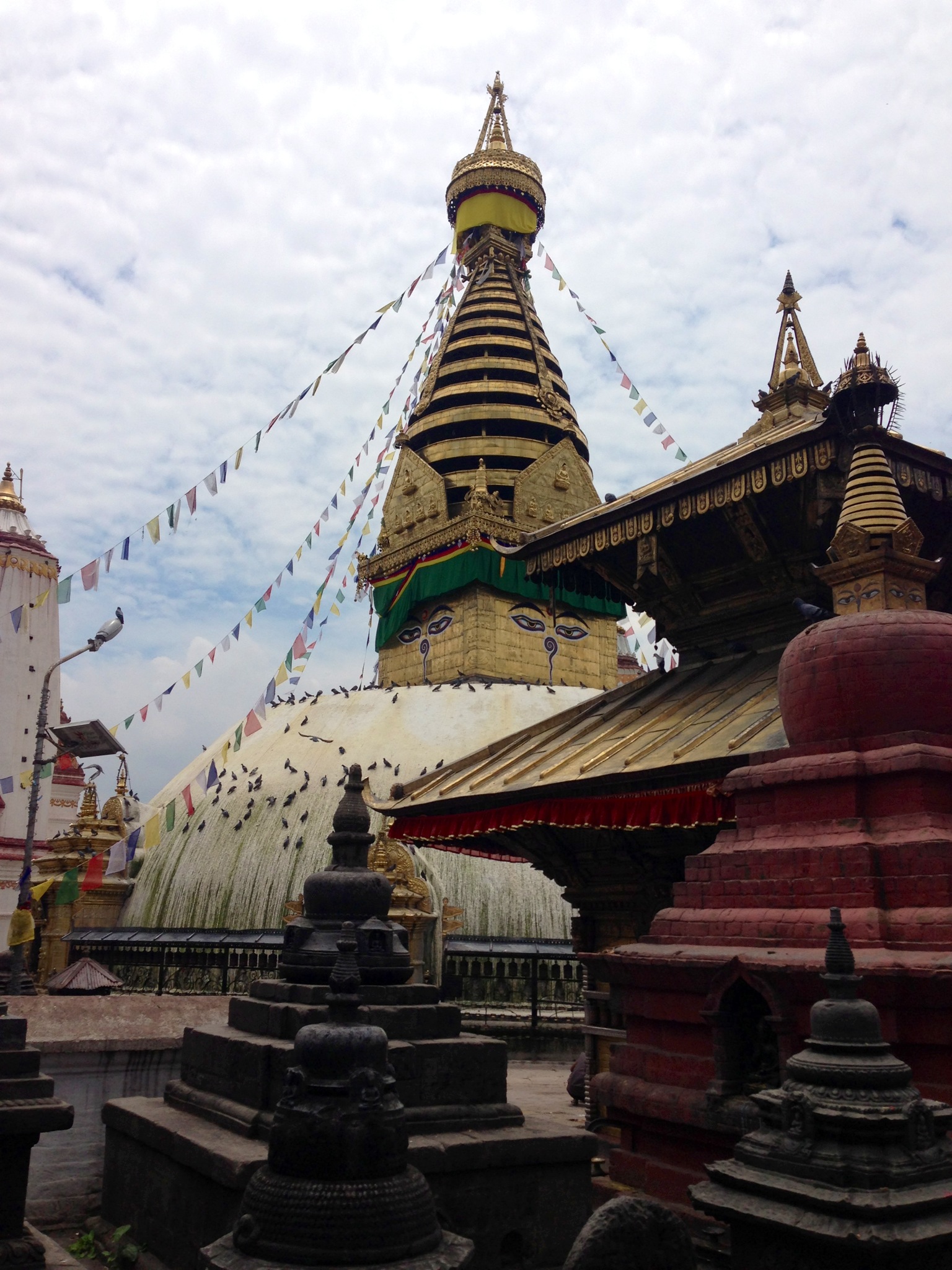
Swayambhunath
That same day, the three of us travelled to Pashupatinath. As non-hindus are not allowed to enter the temple, the group split up and visited different portions of the landmark. Being of Indian descent, I was allowed to enter the sacred space, while my colleagues paid 1000 Nepali rupees (approximately $10, which can buy you more than 10 Nepali lunches) to tour the outside of the temple. I was pretty shocked by this price disparity. Apparently, the high price for foreigners keeps Pashupatinath free for the regular worshippers.
Now here is a great place to sidetrack about the weather in Kathmandu. Unlike California rain, which is relatively predictable with the morning’s gloomy clouds, Kathmandu’s rain is as predictable as its internet connection– as in, not predictable at all. When I would leave Summit Hotel in Kathmandu’s heat and humidity at 9 am, it seemed almost foolish to bring a light sweater, forget an umbrella. But just hours later, it would be pouring buckets, and I would be sitting by the window at work, freezing and cursing myself for not bringing that umbrella.
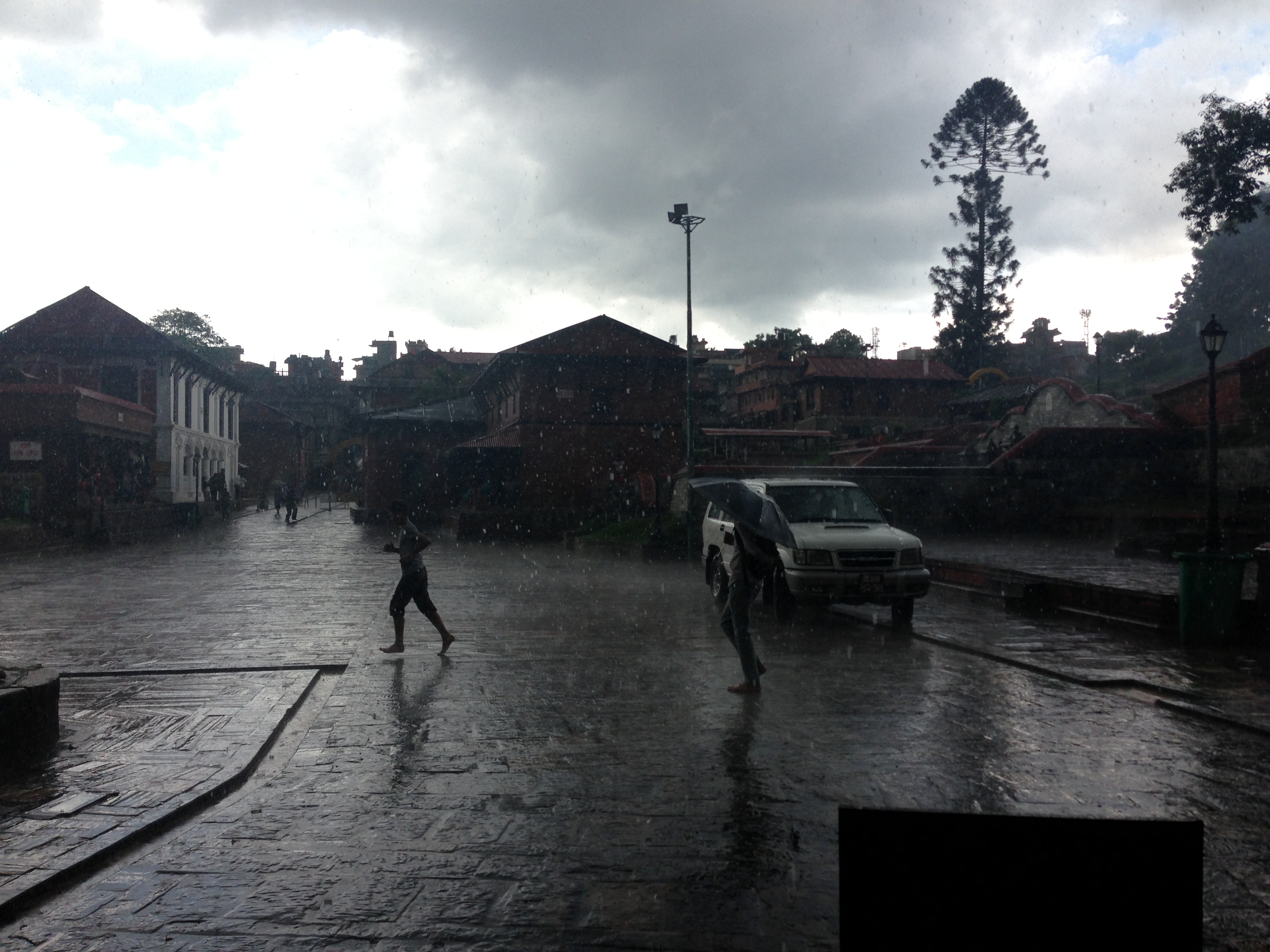
Pashupatinath
At Pashupatinath, this is exactly what happened, expect 10 times more intense. With barely any signal on my phone, I attempted to relocate Dorothee and Lizzy in the pouring rain. I was in a completely different part of the temple, but I had with me a “tour-guide” (really an un-hired man who decides to follow you and “explain the temple” to you even if you insist you can tour the temple yourself) who apparently knew where Dorothee and Lizzy were taking shelter. (How did he know this?)
With no umbrella and no full sleeves, I held my slippers in hand and ran barefoot through puddles (more traction) all around the grounds, laughing alongside other runners also making their way out of the temple in Kathmandu’s rain. Many visitors took shelter under small roofs in these tiny bungalows, and sure enough, after trudging through the flood, I found Dorothee and Lizzy in a small cave-like covering. I attempted to join them inside, but almost 8 people were already squished in the space of a tiny cubicle. (*If you’re interested in my experiences at the temple, ask me about the religious pandits who smoked weed in caves for 6 days of the week in the reenactment of Lord Shiva.) I looked down at myself, and honestly there was not a single dry patch on my body that would make me pretend I needed shelter. It was as though I had taken a shower with my clothes on. (My phone survived because I had wrapped it in some plastic I had found on the floor.) There was no drying off anytime soon, so might as well make the most of the experience, right?
I toured the rest of the temple in the rain and puddles with the “help” of two tour-guides, who while leaving found their pockets a decent amount heavier.
Part 3: Work and Field Visits
If you’ve managed to reach Part 3 of this longish blog, you are probably wondering what exactly I’m doing in Nepal in the first place.
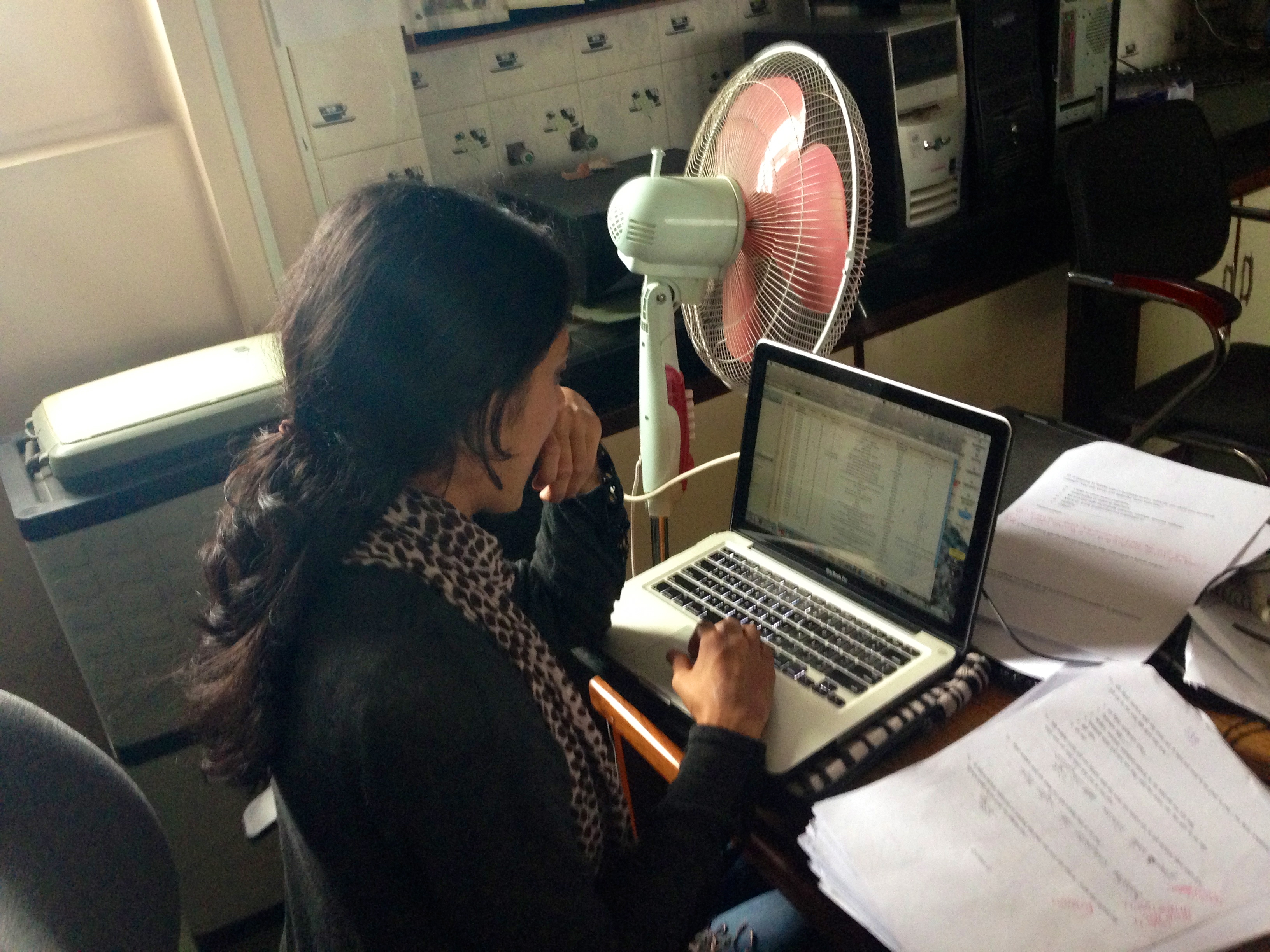
Working in the Kathmandu office
As part of the Global Social Benefit Fellowship at Santa Clara University, I am working for 9 months with an international organization, Equal Access, in business development. Equal Access was started by a social entrepreneur who wanted to deliver critically needed information through media and direct community engagement, and I was able to witness how such life-changing radio programs are created and disseminated.
While I worked in the main Kathmandu office for most of the month, I also accompanied other colleagues on field visits to several urban and rural parts of Nepal, including Nepalgunj, Dharan, and Biratnagar. Each place had a unique story, but of my four weeks in Nepal, it was two hours in rural Singiya that most distinctly impacted my world perspective.
Closest to the city of Itahari, Singiya was an hour and a half by taxi on one of the bumpiest and most underdeveloped roads in Nepal. I thought after such a journey my 2 Nepali colleagues, Lizzy, and I might rest or freshen up (*Don’t ask me about my upset-stomach experiences), but as soon as the vehicle stopped on the dirt road next to a few huts, the entire community welcomed us with “Namastes” and organized chairs in a circle for us to begin talking. The radio listeners in this village had been waiting for us for several hours (while our taxi arrived late, broke down, then needed petrol), and from the moment we arrived, we were admired.
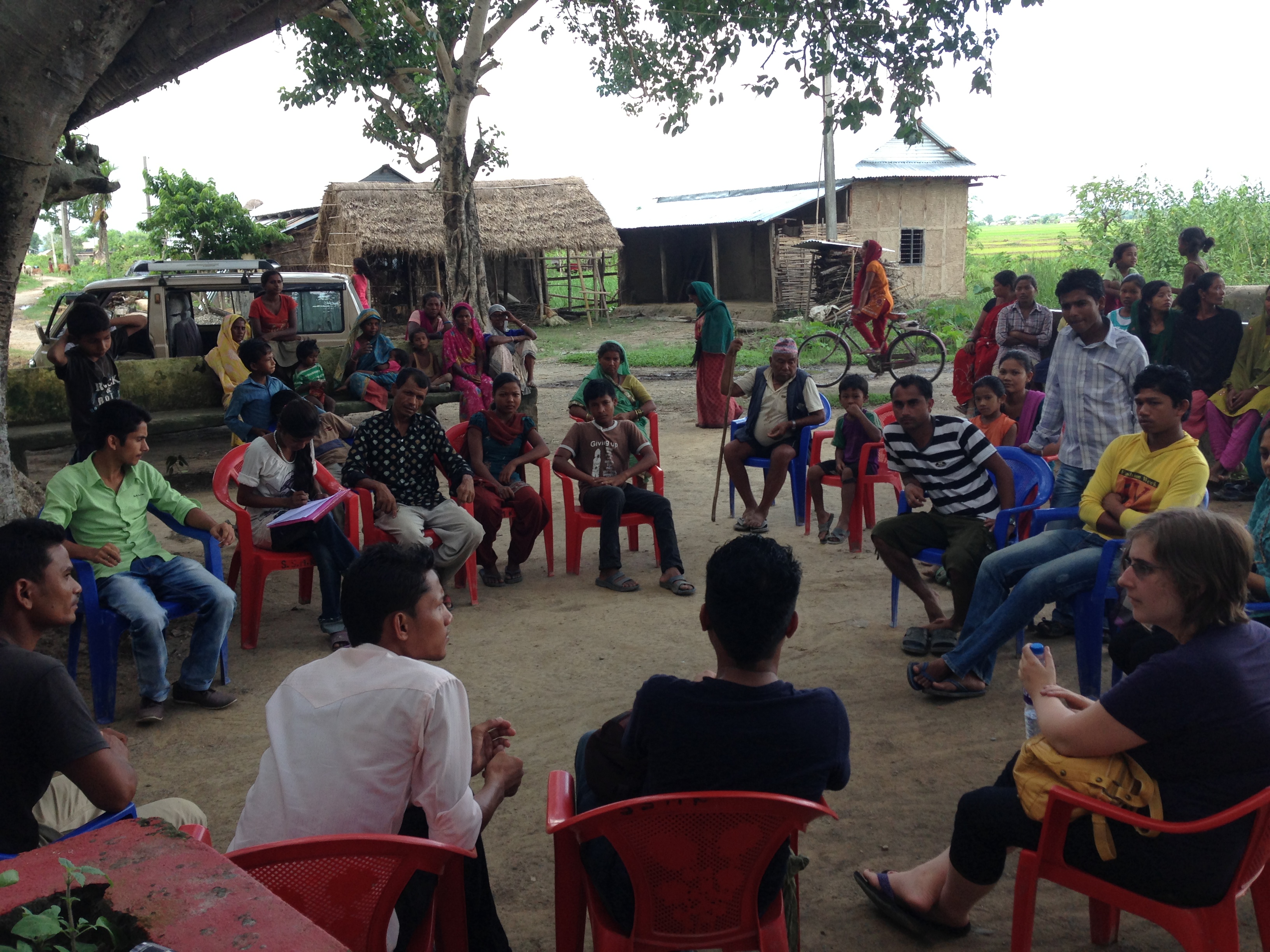
Question and answer session with many Nepali men
Being American was a big deal, but at the same time it was just a concept. To the rural villagers, many of whom had never even been to the closest city of Itahari, America was like a distant celebrity. You can idolize a celebrity, maybe know key facts about his or her life, but unless you’ve spent time with the person, you realize that you don’t really know him or her at all. America was a concept that people recognized, but their knowledge of America was as superficial as my understanding of Brad Pitt.
Sitting in a circle, Lizzy and I started our formal question and answer session with primarily the men of the village (our two Nepali colleagues translating back and forth for us).
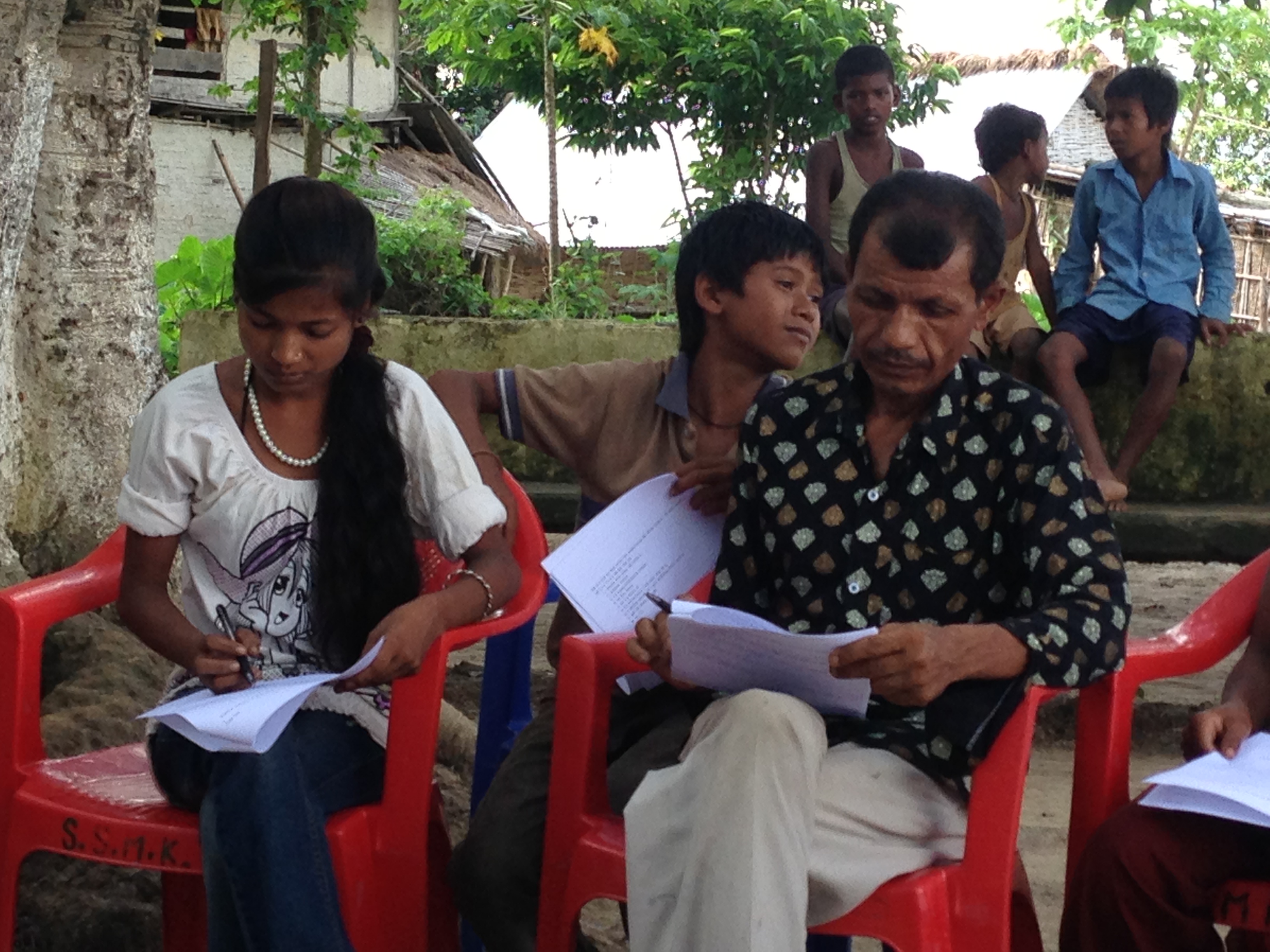
Others participating in the survey
Afterward while the group filled out surveys, I walked to the back of the gathering where almost all of the women were standing. I wanted to speak with them alone because as I had learned while visiting rural villages in India, women alone often say very different things than women around men. After introducing myself and where I was from (because it sometimes confused people that I could look Indian but be American), I asked the women if they had any questions for me. They were shy and polite for a few minutes, then they asked me if I was married. This was the first thing they wanted to ask? Pretty personal question. I replied with a slight giggle. “Oh no, not yet.” (Dot dot dot…) Astonished, they inquired how old I was. In their village, to be 21 and unmarried was unusual, so I was re-asked this question a few more times by other women who wanted to hear for themselves.
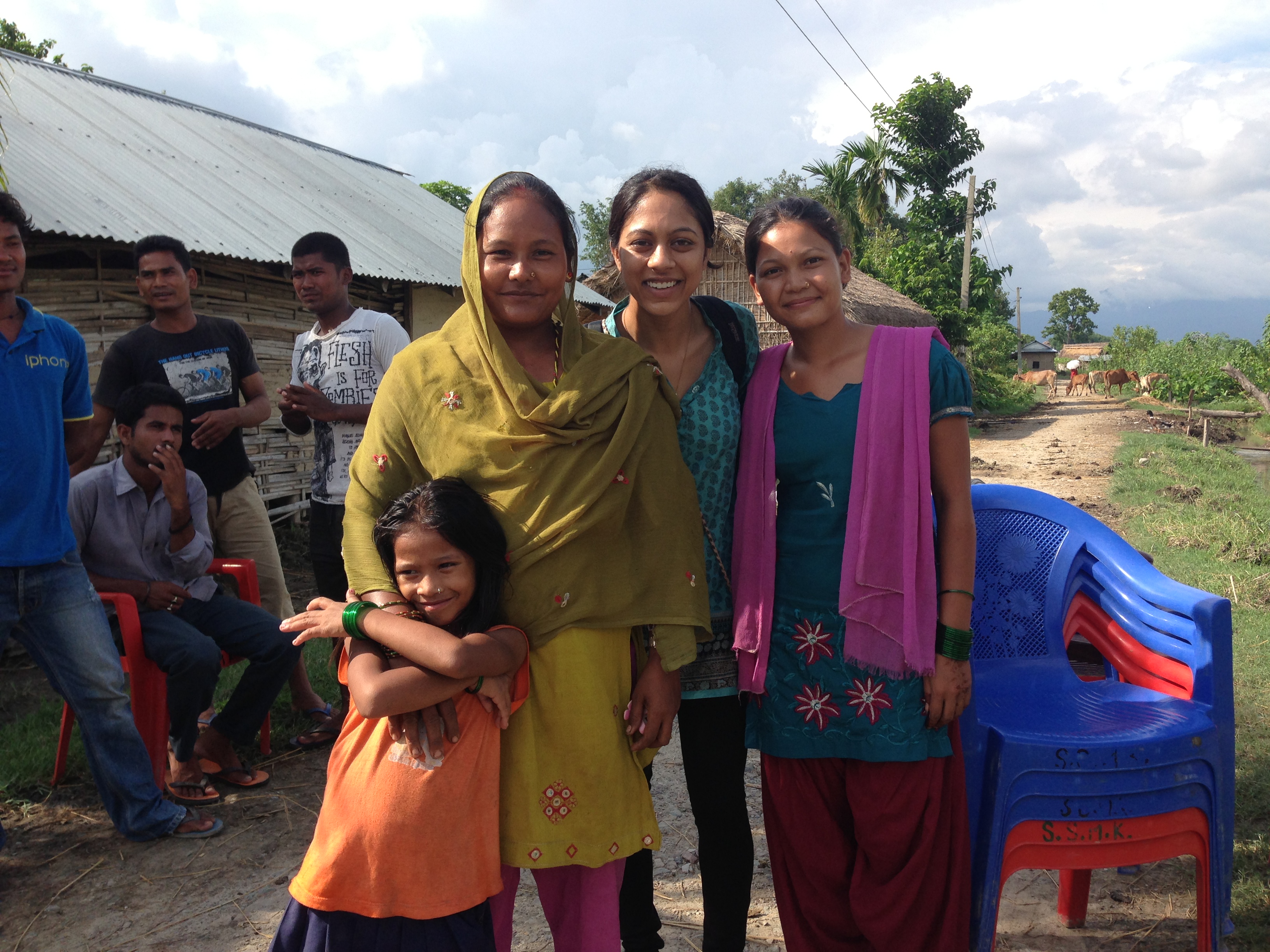
Women of Singiya
I turned the question around and asked when they were married. One woman in a green salvar was vocal while the others hid behind their ghunghats. In Nepali, she told me she was married at 20 because her parents saw her as a liability and did not want to keep her anymore. I could not understand every detail she described, but beneath her subdued tears, I saw the helplessness she harbored. When I asked about her husband, she told me that he went abroad to find work and regularly sent home money and that he visited every 2 to 3… years.
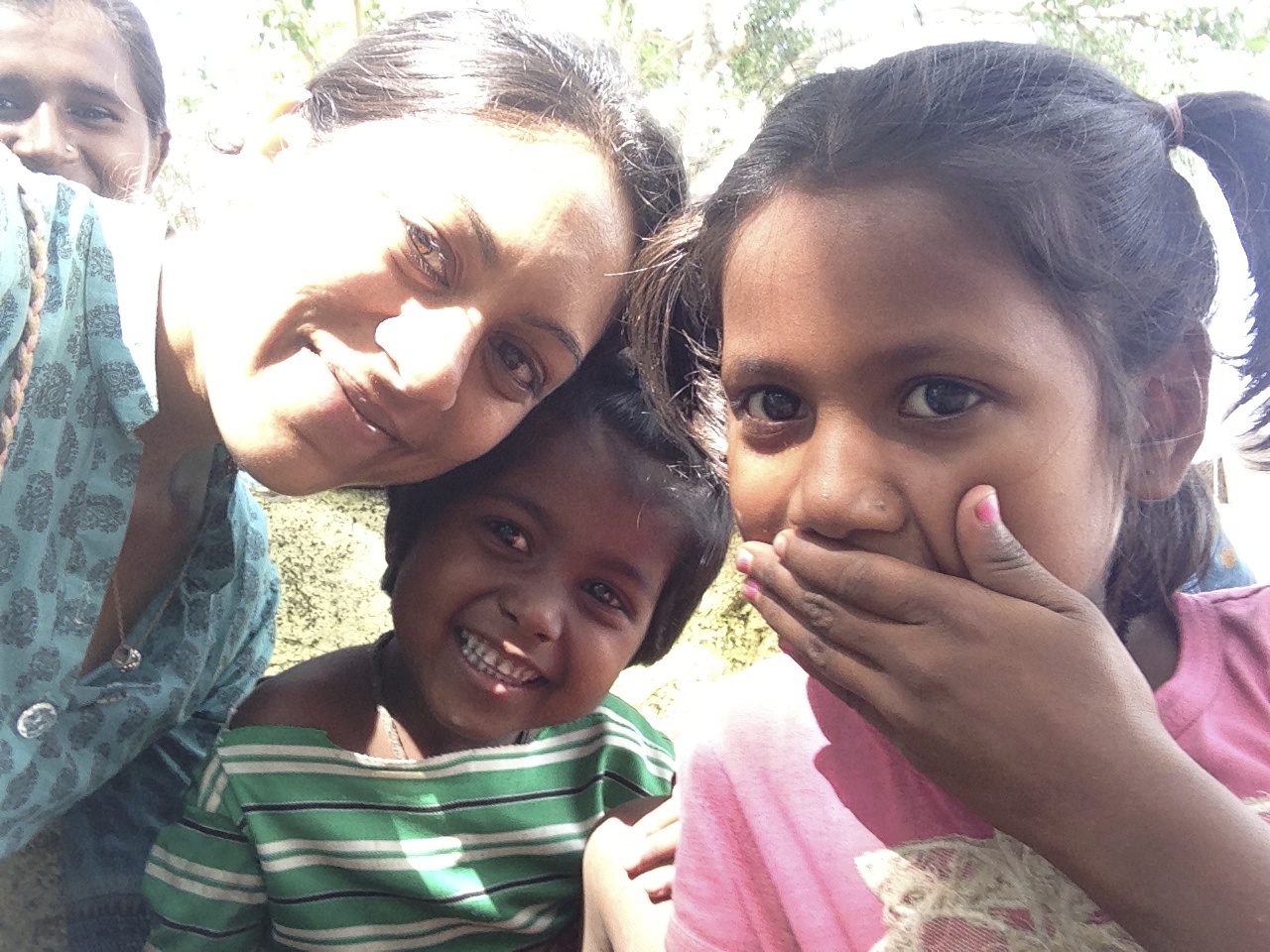
Had to put a picture of cute kids
I didn’t have any experience of loneliness that could even come close to hers. But apparently, other women in the village did. Almost all of them had the same story. The husbands were missing. Confused, I looked back at the men taking the survey several feet away, and sure enough, almost all of them were young enough to be the children of these women. Everyday, the women farmed on the field (just enough to feed their broken families) and depended on the money sent by their husbands to pay for expensive school fees and health-related costs.
The trend of the missing husbands bothered me for more than the overwhelming emotional responses I witnessed. Economically, I saw that Nepal’s men were not investing in Nepal. To feed their families, men went abroad for work, reducing Nepal’s capacity to develop and making it likely that the next generation of Nepali men would face the same unemployment dilemmas.
The nature of this continuous cycle made me think vigorously. On our taxi ride back to Itahari, I wanted to pinpoint a specific problem, but the problems of Nepal, be it education, employment, or health, or X were more interrelated than I had realized. Without education, employment opportunities were difficult to find, but without employment, people had no chance to pay for an education. Every issue was tangled with more challenges.
I hadn’t thought that it would be in the field, when I was closest to the poor’s problems, that I would understand just how grand and large-scale the challenges of the developing world are. But this incredible scope of potential energized me professionally and personally.
Often I have found that people perceive social work as an entirely different sector than business, and I used to do the same. Yet in Nepal, there were so many exciting ways “to create value,” what many would argue is the function of business, be it for-profit or non-profit. The integration of the two ideas, social work and business, fascinated me, and in that moment, I began to understand the significance of what I’d been telling people I’d been doing for the past 4 months: “social entrepreneurship.” The challenges of the developing world are opportunities to many individuals, and the integration of the two fields, I believe, will bring solutions and growth to a beautiful country like Nepal much faster.
Thank you. If you found the *s (or anything else) interesting, please feel free to contact Niki at n4agrawal@scu.edu.
Posted October 2013