Paved Paradise: The Deforestation Process

I can remember the morning we were assigned this essay as I felt very tired from a long night before and was unmotivated to do or talk about generally anything. When we got in groups to discuss ideas, I tried to think of the most generic topics that would have a lot of information to work with and did not require that much thought like “global warming is bad”. It was Olivia who had first brought up the topic of deforestation and she seemed like she knew every aspect of it. So naturally we went with her idea since none of us could really think of a solid alternative. I think many of the other students can agree when I say that raising awareness for our topic through social media and presentations was out of my comfort zone and I would have much rather preferred to give the minimal effort required by only writing an essay. Looking back on this however, I realize this was probably the best for me because in the future I am going to have to learn how to communicate with others and how to motivate them to reach a goal or task. To spread awareness for our topic and presentation, we made a post on Instagram describing the issue, the negative effects it has on all of us, and when and where people interested in it can get informed.

We gave the presentation on Wednesday the 8th in the Sanfilippo lounge to a jam-packed crowd of at least ten people! Anyways, our presentation talked about the repercussions of deforestation, what the main causes were for the process (spoiler alert: It’s cow shit), and what we can do as a community to stop the movement or to slow it down by conserving on things like furniture, shampoo, and chocolate. Since I am a resident of Sanfilippo Hall, I knew many of the people who attended the event, mostly because I was the one who invited them. When I brought up the event, they seemed intrigued at first because many of them hadn’t really thought about deforestation that much.
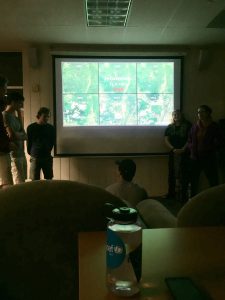
After the presentation, I did not feel like it had gotten anyone running out of their seats to find the nearest rainforest agency they could help, but I do think it made them more aware of the issue and how their daily actions can impact it. Palm oil was one of the major reasons trees were being cut down and everyone was surprised to find out that it was used in many things they use daily, like their shampoo and in chocolate. I believe it made them think about maybe not getting that hot chocolate that next day or something to that extent. None of the audience members have informed me about becoming involved in organizations like the World Rainforest Fund nor has the dorm begun planning events to talk about the rainforests and raise awareness about them. But if I am able to get at least one person to become active in the fight or at least cut back on their use of the products gained from deforestation, I will be satisfied.
 

Rick Grimes: The Christ Figure of The Walking Dead

The main protagonist of AMC’s hit show “The Walking Dead”, former Atlanta sheriff Rick Grimes, is someone who I would consider to be a christ figure. By this, I do not necessarily mean he is perfect and without sin like our Lord and Savior, but he is the closest character on the show to this image. We defined a christ figure as a messianic person destined to save humanity. Someone with strong morals, is pure, and is willing to sacrifice himself for the greater good. In the show, Grimes is the leader of a group of survivors who have gone through the few peaks and many valleys of a zombie apocalypse together. While his ultimate goal might not be to find a cure and save all humanity, he has made it clear that he will do whatever it takes to find a safe haven for his group and family and will never leave a member behind. He always factors morality into his decision making process. Whether it is negotiating the trade of resources between his group and another, or what to do with a prisoner from a rebel group, Rick always tries to find the morally right choice and execute it. As far as sacrifices go, Rick is willing to risk it all to help or find members of his group. When the neighborhood complex they were living in becomes infested with zombies, Rick decides to try and lure the horde away from the house the group is held up in so that they can find a route to escape. The zombie apocalypse does not present the easiest moral decisions, but Rick Grimes is willing to do whatever is right in order to protect his group.

Why Sir Gawain is Not a Hero

Sir Gawain and the Green Knight is a thrilling tale full of deception and triumph, but I don’t exactly think Gawain fits the mold of a hero that our class has made. Our definition we ended up deciding on was “A hero is someone who puts him/herself in harm’s way for the benefit of others because it’s the right thing to do (not for personal glory). A hero does something to inspire. A hero will not be afraid to walk on the path less traveled and will bring about change irrespective of the circumstances.” On the surface, it seems like Gawain fulfills this throughout his journey. He volunteers to take King Arthur’s spot when they first encounter the Green Knight and is willing to meet his fate, much to the dismay of Camelot. For me, that’s as far as his heroism goes. For starters, he tries to cheat the Green Knight’s game by decapitating him so he can’t strike back. A great message to send to our kids; when the going gets tough, find the easiest loophole and get out of any consequences. On his journey to find the Green Knight, he comes to the castle of a kind lord who is willing to give him a place to stay, a charitable action. How does Gawain return this generous favor? By getting in bed with his wife multiple times and hides the fact from him. I couldn’t really say these acts are inspiring nor can I say that banging his wife is putting himself in harm’s way for the benefit of others.

Douglas Gantenbein and Why He is Stupid

As I was slowly descending into madness and trying to find the bleach bottle my roommate and I have for our laundry while I was finishing the final draft of my essay on Sunday night, I began to wonder if I could have chosen an easier article to argue about. This is how I stumbled upon Douglas Gantenbein’s article “Smoke and Mirrors”, a three page report of steaming shit that makes you think “God this guy is an asshole.”

Gantenbein’s objective is to prove to the audience that firefighters are not heroes. I know right. Yeah these selfish bastards go breaking through burning buildings like an arsonous Kool-Aid man just to get a good laugh out of it. One of Douglas’s brilliant claims is that firefighting isn’t that dangerous. He says that since only about four hundred firefighters die every year, their jobs aren’t that risky and therefore they should not be deemed heroes. Oh yeah I agree, running through carbon monoxide rooms to help people in danger while a house/building is slowly collapsing on you is not life threatening at all and is actually quite a fun experience. For Christ sake the guy even says pizza delivery drivers have a more dangerous job than firefighters. His most infuriating claim however was that firefighters are just adrenalin junkies who only do their job just for the thrill of the action. Seriously check this man into a mental hospital ASAP. Sure some of them enjoy the rush they get when they’re on a call, but they did not sign up for the job just so that they can get their quick fix. These people have a desire to protect their community and they are willing to sacrifice their lives to save others. Someone please lock Douglas Gantenbein up immediately.

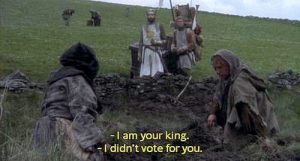
“I Didn’t Vote For You”-The Analysis of King Arthur’s Journey in “Monty Python and the Holy Grail”

King Arthur, perhaps the most renowned knight in history. The noble king who ruled over all the Britains and feared nothing, except flying killer bunnies. The 1975 classic “Monty Python and the Holy Grail” retells the story of King Arthur and his legendary Knights of the Round Table but with a comedic twist. Arthur starts out alone as the only knight, only accompanied by his trusty sidekick (and horse galloping noise maker guy) Patsy to search for worthy knights to join him on his quest for the Holy Grail. He represents his community because he is Arthur, King of the Britains, even if the citizens don’t know who a Britain is or if they didn’t vote for Arthur to be king.

A learning process for Arthur along his journey comes when he encounters a castle of Frenchmen. As the French taunt and bully the knights, Arthur must thinkof a way to out smart them and gain access to the castle. They construct a giant wooden rabbit and deliver it to the French as a gift (like Troy), but once inside the castle the knights will spring out of the rabbit and defeat them. Even though the plan doesn’t work, Arthur gains some valuable knowledge from his defeat.

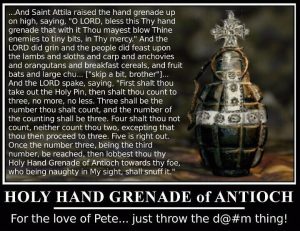
The best example of Arthur being able to rely on his own physical and moral courage is when he realizes he can only defeat his greatest enemy, a flying killer bunny, with the help of the Holy Spirit. Instead of being enlightened through prayer, Arthur is blessed with something even greater, the Holy Hand Grenade. He pullethed the pin and counted to three before heaving the grenade towards the bunny and dispatching his foe.

Although quirky, this movie is able to follow a knight’s journey perfectly while also breathing new life into the Legend of King Arthur.

Erik the Norwegian

As the story of Matt from Minnesoda is finally being told in Claradise, he is not the first to make the journey from the Land of 10,000 Lakes to the Valley of Silicon. This is the story of Erik the Norwegian.

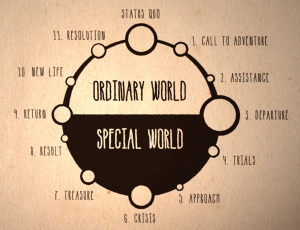
As far back as Erik could remember, he loved to play some puck. He was a large boy whose “Knuckle puck” shot was feared across the Twin Cities. He loved to sled down the big hill in Duluth, and his mother would have a nice cup of hot cocoa waiting for him inside. In the summer when he couldn’t shoot clap bombs or snipe the twine, Erik would fish for bass, hit up the local DQ, and go tubing at his cabin up north. Whenever he would play the NHL video game with his buds, he always thought the San Jose Sharks had a neat logo, so naturally he chose to come to Santa Clara. Unsure his journey, Erik’s dad Clark reassured him he had the strength to do it, as he reminded him that he came from a long line of powerful lumberjacks. His first few days in Claradise were brutal as there was no rink or skiing lodge for miles. He approached these challenges by buying rollerblades so he could still grind and work on his craft. His crisis came when he discovered most Californians don’t listen to Prince or that they order a “soda” with their burger and not a pop. However, Erik was able to find his treasure, the club hockey team. As a result, he was able to enjoy a bit of his old life while also learning new things from his California pals. After returning to his homeland after his freshman year, when asked by his mates if he liked California, he responded with a resounding “You betcha, bro”.

Week 2 Blog

For this week’s blog, I read Anne Lamott’s Shitty First Drafts. Perhaps the most relatable quote I have ever heard about writing came from the article when Lamott says “‘It’s not like you don’t have a choice, because you do– you can either type or kill yourself.'” 

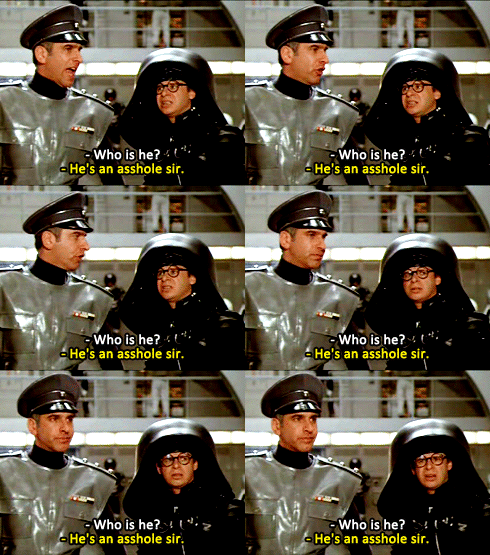
I can relate to this quote, as well as the meme, because I can recall many long, tiring, and brutal evenings/mornings staying up to finish what appears to be a hopeless paper instead of getting some much deserved Z’s. And it’s not until 2am that I begin to realize what the main point of this article is: It’s the first draft, it’s supposed to be shitty. You are not trying to hit a home run with your first draft, that’s the reason why you’ll be running on coffee or energy drinks the next day. In the first draft, you are supposed to get all your thoughts and reasonings down just so you can get a good idea of where you want to go with your writing. It’s a way to alleviate all your stress about the topic and just let the words flow, you can leave the nitpicking for the second and third drafts. My favorite part of the article was when she said all authors struggle through the same problem. For me when I’m writing, it’d be enjoyable to think about great authors such as J.R.R. Tolkien or Mark Twain sitting in their bed at 2am with their Doritos questioning their life choices just as I do on those lonely nights.

Blog 1

Week 1 Response

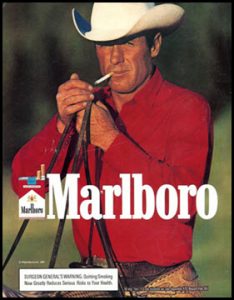
A reoccurring theme that I found inDouglas Holt and Craig J. Thompson’s article “Man-of-Action Heroes: The Pursuit of Heroic Masculinity in Everyday Consumption” was that the ideology of heroic masculinity is being threatened in today’s modern American society. The article talks about symbols like the cowboy, the adventurer, or the hunter who should be idolized by men for their “rugged individualism, an adventurous spirit, risk-taking, displays of physical prowess, and most of all, a high degree of personal autonomy.” While having these qualities is not necessarily wrong, they can create an identity crisis inside of a man, stuck between a standard society has set for them or the image they have for themselves. This part of the article reminded me of another symbol which set dangerous standards for American men: The Marlboro Man.


The Marlboro Man was a figure used in Marlboro’s advertising campaigns for their cigarettes from 1954 to 1999. Like the previously mentioned figures, The Marlboro Man was meant to symbolize the “rough-n-tough” look and encouraged men to be adventurous like him. Unfortunately for millions of Americans, this advertisement was wildly successful and cigarette smoking started to become the new norm across the country. The hazardous standard for men to live up to set by the Marlboro Man led to thousands of deaths in America from lung cancer (including The Marlboro Man pictured). In conclusion, there has been and still are many false gods that American men are supposed to worship in our society and although not all are entirely bad to follow, American men are better off making their own image.