In America, soccer has barely been able to keep up with the other popular professional sports that this country has to offer. Hell, ten years ago if someone heard you were a soccer player, your name would become synonymous with the terms “pansy” and “field fairy”. Soccer’s popularity gained in the 90s was slowly dying and the sport’s presence in America was drifting into oblivion. Now, as of the past five or so years, soccer is one of the most popular sports in the country. The national team’s coach being fired is front page news and millions of people cried out in anger when they failed to qualify for the upcoming World Cup in Russia. Today, there are more kids playing soccer than there are playing basketball in America and it will soon catch baseball. The recent success of soccer in America in my opinion can be attributed to the most recent World Cups and the achievements of the men and women’s national teams in this event. In 2014, the men’s team finished with a record of 1-2-1 in Brazil and were eliminated in the round of 16. These stats might not sound impressive, but they team went above and beyond expectations and even gave the eventual champions Germany some fits. Their success brought in an estimated 26.5 million American viewers and viewership for all sixty-four matches was up thirty-nine percent from the 2010 World Cup. The women’s team proved to be much more successful in the 2015 World Cup in Canada as they defeated their longtime rival Japan to win the tournament. More Americans tuned in to watch the championship game than the NBA Finals that year, showing that soccer had finally arrived in the United States and is here to stay.
THIS BLOG POST IS RELATIVELY SPOILER FREE AND DOES NOT REVEAL ANY MAJOR PLOT POINTS, YOU’RE WELCOME.
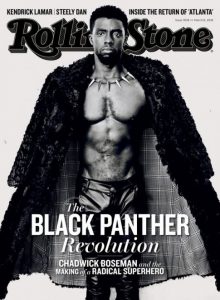
Over the long holiday weekend, I got the chance to see the newest blockbuster to hit the big screen, “Black Panther”. The movie had already gained critical acclaim prior to its release and being an avid fan of the Marvel Cinematic Universe, I had to see where it would stand with the likes of Captain America and Iron Man. After seeing the movie, I can attest to its greatness, but it goes beyond that of its action and storytelling. Out of the seventeen movies the company has produced, “Black Panther” is the first Marvel film to feature a black character as the star of the show. The film was also able to give an accurate representation of African culture and did not fall into the trap of whitewashing as other Marvel films had previously done (that’s you Doctor Strange). The messages the film conveyed were powerful and relevant in today’s society, as it dealt with issues of racism and diplomacy. The main villain Killmonger’s plan is to take control of all of Wakanda’s advanced weapons and give them to the black people across the world so that they will rise up against those who have oppressed them throughout history (the whites). Its an important topic to discuss as T’Challa stresses to Killmonger that violence cannot solve this problem, it’ll only allow it to persist. The strongest message of the film comes during T’Challa’s meeting with the UN. With rising political tensions among nations and threats of isolationism, the Wakandan king delivers a powerful quote that is relevant in today’s society: “Wise people build bridges, foolish people build barriers.”
Through his various films during the decade, Clint Eastwood captivated the American people with his gritty and macho performances. He influenced the idea of what a man should be like with his characters Blondie and Schaffer. The former is one of his most recognized roles from the 1966 film “The Good, the Bad, and the Ugly.” Set in the Wild West, Blondie is a professional gunslinger trying to find a stolen treasure. His journey is filled with shootouts and fragile alliances, culminating with a classic Mexican standoff for the buried treasure. This role helped popularize the idea of a rough and tough man. Blondie is not the friendliest man and is no stranger to fistfights or duels. He made this type of life seem exciting and rewarding and promoted the lifestyle to its intended masculine demographic. Another of his famous roles of the 60s was as Lieutenant Schaffer in the film “Where Eagles Dare.” Schaffer is an American spy apart of a team sent to infiltrate one of Hitler’s main command centers, the Eagle’s Nest, a castle in Austria during World War II. This character was another talented gunslinger and who had trouble listening to authority. It’s an action-packed role filled with explosions and cursing, which made a man cheer and imitate in reverence. It also invoked a sense of patriotism in men at the time, as the film was released during the peak of the Cold War with the Soviets. Eastwood’s heroic performances throughout the decade inspired American men to live a grittier and fast-paced life as his characters did.
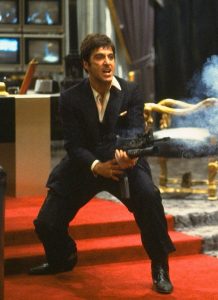
As we began to discuss the topic of antihero in literature and in pop culture this week, there was only one man I could think of that tops that charts of guys you hate to love to root for, my little friend Tony Montana. In class, we identified antiheroes as people who are great sinners and are reckless and doomed. In 1983’s “Scarface”, Al Pacino plays Cuban immigrant Tony Montana as we get to see his bloody rags-to-riches story unfold. Montana starts out as a bum living in the slums and working at low-wage food joints. It isn’t until he becomes involved in the drug business that we get to see the real and menacing side of the character. The great sinner part is easy to check off the list, as Montana lies, cheats, and kills his way to the top of the drug trafficking world, not exactly the things that get you on Santa’s nice list. Perhaps the most visible antihero trait of Montana is his reckless attitude. He is the type of character to shoot first and ask questions later and is prone to cocaine induced tantrums. He dooms himself by not listening to the advice of reasonable people like his wife or business partner. He is left without any help when he is ambushed in his mansion while buzzing off of the nose candy he had just had. He is gunned down and left to a bloody demise in his own fountain. It’s amazing to see his descent from likable immigrant to power-hungry kingpin, as Montana shows just how far he will go to get to the top. No quote better displays his role as an antihero than when he says, “ordinary people need guys like me so they can point their fingers and say “‘that’s the bad guy.’”
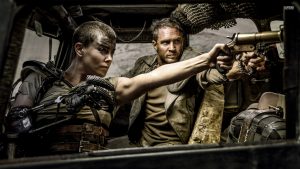
The screening of “Mad Max: Fury Road” in class this week was the first time I had seen this movie. I had heard many great things about the film from friends and critics, especially its action and cinematography. Going into the movie, I expected Max to be the one kicking ass and taking names in intense car chases and hand-to-hand combat. While Max did have some impressive fighting scenes and stunts, it was the women in the movie, especially Charlize Theron’s character Furiosa, who really stole the show. The main female characters in the film are Immortal Joe’s “wives” who have escaped his captivity and will do everything in their power to get away from him. The first time I was impressed with these characters was when they had fought Max just after they had escaped. Furiosa’s hand-to-hand combat and somewhat martial arts skills prove to be a match with Max’s skills as he is barely able to fend off the women, not without some blood and bruises however. The next scene shown was the final fight between Max & Crew vs. Immortal Joe, and boy did it live up to the hype. When Furiosa sticks the the chain in Joe’s mouth and his face proceeds to get ripped off, my jaw was on the floor in awe of her badassery. The great thing about this movie was that it showed not only that female characters didn’t have to be the damsels in distress in blockbuster films, but that they could also be just as big asskickers as their male counterparts. This was an important message to send in Hollywood at the time and I’m glad that the success of the film has helped spread this idea throughout the country.
When she first took the title of Captain Marvel instead of Ms. Marvel in 2012, Carol Danvers was not one of the more recognizable female characters inside of the Marvel Universe. The common person would look to women such as Black Widow who had rose to prominence from the gigantic success of the “Avengers” and “Iron Man” movies or to someone like Mary Jane, Peter Parker’s love interest in the Spiderman comics and movies. In my opinion, it was not until her turn as Captain Marvel that she really started to gain recognition and have an impact on the Marvel Universe, as well as in our world. From the comic we read in class, we can clearly tell that Danvers is not the type of “damsel in distress” character we had seen from many females in past comics or movies. Instead, Captain Marvel shows that she is fully capable of handling herself and even comes to the aid of the Marvel Universe’s beacon of masculinity Steve Rogers, or better known as Captain America. Hell, she even gives orders to him too. Throughout the comic, she shows she is just as, if not smarter than the male characters, as she outwits and overpowers her enemies to victory. Captain Marvel’s biggest impact, however, has to be in our own universe. With an increasing amount of attention being brought towards the feminist movement over the past few years, Captain Marvel is an empowering character that provides women with a symbol of confidence and power within their community.
On Friday, my group was assigned with reading and analyzing Rebecca Solnit’s article about men reading a novel about “a white man serially raping a child over a period of years” (Solnit) and giving their opinions on it. My focus for this blog will not be on the responses of the men, but on Solnit and the tone and themes of her article. It started to become visible to me that this article was going to be an aggressive attack on males when she starts her second paragraph off by saying “It isn’t a fact universally acknowledged that a person who mistakes his opinions for facts may also mistake himself for God” (Solnit). While this quote is not necessarily wrong, I immediately noticed her choice of words when she uses “his” and “himself”. She could have said “their” or “themselves” but decided not to. Another example of this is when she talks about upsetting men. Lolita says, “Many among that curious gender are easy to upset, and when they are upset they don’t know it (see: privelobliviousness). They just think you’re wrong and sometimes also evil.” This quote lines up with the beliefs of radical feminism. In this movement, there is a “struggle” between men and women and that the only solution may be to separate the two genders. From my interpretation, Solnit unfairly stereotypes all men as people who are unable to understand the emotions of others and that they would rather attack your opinion than have a civilized debate on the issue. Painting men as the enemy is not the solution to equality, in fact its quite the opposite. In order to achieve this goal, both sides must work together and find the best path towards equality.
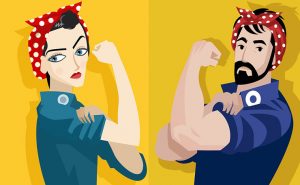
The main focus of the second wave of feminism, which occurred in between the 1960s and the 1980s, was that the relationship between men and women had always been unequal and oppressive and from it spawned three different types of feminism to combat the problem. Liberal feminism’s goal is to reform society gain equality while Socialist feminism calls for men and women to work together to change society. The last mode, Radical feminism appears to be the most extreme. Followers of this group believe that men are impossible to change and that the only way feminist goals can be achieved is if they separate the two sexes completely. In my opinion, this form of feminism is ineffective and counterproductive to the goals of feminism. In order to gain equality, women do have to fight for it, but violence and complete segregation will not solve the problem only intensify it. Fixating on men behaving badly instead of on other important issues like workplace changes is a distraction to the feminist movement and is more detrimental to their cause than beneficial. Furthermore, it sours the relationship between the two genders even more and makes equality harder to attain. Personally I believe that out of the three modes of feminism, Socialist feminism is the best way to reach the goals of the movement. The only realistic way is for both sides to come together to address the issue and thats what Socialist feminism encourages. By seeing men as allies rather than enemies, we all can come together to find the best solution.
Cretin Derham Hall High School was my school’s fiercest rival. I haven’t met one of them that I ever liked, with only one exception. Joseph Patrick Mauer attended CDH from 1998-2001, and in the process, embarrassed our basketball, football, and baseball teams on a regular basis. I can’t really hate him because who who could? He’s a local boy with a down to earth attitude playing for the baseball team he grew up watching, while also giving back to the community. To me, Mauer is the epitome of a hero because his heroism spreads beyond the stadium with his attitude and dedication to the community.
Minnesota Twins first baseman Joe Mauer toss a ball to a fan as he leaves the field at the end of the seventh inning at Target Field on Wednesday, July 27, 2016. The Braves beat the Twins, 9-7. (Pioneer Press: John Autey)
To non-Minnesotans, Mauer’s most recognizable heroic trait is his work ethic. Throughout his life, Joe has never been the bulkiest player on his teams, but he’s always been the hardest worker. Being the smaller kid, Joe was often overlooked in favor of stronger players throughout his childhood and into his high school career. The best example of his work ethic came after he was cut from the baseball team during his freshman year. Not deterred by the results, Joe continued to work on his craft and did more than just make the team the next year. He batted .600, was named National Player of the Year, and was drafted first overall in the 2001 MLB Draft. Safe to say the coach messed up.
While much can be said about Joe as a player, many say he is an even better person. Joe has kept a humble, level-headed attitude for most of his life, avoiding the spotlight and electing to give credit to his teammates and coaches during interviews. As a leader on the team, Joe understands the importance of the relationships he has with his fellow players and tries to build on them everyday. Reporters say he’s always going around at practice talking to multiple players about their families and their weekends. “He’s an average Joe, but he’s something special in the clubhouse. He’s a great teammate but an even better friend” (Kurkjian) said former teammate Nick Punto. Joe’s ability to stay down to earth and his emphasis on building relationships with others is another reason I consider him to be the epitome of a hero.
May 5, 2017; Minneapolis, MN, USA; Minnesota Twins first baseman Joe Mauer (7) gets picked up from third baseman Miguel Sano (22) after hitting a walk off home run in the ninth inning against the Boston Red Sox at Target Field. Mandatory Credit: Jesse Johnson-USA TODAY Sports
The last heroic piece of Mauer’s is mostly unheard of by those outside of Minnesota: Joe has a deep passion for helping communities in the Twin Cities area. He helps multiple non-profits that support local city kids and has raised thousands of dollars for other organizations. “‘We live and play here as big league ballplayers. We’re in a position where we can do a lot of good in the community and it’s a good thing to be in that position and help. I think it’s probably a little bit more special for me since this is my hometown'” (Thesier). Joe is a hero because he fights for a righteous cause and while some people with the same level of fame as him would only do a couple of charitable things, Mauer goes above and beyond to help those in need.
Joe Mauer is the epitome of what a hero should be because of desire to work as hard as he can to reach his goals, his self-sacrifice, and his actions to help others less fortunate than him. So even though he may be a rival, he’s quite alright with me.
It wasn’t until I was reviewing the paper of one Agustin Arcos that I discovered the majestic and unknown creatures called Pangolins. At first glance, I immediately thought these were some sort of hybrid penguin-fish thing with some kind of cool look or abilities. After Agustin had shown me some pictures of these cute, hard-shelled, little mammals, I realized that I had seen these animals before. The first time had been on the Animal Planet channel. I remember seeing in ravage a giant ant with its large tongue snatching ants left and right. The second time was a little different. A creature from the Pokemon games I “used to play” was entirely based on the pangolin with a similar appearance and abilities. I thought it was funny that these little guys had been right in front of me the whole time and I didn’t even realize it.
As pangolins began to reemerge in my mind, I also discovered the danger they face. Pangolins are the world’s most trafficked as its scales are highly sought after for its uses in traditional medicine. I also found out that this issue relates to my essay topic, as more and more pangolins are losing their homes because of deforestation. It brought up another negative effect of deforestation that I didn’t bring up in my essay: the eradication of local wildlife. Animals like the giant otter and the red faced Uakari monkey are on the verge of extinction because of this process. The worst affected are the large number of unique vascular plant species, which an estimated 40% has been wiped out.