Impact of the World Cup on Americans

In America, soccer has barely been able to keep up with the other popular professional sports that this country has to offer. Hell, ten years ago if someone heard you were a soccer player, your name would become synonymous with the terms “pansy” and “field fairy”. Soccer’s popularity gained in the 90s was slowly dying and the sport’s presence in America was drifting into oblivion. Now, as of the past five or so years, soccer is one of the most popular sports in the country.   The national team’s coach being fired is front page news and millions of people cried out in anger when they failed to qualify for the upcoming World Cup in Russia. Today, there are more kids playing soccer than there are playing basketball in America and it will soon catch baseball. The recent success of soccer in America in my opinion can be attributed to the most recent World Cups and the achievements of the men and women’s national teams in this event. In 2014, the men’s team finished with a record of 1-2-1 in Brazil and were eliminated in the round of 16. These stats might not sound impressive, but they team went above and beyond expectations and even gave the eventual champions Germany some fits. Their success brought in an estimated 26.5 million American viewers and viewership for all sixty-four matches was up thirty-nine percent from the 2010 World Cup. The women’s team proved to be much more successful in the 2015 World Cup in Canada as they defeated their longtime rival Japan to win the tournament. More Americans tuned in to watch the championship game than the NBA Finals that year, showing that soccer had finally arrived in the United States and is here to stay.




Marvel’s Dark Knight Rises

THIS BLOG POST IS RELATIVELY SPOILER FREE AND DOES NOT REVEAL ANY MAJOR PLOT POINTS, YOU’RE WELCOME.

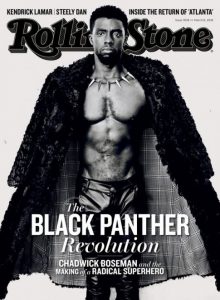
Over the long holiday weekend, I got the chance to see the newest blockbuster to hit the big screen, “Black Panther”. The movie had already gained critical acclaim prior to its release and being an avid fan of the Marvel Cinematic Universe, I had to see where it would stand with the likes of Captain America and Iron Man. After seeing the movie, I can attest to its greatness, but it goes beyond that of its action and storytelling. Out of the seventeen movies the company has produced, “Black Panther” is the first Marvel film to feature a black character as the star of the show. The film was also able to give an accurate representation of African culture and did not fall into the trap of whitewashing as other Marvel films had previously done (that’s you Doctor Strange). The messages the film conveyed were powerful and relevant in today’s society, as it dealt with issues of racism and diplomacy. The main villain Killmonger’s plan is to take control of all of Wakanda’s advanced weapons and give them to the black people across the world so that they will rise up against those who have oppressed them throughout history (the whites). Its an important topic to discuss as T’Challa stresses to Killmonger that violence cannot solve this problem, it’ll only allow it to persist. The strongest message of the film comes during T’Challa’s meeting with the UN. With rising political tensions among nations and threats of isolationism, the Wakandan king delivers a powerful quote that is relevant in today’s society: “Wise people build bridges, foolish people build barriers.”

Clint Eastwood: A Man’s Hero of the 1960s

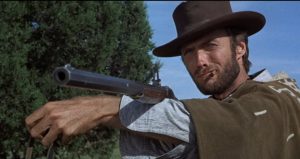
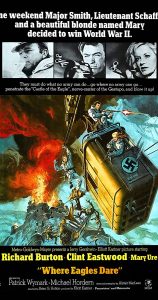
Through his various films during the decade, Clint Eastwood captivated the American people with his gritty and macho performances. He influenced the idea of what a man should be like with his characters Blondie and Schaffer. The former is one of his most recognized roles from the 1966 film “The Good, the Bad, and the Ugly.” Set in the Wild West, Blondie is a professional gunslinger trying to find a stolen treasure. His journey is filled with shootouts and fragile alliances, culminating with a classic Mexican standoff for the buried treasure. This role helped popularize the idea of a rough and tough man. Blondie is not the friendliest man and is no stranger to fistfights or duels. He made this type of life seem exciting and rewarding and promoted the lifestyle to its intended masculine demographic. Another of his famous roles of the 60s was as Lieutenant Schaffer in the film “Where Eagles Dare.” Schaffer is an American spy apart of a team sent to infiltrate one of Hitler’s main command centers, the Eagle’s Nest, a castle in Austria during World War II. This character was another talented gunslinger and who had trouble listening to authority. It’s an action-packed role filled with explosions and cursing, which made a man cheer and imitate in reverence. It also invoked a sense of patriotism in men at the time, as the film was released during the peak of the Cold War with the Soviets. Eastwood’s heroic performances throughout the decade inspired American men to live a grittier and fast-paced life as his characters did.

Tony Montana: An Antihero to Rule Them All

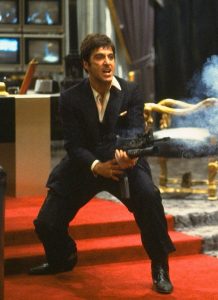
As we began to discuss the topic of antihero in literature and in pop culture this week, there was only one man I could think of that tops that charts of guys you hate to love to root for, my little friend Tony Montana. In class, we identified antiheroes as people who are great sinners and are reckless and doomed. In 1983’s “Scarface”, Al Pacino plays Cuban immigrant Tony Montana as we get to see his bloody rags-to-riches story unfold. Montana starts out as a bum living in the slums and working at low-wage food joints. It isn’t until he becomes involved in the drug business that we get to see the real and menacing side of the character. The great sinner part is easy to check off the list, as Montana lies, cheats, and kills his way to the top of the drug trafficking world, not exactly the things that get you on Santa’s nice list. Perhaps the most visible antihero trait of Montana is his reckless attitude. He is the type of character to shoot first and ask questions later and is prone to cocaine induced tantrums. He dooms himself by not listening to the advice of reasonable people like his wife or business partner. He is left without any help when he is ambushed in his mansion while buzzing off of the nose candy he had just had. He is gunned down and left to a bloody demise in his own fountain. It’s amazing to see his descent from likable immigrant to power-hungry kingpin, as Montana shows just how far he will go to get to the top. No quote better displays his role as an antihero than when he says, “ordinary people need guys like me so they can point their fingers and say “‘that’s the bad guy.’”