Week 2 Blog

For this week’s blog, I read Anne Lamott’s Shitty First Drafts. Perhaps the most relatable quote I have ever heard about writing came from the article when Lamott says “‘It’s not like you don’t have a choice, because you do– you can either type or kill yourself.'” 
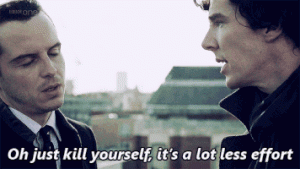
I can relate to this quote, as well as the meme, because I can recall many long, tiring, and brutal evenings/mornings staying up to finish what appears to be a hopeless paper instead of getting some much deserved Z’s. And it’s not until 2am that I begin to realize what the main point of this article is: It’s the first draft, it’s supposed to be shitty. You are not trying to hit a home run with your first draft, that’s the reason why you’ll be running on coffee or energy drinks the next day. In the first draft, you are supposed to get all your thoughts and reasonings down just so you can get a good idea of where you want to go with your writing. It’s a way to alleviate all your stress about the topic and just let the words flow, you can leave the nitpicking for the second and third drafts. My favorite part of the article was when she said all authors struggle through the same problem. For me when I’m writing, it’d be enjoyable to think about great authors such as J.R.R. Tolkien or Mark Twain sitting in their bed at 2am with their Doritos questioning their life choices just as I do on those lonely nights.
Blog 1

Week 1 Response

A reoccurring theme that I found inDouglas Holt and Craig J. Thompson’s article “Man-of-Action Heroes: The Pursuit of Heroic Masculinity in Everyday Consumption” was that the ideology of heroic masculinity is being threatened in today’s modern American society. The article talks about symbols like the cowboy, the adventurer, or the hunter who should be idolized by men for their “rugged individualism, an adventurous spirit, risk-taking, displays of physical prowess, and most of all, a high degree of personal autonomy.” While having these qualities is not necessarily wrong, they can create an identity crisis inside of a man, stuck between a standard society has set for them or the image they have for themselves. This part of the article reminded me of another symbol which set dangerous standards for American men: The Marlboro Man.


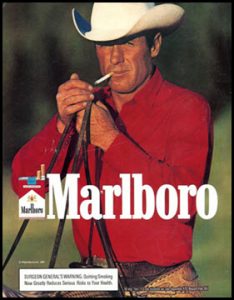
The Marlboro Man was a figure used in Marlboro’s advertising campaigns for their cigarettes from 1954 to 1999. Like the previously mentioned figures, The Marlboro Man was meant to symbolize the “rough-n-tough” look and encouraged men to be adventurous like him. Unfortunately for millions of Americans, this advertisement was wildly successful and cigarette smoking started to become the new norm across the country. The hazardous standard for men to live up to set by the Marlboro Man led to thousands of deaths in America from lung cancer (including The Marlboro Man pictured). In conclusion, there has been and still are many false gods that American men are supposed to worship in our society and although not all are entirely bad to follow, American men are better off making their own image.