“Ready? Let’s go.”
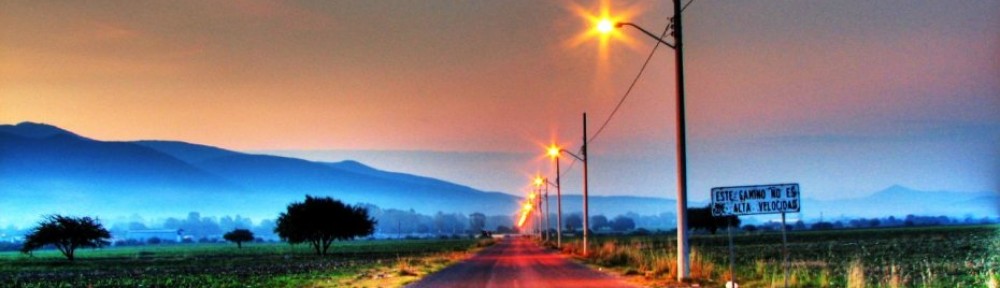
I slam the door to my car and head through a side gate of the house off Jasmine Lane. The sky is dark, and the moon is barely a sliver tonight. I follow the footsteps ahead of me, trying to discern some shape of a concrete path as I reach out and use the siding of the house as a guide in the darkness.
I come to an outdoor patio where my friends are already setting up a Rifa light and the tripod. I drop the camera bag on the ground and we begin to go over our game plan for the night. We are filming a documentary on deferred action and tonight is an important shoot for us. Tonight, we are at the house of girl we have been following for weeks. Tonight, we meet her family and will hopefully get to glimpse into what they have sacrificed in order to give their daughter a better life in the United States. Tonight, we will turn on the camera on the 12X15 foot house the family lives in and watch as mother and daughter embrace each other, giving voice to the sacrifices and promises they make.
________________________________________________________
Headlamp.
Tonight, it’s really dark outside. Too dark. Out of habit, I take my headlamp out of my bag and start to attach the battery and mic cable to the camera.
I say “out of habit” like I have always done this, but this rote action of putting on a headlamp and rummaging through a camera case is a new habit: one that I learned in Uganda.
In Uganda, every night was dark like this one. I got used to traveling into villages, and towns, and pulling out this same headlamp and setting up equipment. On those nights, in the African summer, I would be with my friends and colleagues, different ones than tonight, but similar dynamic, and we would set up the equipment, and go over our game plan. Then, we would take a breath, look at each other for support, and step into an unknown house. Every night would bring a new unknown location, person, or situation.
Tonight , we look to each other – camera, boom, and headphones, on each of our respective shoulders and hands, taking that same breath that I breathed a continent away. I can’t help but smile. I do not know what lies beyond the door of the house. What will the girl’s parents say? Will their Spanish be slow enough for me to understand? Will I ask the right questions? I know as little about tonight’s shoot as I did many times in Uganda, and it soothes me. There is a strange comfort in the unknown.
I step through the door, my feet echoing steps I’ve taken a thousand times over.
Even hours later, as the three of us debrief after the intense shoot, the parallels of Uganda and the current moment, resonate. How many times did I sit just like this, with friends and colleagues, talking about the intense and often rewarding experiences we had filming in the villages? It almost seems necessary in documentary work – the need for immediate purging or osmosis of experience. Entering into someone’s life and home is a vulnerable act; they are exposing themselves to you, and in return, you are exposing yourself to them – exposing your intentions, hopes, and vision. There is a rawness to it. There is a rightness to it.
________________________________________________________
Paper.
I lie awake in bed that night after the shoot. It is a ritual after any film exercise. I replay the night in my mind and try to imagine how maybe, just maybe, I could have gotten a better shot, a better angle, than I did tonight. I try to remember all the mistakes, and all the highlights so the next time I film, it will be perfect. I once had a professor tell me after viewing footage that I thought was decent,“Sure, sure, it’s good. It’s really good. But we are not going for good. We are going for perfection. That is what we are striving for, no?”
He was right. And there is no time when the strive for perfection is more obvious then as the footage of the day plays across the ceiling above my bed. Sometimes I get disheartened though, when I see the whir of footage in my mind and I know it’s not perfect, or even good. At times like these, I crawl out of my bed and go to my camera case and pull out a piece of paper that I have tucked away in a fold, right next to my headlamp. On the paper is an excerpt of Fernando Solanas’ Toward a Third Cinema:
“The existence of revolutionary cinema is inconceivable with the constant and methodical exercise of practice, search, and experimentation. It even means committing the new filmmaker to take chances on the unknown, to leap into space at times, exposing himself to failure as does the guerilla who travels along paths he himself opens up with machete blows. The possibility of discovering and inventing film forums and structures that serve a more profound vision of our reality resides in our ability to place oneself on the outside limits of the familiar, to make one’s way amid constant dangers.”
Solanas is an Argentine filmmaker who is most famous for La Hora de los Hornos, an epic revolutionary documentary set in the midst of political turmoil in Argentina in the 1960s and 1970s. Reading his words, I am inspired to action. Solanas was making La Hora during a dangerous and scary time in Argentina, and every day he was making a conscious choice to step out into the unknown with a camera and a machete. Suddenly, the type of footage I have does not seem as important as the fact that I am trying. I am discovering.
________________________________________________________
Dice.
The next day after the documentary shoot I transfer all my gear from my camera bag and backpack, making room for my school notebooks. I take out the three things I always carry with me when I travel: my headlamp, my Solanas quote, and my dice.
I have had the dice for 10 years now. They have been tucked away in my bag through the streets of Bangkok, Venice, and everywhere in between. They are my personal totem; I know the weight, and the smoothness of them, the way they sound as I roll them in my palm. They have become such a fixture in my bag, I no longer think about their existence. They just are. And though I forget they are with me sometimes, falling into the cracks of my bag, they continue to travel with me.
Now that I am graduating, I get the constant question, “What are you doing with your life?” The truth is, I do not know. I thought I had it all figured out when I was younger: study hard, go to Princeton, become an FBI agent. That changed a little. I thought I knew where I was headed when I declared my major: communications with a film emphasis and international business. That matters less than I thought it did at the time. Instead of figuring it out, I get glimpses of new choices and new paths. I got a glimpse of something when I worked for Solar Sister this summer, and saw how necessary social entrepreneurship is in the lives of the strong Ugandan women. I got a glimpse when I worked at Telluride Film Festival and saw the passion people had for creating art. I get a glimpse now, as I start to think about where my future is headed and all the possibilities of it.
I place the headlamp, paper, and dice into my drawer. I don’t know where I will be placing them next. It could be another camera bag. It could be a suitcase, or a briefcase, or maybe I will find another object that will replace them. For the time being, they sit in my drawer, ready for the moment when I step into my next unknown. After all, even though there is a certain comfort in the unknown, there is a greater pleasure knowing I will be able to see in the dark, act in my fear, and know the weight of my past experiences.
Closing the drawer I take a breath again. Ready? Let’s go.