
The monsoon rains were coming down hard as I meandered through the muddy streets of a village outside Bangalore, India. After visiting four clothing factories, I was frustrated not to have had the opportunity to spend more time with workers to hear about their lives and build trusting relationships. The factory’s productivity was too important, so interviewing time was limited with respondents. It wasn’t until that rainy July 6th that I was able to talk with women outside of the confines of the factory, and further discover the amazing and difficult lives they lead, which would leave a lifelong impact on me.
In India’s apparel industry, labor unions are highly castigated by management, and anyone who is suspected of starting one typically gets fired and refused employment in surrounding factories. There’s a culture of fear among workers, and it’s so intense that most refuse to talk with anyone about the hardships and treatment they endure in the workplace. In southern India, where approximately 80 per cent of factory workers are women, many of whom are uneducated, the environment is ripe for mistreatment and abuse. It was only through a labor union activist in the local community that I was permitted to enter into one of these women’s homes.
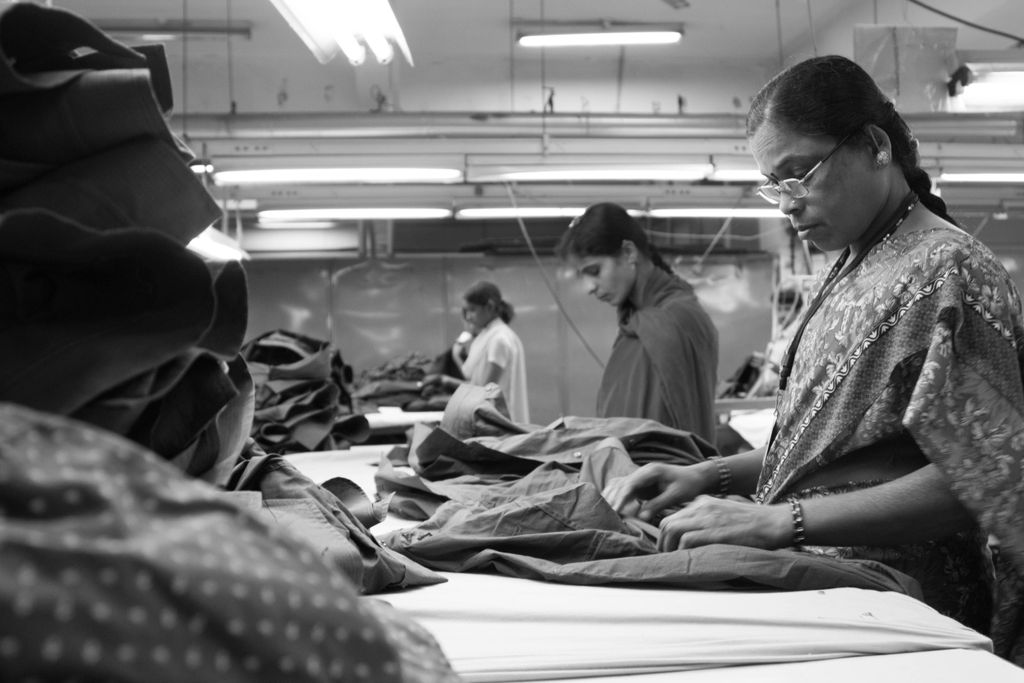
Women working in a clothing factory. (Photo Credit: Holly McKenna)
I took off my muddy sandals outside the door, and walked under a small doorframe into another world. The interior of the home was small yet beautiful. Ornate Hindu symbols hung on the walls and an altar donned the back of the room. The central living space was about 10×15 feet, with a small door on the left that led to the kitchen. Opposite the kitchen was a small bedroom. The fragrance of incense was in the air, and the place was spotless, as these women had prepared for our visit. The home was special because of the people who inhabited its space. Three middle aged women and a younger girl of around 20, all dressed in beautiful saris sat with us, and in true Indian style, we packed about ten of us into the living room that only sat around five comfortably. We sat shoulder to shoulder on the couch across from the women, sipping on the hot chai they had generously prepared for us. There’s a unique fellowship in India that comes from drinking chai together, and when I took the chai then, I didn’t understand its full significance. When I reflect on the moment now, I know that these women weren’t only opening their home to us. They were also opening up their hearts.
It took a while for them to become comfortable with us, as sharing sensitive things about their lives both in the factory and at home was no easy thing to delve into. There was so much fear about what might happen to them if they opened up and we misused the information. So, we started talking about lighter things: our research and experiences in India, our love of Indian food and chai, etc. When we had built a little bit of trust and the labor union advocate ensured the women it was okay to speak, they began to tell us more about their lives.
I observed a similar pattern as the three middle-aged women opened up to us. In India, the majority of marriages are still arranged, and while many of these marriages last in comparison to “love marriages”, many arranged marriages leave women stuck in abusive relationships. My heart broke, as one of them began to explain in detail the atrocities she has endured with her husband. The small amount of money she retains by working long, hard hours in a clothing factory is usually taken and spent on his addictions. In addition to this, she also spoke of the physical abuse she has gone through. Divorce is so stigmatized in Indian traditional culture that she, and many other women stuck in these kinds of relationships, do not even consider it. She spoke as though it was her lot in life to endure this kind of treatment in her home. Her only hope is for her children to have a better future, and she works tirelessly to turn this dream into reality.
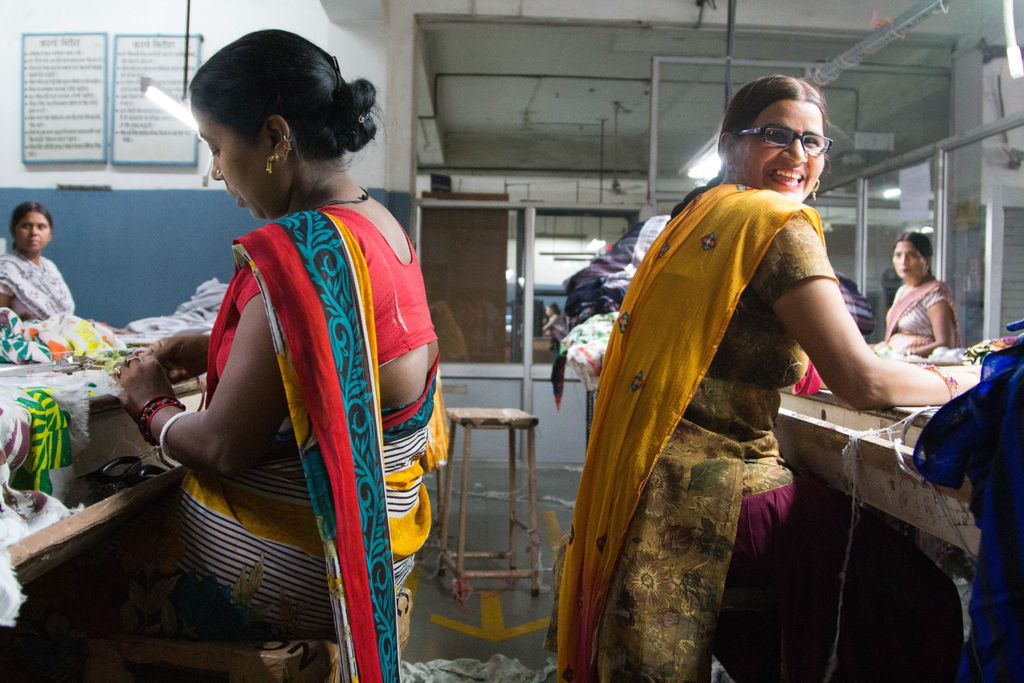
Indian women have strong spirits. (Photo Credit: Holly McKenna)
The other two women had similar stories, further explaining the verbal abuse and other difficulties they deal with in the factory. The average woman that works in a clothing factory wakes up at the break of dawn to prepare food and do what it takes to get their children to school, followed by a grueling day in the workplace that lasts for 10 plus hours for all of 3 dollars a day, a small sum even on Indian standards. She goes home, prepares dinner, and continues her household chores late into the night only to do the same thing the following day. “Where is the agency and freedom to dream in the lives of these women?” I asked myself. I felt helpless and heartbroken, looking into the eyes of these women who had accepted this to be their share of life.
Gregory David Roberts wrote, “Sometimes we love with nothing more than hope. Sometimes we cry with everything except tears.” That’s how I felt after talking with these women. Who was I, as a white, privileged American male to tell them they ought to change the way they see themselves in their society. It wasn’t my culture or place to say something like that. Even more heart throbbing was talking with the younger woman, who was still not married and expressed her belief in a brighter future for herself, one where she had the freedom to dream and make a life for herself. I have long considered myself a feminist, but it wasn’t until I walked out of that house fraught with heavy emotions that I felt in myself the desire to commit my life to empowering others, especially women, and ensuring that everyone has a right to dream.
I find myself inspired by people like Che Guevara (during his youth in The Motorcycle Diaries) and Mother Teresa, people who committed themselves to live with and fight for the rights of marginalized communities. I have had a lot of life changing experiences and formative conversations with people in Mexico, Thailand, Rwanda, and the inner city of Chicago, and have found that my greatest joy in life comes from living with people and getting some skin in the game, as we strive together to ensure equal opportunities and the freedom to dream. It wasn’t until I got back from this experience that I’ve started to process and piece all of these former experiences together like a puzzle, which has revealed its image to me. And I will be forever thankful to these women for opening up their home and heart to me, and enabling me to realize my dream of helping others discover and pursue their own.
The culture of India and the world as a whole is changing rapidly. Across the globe, we are becoming more aware of inequality and mistreatment through globalization, and there’s also a common desire across nations to fight for marginalized communities, whether it be through global policy, social entrepreneurship, or other mediums. From this experience and others, I find in myself a desire to live abroad for some time, to play my part alongside local communities in driving social change. Gregory David Roberts also wrote in Shantaram, “A dream is the place where a wish and a fear meet.” It’s scary sometimes to think of what following my dream entails. But then I think of the true joy associated with it, and that gives me comfort. I couldn’t be more grateful for everything India and my past experiences in traveling have taught me in regards to vocational discernment among other things, and I can’t wait to see what the future holds. In everything I do or will do, I hope to follow after the words of Mother Teresa, “Spread love everywhere you go. Let no one ever come to you without leaving happier.”