My third blog post.
It’s been a few weeks, but I can say that I’m back in the U.S., adjusted (almost adjusted to school starting again), and thinking over my experiences in South Africa. Thoughts of confusion are still there; how I felt when I was there, who I met and what they meant to me, and the work I did.
I’m going to start at the end.
In August, when all the fellow had returned from our respective countries, Fr. John Staudenmeier from the University of Detroit Mercy, came to visit us and talk to a few of the fellows. I and two others were able to have a conversation with him. When we sat down together, after he had introduced ourselves, the first thing he said was, “I know everyone here has been asking you to talk about your summer and your deliverables, and you’re probably used to that by now. I want to hear the hard stuff.” He was asking us to each tell a hard story from our time there, or a story about someone we met. For a moment, I internally panicked.
I have no hard stories! I don’t have a transformative moment where one of the tutors came up to me and told me how much tutoring meant to them, or a learner who I had the chance to witness breaking down in tears because of how much they valued their education! Everyone else has those stories, why don’t I?! Did I do something wrong? Did I do my experience wrong? I’m supposed. To have. A story.
He talked a bit more and told a story of his own, and gave us a bit to think. I purposely waited to go last, and when it was my turn, I sputtered out, “I… I don’t really have a specific story, we really did a lot of work and talked to people and I spent a lot of time with my research partner, and we had some rough patches but it was fine, but other than that… I don’t know…”
Then, I started to talk about what I saw while I was there and what I noticed. I talked about the District Six museum and about the townships. I talked about the Eastern Cape and about listening to the students talk about their teachers not being there for entire terms. I talked about the feeling of driving into a township and then returning home at the end of the day to my daily routine of the air-conditioned gym and our apartment in the nice neighborhood of Gardens. Through all this, I found myself crying.
I’m crying! Why am I crying! Sorry everyone, I don’t know why I’m crying!
Fr. John prodded at me more and more, and asked me to explain how I felt and to use adjectives that could encompass my reaction. I thought of words I could say, and I said angry. Disgusted. Frustrating. Unjust. Confused, helpless, torn, angry. Angry. Angry. Angry.
Angry at the state of the townships, angry that I had the privilege to go to a comfortable apartment at the end of the day and a car to drive around in to “shield” me from “them,” angry at the idea that a child who happens to be born in a township has a monumentally small chance of getting into college compared to a richer–often whiter–child. Angry. There are very few times in my life that I’ve felt such raw anger like that, so much to make me cry and for my face to turn red and for my palms to sweat. I was angry.
I’ve been feeling that anger for a long time now, but I think that moment showed me how unprocessed that anger was and how much I hadn’t reflected on it or realized it. Even through my time in South Africa, I’ve felt a distance from it, something I could never explain, and I think I’m realizing that South Africa gave me a slap in the face, over and over, and I’m just now realizing that I’ve been slapped.
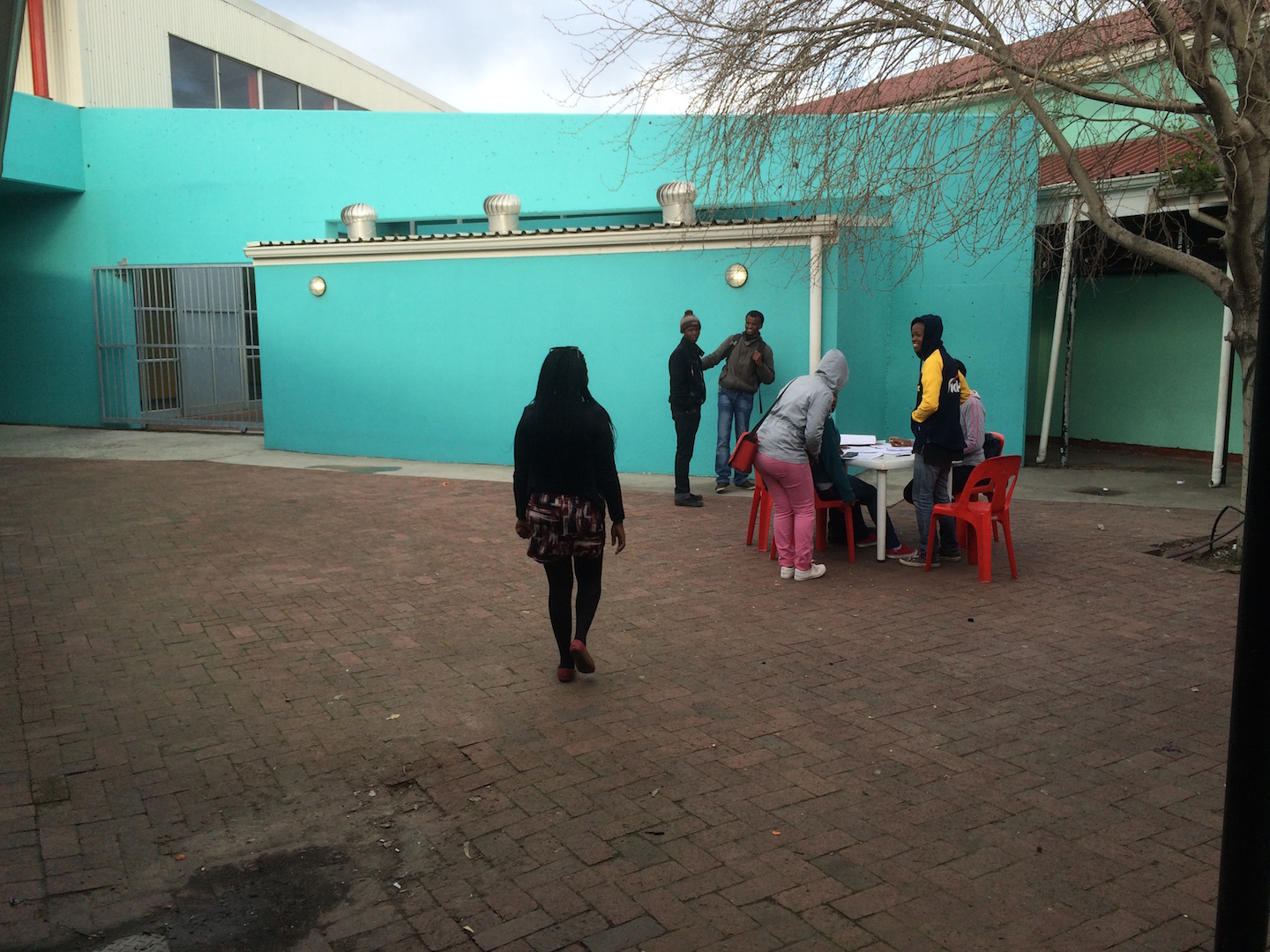
I grew up in Alameda, California, which is quite literally a bridge-crossing away from East Oakland, which is infamous for its crime, poverty, and less-than-average education system. Alameda seems like a “haven” away from East Oakland. I thought I knew what it’s like to grow up next to injustice, but it’s so easy to shove it away, cover it up, pretend like it’s not there. Who am I kidding? I didn’t grow up there or live there for a long period of time. I know my safe neighborhood where I can walk around at night by myself. Even when I was in El Salvador, I think I paid more attention to the beauty of the place than the corruption hidden underneath. Even though I was working in rural areas, there’s a part of myself that I shielded from the knives of privilege and poverty. I guess.
I know what poverty is and I know what injustice looks like, I have known that. What I do know is that coming back from South Africa, I feel angry, with a kind of freshness that I haven’t felt in a long time. This kind of anger is saying to me, “Wake up. Act now. Be here. This is real. I’m real. Stay awake. This is injustice. You can’t leave now, you’re in this. Be with me.”
—
If you want to see what someone can really do with their mind and their talents, give them tools and an opportunity to use those tools.
Backtracking to the beginning of my time in South Africa, one of my clearest memories is their talent show at the end of Winter School. There was singing, dancing, poetry, fiction, rapping, and debating. This was all fantastic, and I remember it so vividly. These high schoolers acted not unlike the friends I remember having when I was in high school. Everyone’s a little self-conscious, your identity is linked to the clump of people you’re standing with, and everyone wants to be the coolest. It’s a marvelous sight to see slightly post-puberty young people. (That’s a little sarcasm – it was more funny than marvelous.)
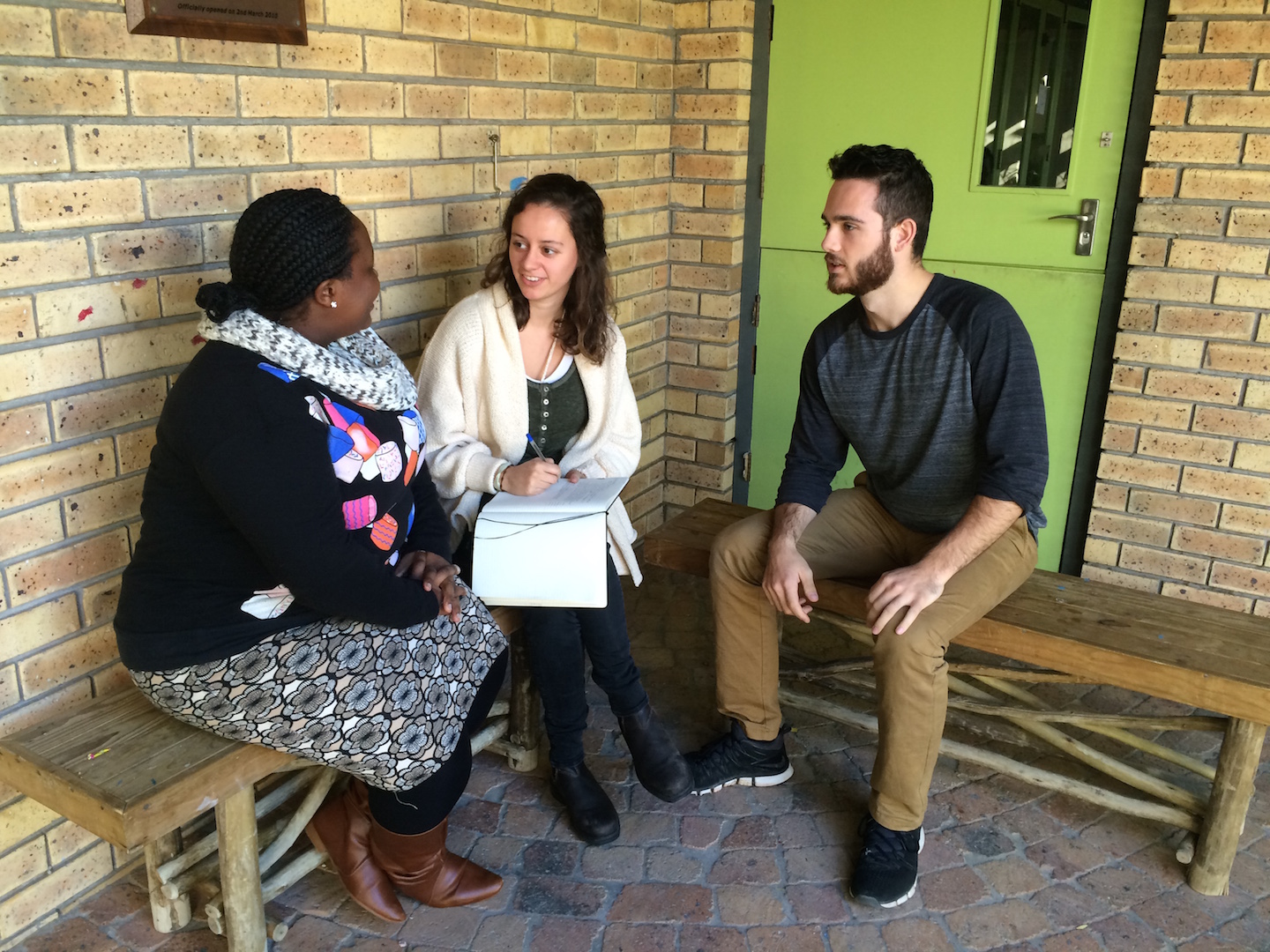
Surrounding the time of the talent show, listening to and interviewing the tutors, we were able to view how the tutors felt both about the learners and about their own lives. It was clear that these were strong, ambitious, smart people with a bright future ahead of them. It became clear to me that IkamvaYouth was not just a tutoring program, but a place for these kids to gather and feel at home: a really successful after-school program. I felt so connected to them, the tutors, as I remember coming out of high school and wondering what to do with my life as well, what to dedicate my time to. The biggest difference between them and me was our upbringing. Almost all of them came from disadvantaged communities, townships, and had a supbar education. And, for almost all of them, IkamvaYouth was a source of support and encouragement.
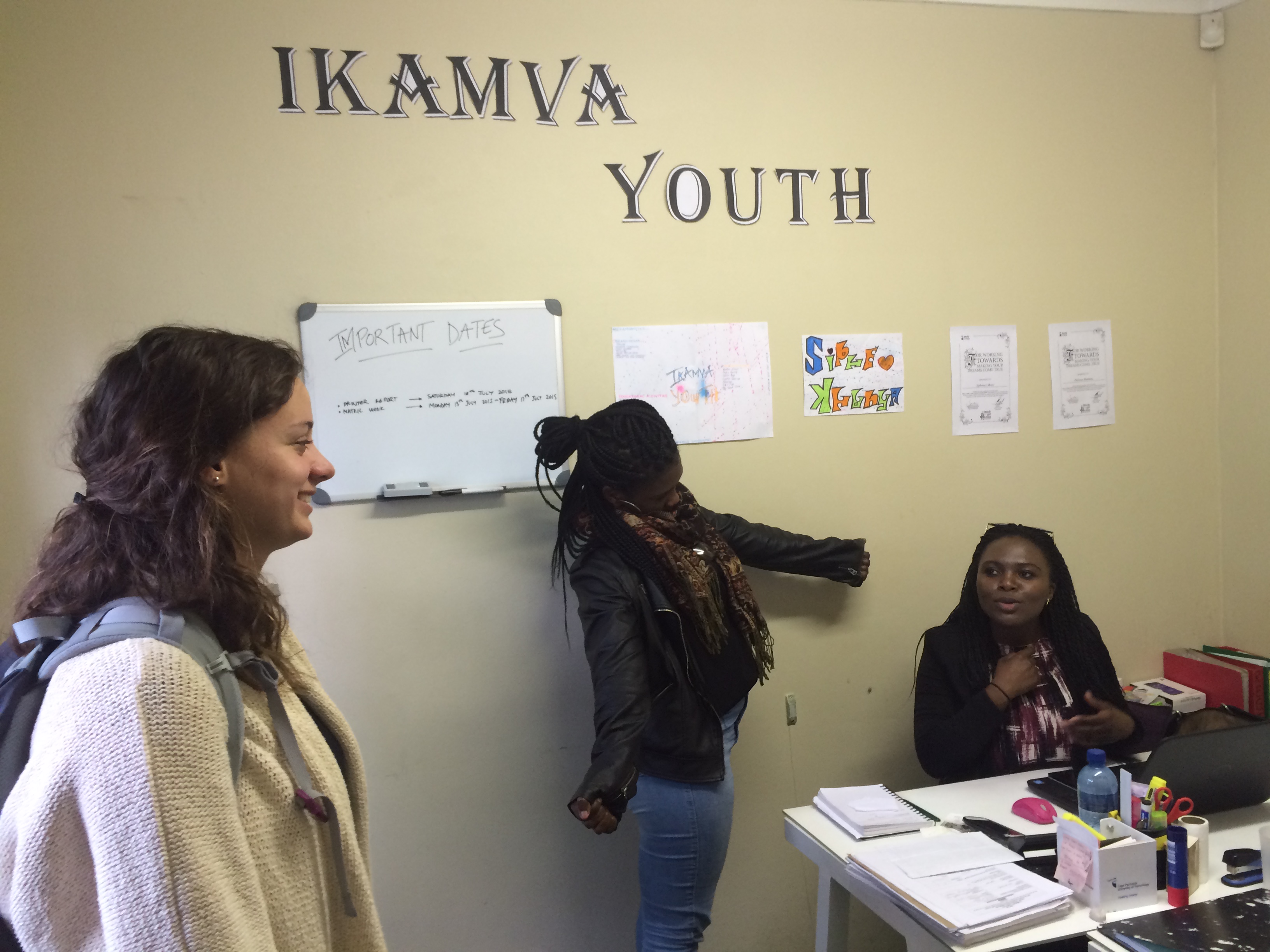
I noticed this in the Eastern Cape branch as well, which was much more rural than the Western Cape branches. Part of me was deeply inspired by these young people and the hardships they had overcome and worked through to get to school, and part of me was struck by the normal-ness of the situation. I was able to create meaningful connections with tutors who came from a completely separate background than I, but we were able to find common ground. They had experienced injustice and hardships in their lives that I had – and probably will never have to – experience, but the connection was much more real than any social barriers that might have stood between us.
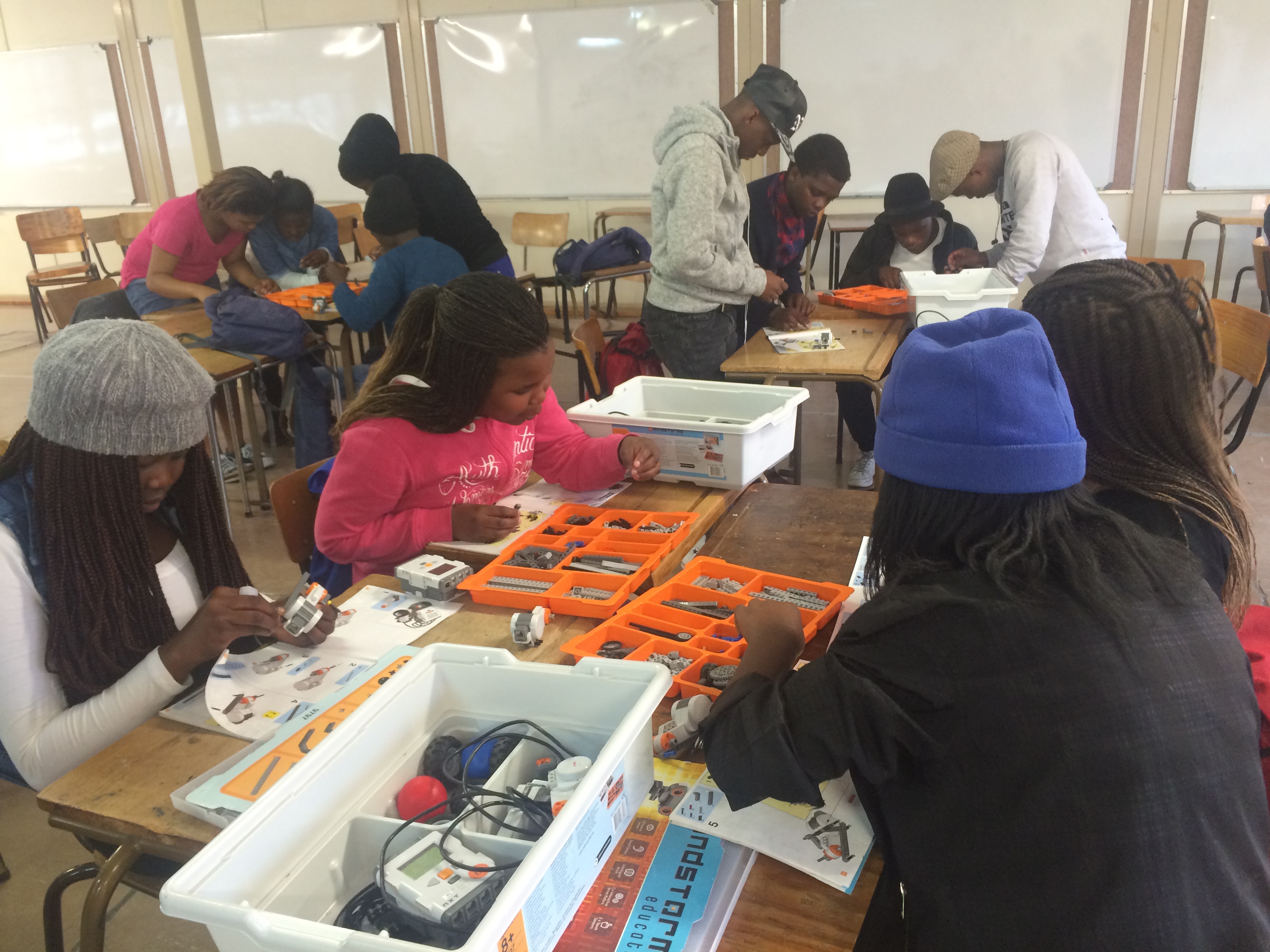
I was careful to not impose myself, but to still be a constant figure. I wanted to start my time by what I call the “ultra-receiving” phase, when all we did was take in what was around us and to have our faces be seen, but not try to do or say a whole lot just yet. Just take in everything and soak in the environment and faces and culture, and then start to transition. I was as sensitive as possible to the reality that we were outsiders and we could not simply pop in when we pleased.
—
I’m not sure what the future holds for me, but I know that I could never be satisfied doing a job that solves problems for people who don’t have them. I want to help solve real problems. This anger that I have, this fresh, fiery anger that gives me energy and keeps me going, can be my friend. It’s not a cruel anger; it’s a helpful anger. It allows me to see the world clearly while allowing myself to be a peace with the life I’ve been born into.
I know that I want to use my insights and skills that I’ve gained from this experience and combine them with my talents somehow. I know I have a passion for design and technology and how that can help solve real problems, but how that relates to my summer experience is yet to be solved.
I found the peak of my passion for social justice in South Africa. How to practice that passion and live it is the next step, and I’m so looking forward to it.