
One of the perks of being from Alaska is that everyone whom I meet seems to be intrigued by my homeland. It’s a cradle of adventure and truly one of the last frontiers. It’s always easy to talk about Alaska, from the incredible summer fishing to the seemingly endless cold, dark winters. It is certainly not the easiest place in the world to live, but it’s profoundly rewarding and I’m very proud to call Alaska home.
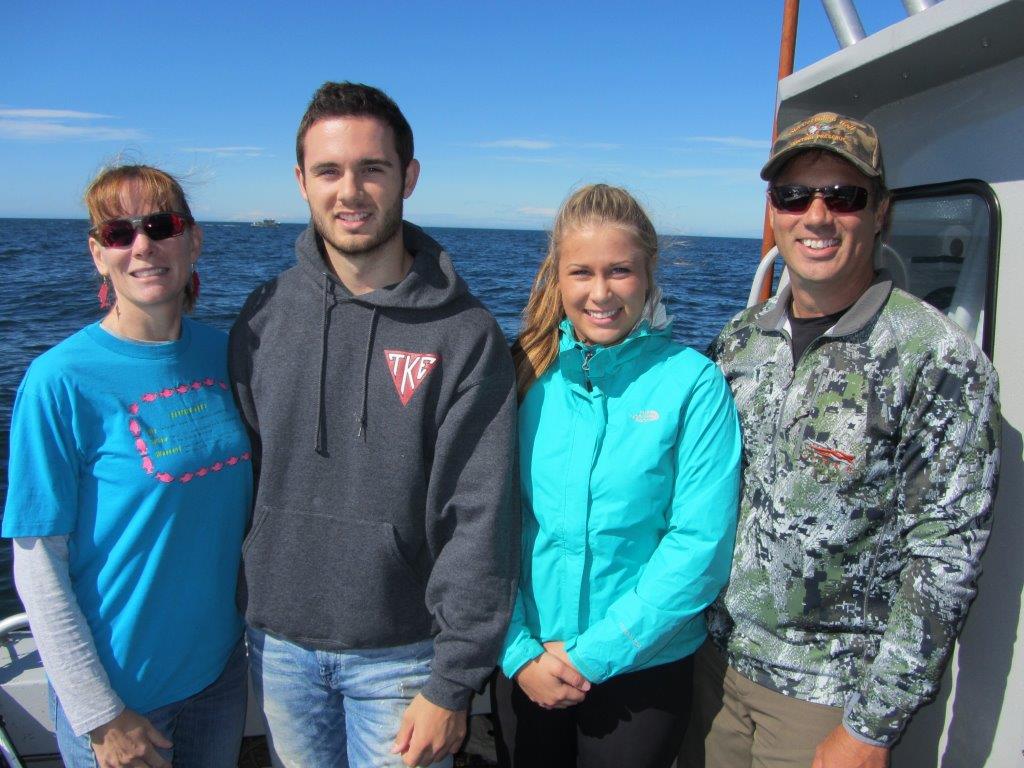
Fishing for halibut with my family off the coast of Homer, Alaska
Growing up in Alaska played a huge role in my development because there was always a beautiful landscape for me to explore. Yet, when it came time to make the transition to college, I was ready to venture away from home and experience life in a very different place. The love for adventure that Alaska instilled in me also inspired me to turn my attention towards the incredible ingenuity found in the Silicon Valley. The entrepreneurs, engineers, and artists of the Bay Area share a passion for upheaving the status quo, reimagining new ways to live and sparking changes that resonate throughout the world.
Of course, it was Santa Clara’s Jesuit education that has been the most transformative component of my time in college so far. I had never heard of Santa Clara before applying, but when I arrived I was introduced to professors, faculty, and students who shared a common vision of human progress which inspired them to pursue learning beyond the classroom. During the spring of my sophomore year, I enrolled in a course which examined entrepreneurship in the context of social justice. I had only a very basic knowledge of business or entrepreneurship, but felt drawn to the course as a refreshing departure from the rigid structure of my technical engineering courses. I certainly got a whole lot more than I could have ever anticipated. If my previous courses had a lacked a certain level of critical analysis, this course more than made up for them.
I would consider myself a very logic-oriented person, but in the past I have based my understanding of the world upon the framework of mainstream American society. Before taking the social entrepreneurship course, I was aware of the monumental challenges faced by billions of people around the world, for whom things like health care, education, and energy are not easily accessible. But these issues seemed so much bigger than myself that I had never really identified how I, as an individual, could affect positive change in the world. Each day I attended class, I learned of countless examples of incredibly passionate and competent individuals working in harmony to forge new paths towards social justice. Yet, they certainly did not fit my preconceived notion of a social activist. What truly inspired me was that these entrepreneurs of various backgrounds, including academics, social activists, and community leaders, all shared a common trait; they challenged popular conceptions of social activism by addressing issues with novel and unprecedented solutions. They weren’t simply organizing charity drives or distributing free food to the needy. They attacked issues with regard to the complex social, economic, and cultural factors and placed the well-being of their stakeholders over all else.
During the duration of the course, I can truly say that I began to see the world differently. Just a few weeks after the course ended, I departed for South Africa, where I spent the next five months studying at The University of Cape Town. There were several organizations associated with my aboard program that offered opportunities for students to take part in community engagement activities, and one in particular caught my eye. Educating Athletes, an emerging enterprise, offered tutoring, mentoring, and financial support to high school student-athletes from disadvantaged communities.
Upon arrival at the tutoring center, I quickly realized that the students were intrinsically different than those that I had tutored previously. They all had positive, optimistic attitudes, but, I often found there to be a cultural barrier that had to be broken down before I could openly communicate with them. These boys had very different backgrounds from myself and sometimes it took time to understand the unique way in which they interpreted information. As I learned about their passions, opinions, and daily lives, I slowly began to understand their learning styles. And as I learned about them, I also learned about myself and the fact that the lens through which I had previously viewed the world did not always hold true in a place so far removed from home. Those students gave me so much more than I could have possibly given them because they inspired me to reconsider the importance of cultural context to even something as seemingly simple as an hour of algebra tutoring.
Near the end of my time abroad, I spent a weekend in a small town just north of Cape Town, Grabouw, which is home to some of the most beautiful apple orchards in all of Africa. Along with dozens of other students, I spent the first day at a local school constructing a new garden in which the students could learn about biology, botany, and sustainability.
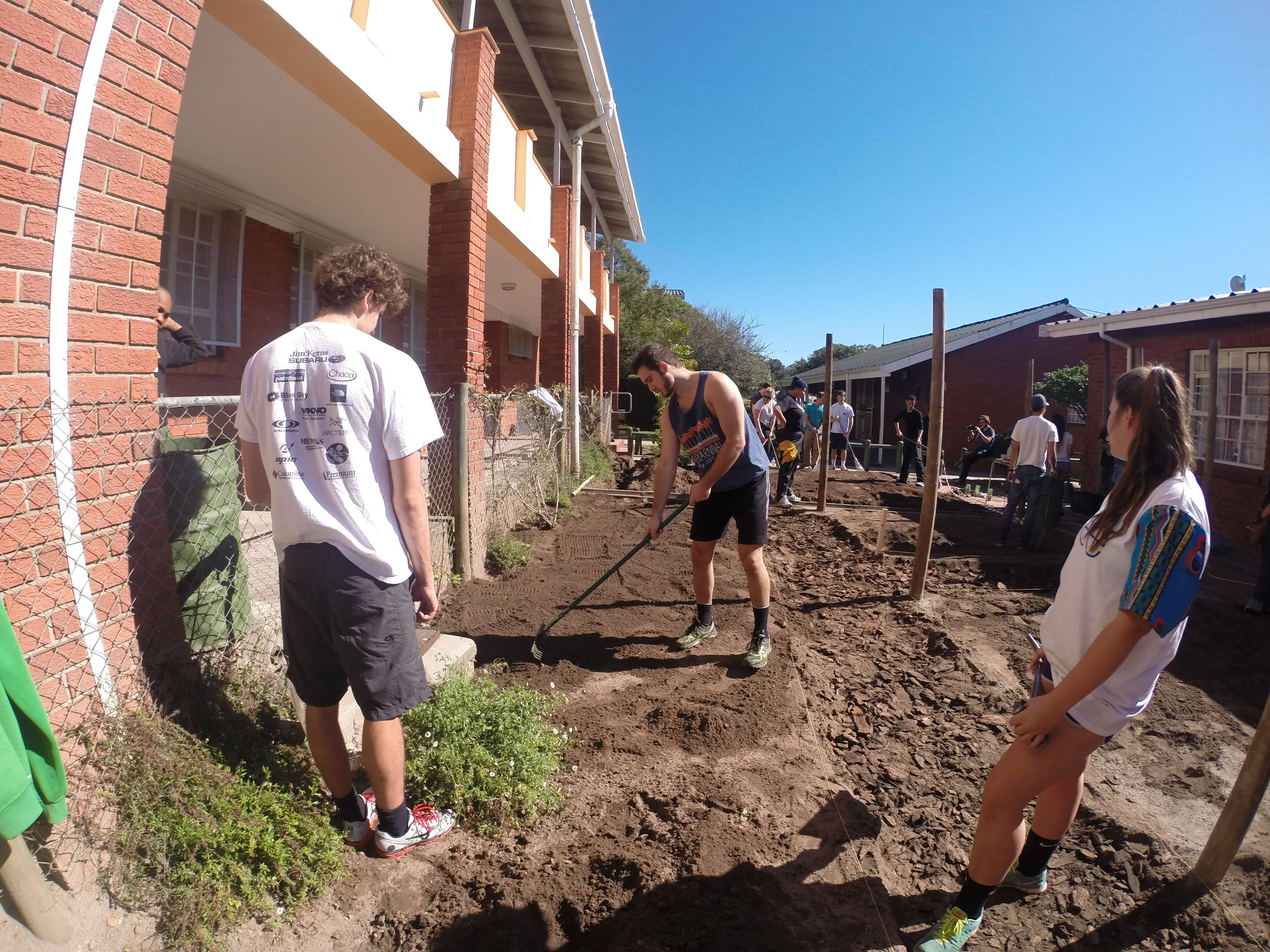
Building a Garden in Grabouw, South Africa
We all had a great time, but the most insightful part of the day was the opportunity to speak with the principal of the school. She shared all of the incredible things her students were achieving, including theatre events, afterschool programs, emerging science program, sports events, and university admissions. Her pride in the students was palpable. Yet, for each opportunity that her students enjoyed, they also faced a multitude of challenges. There was a chronic lack of parent involvement, funding, and technological access, all of which were exacerbated by the widespread prevalence of HIV/AIDS. The principal never spoke with a hint of pessimism, but it was clear that her life was consumed by those students. She needed more support, from the parents, the staff, and the government, if she was to be able to continue improving the quality of the school.
Upon my return from South Africa, I felt a bit lost as to how to proceed in a positive direction. It was so abrupt; there was no debriefing, no time to reflect before returning to the daily routine. When I applied to the Global Social Benefit Fellowship, I felt as if fate had driven me to a solution to the dilemma of how to continue to improve myself and apply my passions. South Africa shares the adventurous spirit of Alaska and the entrepreneurial spark of the Silicon Valley. Yet, it is even greater than the sum of those parts, because there exists so much potential for rapid, positive social progress. I found a new home in South Africa and am thrilled to return with a distinct purpose and focused goal. Here’s looking forward to a year of new experiences with a remarkable group of talented, passionate people.
Cheers