Leadership, Ignorance, Education, & Support

After almost six weeks in South Africa, my research partner and I were still unsure of how we could provide value to the enterprise that had so graciously hosted us. IkamvaYouth had been more supportive and encouraging of our work that I had ever anticipated. Yet, even after receiving feedback on an online survey from hundreds of tutors and conducting dozens of interviews, we felt lost as to how to turn our research into something tangible and beneficial to the organization. We asked Zoe Mann, IkamvaYouth’s Community Coordinator, to meet with us to discuss some preliminary research findings and try to discern potential deliverables.

Our research findings contained trends that indicated some major issues regarding the organization’s ability to engage with and retain its volunteers, the driving force behind its key activities. We did our best to frame the findings in a positive, solution-oriented light. Yet, it was overwhelmingly clear that we were going to have to report to Zoe some disheartening findings. We were nervous that we might be overstepping our boundaries and inadvertently disrespecting an organization that works tirelessly to improve the plights of its beneficiaries.

We delivered our findings to Zoe and waited anxiously for her response. Yet, when she began to speak, it was not with any tone of defensiveness or frustration. She seemed absolutely delighted and thanked us profusely for having gathered such valuable information. We were shocked. Zoe explained that IkamvaYouth had grappled with these same issues before but that past attempts to address them had been unsuccessful because people had been too concerned with protecting IkamvaYouth’s perfect image or insulting its employees and members. She thanked us for finally providing a researched, objective, and practical evaluation of the organization’s weaknesses.
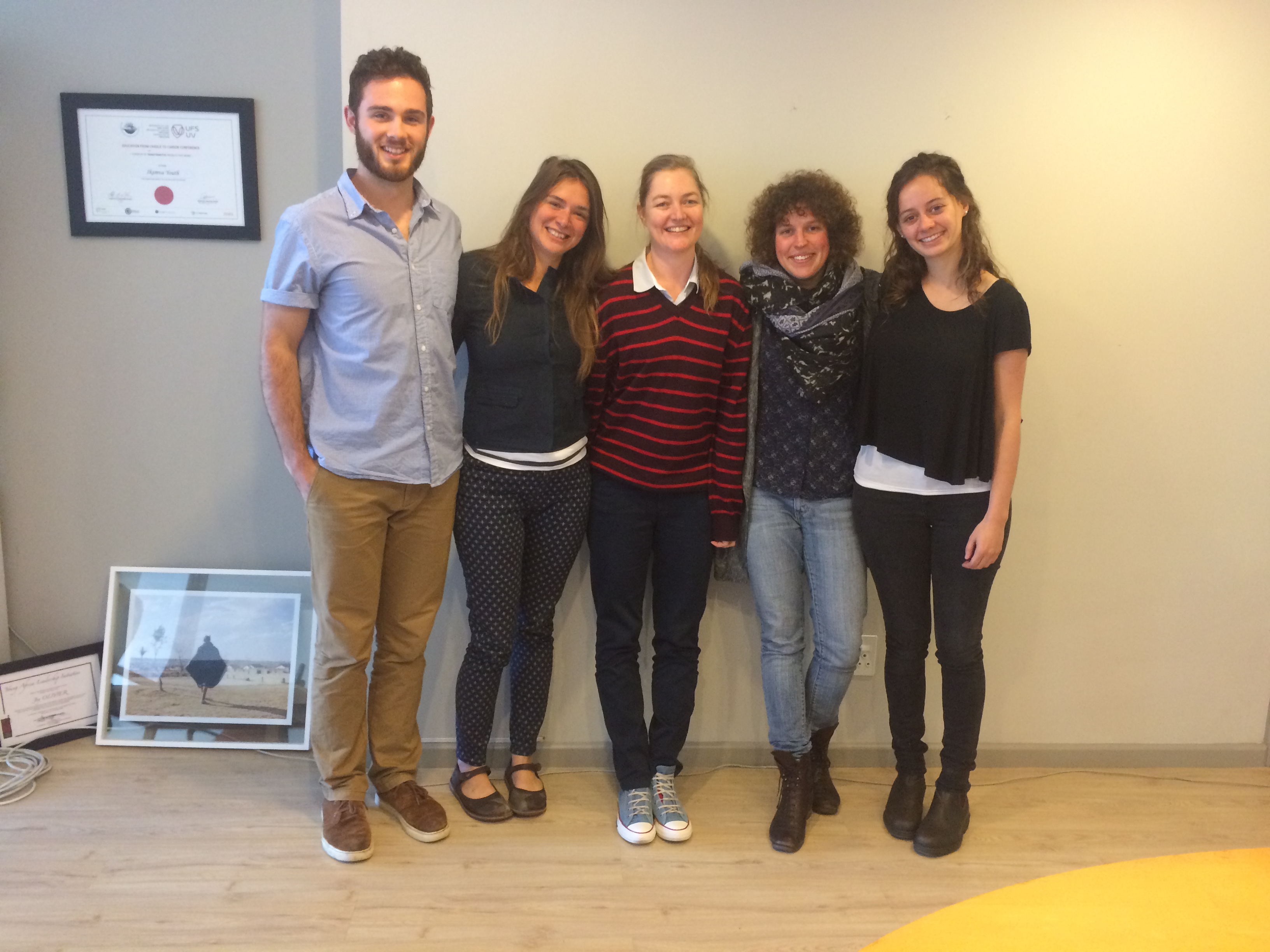
The exemplary IkamvaYouth leadership: Alex (Fundraising Coordinator), Joy Olivier (Co-Founder & Director), Zoe Mann (Community Coordinator).

Some of the exemplary IkamvaYouth national staff: Alex Smith (Fundraising Coordinator), Joy Olivier (Co-Founder & Director), Zoe Mann (Community Coordinator)

As we moved forward in the process of developing valuable deliverables to address these key findings, I was profoundly moved by Zoe’s candid response during that meeting. She had every right to question our understanding of the organization and to discredit our research on the basis that we were simply undergraduate students without any “real world” experience. She could have become defensive, rationalizing the findings rather than courageously addressing them. She could have asked us to shift our focus towards topics that weren’t so sensitive in nature. Rather, she exemplified the nature and composure of a truly inspiring leader.


___


The fellowship gave me the space to fully realize and appreciate the value of humility. For me, the concept of humility is rooted in the understanding that everyone, despite their education, experience, age, or salary, is inherently ignorant in some regards. Yet, we should not be afraid or defensive of this ignorance, for it is what defines our future potential. When Zoe graciously welcomed our critical research findings, she recognized that our unique insights could help IkamvaYouth in areas that it did not yet have sufficient information.

The fellowship also gave me an opportunity to understand my potential contributions to the future of social engagement. I firmly believe that my ignorance, of IkamvaYouth’s inner working, culture, and practices, was the basis of my value to the organization. Because I was acutely aware of my own ignorance but was neither too proud nor shy to ask questions and critically evaluate IkamvaYouth’s practices, I learned far more than if I had remained silent. Furthermore, these questions unearthed some key issues that had not been addressed by the organization in some time.

I realized, through this process of exploration, that I work best in an environment that allows me to be immersed in the action. Whenever possible, I tutored leaners, witnessing firsthand some the issues tutors discussed during interviews. I ate with the tutors during lunch breaks, learning about their lives outside of IkamvaYouth. I spent evenings with IkamvaYouth staff, discussing their vision for the future of the organization. These constant, informal experiences gave me insight into the culture of the organization and a profound respect for its members. Simultaneously, I felt like they began to reciprocate trust and respect. I felt valued and knew that my work was taken seriously.
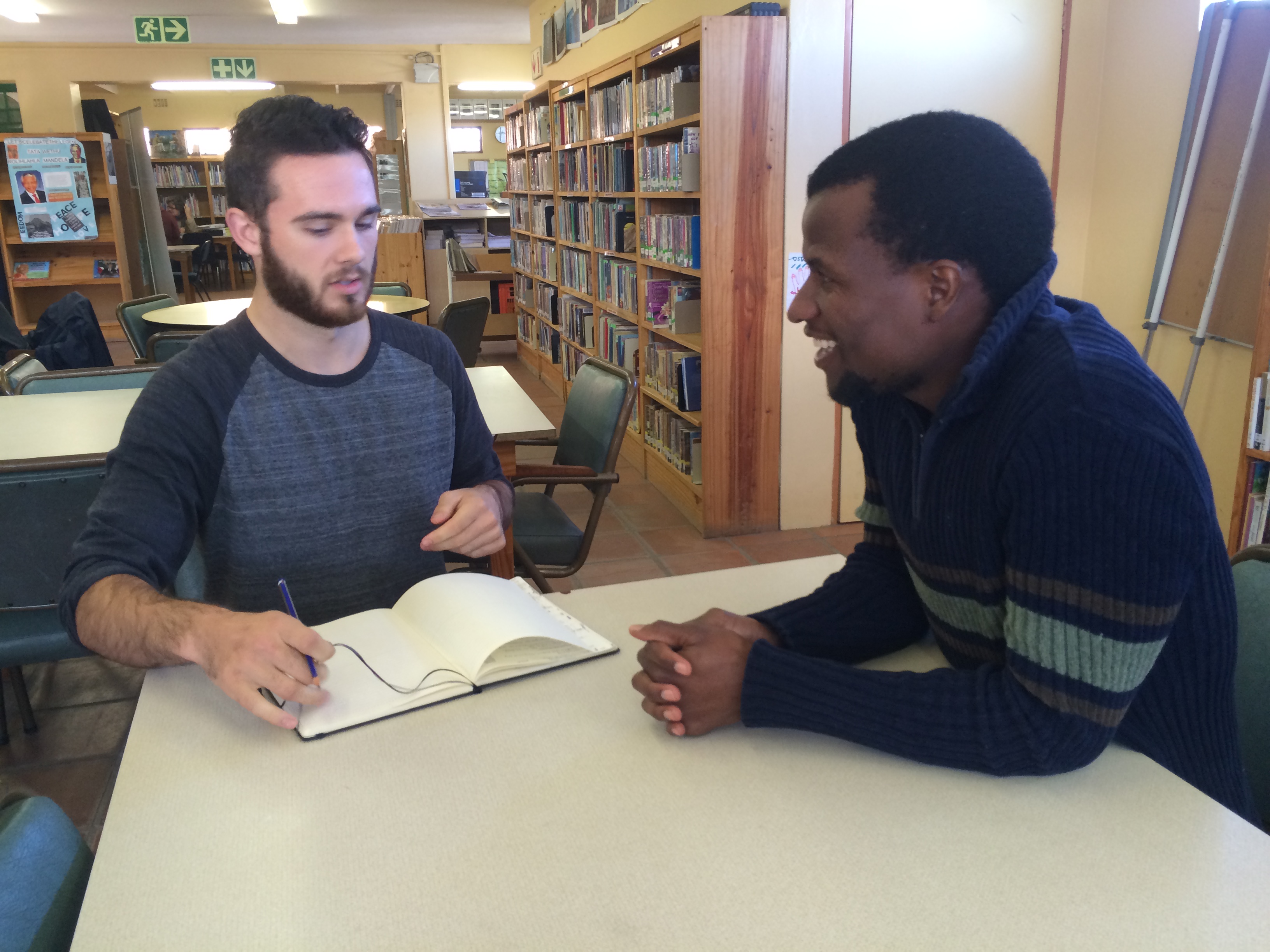
Tutors like Farai Mudi, of the Masiphumelele branch, made us feel welcomed and valued and taught us as much about hospitality as he did about IkamvaYouth as an organization

Tutors like Farai Mudi of the Masiphumelele branch made me feel welcomed and taught me as much about hospitality as they did about IkamvaYouth as an organization

Thanks to these informal discussions with learners, tutors, and staff, I began to understand the culture, tone, and vision of the organization. I feel that I have the potential to contribute to social engagement in the future by bringing this same acknowledged ignorance; although I do not necessarily have the answers, I can certainly ask the right questions.


___


The fellowship has been an unexpectedly magnificent asset to my own vocational discernment. As mentioned earlier, I pursued the fellowship as a means of experiencing unconventional education outside the classroom. I did not expect to be paired with an enterprise whose primary mission was rooted in education.

Working with IkamvaYouth allowed me to reflect upon my conception of the meaning and value of education. I saw youth, carrying the heavy baggage of challenging upbringings, fighting tooth and nail to earn their education. I saw tutors dedicating countless hours in order to ensure that the next generation had access to the support that many of them had lacked during their childhood. I saw staff working unreasonably hard to change entire communities through education.

Staff, like Zukiswa Gavu of the Masiphumelele branch

Staff, like Zukiswa Gavu of the Masiphumelele branch, work tirelessly to mentor and support their learners

As I saw these amazing things, I reflected upon the way I had previously regarded my own education. I returned to school with a view of education that was less rooted in prestige—GPA, professor references, class rankings—and more concerned with its contribution to my future potential and development. I have since enrolled in a masters program, less anxious to “escape” the classroom and more excited to have the means and capability to expand my skills through education.

I refuse to continue to view education as an inconvenient given out of respect to those disadvantaged youth who fight so hard to secure it. I am fortunate enough to have been given the time and space to come to this conclusion on my own. I am hopeful that, through the hard work of organizations like IkamvaYouth, more and more youth around the world will be given the same opportunity to realize the value of their education before it is too late.
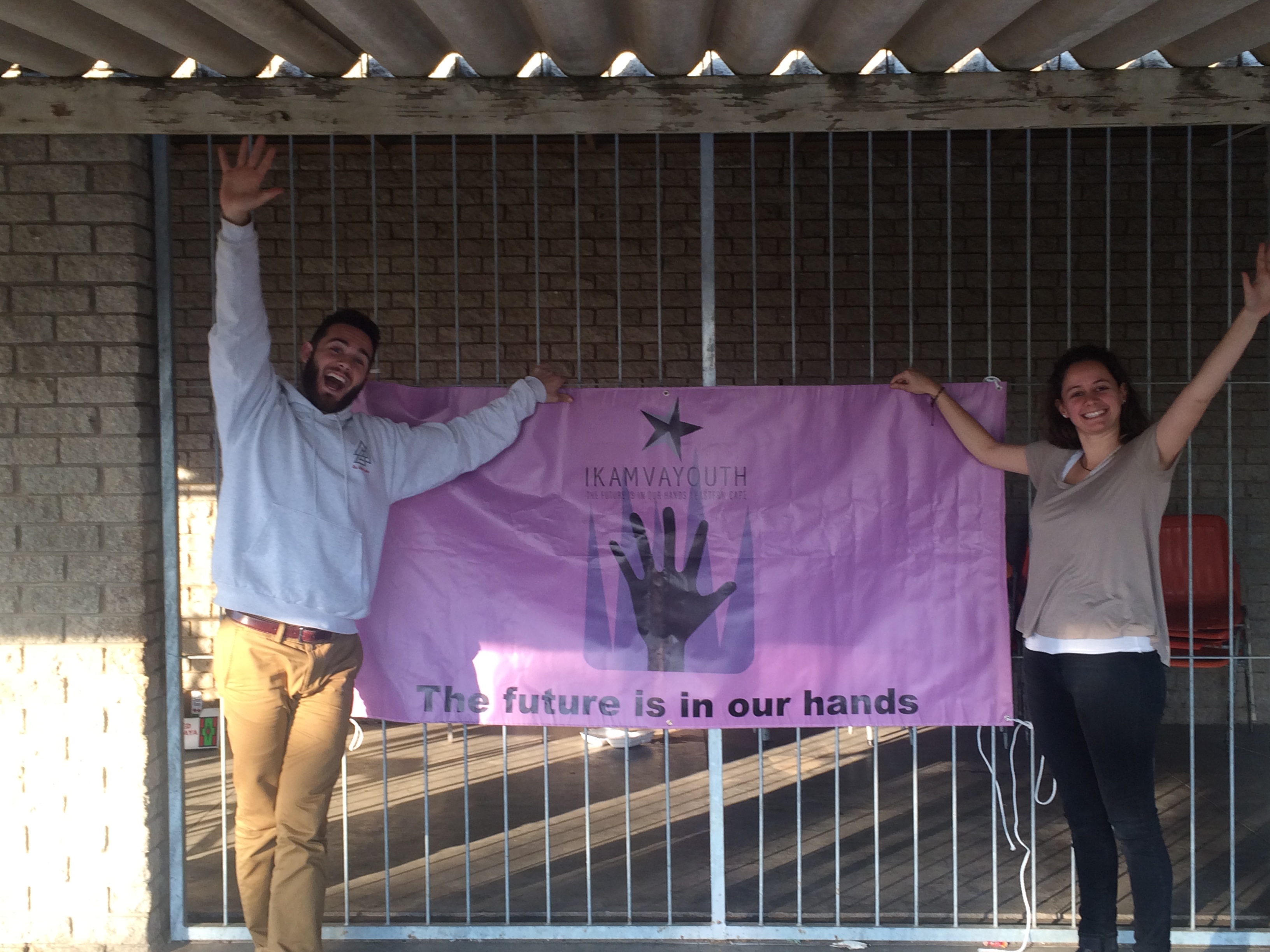
Our final day with the rural Joza branch in Eastern Cape

Our final day with the rural Joza branch in Eastern Cape


___


My experiences throughout the fellowship have changed my perception of my own personal capabilities because it constantly put my self-confidence to the test. I applied to the fellowship with little knowledge about social entrepreneurship and without any particular set of skills that set me apart. When I was accepted to the program, I knew that the tough was about to get going.

The first real challenge was developing a coherent research plan. Neither my research partner nor myself had experience in almost any of the areas in which we were expected to conduct research. We worked tirelessly with one another and our mentors, slowly rewriting, revising, and refining our plan right up until the day we departed for South Africa.

When we arrived and began conducting interviews and distributing surveys, we once again were forced to acknowledge the fact that we were not experienced enough to work completely independently. We reached out to IkamvaYouth staff who assisted us through every step of the research process. And as our research began to take shape, so did our understanding of the organization.

Yet, as the research developed, we were forced to face the fact our original plan no longer aligned with the reality of the needs of the organization. With Zoe’s help, we pivoted and developed several entirely new deliverables that will have a far more impactful effect on the organization than we had originally planned.

Finally, after returning to the United Sates and beginning to develop our deliverables, my research partner and I came to the sobering realization that we did not have enough information to produce the deliverables we intended to develop. When we reached out to IkamvaYouth for support, they dedicated an entire group of individuals to assisting us in gathering all of the relevant information.

I list these experiences not to “pat ourselves on the back,” but to point out the fact that, each time we were faced with adversity, we were able to revive our commitment to the project by seeking the support of others. I originally pursued the fellowship because I was, frankly, fed up with conventional learning, in which students work towards a predetermined answer. The fellowship more than lived up to my expectations in this regard. I was forced to work on tasks with which I had absolutely no prior experience and to address each and every obstacle with tenacity and creativity.

I slowly came to the realization that just about every other person on this earth is also improvising on a daily basis in order to solve real problems. By coupling a positive mindset and self-confidence with the support of allies, I was able to achieve far more than if I had assumed that my worth was determined by my prior experience. I believe that this ideology is central to IkamvaYouth’s culture, in which learners and tutors refuse to be limited by what they lack, be it resources, knowledge, financial support. Rather, they rely on one another and their drive to improve in order to pull themselves from poverty through education. I thank my research partner, mentors, professors and the IkamvaYouth learners, tutors, and staff for exemplifying and helping me to appreciate the value of mutual support.
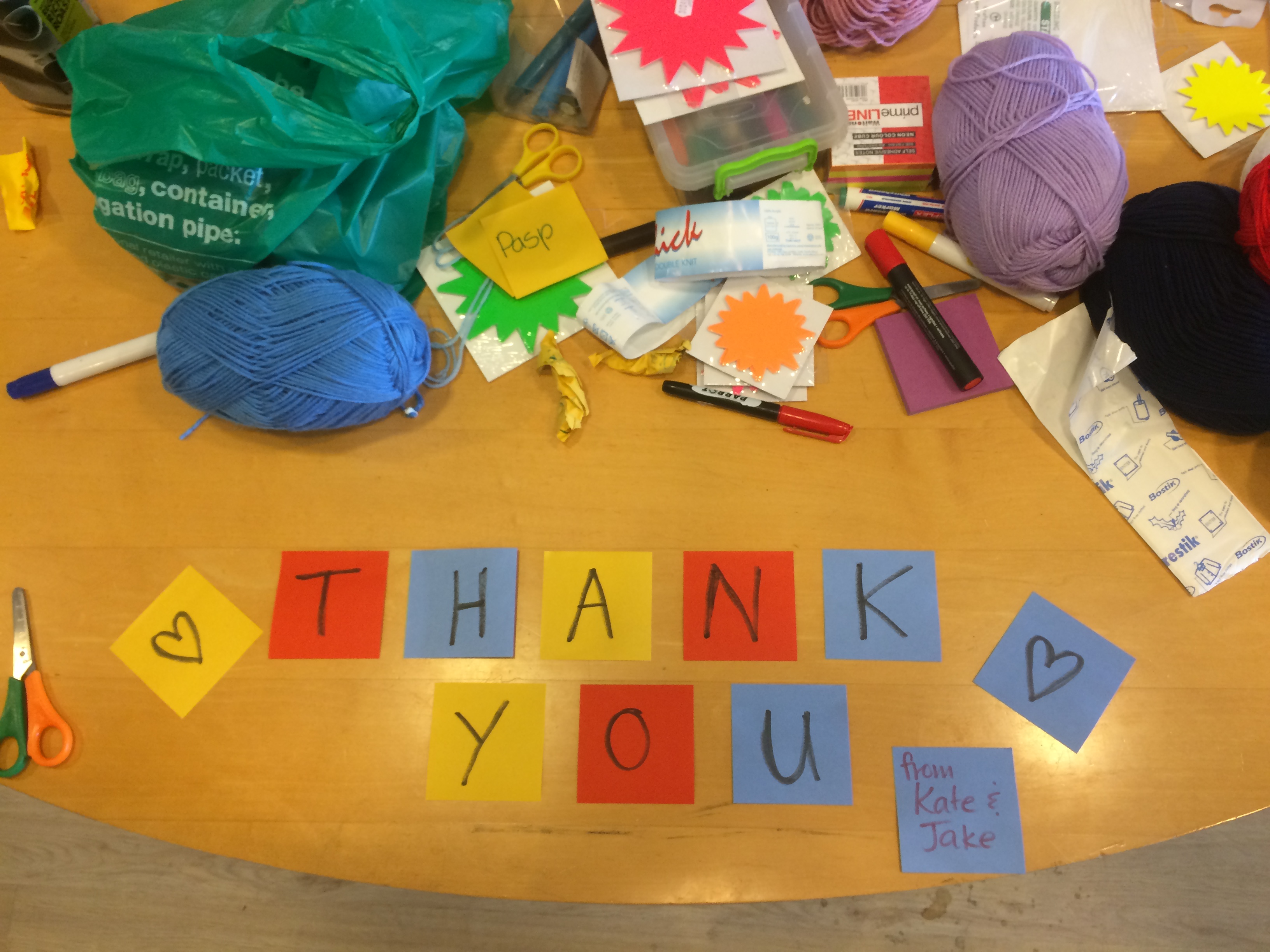
The final goodbye we left for IkamvaYouth

The final goodbye we left for IkamvaYouth


Cheers

Posted in Uncategorized | Leave a comment

In Summary

Wow. It was a very short 47 days. You might be wondering if you missed all of my in-field blog posts from those two months. The truth is, I had so many opportunities to update this blog but I just felt like I wasn’t quite ready to share my experiences yet. I have a bad habit of overanalyzing things and I’m learning that experiences can’t always be condensed down to cohesive blog posts. But I’ve been missing out on the opportunity to get my thoughts out of my head and hear what others think about them. And recent conversations with my parents, my project partner Kate, and many other amazing people have forced me to do just that. They forced me to stop analyzing for a minute and just tell my stories. So, here goes.


The vivid community-produced paintings on the walls of the Masiphumelele library, one of the IkamvaYouth branch locations in the Western Cape

The vivid community-produced paintings on the walls of the Masiphumelele library, one of the IkamvaYouth branch locations in the Western Cape

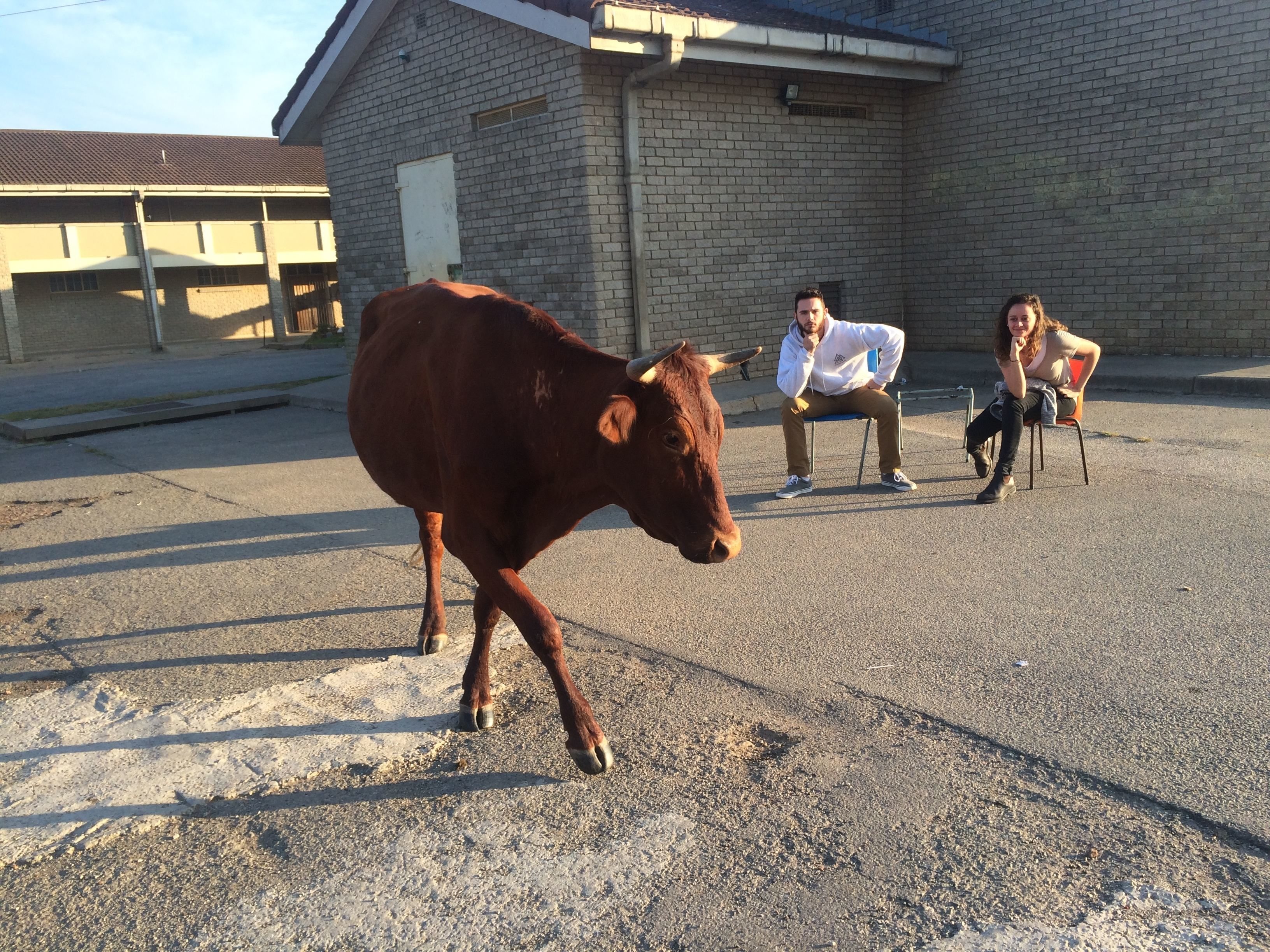
Life in Joza, a rural Eastern Cape town, is quite different than that in urban areas, evident by the livestock animals roaming freely through the open halls of the local high school

Life in Joza, a rural Eastern Cape town, is quite different than that in urban areas, evident by the livestock animals roaming freely through the open halls of the local high school

Those seven weeks were absurdly fun, in so many ways. I had the privilege to work in an astonishing range of environments, from the dense urban townships in Cape Town to the quiet villages of the rural Eastern Cape province. Each and every one of the specific experiences I got to be apart of had a unique way of contributing to my own “vocational discernment,” the junction of my passions, my talents, and the world’s needs. The concept of vocational discernment has been weighing heavy on my mind for the past… few years, it seems. I know that doesn’t necessarily make me unique. Every human being has surely grappled with the question of what he or she is “meant” to do.

Since vocational discernment is an abstract concept that I, among other things, tend to overanalyze, I sometimes get a bit anxious when I’m asked what I want to do after graduating college. And it’s my own fault, really. I get stressed because a phenomenon known to millennials as FOMO: Fear Of Missing Out. According to Urban Dictionary, FOMO is “an omnipresent anxiety brought on by our cognitive ability to recognize potential opportunities.” That, for me, is just an elegant way of saying that that the clock is ticking. Of course, uncertainty over the future should not control my decisions. I think I’ve come to accept a bit of FOMO in my life without letting any anxiety about the future detract from the beauty of life that surrounds me. But it’s hard to deny the fact that if I’m at a pivotal part of my life in which the ramifications of each and every decision will likely have a profound impact on my life’s trajectory. The closer I get to graduation, the more I become aware that things are starting to moving crazy fast.

________

If you had asked me to describe myself before leaving for Cape Town, I would probably have used the word efficient. To me, efficiency means cutting out waste, distractions, and obstacles to success. And I don’t limit that definition strictly to professional settings. I love finding ways, often through technology, to cut out wasted energy in everyday life. If there’s one saying I live by, it’s, “don’t work hard; work smart.” Perhaps it’s that same fear of missing out that drives me to be as efficient as possible so I can pursue a range of opportunities that might not otherwise be attainable. But, the truth of the matter is that, regardless of my enthusiasm, not every person in the world wants to hear me talk about optimizing email inboxes or streamlining their daily habits.  It wasn’t until later in the field placement, during a five-day backpacking trip through coastal villages in South Africa’s rural Transkei region that I fully realized how out of touch my expectations were with the reality of life for many South Africans.

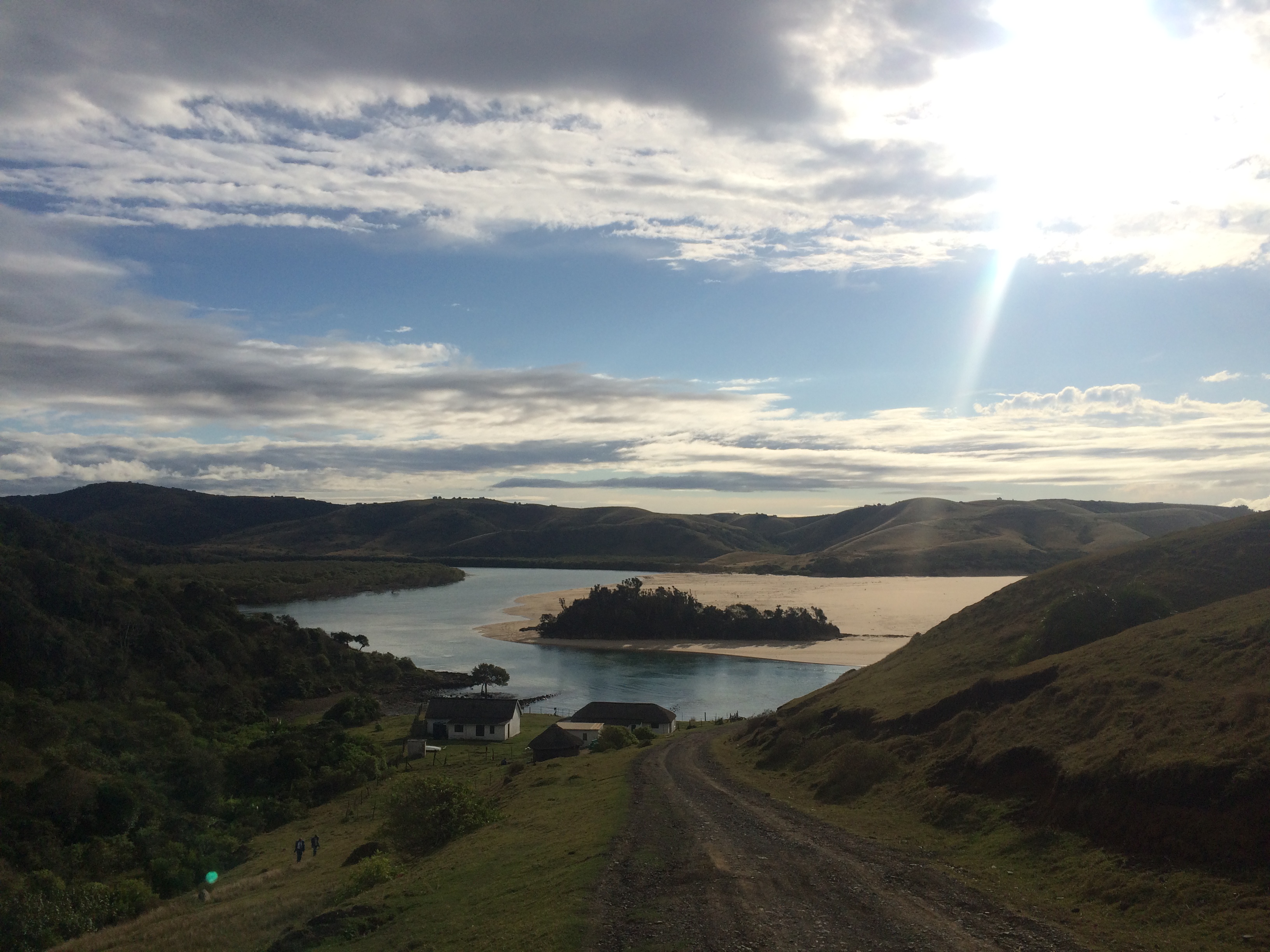
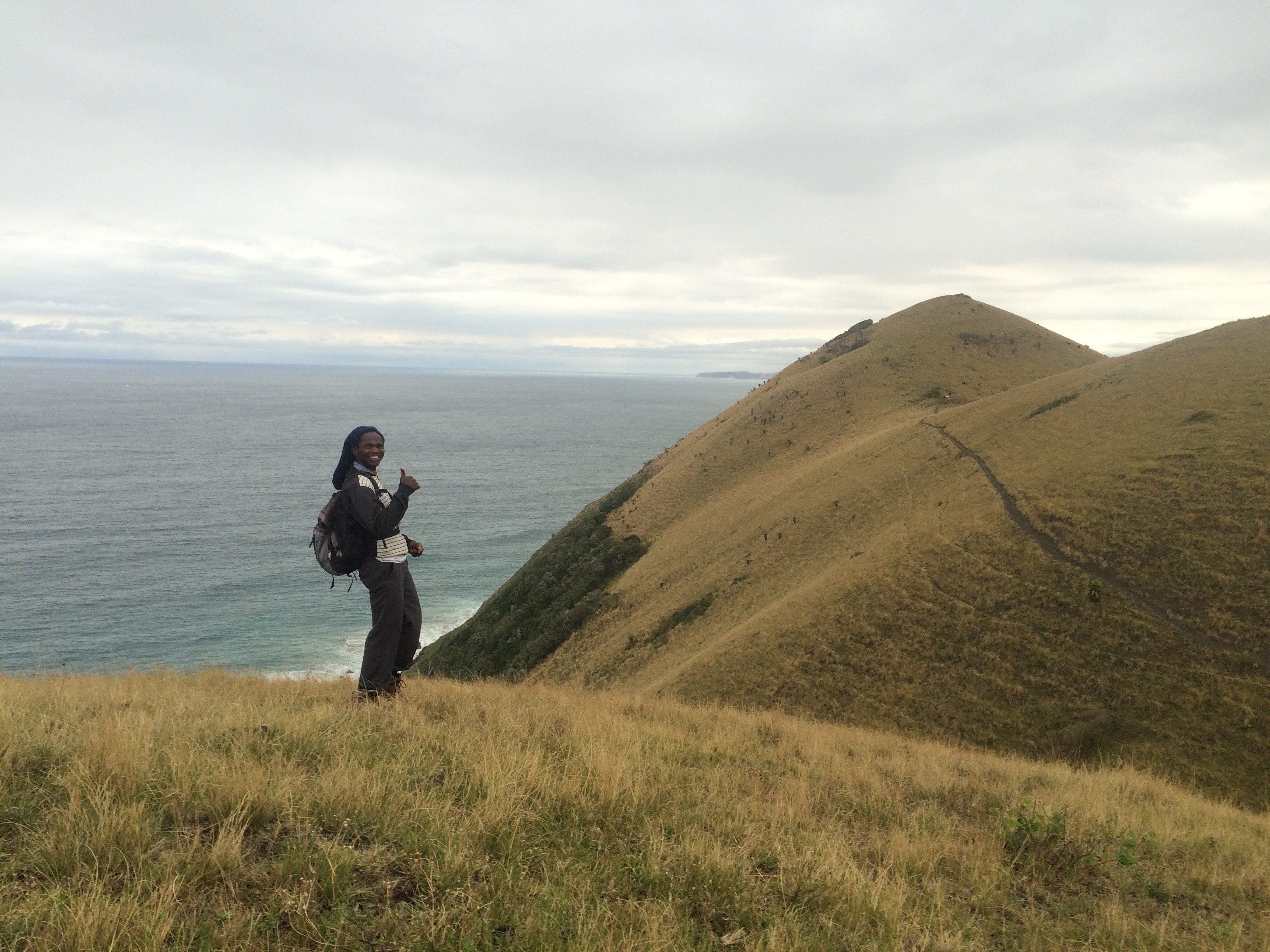
The Transkei region is one of the most beautifully rural areas in South Africa and was even at one time a distinct political republic set aside for ethnic Xhosa people

The Transkei region is one of the most beautifully rural areas in South Africa and was even at one time a distinct political republic set aside for ethnic Xhosa people

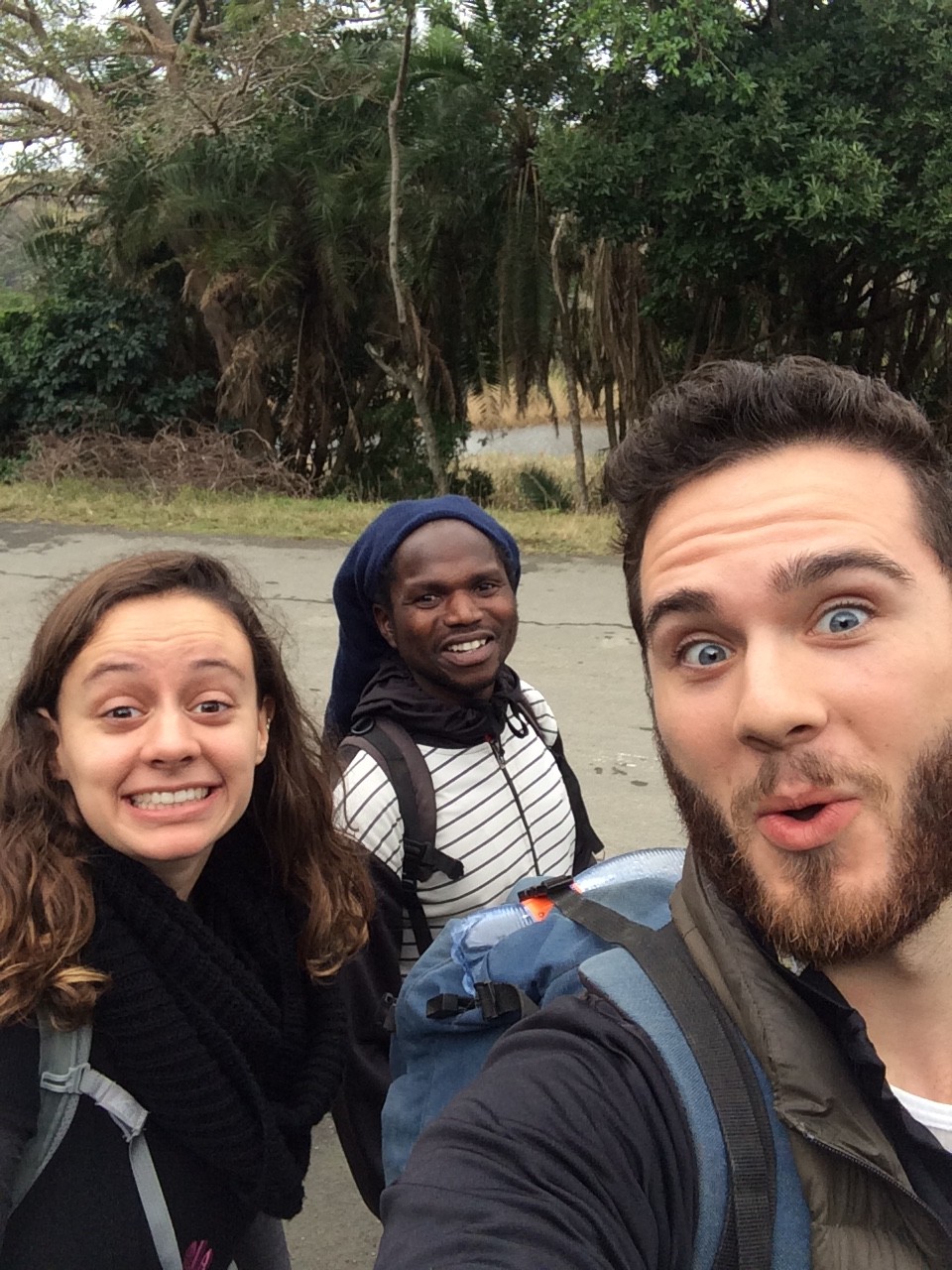
Kate, Sipho, and myself excited to leave the backpackers in Port St. Johns and begin the five-day backpacking journey through the "Wild Coast"

Kate, Sipho, and myself excited to leave the backpackers in Port St. Johns and begin the five-day backpacking journey through the “Wild Coast”

After an exhausting (and seemingly exclusively uphill) first day of hiking, we arrived at the final stretch of beach. Our guide Sipho, a native and resident of the area, seemed anxious when he noticed the clouds and rain in the distance. As we approached the storm (and vice versa), we hastily yanked our jackets and pack covers out of our bags as the rain began to soak our thermal layers. As we picked up the pace, Sipho pulled an inexpensive feature phone from his tiny bag. After holding it to his ear silently for a few seconds, he said, “We must hurry.” The tone of his voice and the fact that the temperature was dropping rapidly with the setting sun were great motivators. We hustled towards the village, visible in the distance, and passed a woman and a young boy in plain clothes doing the same. Sipho said something to her in Xhosa and she smiled shyly but stayed silent.

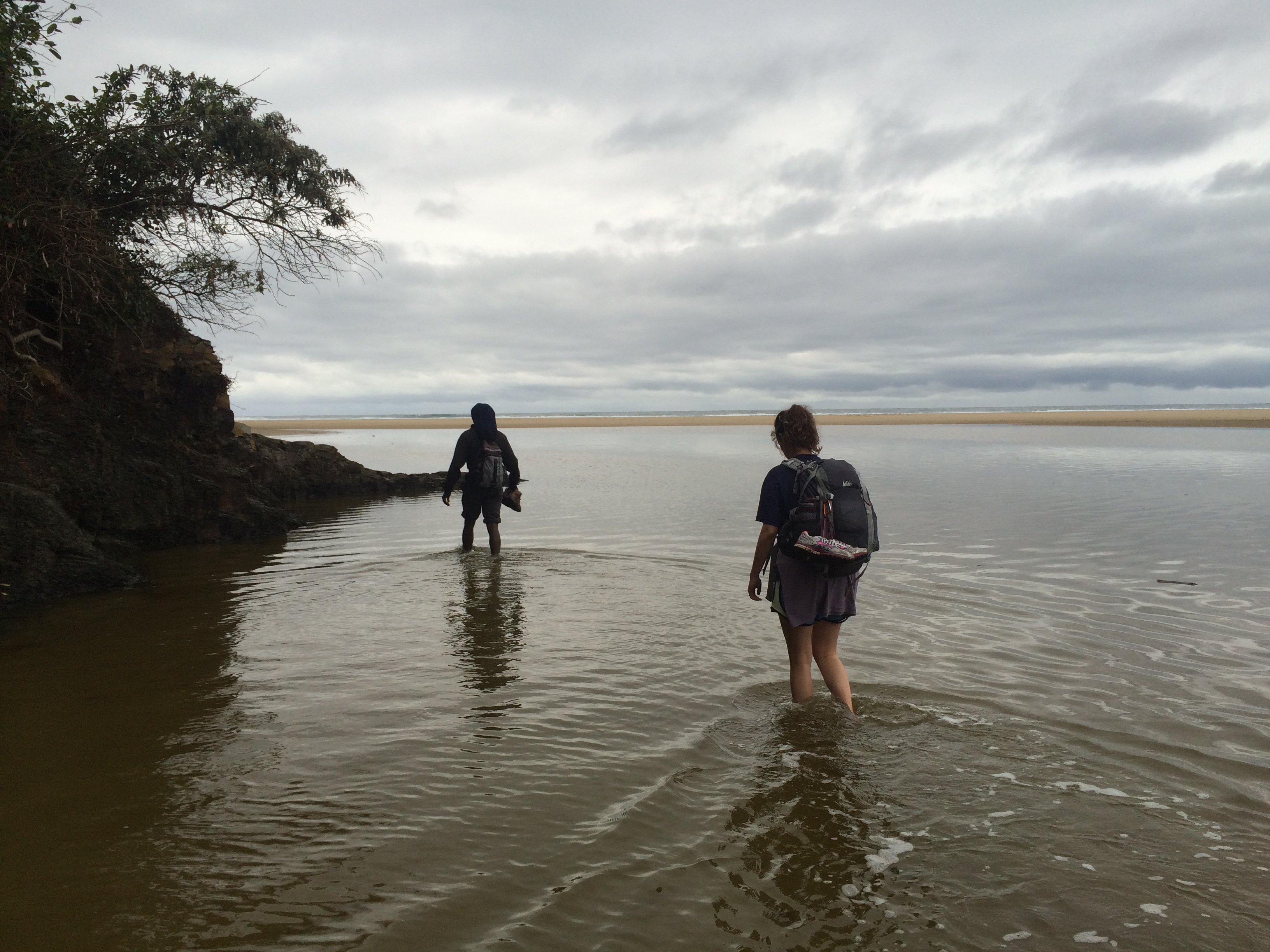
Kate and Sipho cross one of the many rivers that feed into the Indian Ocean

Sipho and Kate cross one of the many rivers that feed into the Indian Ocean

As we neared the village and entered the heart of the storm, Sipho pointed out the river crossing and explained that there was no way to cross the raging river water without the boatsman–and he was nowhere to be found and was not picking up his phone. After frantically making several more unanswered phone calls, Sipho explained that his phone was waterlogged and, although it was still powered up, some of the buttons had stopped working and he could not access his contacts in order to call the boat operator. “So how else can we get to the village?” I asked. “We can not. We would have to turn around.”

We can not? Surely he’s joking, right? We just hiked up and down hills for five hours.

At this point the young woman and boy had caught up to us, the boy sobbing as the gusts of wind hurled sand and saltwater into his eyes. We crafted a makeshift rain cover out of a trash bag and took refuge in the forest near the river. As we all began to realize the severity of the situation, Kate, sternly but calmly, asked, “Sipho. We need to come up with an alternative plan now. How are we going to get out of here?” 

I’ve ever heard more contained panic in one sentence then I did when Sipho replied, “I don’t know.” Then, just as quickly as the panic had entered his voice, it left as his phone started ringing. “It’s the boat operator.”

We crossed the river one at a time because the boat operator skillfully maneuvered the kayak through the raging waters, aggravated by the intense downpour of rain and vicious winds. It took almost an hour to cross the river and hike to our residence for the evening. We took turns carrying the boy who, although still crying, had lost the fear in his eyes.

That was one of the most physically and psychologically draining experience of my life. The reality of the situation hadn’t really sunk in until I awoke the next morning. What we experienced was not staged. It was not just a zany evening of shenanigans.

We got a very real glimpse into what it means to rely entirely on someone and what it can mean when that lifeline disappears.

We understood how dependent our lives are on technology.

And we realized that for many people, like that young woman and boy, sometimes there is no easy solution. Sipho later told us that if we hadn’t been there with a cell phone, she would have turned around and made the two-hour-long hike through the steep, muddy hills back to the village from which she had come.

That experience was truly transformative for me because, in one sentence, Sipho had perfectly communicated the reality of living in a place where the things that I take for granted are never a guarantee.

As you can see, there's never been a happier person in the world than Sipho

As you can see, there’s never been a happier person in the world than Sipho

I’m happy to say that the rest of the backpacking trip was relatively stress-free. But I am thankful that I got to experience such a journey and develop respect for the people and lifestyle of the Transkei and South Africa as a whole. My love of efficiency has not disappeared, but it is now accompanied by a healthy dose of understanding that the world I am accustomed to is far removed from the reality of most. For once, the world had not moved at my pace. I feel profoundly humbled to have been able to come to that realization without serious consequences.

This fellowship has helped me to put aside some of the stress of vocational discernment. I’m starting to get some clarity as things begin to line up and make sense. It’s taken some personal growth for me to realize that I don’t need to analyze anything right now. It’s taken that same growth for me to realize that writing a blog post doesn’t require anything except for me to tell a story.

Cheers

Posted in Uncategorized | Leave a comment

A Home Away From Home(s)

One of the perks of being from Alaska is that everyone whom I meet seems to be intrigued by my homeland. It’s a cradle of adventure and truly one of the last frontiers. It’s always easy to talk about Alaska, from the incredible summer fishing to the seemingly endless cold, dark winters. It is certainly not the easiest place in the world to live, but it’s profoundly rewarding and I’m very proud to call Alaska home.

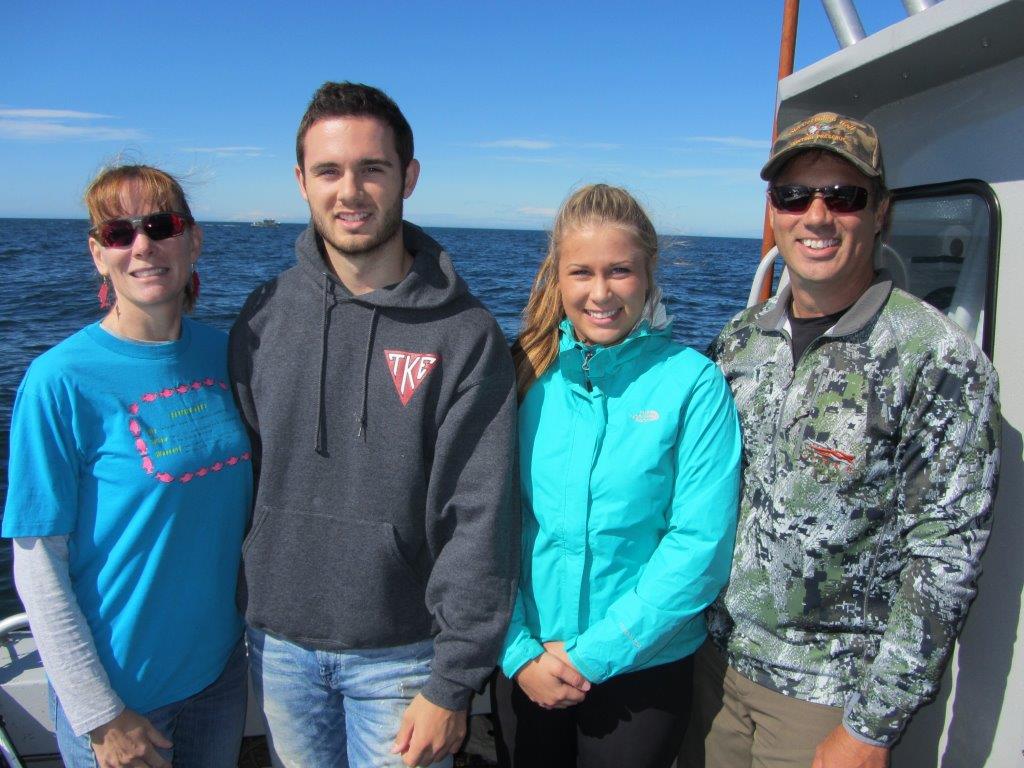
Fishing for halibut with my family in Alaska

Fishing for halibut with my family off the coast of Homer, Alaska

Growing up in Alaska played a huge role in my development because there was always a beautiful landscape for me to explore. Yet, when it came time to make the transition to college, I was ready to venture away from home and experience life in a very different place. The love for adventure that Alaska instilled in me also inspired me to turn my attention towards the incredible ingenuity found in the Silicon Valley. The entrepreneurs, engineers, and artists of the Bay Area share a passion for upheaving the status quo, reimagining new ways to live and sparking changes that resonate throughout the world.

Of course, it was Santa Clara’s Jesuit education that has been the most transformative component of my time in college so far. I had never heard of Santa Clara before applying, but when I arrived I was introduced to professors, faculty, and students who shared a common vision of human progress which inspired them to pursue learning beyond the classroom. During the spring of my sophomore year, I enrolled in a course which examined entrepreneurship in the context of social justice. I had only a very basic knowledge of business or entrepreneurship, but felt drawn to the course as a refreshing departure from the rigid structure of my technical engineering courses. I certainly got a whole lot more than I could have ever anticipated. If my previous courses had a lacked a certain level of critical analysis, this course more than made up for them.

I would consider myself a very logic-oriented person, but in the past I have based my understanding of the world upon the framework of mainstream American society. Before taking the social entrepreneurship course, I was aware of the monumental challenges faced by billions of people around the world, for whom things like health care, education, and energy are not easily accessible. But these issues seemed so much bigger than myself that I had never really identified how I, as an individual, could affect positive change in the world. Each day I attended class, I learned of countless examples of incredibly passionate and competent individuals working in harmony to forge new paths towards social justice. Yet, they certainly did not fit my preconceived notion of a social activist. What truly inspired me was that these entrepreneurs of various backgrounds, including academics, social activists, and community leaders, all shared a common trait; they challenged popular conceptions of social activism by addressing issues with novel and unprecedented solutions. They weren’t simply organizing charity drives or distributing free food to the needy. They attacked issues with regard to the complex social, economic, and cultural factors and placed the well-being of their stakeholders over all else.

During the duration of the course, I can truly say that I began to see the world differently. Just a few weeks after the course ended, I departed for South Africa, where I spent the next five months studying at The University of Cape Town. There were several organizations associated with my aboard program that offered opportunities for students to take part in community engagement activities, and one in particular caught my eye. Educating Athletes, an emerging enterprise, offered tutoring, mentoring, and financial support to high school student-athletes from disadvantaged communities.

Upon arrival at the tutoring center, I quickly realized that the students were intrinsically different than those that I had tutored previously. They all had positive, optimistic attitudes, but, I often found there to be a cultural barrier that had to be broken down before I could openly communicate with them. These boys had very different backgrounds from myself and sometimes it took time to understand the unique way in which they interpreted information. As I learned about their passions, opinions, and daily lives, I slowly began to understand their learning styles. And as I learned about them, I also learned about myself and the fact that the lens through which I had previously viewed the world did not always hold true in a place so far removed from home. Those students gave me so much more than I could have possibly given them because they inspired me to reconsider the importance of cultural context to even something as seemingly simple as an hour of algebra tutoring.

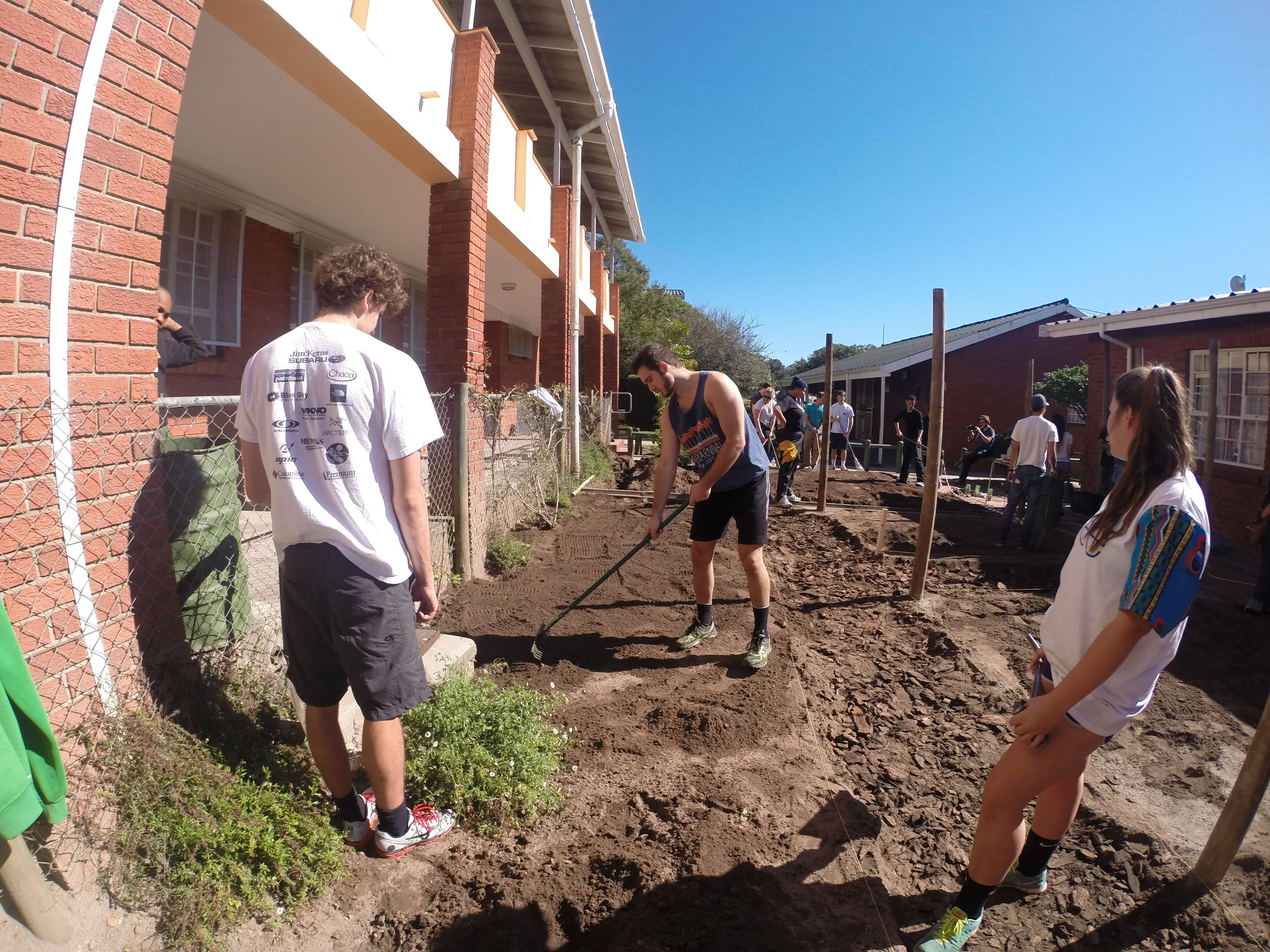
Near the end of my time abroad, I spent a weekend in a small town just north of Cape Town, Grabouw, which is home to some of the most beautiful apple orchards in all of Africa. Along with dozens of other students, I spent the first day at a local school constructing a new garden in which the students could learn about biology, botany, and sustainability.

Building a Garden in Grabouw, South Africa

Building a Garden in Grabouw, South Africa

We all had a great time, but the most insightful part of the day was the opportunity to speak with the principal of the school. She shared all of the incredible things her students were achieving, including theatre events, afterschool programs, emerging science program, sports events, and university admissions. Her pride in the students was palpable. Yet, for each opportunity that her students enjoyed, they also faced a multitude of challenges. There was a chronic lack of parent involvement, funding, and technological access, all of which were exacerbated by the widespread prevalence of HIV/AIDS. The principal never spoke with a hint of pessimism, but it was clear that her life was consumed by those students. She needed more support, from the parents, the staff, and the government, if she was to be able to continue improving the quality of the school.

Upon my return from South Africa, I felt a bit lost as to how to proceed in a positive direction. It was so abrupt; there was no debriefing, no time to reflect before returning to the daily routine. When I applied to the Global Social Benefit Fellowship, I felt as if fate had driven me to a solution to the dilemma of how to continue to improve myself and apply my passions. South Africa shares the adventurous spirit of Alaska and the entrepreneurial spark of the Silicon Valley. Yet, it is even greater than the sum of those parts, because there exists so much potential for rapid, positive social progress. I found a new home in South Africa and am thrilled to return with a distinct purpose and focused goal. Here’s looking forward to a year of new experiences with a remarkable group of talented, passionate people.


Cheers

Posted in Uncategorized | Leave a comment