

The famous Cart Lady standing behind her masterpiece.
Ring, ring, ring! “Watch out for the cart,” she yells in a thick Mandarin accent while shaking a bicycle bell. Traipsing in the middle of a busy intersection, the cart lady is both marketing her makeshift business and causing a miniature commotion in the bustling streets of Shanghai. I am flabbergasted… yet, extremely curious of her work. “What is this woman doing,” I gasp to my mother, who is navigating our way to my aunt’s house. “Ah, that must be her business,” my mother replies. I pause to think for a moment. Attempting to do business through this unconventional method – she is so unreasonable! How could she make a living off of this? Why resort to this business when she could have a more stable job? These questions raced in my head as my mother and I hurriedly searched for our destination. At the time, I neglected to think further about the cart lady, so I snap a photograph and let her be.
Shanghai was a major learning experience. Flying there with my preconceived assumptions of Shanghai’s urban development, state-of-the-art technology, and a familiarity with Chinese culture, I encountered the opposite of my expectations. Standing in the Pu Dong region of Shanghai in an underdeveloped, rural farm while visiting my family demonstrated the major social disparities often overshadowed by the all too dominating Shanghai skyscrapers. During our one-week visit with my relatives, I also visited my great-uncle suffering from Alzheimer’s disease, shocked to find him placed in an overcrowded psychiatric ward rather than a specialized facility. After speaking with my aunt, I learned that the Chinese government had unfortunately cut some of the budget allocated to that hospital. Angered by shortage of resources, which occurred in the midst of Shanghai’s skyrocketing economic development, I simultaneously felt a sense of determination to one-day bridge the many gaps of social injustices that occurred right before my eyes during my short visit to Shanghai.
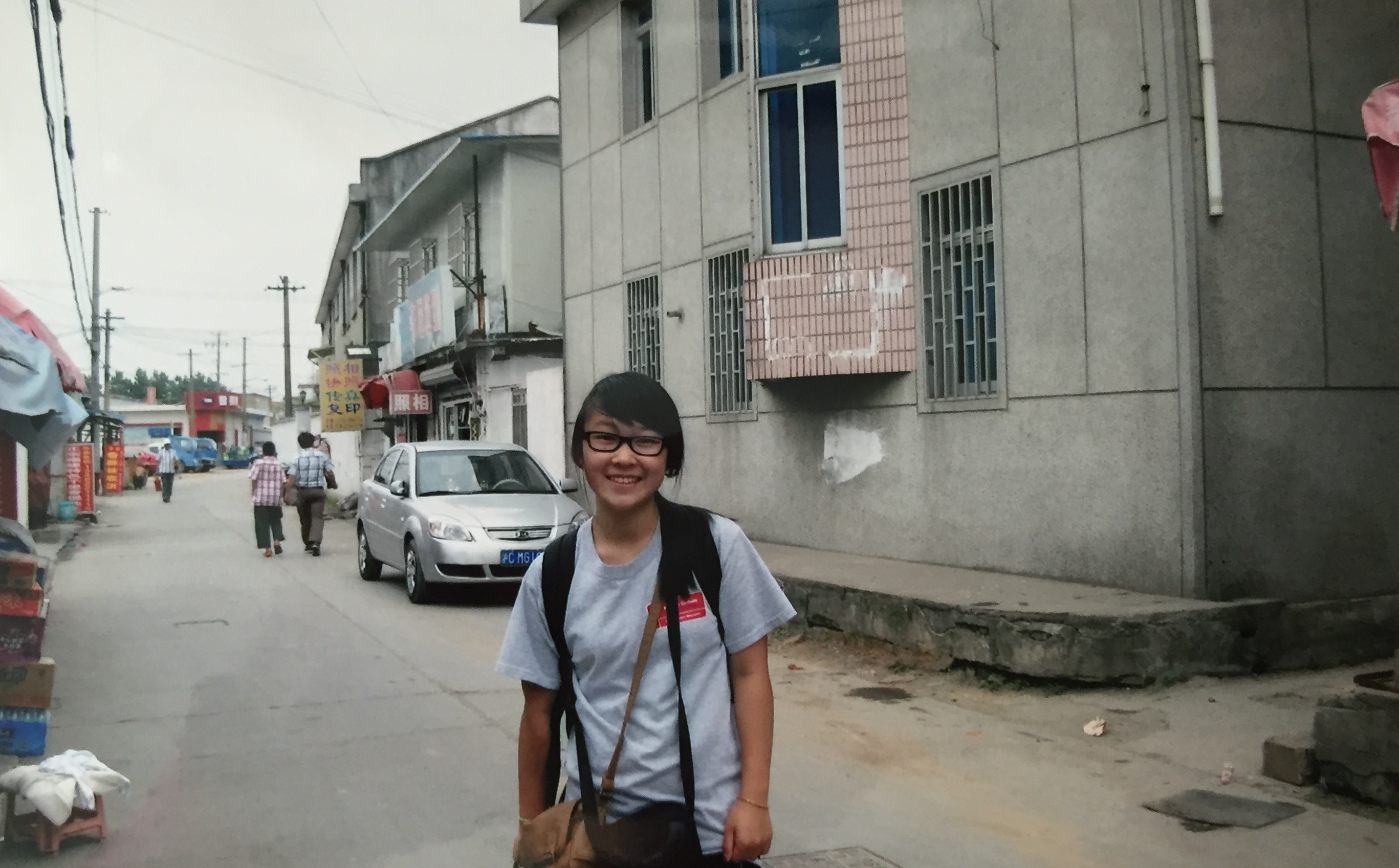
Bleak skies and dusty driveways alongside the Pu Dong region of Shanghai.
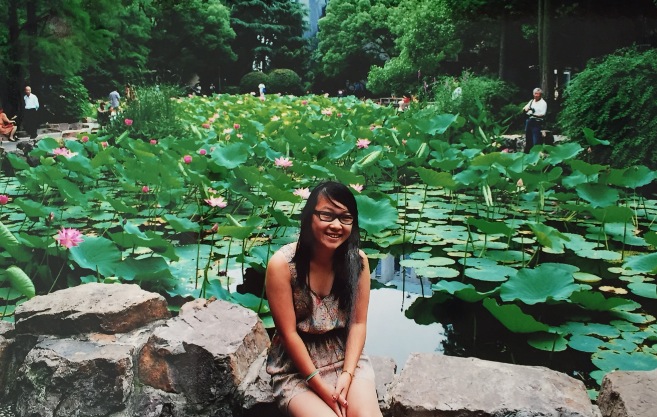
Pu Xi, Shanghai. What a difference 16 kilometers makes in this beautiful urban garden!
Back at home in the East Bay Area, I always felt drawn to careers in the Science, Technology, Engineering, and Mathematical (STEM) fields. Advanced Placement Chemistry was where I found comfort as our class ran daily experiments on acid-base titrations that always culminated in fun laboratory reports. While Chemistry haunted the lives of many of my peers, I was less drawn to reciting the properties of solids, liquids, and gases and instead, I enjoyed crafting the laboratory reports and investigating errors in my experiments. Through chemistry labs, I was formally introduced to research designs and methods that shaped my understanding of science’s role in society. I learned that scientific experiments are inherently creative and are constructed upon the imagination and design of the experimenter. As I have pondered more and more about the cart lady, I began to link the similarities of my chemistry experiments with her business approaches, which modeled the science experiments I did in the laboratory! The cart lady and I were more alike than I had previously thought because she was also combining her structured, marketing approaches with her product (the cart) in a creative manner, much like how oxygen, an abundant element on Earth, reacts with methane bubbles to create something unique. It was the experiments I did in school that aided my pursuit to study public health, in addition to exploring how science could benefit communities at large. Though her choice of occupation may not have been ideal, she, like many of the social entrepreneurs of the world, was investing her time in a successful business by fearlessly attracting many locals and tourists to her stand. Here was a business entrepreneur discovering new ways to make ends meet. Unreasonable as this may be, the cart lady is proof that creativity has no limits in the working world. Her drive to sustain her business for the long run was more inspiring than any skyscraper I have ever encountered. Although she was only a one-person business, she has influenced my life (and arguably many others too) in immeasurable ways.
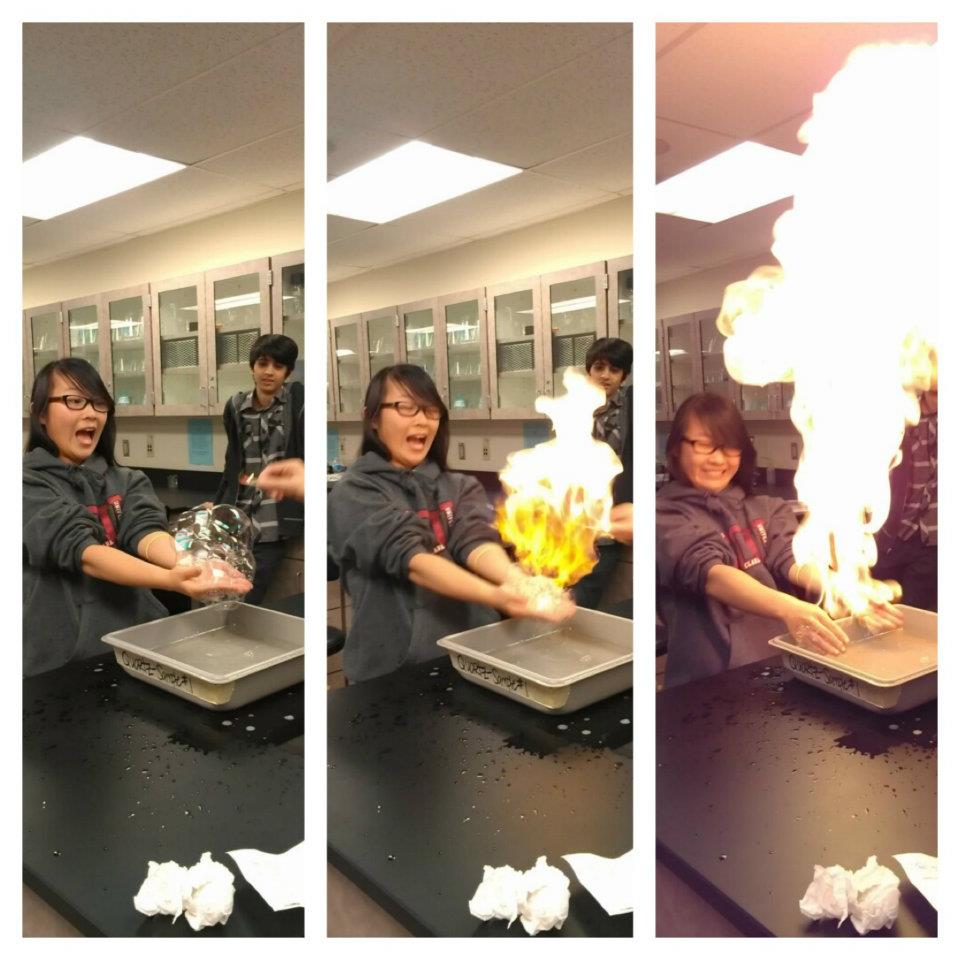
Fire bending explained:
This reaction used methane bubbles (CH4) and oxygen (O2) to create a flame. Because methane is highly combustible, when a flame is added to the bubbles, it reacts rapidly with oxygen to form carbon dioxide and water.
Chemical Reaction: CH4 + 2O2 –> CO2 + 2H2O
Since then, I have taken these lessons and have recently been able to apply them into my coursework at Santa Clara University (SCU). During the first quarter of my Junior year, I took an Epidemiology class that reignited my purpose for studying public health and forced me to recall the social disparities I saw in China so that I could continuously apply research designs in the context of bettering the lives of those living in poverty. Because public health is an interdisciplinary field, I learned how research designs could influence economic choices individuals have that ultimately shape their health. After seeing how these courses had connected to my experiences abroad, I added two additional minors in Chinese and Communication to bolster my understanding of cultures both familiar and unfamiliar, in addition to exploring communication in cross-cultural contexts.
Through my college career, I have learned that I am a meticulous planner. I love how science experiments could be structured through experimental designs that would best acquire useful data. However, as science experiments are prone to errors, I also recognize that there are certain aspects of my life that simply cannot warrant planning. Even after deciding early on that public health was truly the right field for me, I still feel as though my purpose is missing. While many people have enthusiastically told me that health care administration was the perfect fit and despite the number of career assessments I have done, I am still unconvinced. How would health care administration truly address the social disparities present in America? Thus, my journey to the Global Social Benefit Fellowship acted as an opportunity to combine my scientific curiosity with the elements of social entrepreneurship needed to address the social injustices still present in the world.
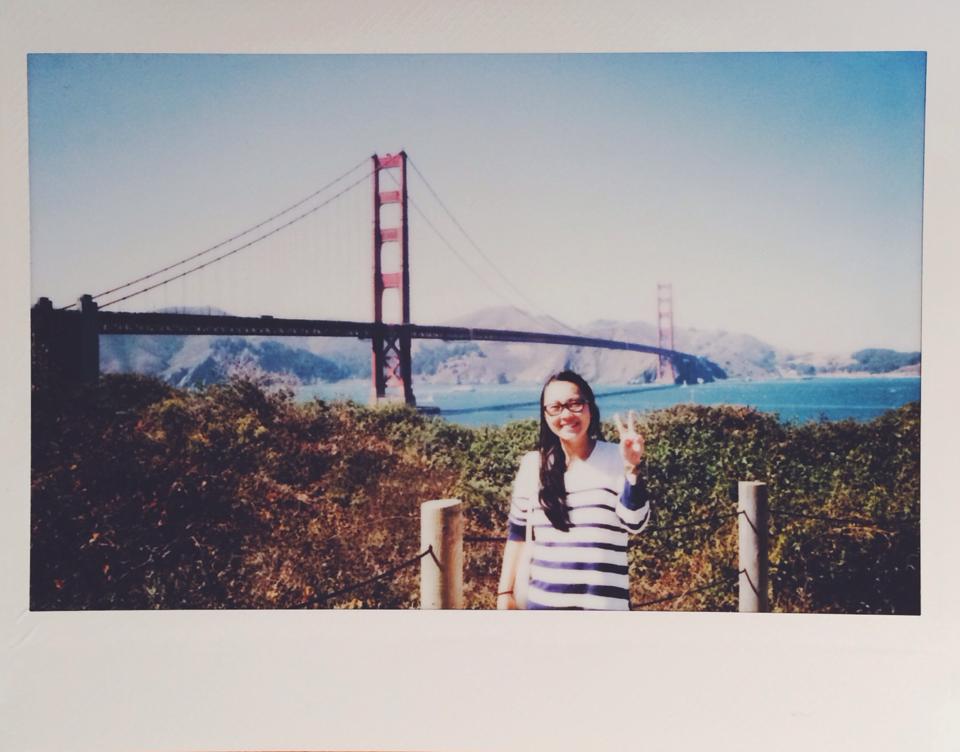
San Francisco’s beloved Golden Gate Bridge: a familiar sight growing up.
Needless to say, I am beyond excited to spend this summer working with Sankara Eye Foundation in India with my awesome teammate, Maggie! I am confident that this fellowship will not only culturally immerse Maggie and I in social entrepreneurial work with an established enterprise, but it will also serve as a connection between economics and public health that are rooted in social impact research. Since public health work is often referenced as “interdisciplinary,” I hope to apply my SCU coursework in India. Sankara Eye Foundation’s vision to work against needless blindness is a remarkable goal that directly addresses the needs of the community. Through my experiences in India, I plan to capture the unique stories of India’s community through detailed case studies as well as documenting how important preventative eye care is in the lives of the poor. I hope my past experiences in China build upon a more unified approach both public health and business work. Who knows, maybe I will find another cart lady in India who shares the same motivations as the cart lady in China.