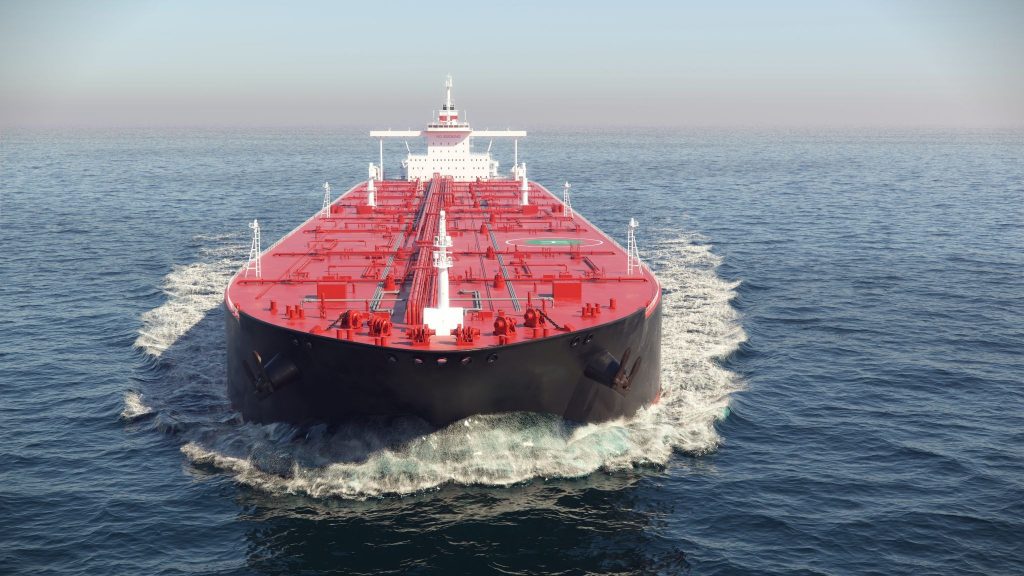
IMAGE [An oil tanker in the Strait of Hormuz]
For a century or two, nicotine has been the most geopolitically uneventful substance in consumer history. It has been grown in American soil, rolled into American cigarettes, and sold in American stores, with a logistical complexity similar to that of grocery-store eggs.
Vaping does not enjoy this same level of logistical luxury. The device in your pocket, the one that helped you quit a thirty-year cigarette habit (or at least gave you a fighting chance), is an international object.
Its lithium-ion battery was almost certainly manufactured in Shenzhen. The plastic housing is derived from petrochemical feedstocks, a staggering 85 percent of which, when sourced from the Middle East, pass through a 21-mile-wide corridor of water between Iran and Oman. The coil was wound in a factory that runs on electricity generated, in part, by liquefied natural gas that transits that now-controversial corridor.
It certainly doesn’t end there. The e-liquid bottle, the packaging, even the humble blister pack it arrived in are all petroleum-derived, globally shipped, and fully dependent on a narrow stretch of sea that most vapers had never heard of until recently.
On February 28, 2026, Iran closed that stretch of sea. Or rather, Iran warned every commercial vessel in the Strait of Hormuz that passage was no longer advisable, which, in shipping terms, equals the same thing. Daily traffic through the strait fell from 138 vessels to two.
Most shipping companies are temporarily out of the game entirely. Maersk suspended transits, as has Hapag-Lloyd. Rerouting via the Cape of Good Hope added a fortnight to delivery times and a considerable sum to freight costs. Brent crude passed $100 a barrel for the first time in four years and keeps climbing.
Given the sheer scale of the consequences, vaping would not make any reasonable person’s list of serious casualties. It probably should, though. The potential health implications of a disrupted vape supply chain may not compete with fuel shortages and food prices for media attention, but they are real, and they may end with thousands of people smoking again.
Thin Margins
The products that vanish first from any disrupted supply chain are never the profitable ones. They are the affordable ones, including starter kits, budget e-liquids, and replacement coils: the entry-level products with margins so thin that a fifteen percent increase in freight costs turns a viable product into a loss. These are, not coincidentally, the products that matter most to the adult smoker who has just decided, perhaps nervously, to try something other than cigarettes.
Premium devices will survive, because they always do. The diversity of choice that makes a functioning vape market actually work for actual people (the wide shelf at a Vape Superstore or any well-stocked specialist retailer) is what contracts when the world’s shipping lanes rearrange themselves around a conflict that has nothing to do with nicotine and everything to do with it.
The Domestic Product
This bit should bother most people, regardless of how they feel about vaping.
Cigarettes are grown in Virginia and the Carolinas. They are manufactured in Richmond, then distributed by truck, on American roads, to American retailers, using American diesel that (admittedly) now costs rather more per gallon than it did a month ago. But the supply chain is domestic and does not depend on container ships that are currently anchored outside Omani ports, waiting for a conflict to end.
In other words, the product that kills 480,000 Americans a year will remain on every shelf, at every gas station, in every state, without the slightest interruption. The products that are trying to help people stop dying from cancer or heart disease are the ones routed through the epicenter of the largest energy disruption since 1973.
This is simply what happens when the dangerous product is local, and the safer alternative is global. The cigarette will continue unabated, while the supply chain behind its competition burns.
Tangiable Consequences
Freight costs have not finished climbing, and the Strait shows no signs of opening anytime soon. The rerouting surcharges that shipping lines imposed in the first week of March are going to get worse before they improve.
If you run a vape shop in America, your spring orders are either late, more expensive, or both, and your customers won’t care about the Strait of Hormuz when they ask why their preferred device is out of stock. They are, however, going to notice the cigarettes – still priced the same as last month, give or take.
It is one of the more bizarre consequences of this war that nobody is discussing: a conflict fought over oil, territory, and nuclear capability may, as a bizarre byproduct, kill more Americans through tobacco addiction than through actual combat.
Strange, then, that a conflict fought over oil might be remembered for how many people it quietly sent back to smoke it.
Leave a Reply