Service

In our globalized and media filled world today there is a growing understanding that we are all interconnected and therefore have a responsibility for the wellbeing of those outside of our own local community. The term “global citizen” and the phrase “act locally, think globally” are becoming increasingly popular as we recognize that our day-to-day choices affect people around the world. At the same time, there is mounting distrust of charity and aid organizations. We’ve read books like Dead Aid and Toxic Charity, and heard of organizations doing more harm than good. More often our action turns to armchair activism as we post an impassioned Facebook post and then stop there, not because we don’t want to help but because we are paralyzed by the overwhelming number of choices and mixed messages.

Elizabeth Guatemala

Making friends in Guatemala in 2006

At a young age I started going on mission trips with my church, taking me to Mexico, Central America, and several cities within California. I can confidently say that these trips were truly life changing. They pulled me out of my comfort zone and pushed me to be more outgoing. They taught me to be vulnerable, to be flexible, and to value other cultures. I would not be the same person today without these experiences, nor would I have ended up in the Global Social Benefit Fellowship.

Although I will be eternally grateful for these travel experiences, towards the end of high school and especially in college I have constantly had to be careful about how I describe these trips because of the skepticism around them today. We’ve all read that article about the girl who traveled to Africa to get a new profile picture. There are short term service trips out there that are very flawed, often because people from the U.S. go into another country with a plan to “help” a certain group of people, without listening to their needs, ideas, and desires. I would be lying if I said that I hadn’t been on one of these trips. I have been in situations where I look back now and see how messed up the system was. I see how we may have done more harm than good when we should have been accompanying local people to create change in their community.

With all these criticisms in mind, I have struggled with why I keep going back. People have told me that I should stop wasting time and money traveling around the world when I can make more of a difference right here at home. Some people say that rather than working for a non-profit, we can have a more of an impact by using our college education to get a high paying job, and then donating a large portion of our annual salary to charity. So why do I keep looking for opportunities to visit and work in other countries? Why am I so motivated to move to Latin America next year? Will I have more of an impact if I work on global health issues from the U.S.? How do I reconcile my role as an outsider when I travel?

P1020483

With my friends Geraldy and Ashley in Mexicali in 2013

This fellowship has forced me to think about what motivates me and address these questions. While I definitely do not have all the answers, I would like to share three insights that I’ve gained. First, my Jesuit education has taught me that vocation is found at the intersection of what I’m passionate about, what I’m good at, and what the world needs from me. I know I am passionate about public health and Latin America. There are needs here in my home community and I will work to address those while I’m living here, but that doesn’t mean I have to stay here forever. I feel a call on my life to go back to Latin America, and I believe I can put my talents to use there, where there is also a great need. Other people may feel that call to India or Ethiopia or to stay right at home, but for me it’s Latin America.

Second, today the global community is my local community. The food I eat and the clothes I wear come from around the world. The decisions I make regarding energy consumption have serious ramifications for people across the planet. I believe that by traveling I become a better global citizen. I learn how people in other parts of the world live, which helps me grow in solidarity with them. One day I may find myself living in the U.S. but working on global health issues in other countries. Living abroad will offer an important perspective and insight into how to more effectively promote change in a culturally sensitive and sustainable way.
IMG_7101

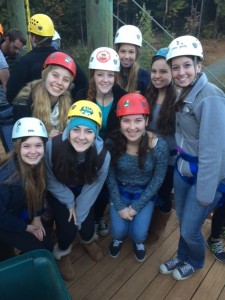
With some of my high school girls before going on the ropes course at camp

Third, I would like to point out something that is not said nearly enough in our culture. I recently heard a talk from Mam-Yassin Sarr, a woman from The Gambia, first in her family to go to college, who, after living in the U.S. for several years, returned to her home village to start Starfish International, an academy for girls. Yassin said what many of us are thinking but too scared to say out loud: service is never a sacrifice. I could not agree more. Why do I keep returning to Mexico, or continue “sacrificing” my time as a young life leader for high schoolers? Because I love it. I would rather go to Mexicali than on vacation to Hawaii. Not because it makes me look good, not because I think it’s what I’m supposed to do, but because, as Yassin said, through service we always get more than we give. Through serving I have made life-long friends, learned a new language, seen beautiful new places, lived in exciting cultures, and experienced genuine joy. The people out there that we praise for dedicating their lives to others such as Mother Theresa, Paul Farmer, and all the social entrepreneurs I met through GSBI have discovered this secret. They have found that there is so much life in giving. I do not mean to discount the sacrifices they make on a daily basis through giving up money, comfort, and time with family. But I’d be willing to bet that when looking at their life as a whole none of them would consider it a sacrifice. They know that true happiness comes from dedicating our lives to a cause outside of ourselves. They feel the love and joy and beauty in giving, and because of that they are addicted to a life a service.

Many of us have become skeptics, afraid to go on this trip or donate to that organization. But this is simply not an option for me. I cannot shake my passion for Latin America and the deep sense of injustice I feel when I hear about poverty, human trafficking, or lack of health services. I cannot give up on service. But I also cannot blindly give or work with any organization that will take me. I have seen the damage that can be done by ignorance and flawed structures, and I do not want to be a part of that. This fellowship and social entrepreneurship as a whole gives me hope. The social entrepreneurs I have met or learned about are all motivated by the same sense of injustice I feel, often in their home community, and they are compelled to do something about it. Their inward pull toward justice and the joy they gain through dedicating their lives to building up their communities help them overcome the extreme challenges they face.
Screen Shot 2015-11-20 at 3.30.18 PM

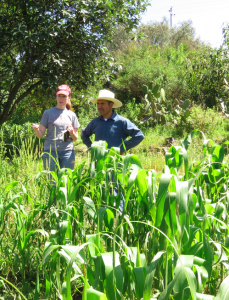
Talking with a farmer in Puebla

I recognize that, especially if I choose to pursue a career in global health, I will never be a social entrepreneur. No matter what credentials or experience I have, I will never be as good at creating change as someone from the local community. As an outsider, it is not my job to enter a new place and fix a problem, but rather to accompany community members and help provide them with tools to foster leadership and change. Working with Sistema Biobolsa helped me experience this role in a very tangible way, considering we as outsiders came in with a job to do, yet very little knowledge of Mexican culture and agriculture. Our role was never to tell them how to run their business or come up with some big idea or solution. Rather, through our project we listened and collected data, ultimately to provide an outside perspective on issues they were already aware of and use our resources and skills here at Santa Clara to build tools that will play a small role in helping them grow their business. Through this experience I recognized that I can travel and live in other places without being a burden or doing more harm than good. It requires educating myself and doing my research, and always embracing a posture of humility and a spirit of learning.

One such method I now use when evaluating a program or organization is social impact. When I hear of a non-profit or company doing good in the world, one of my first questions is, how are they measuring their impact? Social impact assessment is a good way to show that an organization is actually meeting the goals its mission sets out to achieve. However, I have also learned to not disregard the immeasurable. Some of the greatest need in our world lies in places where collecting data and measuring change is most difficult. Before I might have shied away from these problems, but now I see them as opportunities. The entire nine months of this fellowship was filled with uncertainty. We never had all the information we needed at our fingertips; reaching out in many directions to search for information became a daily reality, whether in completing a homework assignment, conducting research in the field, or working on our deliverables for the social enterprise. I learned not to avoid uncertainty, but rather to function in it. I believe this is what social entrepreneurs and all those dedicated to a life of service must do. We must seek to measure as much as we can to show that we are actually making a difference, yet we also must recognize that some of the most valuable experiences, relationships, and challenges in life are messy and immeasurable.
 

Posted in Uncategorized | Leave a comment

Perspective

My instinct when arriving in a new place, especially one with a different language and distinct culture, is to be like a sponge. I try to take in everything—the words, foods, ideas, and cultural idiosyncrasies—with little judgment. I never want to be prideful and act like I know better. My experiences and lack thereof have taught me that I do not know better and that although the United States does a lot of great things, we are far from perfect. While I am accustomed to asking questions and soaking up new information, I cringe at the thought of stepping into a new place and making suggestions or expressing my opinion too much.

Up until this summer I had done pretty well traveling the world as a sponge. All of my trips were very relationship-centered. I would engage in conversation and listen and learn as much as I could about the people and the places I visited. Although we may have built a house or painted a room, I always left these trips knowing that my contribution was mostly relational. Anyone can do a little construction work (and certainly better than me), but I had connected with others in a way that we will cherish for a long time. While I do value building relationships with people of different cultures, I always wondered if I could do more. And that’s how I ended up here.

From the beginning this fellowship was different. Although it is an incredible learning experience, the Global Social Benefit Fellowship is about creating high quality deliverables that will support the social enterprises we work with. Starting in April our professors and mentors worked hard to prepare us for the summer, to equip us with the skills and knowledge needed to make a positive and valuable contribution. Yes, we would learn a lot, and yes, we would build relationships with the people we met, but we would also tangibly contribute something of value.

While this concept of action research excited me and attracted me to the fellowship, eventually I realized it meant I had to be more than a sponge. I could still ask as many questions as before, and more, but then I had to take that information, process it, discuss it, add to it, and use it to produce something valuable. This scared me. I felt, and still often feel, that I do not know enough to contribute. Before this fellowship I knew nothing about business and nothing about agriculture. I worried I would be posing as an expert on a topic I knew little about.

With all this in mind, I arrived in Mexico feeling that same tension between action and inaction that I mentioned in my last post. I wanted to be proactive—ask questions, discuss ideas, start to form solutions—but I also wanted to be flexible. When traveling abroad everyone tells you to be flexible. You’re supposed to go with the flow and not get upset when the bus takes four hours longer than expected or someone serves you a questionable meal. It’s all about embracing the unknown and experiencing the new culture. I’m all for embracing flexibility. I believe it makes the experience more enjoyable and teaches patience and the ability to let go of control. However, I never realized how I could mistake passivity for flexibility. I assumed that if I stepped back and let others make decisions I was being flexible. But there are times to go with the flow and other times to speak up. In Mexico, I had to speak up. Quite literally as the translator, I was everyone’s voice at one point or another.

Screen Shot 2015-09-25 at 5.00.20 PM

Translating for a biobolsa owner

So rather than choosing flexibility, passivity, or action, I lived in the tension of all three. I had to learn when to step back and let others take over and when to assert myself. And while I definitely didn’t always choose the right action in every situation, through this process I slowly started to see that I had something to contribute. As our ideas developed more and more and our words transferred to paper, I realized I was a valuable part of this team. I am definitely not an expert in business or agriculture, and I may never be, but I bring unique talents and experiences to the team. I know it may sound obvious, but it is one thing to know you have something to contribute and an entirely different experience to truly believe it about yourself.

Screen Shot 2015-09-25 at 5.01.21 PM

Paul and me with part of the Sistema Biobolsa team

All of this was really a lesson on perspective. Translating offered a little window into how others think and process information. Some people communicate in a very straightforward way, while others like to tell stories to illustrate a point. It was so clear, through translating, working with Paul, and communicating with the Sistema Biobolsa staff, that each person attacks a problem or an issue from a different angle. I’ve always known that everyone sees life from a different perspective, but I never realized how valuable this fact was until faced with a complex challenge. The project Paul and I are working on can be approached from countless different angles. I am certain that we would not be able to create an end product of value without trying to understand the issues from the perspectives of the Sistema Biobolsa staff, our mentors, and most importantly, the farmers themselves.

IMG_6703

Drawings for, “What does Sistema Biobolsa mean to me?”

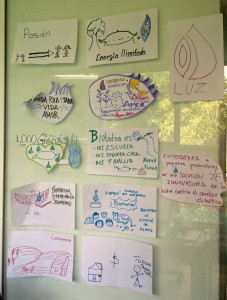
One week before Paul and I left Mexico, Alex and Camilo, the founders of Sistema Biobolsa, and all the other employees who work in Mexico City, came to the Puebla office to take staff pictures. Alex gathered us all up, gave us each an 8×11 piece of paper, and assigned us the task of answering the question, “What does Sistema Biobolsa mean to me?” It was so interesting to see how each person tackled this project. Some took it very literally, drawing out farm animals, a biodigester, and a farmer, while others, like myself, took the simpler route, and drew a single flame with the word luz (light) under it, to represent not only the physical light of the biogas flame but more importantly the hope biobolsas offer so many families. Although we all responded to the same question, each drawing was so very different, clearly illustrating the variation among our perspectives. As I shared my simple drawing with team, I felt their affirmation, encouraging me in a subtle but very real way that, just like everyone in the room, I too had something valuable to offer.

Posted in Uncategorized | Leave a comment

Speed Bumps

Here in rural Mexico the first thing that most foreigners notice is the speed bumps. Called topes, these speed bumps are everywhere. With the exception of highways, you will find them about every 100 yards, which makes for quite the bumpy ride. On our first day out in the field one of the Sistema Biobolsa technicians explained that topes are the only way to get drivers to slow down and (maybe sort of) follow the speed limits.

IMG_6679

Ex-hacienda Chautla, one of the tranquil places we visited

Although Paul and I came to Mexico with a mission to conduct surveys and make as much progress as possible on our project, we have been forced to slow down. The end of the school year came like a whirlwind as we worked to finish our project proposal, study for exams, write final papers, move out, pack for Mexico, and try to mentally prepare for the coming two months. So as we settled into our new life in Puebla it came as a bit of a shock when at 7pm we had nothing to do. Although our days out in the field were exhausting, especially in the beginning as we adjusted to the language, altitude, and different cultural norms (i.e. eating lunch at 3 pm), we returned to the apartment each evening with no plans or obligations but to make dinner. No homework, no meetings, and no group projects. Although we have been productive and made the most of our time here, life for us in Puebla looks very different than our hectic schedules back home. In some ways, the entire time has been one giant speed bump, reminding us that we don’t always need to move through life at such a rapid pace.

I imagine that most people, like me, don’t like speed bumps very much. They often force us to slow down at an inconvenient time, and they may even cause us to bump our heads (Paul). My reaction to this newfound free time has been extremely inconsistent. Sometimes I find this slower pace refreshing. I’ve read six books in the past six weeks and I’ve had so much time to journal my thoughts. But at other times I find myself irritated by all the speed bumps. I am frustrated when we have to wait an hour to get somewhere. And sometimes I get bored just thinking about spending another evening reading. I’m constantly fighting the idea that I always need to be “productive” and not waste time.

IMG_6622

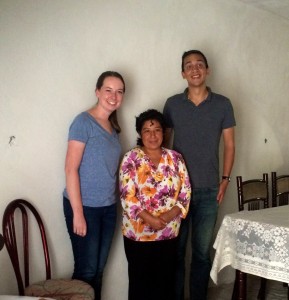
Paul and I with Norma at the birthday party

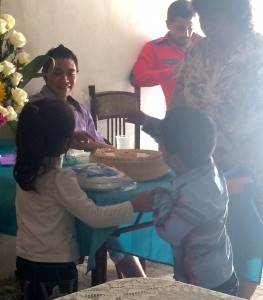
One benefit of adopting this slower pace of life is that it allows time for the unexpected. One day when Paul and I stayed home to get some work done Norma, the woman who cleans the apartment, invited us over to her house that afternoon for her mom’s surprise birthday party. We accepted and ended up spending almost three hours there, no other commitments vying for our time. They hired a mariachi band to perform for all the guests and of course served a huge meal. We enjoyed chatting with some friends of the hostess who sat at our table and learning more about the culture of Puebla. I was once again moved by their generosity and hospitality, and it was a good reminder that oftentimes slowing down lets me say yes to new experiences and be more fully present.

IMG_6616

The grandkids helping with the cake

I don’t have a nice way to tie this blog post together, to announce that this inner struggle has led me to a newfound peace, and that I will live the rest of my life at a beautifully balanced pace. No, I’m here to tell you that life will always be moving too fast when you want it to slow down, and vice versa. But I believe there is life in this tension between action and inaction. I believe that a purposeful life, which is often hectic and messy, can be rewarding and life-giving. I think back to some of my busiest days at Santa Clara and I feel that sense of joy and purpose that often accompanies exhaustion. But I also believe that the idea that you must be busy to be successful or happy is a lie. The time I’ve taken for myself here in Mexico has been an important period of rest and offered me space to reflect on my experiences and dream about where I want to go and who I want to be as I prepare for graduation next year. As I enter back into busy college life in September, I will welcome those crazy days with open arms, as I truly do love that life. But I will also fight it, grabbing hold of those moments of rest, and allowing life’s speed bumps to slow me down.


Posted in Uncategorized | Leave a comment

Gratitude

A month into my time here in Mexico, I find myself saying gracias a lot. I am constantly asking others for help or favors, whether it is Sandra, the wonderful Sistema Biobolsa administrator who prints out surveys for us every morning, or the many farmers we visit each day and ask for ten minutes of their time for an interview. I am very grateful for Norma, the sweet woman who cleans our apartment, and for the entire Sistema Biobolsa staff, who address me with kindness and patience although I know listening to me struggling with Spanish cannot be the most enjoyable experience.

IMG_6367

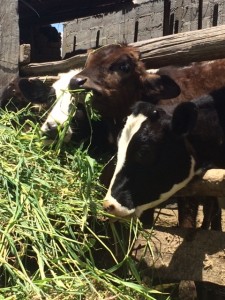
Some of my new cow friends

A genuine spirit of gratitude is a quite apparent part of the culture here. It is common for someone to thank me for something I should be saying thank you for. After each survey we always shake hands with the farmer, as well as his wife and other family members if present, and thank them for their time and willingness to share. But more often than not the farmer will thank us for coming. One man even said it was an honor for him to have the opportunity to speak with us. I am constantly humbled by the openness and graciousness of those I have the pleasure to interact with. These people have families and farms to take care of; we often walk in on them with their hands dirty, feeding their cows or working in their cornfields. Yet they always welcome us with open arms, not out of obligation but with a true spirit of hospitality.

On my first day of field visits we arrived at a farm hoping to speak with the farmer, but he was away working. Yet his wife still invited us inside, insisting on feeding us mounds of tamales and tacos. She spent quite a while cooking for us and made sure we left feeling quite full. This kind woman cooked for us while we offered her nothing, yet as we departed she thanked us for coming. She so clearly embodies the fruits of patience, flexibility, and hospitality that a spirit of gratitude can bear.

Another day we arrived at a home in the late afternoon just as it was beginning to rain. The family graciously ushered us inside to provide shelter from the coming downpour. We sat around the kitchen table with the farmer and his grandson, while his daughter offered us horchata and cookies. We learned that this man, in addition to managing his farm, works for the secretary of education and had only recently returned home for the day. His warm welcome and willingness to chat concealed the exhaustion he must have been feeling. After each survey question, the grandson stood up in his chair and whispered an answer into his grandfather’s ear. It was absolutely adorable and the man did not seem to mind that this caused the interview to take twice as long.

IMG_6479

Sistema Biobolsa Biodigester

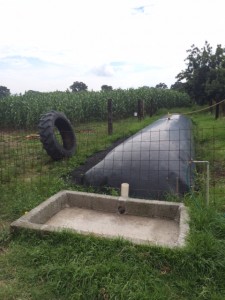
As I reflect upon the warm welcomes we have received in countless homes, I see the social mission of Sistema Biobolsa as one source for the overwhelming gratitude we have experienced. For those of you who are not familiar with the social enterprise, Sistema Biobolsa designs, distributes, and installs biodigesters throughout rural Mexico. These digesters convert animal waste into biogas to be used for cooking and heating as well as an organic fertilizer, allowing families to save money previously spent on propane gas and chemical fertilizers. Use of the biodigesters also reduces methane gas emissions and saves time for those who used to spend hours a week collecting wood for fuel. Furthermore, reduced burning of firewood decreases respiratory problems and the collection of waste lessens the risk of water contamination. Sistema Biobolsa’s mission is to support small and medium sized farmers through these economic, environmental, and health benefits.

The owners of these biodigesters are proud to show us their systems. They love to light their stoves using the biogas and show off their green corn stalks fertilized with the bio fertilizer. So when these Sistema Biobolsa clients welcome us into their homes with such gratitude, they are thanking us, as representatives of the company, for so much more than the small visit. They are saying thank you for the biodigester and the many ways it has helped their family. They are saying thank you to the staff for visiting them anIMG_3159d maintaining a strong relationship. And they are saying thank you to Sistema Biobolsa for always continuing to look for new ways to support them. I am grateful to be working with a company that puts people first, and I hope that throughout my remaining four weeks here I can learn to embrace the type of authentic gratitude embodied by Sistema Biobolsa’s clients and Mexican culture as a whole.
Posted in Uncategorized | Leave a comment

Vulnerability

A few weeks before embarking on this adventure to Mexico I watched Brené Brown’s Ted Talk on vulnerability. In a much more eloquent and inspiring way than I could ever capture, she concludes that vulnerability is essential to a happy life, and that in order to feel joy we must also open ourselves up to the possibility of pain. I immediately resonated with her view, thinking of the times I stepped out of my comfort zone as the most life-changing and rewarding experiences of my life. Yet I also thought of my life and it’s lack of vulnerability. I thought about how I rarely ever cry and how I tend to keep my daily life manageable and under my control. I desired the vulnerability she spoke of and the freedom and joy that accompany it, but I could hardly recognize it in my own life. Slightly disheartened, I moved on to studying for finals and forgot about the whole topic.

Fast foreword a few weeks later and here I am on an airplane heading out to Mexico for the next eight weeks. Although Paul and I have spent months planning and working with mentors to prepare for our research project with the social enterprise Sistema Biobolsa, there are still many unknowns. To distract myself from my anxiety about what was to come, I pulled out the book ¡Gracias! by Henri Nouwen, that my grandmother gave me. In this book, Nouwen, a Catholic priest, journals of his six months spent in Bolivia and Peru. I immediately identified with Nouwen’s call to Latin America, and as I continued reading I felt as though he was speaking directly to me.

For years I’ve jumped at every opportunity to return to Latin America, usually with the justification that I love the culture and the language. When I speak Spanish I feel so alive, and I often leave conversations brimming from ear to ear, experiencing a rush of adrenaline. But I’ve never been able to really explain this feeling. I assumed that the joy I felt was a sense of accomplishment; that after years of Spanish classes my hard work had finally paid off. While this is certainly a part of it, Henri Nouwen put into words ideas that have been brewing in my soul for years. He says:

“When we walk around in a strange milieu, speaking the language haltingly, and feeling out of control and like fools, we can come in touch with a part of ourselves that usually remains hidden behind the thick walls of our defenses. We can come to experience our basic vulnerability, our need for others, our deep-seated feelings of ignorance and inadequacy, and our fundamental dependency. Instead of running away from these scary feelings, we can live through them together and learn that our true value as human beings has its seat far beyond our competence and accomplishments.”

Henri Nouwen really hit the nail on the head for me. As I read these words, I realized that I love speaking Spanish because it forces me to be vulnerable. I talk slowly, I stutter, and I make more mistakes than I even realize. But rarely do people ever condemn me for my mistakes. Rather, they applaud my effort and continue on with the conversation. Nouwen’s words have helped me recognize that I love the freedom of speaking and not being fully in control, of knowing I’m not perfect and being okay with that. As Nouwen so eloquently puts it, “One of the most rewarding aspects of living in a strange land is the experience of being loved not for what we can do, but for who we are.” Although I did not consciously recognize it at the time, I appreciated that my host family in Argentina loved me despite my lack of language fluency. They loved me for the way I made an effort to get to know them, for the gentleness with which I interacted with the kids, and for my smile. They knew nothing of my accomplishments, my school, my family, or my history; they loved me for who I was in that three and half months that I joined their family. I believe that we all experience the most real kind of love when others see our faults, weaknesses, and shortcomings, and love us anyway.

IMG_6352

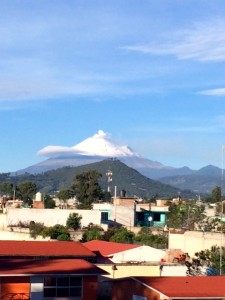
View of the Popocatépetl volcano from the roof of our apartment

After a day in Mexico City, on Thursday morning we finally arrived at the Sistema Biobolsa office in Puebla. Thanks to Henri Nouwen, I felt a rejuvenation of my passion for the Spanish language. But I had forgotten that choosing the road of vulnerability is not easy. Immediately thrown in as a translator, I quickly became overwhelmed. Not only was I managing my own thoughts and doubts in two languages, but I found myself in control of the ideas and opinions of the Sistema Biobolsa staff, the farmers we went to interview, my teammate, Paul, and our mentor, Mike. I struggled to make sure everyone’s voices were heard, including my own. I sought to be the both the best translator I could be as well as fulfill my duties as a teammate in contributing to the conversations and the development of ideas. Despite my enthusiasm for Mexico, my preparation for this project, and my newfound attitude toward vulnerability, nothing could have fully prepared me for this. For the first time in a long time I was acutely aware of my own faults and inadequacy.

Screen Shot 2015-06-21 at 8.40.19 PM

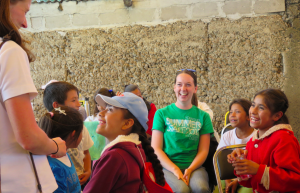
Laughing with the kids at the Sistema Biobolsa promotion event

On Friday we headed out to a Sistema Biobolsa promotion event. On the ride there I felt rather discouraged, wondering how I would be able to move on. Will translating get any easier? What is to come of our project? But I was reminded of Nouwen’s words and of the choice I have to either run from these feelings or embrace them and move forward. At the event I found myself surrounded by a group of adorable kids asking me random questions like, “What is the color of your house?” and “What are your parent’s names?” I laughed with these girls for quite a long time as I taught them some English and they struggled to say words like “red” and “heart.” Through their childlike joy and innocence these kids reminded me of what it is to be loved not for what I do or where I come from but for who I am. In taking steps of vulnerability by engaging with them, my heart was opened to so much joy.

Many questions still remain unanswered. I do not know how much easier translating will become, nor do I know exactly what lies ahead for our project. But I am certain that, although those first few days of translating were a bit overwhelming and exhausting, I came out on the other side with a stronger sense of my own strengths and weaknesses and a better appreciation for taking each moment for what it is and moving on. Although the next seven weeks will certainly contain more discomfort and feelings of inadequacy, I look forward to the ways these experiences will help me grow and encounter the joy and freedom born out of vulnerability.

Posted in Uncategorized | Leave a comment

Building Houses and Birthday Cakes: My journey to the Global Social Benefit Fellowship

old pics 27b

With my big sister, Katie, showing off our 90’s fashion

A lot of people have helped shape me into the person I am today, and I will be forever grateful to each of them for the countless ways they contributed to my growth and joyful experience of life thus far. Growing up in sunny Menlo Park, California, my parents instilled in me a life of adventure, leadership, and compassion. However, it is my big sister, Katie, whom I have to thank for starting me on this journey toward the Global Social Benefit Fellowship. Over 14 years ago, my church announced it would be piloting a trip to Juarez, Mexico as its first family mission trip. This four-day trip, deemed suitable for children ages seven and up, consisted of building houses and running a vacation bible school for kids. Katie, age 10, announced to my family that we were going. My parents were reluctant, seeing as they had never been on a trip like this themselves, and I, their baby, who also happened to be the pickiest eater on the planet, turned seven only days before we left. Yet somehow, in February of 2001, my family found itself on the road to Juarez, embarking on a journey that would change our lives.

Elizabeth on roof in Juarez rotated and brightened

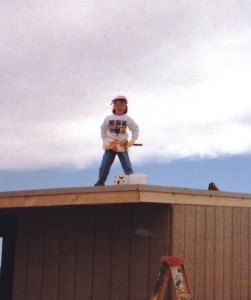
7-year-old me on top of the house we built in Juarez

That trip to a community just outside Juarez opened our eyes to the reality of those living in poverty. It showed me that the world was much bigger than I knew, and taught me that not everyone lived like I did. But most importantly, through the giggles of the children I played with and the gratitude displayed by the families, I learned that true wealth could be found in the poorest of physical circumstances. At a young age I understood that there was so much more to life than material possessions. In the following years my family went on two trips to Guatemala, where I completely fell in love with Latin American culture and the Spanish language.

Here I am, 14 years later, preparing to return to the very country that changed my life. I can confidently say that Mexico has had more of an impact on me than anywhere else. In the years following that first trip to Juarez, not only have I expanded my palate past grilled cheese and chicken nuggets, but I have also returned to Mexico several more times. With my high school youth group I traveled to Mexicali five times, visiting the same church community each year. Through making friendship bracelets with the teenagers, pushing toddlers on swings, and learning to make empanadas with the women, I have built meaningful relationships with these families and they will always hold a special place in my heart. I love returning year after year and seeing so many familiar faces and watching the kids grow up.

IMG_6084

Celebrating my birthday in Mexicali by receiving a cake in the face

This year I was particularly blown away by the hospitality of the Mexicali community. Not only did one of the women bake a homemade cake to celebrate my 21st birthday, but at their Sunday church service I was also introduced to one of their beautiful traditions. Everyone who had a birthday that week stood at the front of the church and one by one each person in the room gave us a hug. This physical act so powerfully illustrates their kindness and generosity, as well as the spiritual and emotional closeness we share. Through worshipping, eating, and laughing together I have learned that although our cultures and backgrounds carry diversity, in the end we are all human. I have come to love that we can learn so much from each other while also sharing in the fundamentally human aspects that connect all people around the globe.

IMG_5488

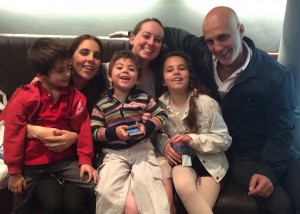
With my wonderful host family in Buenos Aires

These experiences instilled in me a passion for experiencing new cultures and building relationships with those around the world. Last fall I studied abroad in Buenos Aires, Argentina, providing me the opportunity to live outside of the United States for four months. I stayed with an amazing host family who welcomed me into their Argentine way of life while helping me practice Spanish. As a part of the academic component of my program, I conducted interviews with community health workers and other health professionals. As I reflect back on my first trips to Latin America in which I knew no more than “¿como te llamas?” I see how far I’ve come and am so grateful for the opportunity to use the Spanish language to connect with those health workers in Argentina. I am excited to relate with people in this way in Mexico and improve my language skills while working with Sistema Biobolsa.

While my travels have taught me that possessions do not buy happiness and that people living in poverty often express so much faith and joy, that hasn’t kept the injustice of inequality from tugging at my heart. Rather it has done quite the opposite; in connecting with people around the world I see them not as others but as my family, and consequently feel much more frustrated that not everyone is offered the resources and opportunities I have grown up with. Over the past few years I’ve grown particularly passionate about health disparities and the global injustice of human trafficking. As I learn more about these issues, I see poverty as a key factor, so deeply intertwined with a whole host of problems, and I feel compelled to work toward a more equal and just world.

As a result of my experiences abroad paired with my Christian faith, I see my calling in life as one to love others and help provide them with health, education, and other human rights, whether it is here in the U.S. or across the world. The social enterprise model excites me because of its mission to put people first while empowering the community and serving them in a more sustainable way. In the Global Social Benefit Fellowship I feel that I have found a place to use my passions and talents to help the world, and for that I could not be more grateful or excited.


Posted in Uncategorized | Leave a comment