This past Tuesday, I attended a webinar hosted by the Bay Area Water Supply & Conservation Agency workshop program. During the webinar, participants learned from Ryan Marlinghaus of Pervious Products in Campbell, CA. The webinar covered a range of information regarding pervious pavement, including the unique challenges that the urban environments have for water runoff and the benefits that pervious products have in reducing ponding, recharging groundwater, and preventing stormwater pollution.
What is the problem that permeable pavement addresses?
The rapid urbanization of the Bay Area has had significant negative impacts to the environment. By replacing the natural land cover with impervious surfaces like parking lots and streets, we have changed the water profile of the area and have lost the water retention that the orchards and soils of Silicon Valley used to provide. In addition to reducing the water retention of the area, impervious surfaces transport the numerous pollutants from urban areas such as oil and pesticides into the Bay. Permeable pavement can also help to reduce the urban heat island effect.
How does permeable pavement work?
Permeable pavement can be found in three major varieties; permeable pavers, permeable concrete, and permeable asphalt. These surfaces work through their porous design which catches precipitation and runoff instead of allowing it to pool on top of the surface like traditional pavements. The most important part of all permeable pavement systems is the reservoir below the pavement surface. This reservoir, made of gravel or stones, create a space for water to temporarily be stored as it slowly infiltrates the soil and ground below. Due to the open pore design of these surfaces, they are typically best suited for lower use areas like driveways, sidewalks, and parking lots.

What else should I know about pervious pavement?
One of the most noteworthy points that Ryan highlighted during his webinar was the cost of pervious pavement. Typically, environmentally friendly alternatives to traditional methods in construction are cost prohibitive for many consumers. However, pervious pavement is not significantly more expensive than most standard pavement options. While standard concrete costs approximately $11.50/sq ft, pervious concrete can cost as little as $12.00/sq ft. While the cost difference would be noticeable over a large area, it is a relatively minor difference considering the environmental benefits.
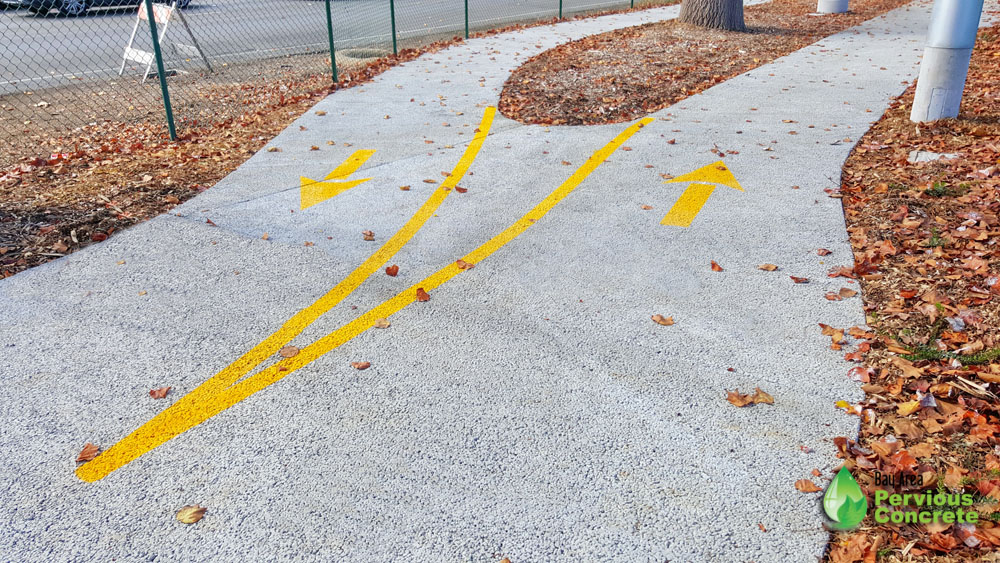
During his webinar, Ryan also highlighted the City of Palo Alto’s permeable pavement rebate. This rebate program is available to Palo Alto residents who are installing porous asphalt, pervious concrete, permeable pavers, or grid pavement systems. The rebate amount is $1.50/sq ft with a maximum rebate of $1,000. Based on the relatively minor cost difference between the non permeable and permeable options, this is an extremely attractive incentive. Additional information on the Palo Alto permeable pavement rebate program can be found here.