Overview
The Intro
Seaspiracy is a recently released trending documentary about the impacts of fishing. The documentary is by British filmmaker Ali Tabrizi. Tabrizi begins the film by expressing his interest in the ocean in general, but particularly dolphins and whales. After some cinematic experience, Tabrizi felt prepared to make his own film about what had intrigued him his whole life: the ocean. Initial research quickly shattered the illusion that the oceans are still thriving. News headlines were reporting whales and other sea creatures filled with plastic and washing up on beaches. Tabrizi began to realize that he was contributing to the 150 million tons of plastic that float in the ocean, and therefore decided to become the “plastic police.” This included beach clean ups, spreading awareness through flyers, donating to ocean protection agencies, and phoning restaurants to encourage them to go plastic free. Despite the impressive effort, Tabrizi’s impacts in saving marine life were minimal. It was in this realization that Tabrizi’s real journey began.
The Whale, Dolphin, Shark, and Fish Industries

Soon after his plastic reduction efforts, headlines about Japan’s plan to resume whaling and withdraw from the International Whaling Commision broke out. Following rabbit holes online, Tabrizi discovered that under the radar whaling had been happening for decades. As visiting Antarctica to further research whaling was an unlikely prospect, Tabrizi settled on visiting Taiji, Japan. Taiji sits on the coast of Japan and is known to be responsible for killing around 700 dolphins and whales annually. Actually visiting Taiji turned out to be even more enlightening as Tabrizi watched and filmed fishermen trapping and killing dolphins in the cove. Though he explored the possibility of dolphins being captured for marine parks, the pieces didn’t fit as to why so many dolphins were being killed. Following this next question led Tabrizi’s study to include not just dolphins and whales, but fish and sharks as well.
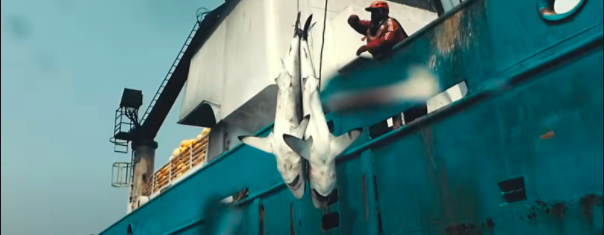
A visit to Kii-Katsuura, a nearby fishing port in Southern Japan, answered the question of why dolphins were being killed off. Tabrizi had accidentally picked the biggest tuna fishing port in the world to visit. Seeking further information, Tabrizi visited a variety of other ports in Asia and found that the two most popular items were tuna and sharks. This discovery threw him into research about the tuna and shark industries. At their most valuable, tunas can be sold for three million dollars and are a $42 billion a year industry. Similarly, sharks are considered a delicacy and a status symbol in Asia. One bowl of shark fin soup at its lowest price is $100. Tabrizi was discovering the role of two multi billion dollar industries and found that dolphins were being slaughtered for “pest control.” The fishing industry is viewing dolphins as competition for resources and therefore getting rid of them. Dolphins, whales, sharks, and fish are all integral for healthy marine life. Without a healthy ocean, the rest of the world is directly impacted. Essentially, if we kill the oceans, we’re guaranteeing our own death sentences.
Protection Efforts
Naturally, the next lead Tabrizi pursued was what was being done to protect dolphins, whales, and sharks and counteract the impacts of the fishing industry. Despite many failed interview attempts, Tabrizi was able to get in contact with the Dolphin Safe label for an interview. His hopes that the label was successful in protecting the ocean sank when he found that regulations were weak and rarely enforced. At this point, Tabrizi was rightfully beginning to lose all hope for the fishing industry.
All of his research and experiences led him to one final conclusion and message for his audiences: stop eating fish. The fishing industry is monopolized by money and powerful organizations. Fishing equipment makes up over 46% of the Great Pacific Garbage Patch (which doesn’t include free floating waste or other garbage patches). Dolphins, whales, sharks, and fish are being killed so overfishing can continue. Fish protection agencies are being bribed and manipulated to wrongfully convince the public that they’re helping. The entire fishing industry is dirty and nobody knows unless they look into it.
Source: Tabrizi, Ali, director. Seaspiracy, 2020, www.netflix.com/watch/81014008?trackId=14170286&tctx=1%2C2%2C4a604427-a4b7-4acd-b0d6-0ac160247424-167348615%2Cc291f64c-fcbd-4b70-bc48-188123d59f75_151890067X3XX1619370629355%2C%2C.
Reflection
Tabrizi’s documentary was highly disturbing and incredibly enlightening. I considered myself educated on ocean health and found myself surprised by fact after fact. There is so much in the fishing industry that is hidden, and Tabrizi has offered a huge contribution in uncovering that. Seaspiracy is the work of one team, imagine what could be discovered if more people had the drive to truly understand. The particular element that I appreciated in the documentary was Tabrizi’s pursuit of small actions that would help. He himself started out with avoiding plastic and reducing waste, he then tried to find sustainable labels to buy from, and ultimately ended with the conclusion to stop eating fish. All of these behaviors are easy, yet impactful. He could’ve encouraged people to take matters into their own hands and tour the world learning about the fishing industry, but he makes the task easy for us. The film was impactful enough to me that I feel solid in my decision to greatly reduce (if not cut out entirely) my fish intake. I encourage you to do the same.