Country of Focus: The Philippines
What is a sachet economy?
A sachet economy refers to the practice of buying consumer products such as detergent, shampoo, and others in disposable single-use plastics called sachets.
A sachet economy is usually in reference to poorer countries because they utilize sachets more often than traditional economies because sachets are much more affordable and bulk-buying is typically not a cost-effective option.
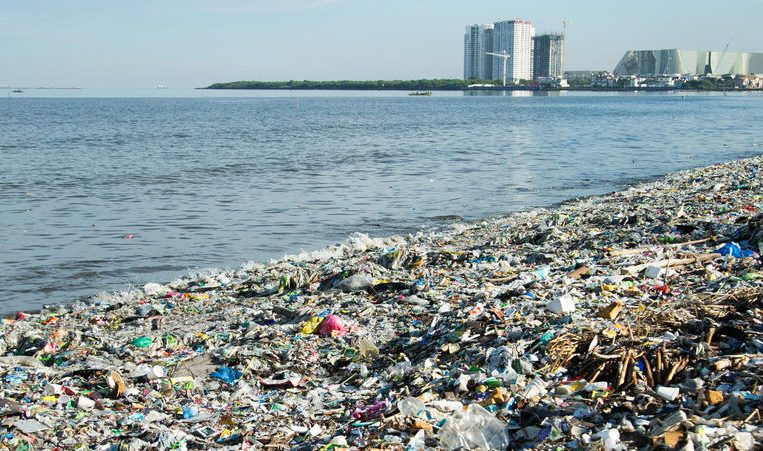
Although sachets are seen as the affordable and convenient option, the external costs are often overlooked – sachets are estimated to be 52% of the residual plastic waste stream and it is estimated that 164 million sachets per day are used in the Philippines. The true costs are at the expense of the environment and the corporations are left unaccounted for.
According to an article published by Karen Lema in 2019, “The environmental group GAIA studied non-recyclable waste collected in Philippine cleanups and found that 60 percent of it came from just 10 companies, led by Nestle, Unilever, and Procter & Gamble”. Rather than these companies coming up with sustainable solutions or alternatives, they settle for the “positive” perception that they are creating affordable and convenient products for people who otherwise wouldn’t be able to afford such products. While there is some truth, the Global Alliance for Incinerator Alternatives – GAIA have proposed the following action plans to increase accountability to aforementioned organizations:
1. Introduce alternatives such as Zero Waste stores and refilling
2. Pass binding legislation encouraging companies to take more responsibility for impacts of their products
3. Companies should fully disclose the amount of plastic manufactured and amount of plastic actually recycled
4. Create guidelines for friendly packaging and more.
What’s interesting about Philippine retail before plastic sachets is the fact that sustainable practices were already in place. In the early 1990s, Glaiza Lee remembers owning a small store that sold essential household times. She ran the business by buying items in bulk and then selling them in small quantities by filling customers’ own containers much like how a Zero-Waste store functions. Another example comes from a man named Mario Tejada who owned a small store in the 1960s – similar to Glaiza, customers would come in with their basket bags made of rattan or bamboo and items such as meat would be wrapped in banana leaves or bamboo twine with almost zero to no waste. It seems odd to think about moving backwards, but in the case of climate change and environmental impact in the Philippines, changing back to old habits might be the only way to move forward.
***This introductory blog post focuses on the Philippines because this was an issue I noticed while living there, but the actionable steps that I listed out above can be taken and used by everyone. Even if sachets are a main issue in poorer countries, that doesn’t mean the issues of single-use plastic are isolated in those areas. We can all do our part through small changes in our habits and make big impacts.
Learn more at: https://drive.google.com/file/d/1V50Ck3TOmSX2Q5sxysRiD7Ec2TgGsIFC/view