“What’s Good for the Ocean May Also Be Good for Business” (March 23, 2021)
- Marty Odlin has been trying to reverse the decline of the Ocean with his company. These efforts refer to the “blue economy” which is the conservation of the ocean and environment. Mr. Odlin and others have been trying to prove that sustainable practices are actually profitable for businesses.
- There are many different practices that could help both the ocean and its creatures, and businesses as well. These could be LED lights that flash for fishing nets, which can reduce the amount of waste and unwanted species. Also, for Ship Strikes to slow down so they don’t kill whales, which would have a great impact on the environment and as well green gas emissions.
- Sustainable business practices need to be implemented. Businesses need to take a more active approach in this movement, and generations ahead won’t forgive us if we don’t help now.

The Collapse of Northern California Kelp Forests Will Be Hard to Reverse (March 5, 2021, local)
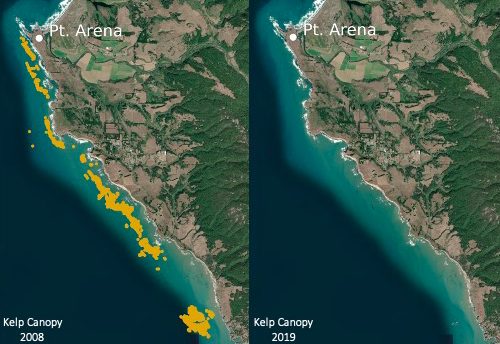
- So much of Northern California’s kelp ecosystem is gone because of “urchin barrens”, this could be a long-lasting effect
- More than 95% of the area covered by Kelp in Northern California has dropped. There are only a few isolated areas of Bull Kelp. This is because of the bizarre warming of the coastal waters that started around 2014.
- The dying of sunflower stars has caused the ecosystem to plummet. The sunflower stars main predator are sea urchins, so without them left the kelp forests of Northern California without any predator of sea urchins, which are known for being kelp grazers.
- An example of a predator of sea urchins is sea otters. Luckily, temperatures were colder this year, so they are hoping to see it reverse naturally. Without sea urchin predators, like sea otters and sunflower stars, the Kelp is in a dangerous place.
“Sharks have killed 7 people in Australia this year, the most since 1934. Climate change could be a factor” (October 19, 2020)
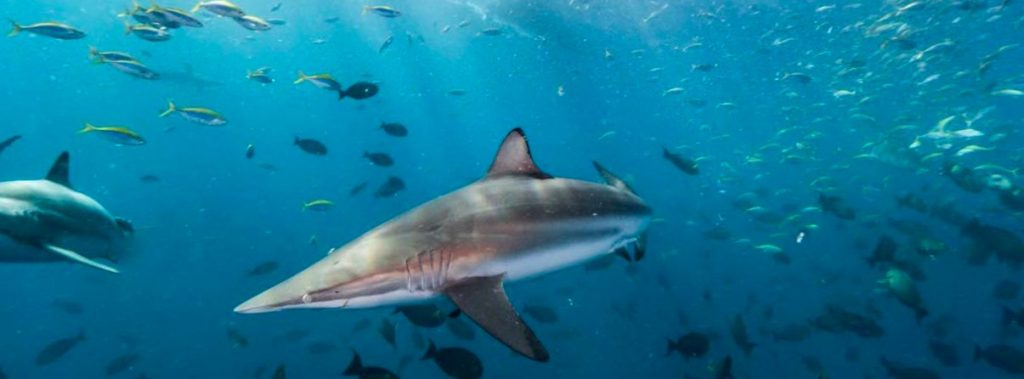
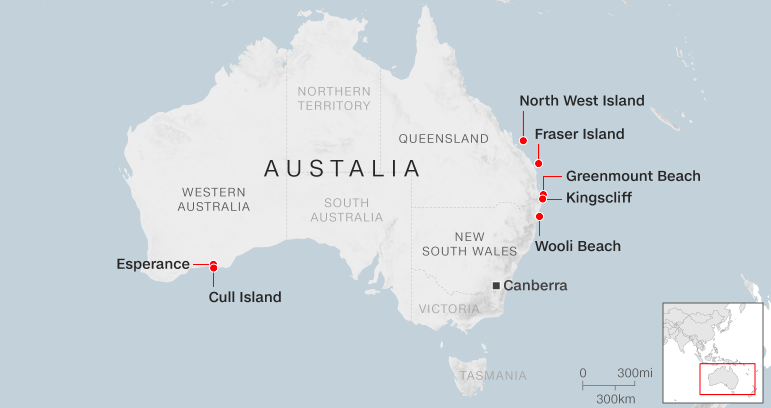
- There has been a huge difference in the fatality rates of shark incidents in Australia in this year compared to others. The main culprit of these attacks is climate change. The heating of the ecosystem and oceans has forced major adaption among the sea animals.
- Fish are migrating to where they never have before, causing sharks to follow, and it happens to be in very human-populated areas.
- Many sea animals are moving more south, from Australia to Tasmania, in search of a new environment. The ocean is changing and sharks are changing with it. Climate change has thrown everything out of balance, potentially how sharks react with humans.
- Links
- First article- national
- Second article- local
- Third article- internation