
Almost as soon as I returned home from my summer in Uganda, I started receiving the dreaded question, “How was it?” Although I was fully expecting my family and friends to have a lot of questions about Africa, I was not (and still am not) prepared to answer that question concisely.
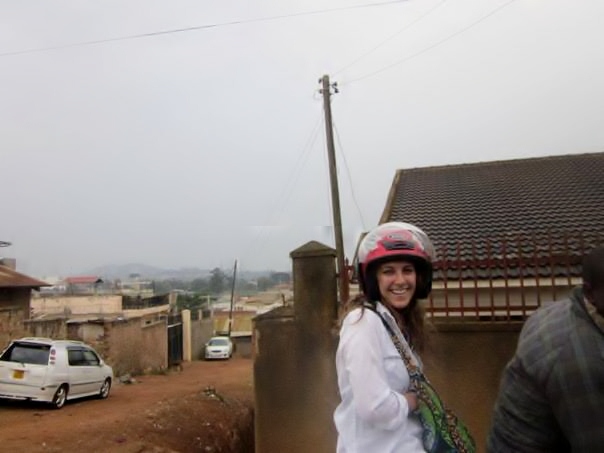
Me, Emily, on a motorcycle taxi (boda-boda) in June 2013
How to sum up the experiences I had? As an engineer, I visualize my impressions of Africa as a sort of non-deterministic wave function. Africa was a multitude of unpredictable things to me. It was a complex stream of randomly intersecting thoughts, logical conclusions, intensive reflections, and gut reactions. At the end of seven weeks, I had decidedly more questions than answers about the problems and solutions associated with the developing world.
One thing I can say with absolute certainty: there is much to be done in Africa. The reality of energy access in Uganda right now is that only 14% of the 37 million residents have access to grid electricity. This drops to 7% in rural areas, which is where the vast majority of Ugandans live (about 86%). Taken together, these statistics mean that grid access is still a far-away dream for most people in Uganda. Solar Sister, our hosting social enterprise, is a jewel among all the various non-governmental organizations (NGOs) and foreign aid groups working in Uganda to widen access to off-grid lighting and electricity. Solar Sister distributes solar lighting products through a network of women entrepreneurs. These women are selling solar lighting products all over Uganda, and have started to expand to Tanzania and South Sudan.
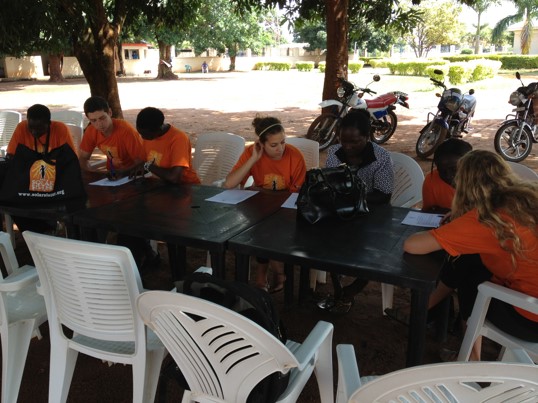
Myself and my teammates, Kevin and Katrina, interviewing Solar Sister Entrepreneurs in northern Uganda
Through Solar Sister, my teammates and I were able to travel to the far corners of Uganda and talk to a wide variety of women in the solar technology field. We heard first-hand the stories of children burning themselves from kerosene lanterns, the value that even a slightly increased income can have on a family, and the joy and pride people take in associating themselves with new technology.
A rather stark realization I had once I settled into my pattern of work and travel in Uganda woke me up to the incredible wealth of life and activity in Africa. It is easy to picture Africa as a dreary, poor, and wearisome place. Perhaps these images were created in my head before I went as a result of all the reading I had done on Africa’s poverty. Contrary to my subconscious expectations, what I found in Africa was just as much diversity of skill, energy, and talent as one finds in the United States. The major difference? Natural resources, geography, and cultural history. I think I can speak for my team when I say we were very impressed by the Solar Sister leadership, market savvy, and technical knowledge of their products. Apart from the Solar Sister staff, we met a breadth of smart and dedicated women working as Solar Sister Entrepreneurs (SSEs) on our many interview trips around the country. There were particular women who stood out to us—especially in Gulu, which is an all-star Solar Sister site that was mentioned in last years’ GSB Fellows’ blogs. (http://blogs.scu.edu/ntesie/2012/10/01/honorary-solar-sister/)
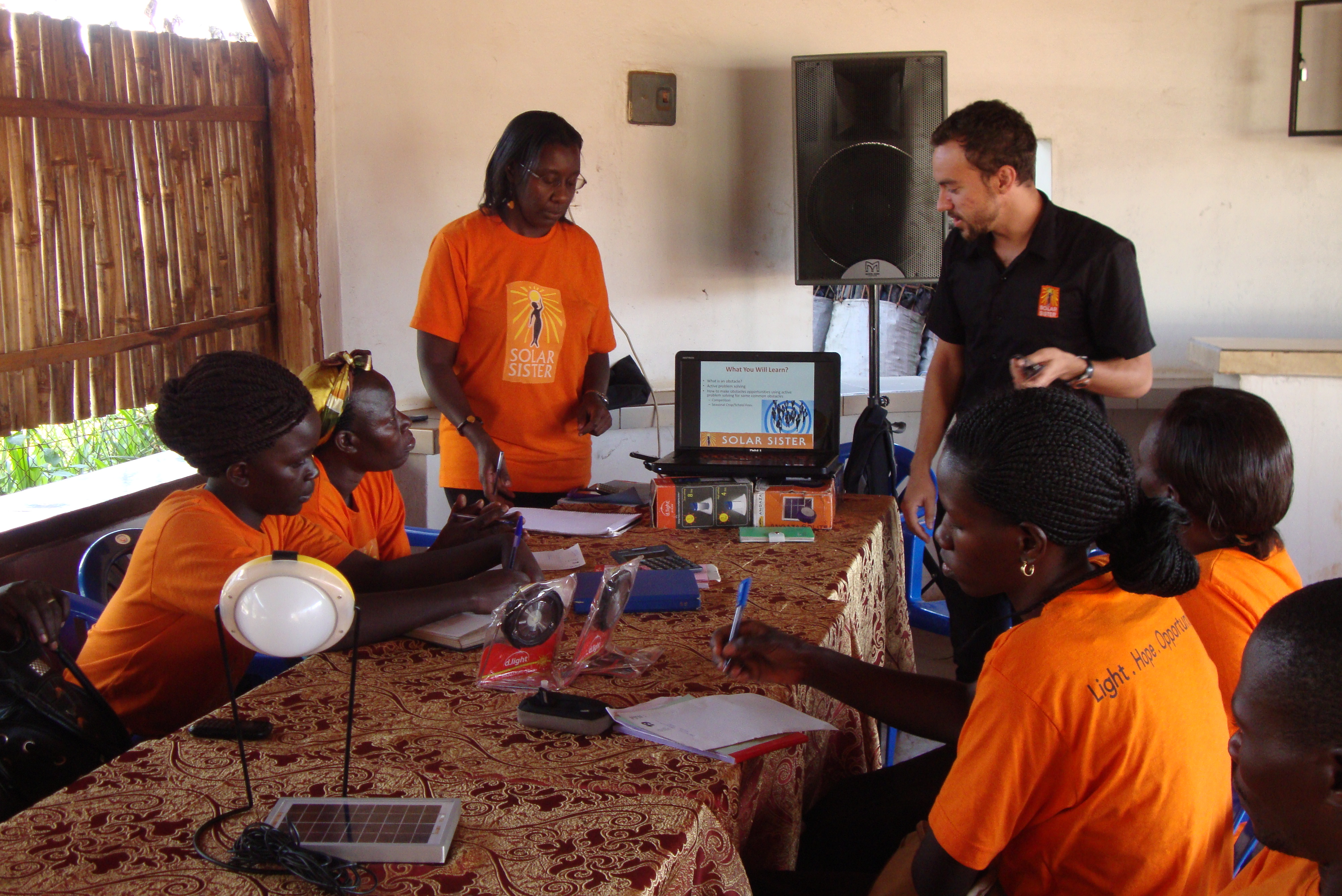
Jayne, top left, leading a meeting of her entrepreneurs in Gulu, Uganda.
I spent a lot of time trying to understand the reasons why certain parts of the world are entrenched in poverty and others have sped far ahead in terms of development. Like I mentioned, I concluded that it comes down to natural resources, geography, and cultural history. One mental battle I fought was trying to understand why there is poverty, and the other major one was trying to understand how best to overcome a cycle of poverty. Because we lived in a part of Kampala densely populated with foreign aid workers, NGOs, and the like, there were far more “mzungus” (read: non-black people) roaming the streets and interacting with us on a daily basis than any of us expected. Based on interactions I had with all kinds of Ugandan people throughout the summer, I suspect the influx of foreigners doing what can only be considered to be great work in Uganda has unfortunately led to a kind of NGO dependency. There is an expectation that mzungus come to Uganda to start businesses and have access to funding. This is an impression that cannot be faulted on the part of a Ugandan, given what part of the western world they see the most often. However, from a development point of view, and on an extremely theoretical level, this bothered me. I am a strong believer in the role of necessity to fuel innovation, and the notion that “someone will help me” is almost always an inspiration-crusher.
Like I said in the opening of this blog post, my thoughts on Africa do not necessarily agree with each other. If they did, I would have all the answers to development—which I decidedly do not. With that in mind, I think NGOs do wonderful work, and it is usually geared towards being sustainable once the foreigners leave. So my opinion on the optimal route for development flip-flopped between what one might call the Dambisa Moyo/Dead Aid/in-country development school of thought and the Jeffrey Sachs/Big Push/external funding school of thought. I recognize the various benefits and drawbacks of both types of thinking and I simply cannot choose one and eliminate the other. All I can conclude from my time in Africa is that, for now at least, it has to be somewhere in the middle, but hats off to whoever can figure out how to do that well and with a lot of success.
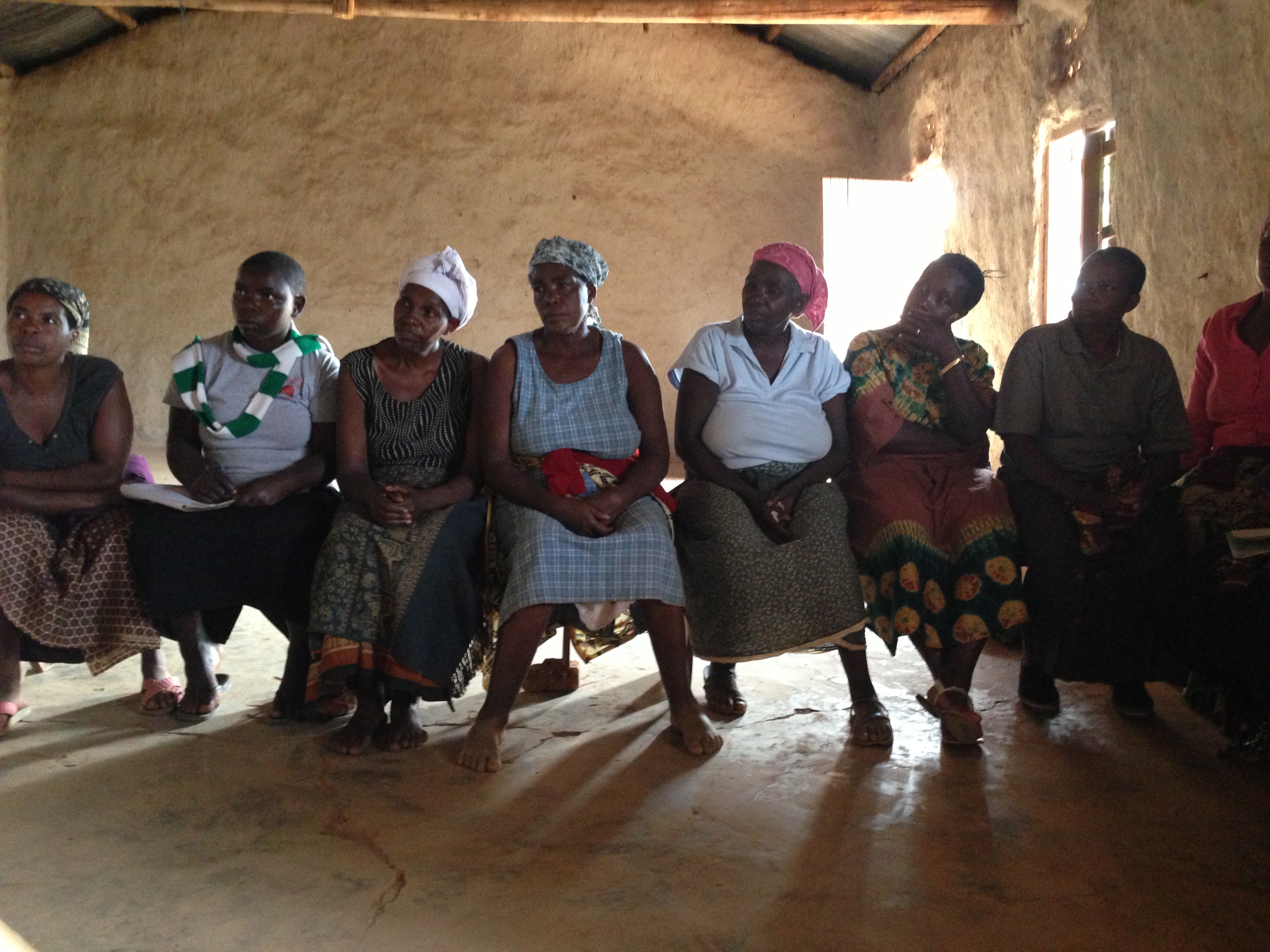
Women in Uganda attending an informational meeting about Solar Sister.
Overall, I definitely gained a sense of the complexities of the development problems in places like Africa. As an overly inductive person, I got overwhelmed at times by the enormity of the gap between the western world and the developing world. When I work on something, I like to begin with a problem statement, evaluate all my options, try some solutions, work it through, and walk away with everything solved. This type of process bears almost no resemblance to working in developing countries. Working in Africa requires an enormous amount of patience, resilience, ingenuity, and sense of humor (without which one would almost certainly lose hope or lose their mind). I was thoroughly impressed with what I observed in watching native Ugandans work in their own economy. At times when I would feel frustrated with the slow speed of progress or with other people not showing up or whatnot, Ugandans take a relaxed approach to dealing with unexpected problems, discomforts, and inconveniences most Americans would not tolerate. The relaxed approach I mention does not mean the Ugandan people we observed would ignore problems or let them go unsolved—on the contrary, my impression of their method of handling these situations was exemplary. In particular, Doreen, our primary host at Solar Sister for the second half of the summer, always stayed cool when faced with challenges, but still got everything done that she intended. I still can’t quite understand how this works, but I think it is my American personality that is preventing me from truly emulating such supreme patience.
I was particularly struck by a Solar Brother I met and interviewed when my team and I were out west in Rukungiri. The man’s name was Francis. He was an understated sort of person with a quiet dignity, which came through to me with intense clarity. Although I was told he did not speak English, he was able to understand the gist of my questions, usually answering before the translator had a chance to ask him in his native language. Although Solar Sister aims to recruit women entrepreneurs, sometimes men also take an interest in the income-generating opportunity.
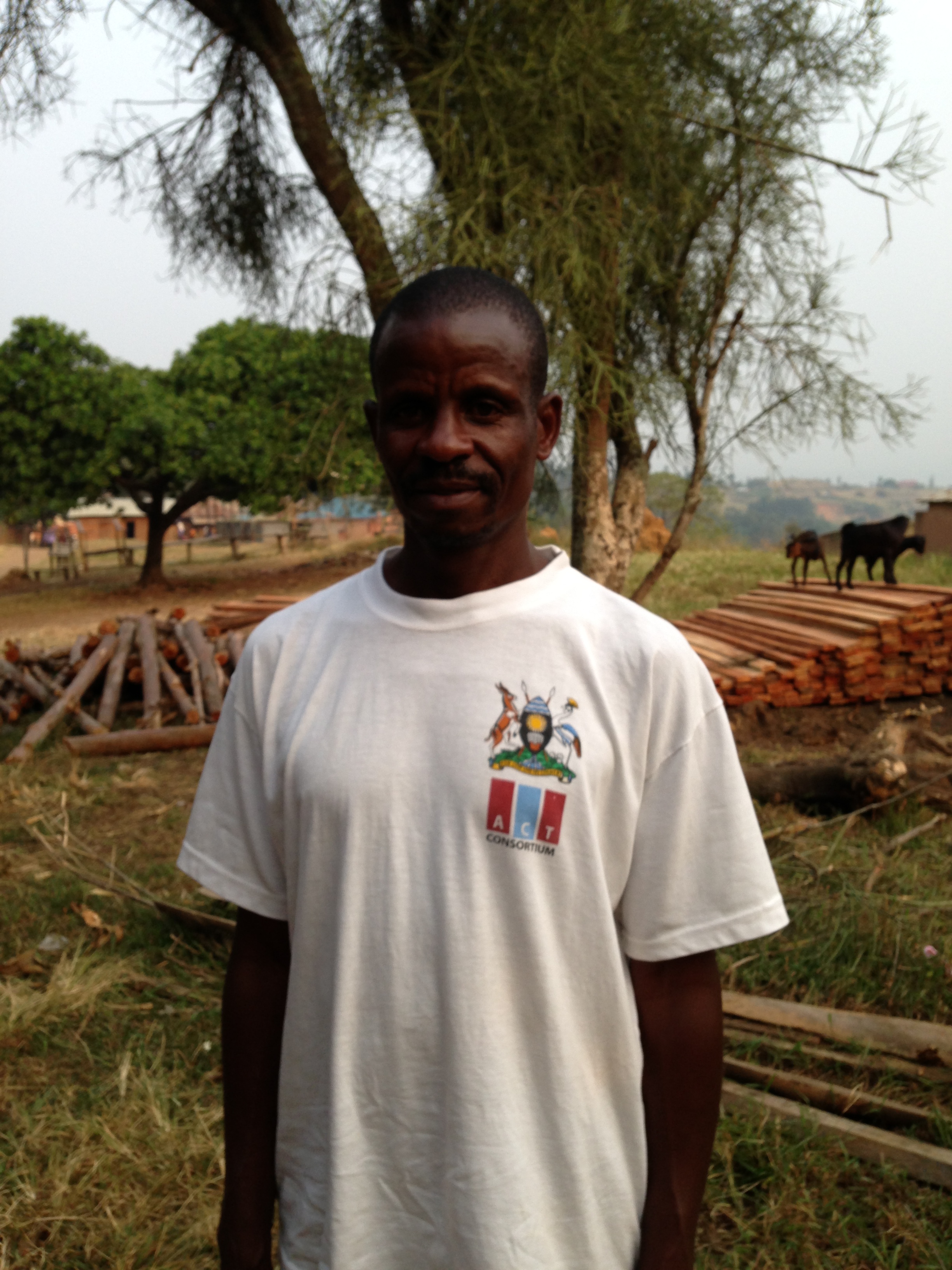
Francis, a Solar Brother and dedicated father in Rukungiri, Uganda
Despite men getting a bad reputation in Uganda for their lack of commitment and reliability, some men have found a lot of success with Solar Sister. What I liked about Francis was the pride he took in his role as a solar salesperson, and the dedication he showed to his family. Francis uses the money he makes as a Solar Brother to help support his kids—which was one of the first examples of a devoted father we had come across in Uganda. Francis, to me, was a quiet but committed person doing what Uganda needs done. It was his mannerisms and humble self-presentation that drew me in when I was interviewing him.
So what do all of these things together mean to me? Africa, as I have stressed, is a lot of things. It is plagued with disease, poverty, and corruption, but also positively exploding with life and hope and development. I am fascinated by what will ultimately drive development, but it is an ongoing drama that I will continue to observe with interest. What works and what doesn’t work are far too complex for the kind of formulaic analyses that are routine in my field of study. I have to get out of my hard data-driven mindset to try to understand Africa as it is, with all of its wonders and all of its issues. It is an ongoing process for me of discernment and learning, and I have a feeling that seven weeks this past summer is just the tip of the iceberg.
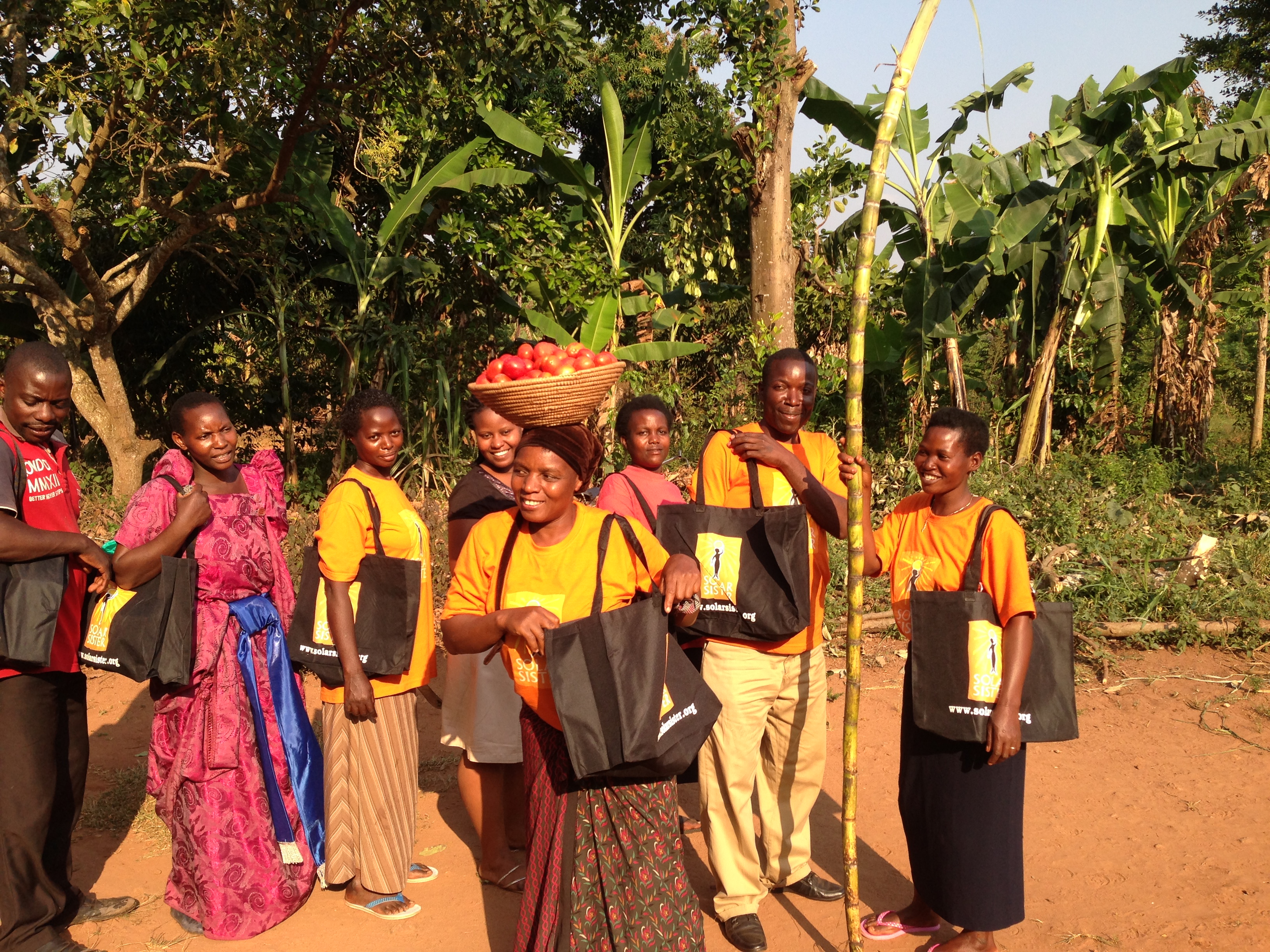
The women of Nakaseke, exuding life and energy at their monthly meeting