Conclusion.

screen-shot-2016-10-01-at-8-32-54-pm

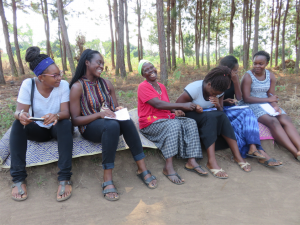
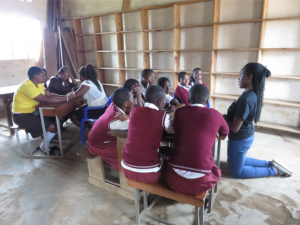
Me talking to a group of girls about healthcare careers.

“You have to be smart, kind, compassionate, humble, and passionate,” I said in response to one of the teenaged girls inquiries about the characteristics one needs to embody in order to become a good doctor. At the time, these characteristics just seemed like characteristics everyone should have, regardless of their career. I formulated this list almost instantaneously when I was asked, not really thinking about what each characteristic meant to me and how each informed my future career plans. As I look back at the experience, I now realize that this wasn’t just a random list of good characteristics–these are the qualities I am beginning to develop and I hope to embody and reflect in my daily life.

Smart. What does it truly mean to be intelligent? Does it mean having a high GPA and having high test scores? Does it mean being on the Dean’s list every quarter, or graduating Magna Cum Laude? I used to think so. I used to think that intelligence was measured by a number, a letter grade, a curve.

If this were truly the case, then those who do not have access to an education would automatically be considered unintelligent, because things such as GPA and test scores can only be measured through an educational system.

My summer with Bana taught me that being intelligent isn’t about hitting marks–it is about making them. It’s about setting the standard instead of fitting it. Being intelligent is about letting pure, unrelenting innovation and imagination run wild. Being intelligent is about going where no one else cares or dares to; asking the questions that no one else is willing to. Being intelligent is about trailblazing.

Those young girls, most of whom revealed to me were first generation secondary school students and planned on being the first people in their families to go to college, were intelligent beyond measures. They dared to challenge themselves by getting an education supported by their families. And one day, I sincerely believe that each one of those young women is going to do something astonishing for their community–whether it be in the field of healthcare or not.

Bana’s founder, Richard Bbaale, is intelligent. He dared to ask the questions no one else would in regards to women’s menstruation, and with innovation and drive, set forth on creating a company dedicated to solving the problems he discovered.  

Alexa Canady, the first woman, and the first African-American to become a neurosurgeon was and is intelligent. Yes, she was booksmart–she was consistently at the top of her class. But she was also a trailblazer. She dared to pursue a career that was unheard of for someone like her, and because of her, I can.
img_2570-png

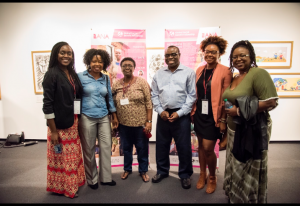
Déjàs mother, my parents, and Dr. Hinga looking smart at the Research with a Mission Open House.

Kind and Compassionate. Being kind and compassionate are key to success in any career path, especially those that require social interaction with others. The kindness with which Jeremiah and the rest of the Bana staff approached young girls whilst addressing menstruation, which can be seen as an uncomfortable topic, was key to the success of their programs. The environment they created during their educational programs fostered warmth, allowing for the girls to feel comfortable asking questions, and even inspired sharing their goals. Even the stories of girls and women’s interactions with Champions were filled with joy and appreciation for how those Champions treated them–with empathy and warmth. Many girls and women reported feeling comfortable and safe discussing their menstruation related health questions with their local Champions.

These are the types of interactions I want to have with people. I want to make people feel comfortable about discussing their health with me, and I want to inspire them to be healthy, goal-orientated individuals.
img_0962

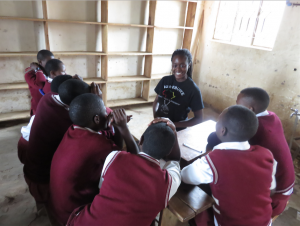
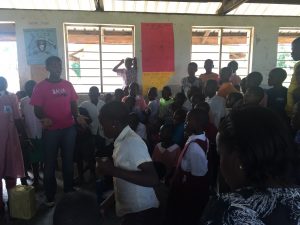
Jeremiah leading an educational program.

Humble. According to the 100people.org, I will become a part of the current 7% of the world that is college educated. I have been given an amazing opportunity to receive an education at Santa Clara University, to pursue a degree specialized to my own individual interests, and to do so in one of the most innovative places in the world. There is no doubt in my mind that I am extremely privileged in this sense.

With the privilege of education comes power, and with educational power comes a multitude of responsibilities. One of these responsibilities is to understand my privilege.

Growing up, I had never questioned whether or not I was going to college. It was always a part of my future. I hadn’t realized that a large population of americans didn’t share the same vision I did, and an even larger percentage of the world does not.  

Because of this, I believe that it is my responsibility to use my education to make a difference for other people. Altruism has been embedded in my degree as a result of the Jesuit values reflected in my classes.
img_1069

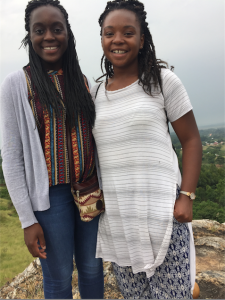
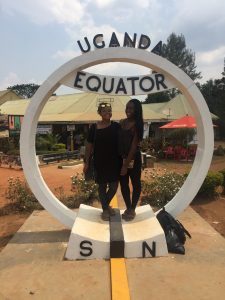
Déjà and I at the Equator

Passionate. Bana’s main fuel source is passion. Starting a social enterprise of this nature requires passion for making a difference for others, especially since the outcomes of the enterprise’s work may not directly benefit its founder.

This characteristic is what has kept my head in the game. This summer, I participated in this fellowship to answer various questions about my future career path and find parts of myself that I thought I had lost.

However, I’ve realized that this fellowship did nothing but affirm my previous vocational decisions and respark the passion I once had for healthcare. Upon my arrival back home, feelings of disappointment and angst took over as I failed to have that life changing “a-ha” moment I was expecting to have that would reveal some magical mysterious career path that I hadn’t yet discovered or been exposed to. No clear doors had been opened; no new ideas were discovered. There was just me and medicine, sitting at opposite ends of the same room, staring at each other as I clung to my chair, resisting its pull. I was wildly unsatisfied.

Attending the GSBI accelerator was a pivotal moment for me. The investors showcase was exciting and fun, and each entrepreneur had such an interesting story. It wasn’t the accelerator itself that helped me shift gears; it was Jeff Miller.

I can distinctly remember coming home after meeting him for the first time and practicing the advice he had given us earlier that day about looking in the mirror and calling yourself by the future title you wished to have, paying close attention to your own reaction to what you were saying. I stood my bathroom mirror and recited the statement: My name is Dr. Christina Egwim, and I am a neurologist. No reaction. “I must not be doing it right,” I thought. Once again, I repeated the statement with a slight variation, now with increasing volume and focus. “My name is Dr. Christina Egwim, and I am your neurologist.” I payed close attention to how my eyes lit up and to the satisfied grin the formed on my lips. A stream of memories rushed through my head as I stared at myself in mirror. I remembered meeting Dr. McNelis and Dr. Simone for the first time; I remembered the first Oliver Sacks book I had ever read; I remembered the first high school biology class I had ever taken; I remembered my first day as a Certified Nursing Assistant; I remembered my first day at the Stanford/VA Alzheimer’s Research Center; I remembered being inspired by the passion of the young girls in Uganda who also aspired to become doctors. I remembered all the experiences that I’ve had that have influenced my decision to want to go into medicine and once again I was filled with the passion and joy that I had been missing for a while.

After spending a summer working with a health-oriented social enterprise, I can still see myself pursuing a career in medicine. However, because of the lessons I have learned from working with Bana, I will strive towards further developing and embodying these traits throughout my career.
img_1097

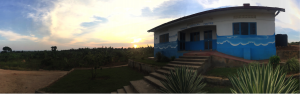
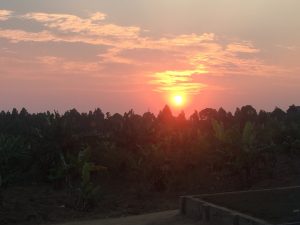
Our last sunset at Bana.


Relentlessly.


The passion with which Jeremiah and Richard described the future of Bana made it evident that they have huge plans for the company. After the first week of being there, I became increasingly more inspired to produce the best manuscript for them, so that their dreams can one day become a reality. 

richard

Bana CEO Richard contemplating life.


Richard’s drive is truly remarkable. He identified problems as a young man and dedicated his life to discovering ways to solving them. This type of passion and compassion for others can take years to develop. For some, it may even take a lifetime to discover the impetus needed to inspire them to make a change. Thinking about Richard’s early-developed passion led me to begin thinking about my own passions and vocational discernment.

oprhans

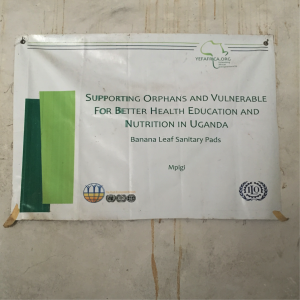
A Sovhen banner hung up in the dining area.

A banner representing Richards larger company, Sovhen, is hung up in the section of the production facility that we usually have our meals. One day, as I was scarfing down a delicious, hearty plate-full of matoke (plantains), beans, rice, and cabbage, I noticed the banner and the phrase it sported: “ Supporting Orphans and Vulnerable For Better Health Education and Nutrition in Uganda”.

I paused from eating for a while after I read the poster.  The target beneficiaries of this larger company were identified as orphans and the vulnerable. For Richard, the vulnerable included rural girls and women who didn’t have access to the things they would need (education and methods of management) when they began menstruating. He identified this group at a young age, having witnessed the difficulties his sister went through while he was growing up.

Then, it hit me.

Several people, including Jeremiah during our orientation meetings, had stressed the importance of connecting the work we will be doing with Bana with the work we want to be doing for the rest of our lives. Even within the weeks leading up to our departure, people often questioned how this fellowship was going to act as another stepping stone towards getting into medical school or even how studying neuroscience would be applicable to the work I would be doing. The connection between participating in a social entrepreneurship fellowship and my vocational discernment became less clear and my confidence began to waver tremendously as the questions began to pile up and my rehearsed, interview-like answers became less satisfactory.

Reading the sign cleared my vision and the connection became evident again: As Richard has, I, too, want to work to support the vulnerable for better health and education. At that time, I began to identify similarities between Richard’s work and what I wish to do with my future.  The vulnerable population I wish to work with is those who suffer from both psychological and neurological mental health disabilities. Both of the populations we have identified suffer from different stigmas prevalent throughout society.  From the interviews and observations that Deja and I conducted this summer, it appears that the problems that surround menstrual health often sprout as a result of a lack of education due to the nature of the subject. People in the community we are observing feel uncomfortable discussing menstruation, which, according to the stories we have heard, have lead to the creation of myths explaining menstruation and how to deal with it. For example, someone told a story about how when they were growing up, their parents advised them not to climb trees while they were on their period because if the tree bore fruit, it would dry up.  It was myths and attitudes similar to these that influenced girls to be silent about their menstruation growing, often times refusing to seek help out of embarrassment.

Stories such as these make me think about how stigmatized mental health disorders can be in the United States.  It is common for people to be reluctant to seek treatment for mental disorders as a result of the embarrassment they may feel due to how those with mental health disorders are portrayed in society. No one wants to be seen as “insane,” “crazy,” or “unstable.” Thus, those who do suffer from mental health disabilities often do not receive the help they need.

I must note that there are still differences between these two health issues. First off, location is everything. In the US, yes, it is true that stigma often acts as a barrier to the accessibility and availability of mental health services. However, it would completely inaccurate of me to compare that lack of access to the lack of access to sanitary pads and menstrual health education here in Uganda.  In the US, the mental health services are not nearly as limited as menstrual health services are in the Uganda. This, however, doesn’t suggest that the United States doesn’t have a problem. The presence of a problem is still a problem, regardless of how big or small it is.


After Working with Bana this summer, I feel that I have begun to develop the skills necessary to address stigmatized health topics such as menstruation in some cases and mental health in others. Observing Richard’s approach to addressing the stigma that exists around the problems experienced by a vulnerable population has begun guiding me towards becoming a better advocate for my patients. Medical school is still the ultimate goal—and one day I will become the neurologist I hope to be. However, I believe that understanding the problems of the population I wish to serve as a doctor on a more comprehensive scale, and discovering ways to ameliorate these larger problems, are just as important as directly treating mental health disorders. Healthcare should be more than just treating—it needs to encompass prevention. Bana’s mission clearly embodies prevention.


screen-shot-2016-10-01-at-8-32-54-pm

Christina speaking with students at the Kinoni Integrated Secondary School about the health care field.


Deja and I were given the opportunity to participate in Bana’s educational programs by answering career specific questions that the students may have for us. I was usually placed with the girls who desired to go into the healthcare field. During these breakout sessions, I would get a variety of questions ranging from the academic requirements necessary to get accepted into medical school to personal questions about my love life and marital status. These sessions always began with awkward silences and nervous laughter, but would then blossom into fun and fulfilling conversations about medicine and life. The amount of future surgeons, doctors, nurses, midwives, and other health care practitioners that I have spoken to amazes me. These young girls have such big dreams, and I am honored to have witnessed the way in which Bana helps these get closer to fulfilling those dreams. It was powerful to observe the drive and passion that these girls exude at such young ages, and I am blessed to have had the opportunity to have shared my experience as a women in pursuit of a career in health care.  

I will never forget the look in one young student’s eyes as she asked me the following question: “Do you think someone from a poor family like me can become a surgeon?” Millions of things were running through my mind. Of course I wanted to jump up and say ‘YES! Absolutely! Anyone can become a surgeon if you work hard enough!’ However,  I began to think about all the people in the world who are just as strong, smart, and caring as people who are surgeons today, but are not surgeons because they lack access to the resources they need to become surgeons. Opportunity sometimes hides itself from the most capable of beings, and talent is lost.  I looked at her and I told her the truth: “yes, I do believe that someone like you can become a surgeon. I’m not saying it is going to be easy, you are going to have to work hard. You have to be smart, strong, and passionate, but with those qualities, you can do anything in this world.” I noticed the slight smile that appeared on her face and fought hard not to tear up.

I saw a bit of myself in that young girl: she had the desire to pursue something, but the obstacles to her dreams seemed to great to overcome, and doubt invaded and dampened her passion. I wanted to hug her and praise her for her bravery and tell her everything was going to be okay, but I couldn’t do that because I didn’t and still don’t know that. What I do know, however, is that I did not lie to her, and I need to stop lying to myself: the career path I have chosen is not going to be easy, and I am going to have to work hard. I have to be smart, strong, and passionate, but with these qualities, I can do anything is this world.

I was hoping that I would come to some huge, life-changing realization in Uganda that would deter me from wanting to go down the path of medicine and pursue something that “would be easier.” What I learned is that nothing is easy–everything challenges you in one way or another.

health-center

The Donna Medical Center located at Bana headquarters

I want nothing more than to become a doctor, and now that I’m out of excuses there is only one thing left to do: pursue a career in medicine wholeheartedly and relentlessly.


Six.

IMG_0923

We were asked not to be too self-critical in this post, but asking me to do this is like asking me to write this through someone else’s paradigm. I began all my other drafts by writing some long, elaborate introduction about my fear of flying and connecting it to my fear of trying new things, discussing how working with Bana fits into my vocational discernment, and all the other this other insightful stuff that no one wants to read about at this very moment. I even got tired of reading over it myself. So, I resolved to keeping it blunt and honest.

Dear Future Fellows,

Here are my top 6 tips for those of you who will be blessed with the opportunity to work with Bana. I am not sure if we will be assigned to write a similar document upon our return, however, I can guarantee you that what I write down while I’m actually on the ground and living the experience will be more valuable than anything I try to remember to say to you when I return home.

1. If you’re afraid of flying—relax. It is going to be okay. I am completely terrified of flying in airplanes. Accepting the fellowship and going through the fellowship class seemed to serve as enough of a distraction up until the day Deja, Alaina, Victoria, and I were scheduled to take off for Uganda. It wasn’t until then that I was forced to figure out how I was going to remain calm while being strapped to a hunk of metal hurdling through the sky (a.k.a the airplane). I could numb myself with pills (Lorazipam) and potions (Zzz-Quil), I thought, OR I could submerge myself in the experience, similar to how a baby chick is pushed out of the nest during its first flying lessons.

I stuck to the latter. This method of submerging myself into the white-water streams of experiences has seemed to guide my decision-making process during my time in Uganda so far, and I have no regrets.

Screen Shot 2016-07-21 at 5.36.43 PM

2. If you have never been to Uganda, you do not know what it looks like.

Do not pack your assumptions and pre-judgments—they will only make your baggage heavier. Do not google “Uganda,” “Mpigi,” or “Kamapala,” and base your entire idea of what you are going to see on those results. If you are from Africa, or have parents from an African nation, like myself, do not assume that you know about ALL of Africa. If you are not from an African nation, or do not have parents from an African nation, but have been to an African nation, do not assume that you know about ALL of Africa.

I came here with an idea of what the rural areas would look like based off of my faint memories of the rural areas I visited in Nigeria. Little did I know, I new very little.

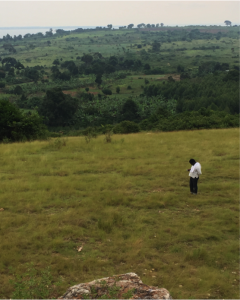
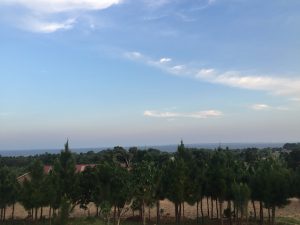
Arriving at the village was a breath-taking experience. I tried my best not to capitalize on the surrounding impoverished areas. There is poverty—this I cannot deny. However, there is also life. When we pulled up to the Bana Limited Uganda production site, the cool breeze coming in from Lake Victoria was refreshing—it was pretty hot that day. Beads of sweat formed and dripped down my face as I took everything in. The lush, green fields of vegetation were absolutely astonishing. I couldn’t help but think, “Not only am I in Africa, but I am in Uganda, and I will be in Uganda for the next couple of weeks.” (Not that there isn’t vegetation at home, but I am from California. Green just isn’t as green as it used to be ever since the drought.)

The campus is equipped with a production site, a maternity ward, a general health clinic, a guesthouse (where we stay), an office building, and other areas that appear to be sites of future buildings. Every time Jeremiah, one of our gracious hosts, and a leading executive of Bana, describes the future of Bana in regards to those unfinished buildings, his eyes light up. “We wish to expand all of this area to become…” and he takes off! It is evident that Jeremiah and Richard, the CEO of Bana, as well as all of the staff that work here, have huge plans for Bana.

IMG_0936

3. Everyone here may or may not look like you, dress like you, or speak like you. If you are not Ugandan, don’t be afraid to lean gently into the inherent tourist in you.

I knew I was going to an African nation before we left. I knew Uganda was a nation full of Ugandan people…who are Ugandan. However, I still can’t understand my own shock and surprise whenever I look around and see people with similar complexions to my own staring back at me (if you don’t know what I look like at this point, go to my ‘About Me’ page). It isn’t an uncomfortable feeling—not at all. Quite the opposite, actually. It is just different. It is different seeing primarily black faces on the television, in marketplaces, and all around the village and other cities. I feel like I am more comfortable than I would be on a different continent, however, I still do feel like I stick out like a sore thumb at times, especially when I am greeted. Some people assume that Deja and I are Ugandans because of the color of our skin and proceed to speak to us in Luganda. These conversations are usually quickly interrupted by Jeremiah, or other employees at Bana, explaining that we are Americans (in Luganda) or by one of us explaining that we don’t speak Luganda, followed by some nervous laughter. Other people can immediately tell that we are not Ugandan.

I had to learn to accept the fact that I was tourist, even though I did not want to be seen as one (I do not like the attention that tourist tend to attract to themselves). I did not pick up an ‘English to Luganda’ book when we visited the Equator because of this. I was afraid to ask questions about the culture, the language, and the country out of the fear of being seen as some dumb American—although, this is probably never the case (and if it is, theres not much I can really do about it, so why worry?).

I eventually swallowed my pride and began to speak up. Doing so helped me learn that everyone here at Bana is looking out for our best interest. They are willing to answer any questions we have, and do so without making us feel ignorant. Yes, there are times when they will comment on or mock our American accents and how we need to stop “speaking through the nose,” however, its all harmless teasing. As long as my questions and comments are respectful, then being a bit tourist-y can’t hurt. Besides, when am I ever going to get an opportunity to travel to Uganda again? I should want to learn as much as I can.

AND EAT AS MUCH AS I CAN.

Seriously, Miss Joanne and her sous-chef, Teddy have changed my life. These women have graced us with their cooking abilities. These women would win Chopped, Master Chef, and Cut-Throat Kitchen. These Goddesses of Confection could work for Chef Ramsey himself. Meals usually come around the same time, and these women have me so hooked on their cooking that I almost panic when the food is late. If I take nothing away from this trip, I will have at least received the opportunity to dine from the one of the finest home kitchens I have ever. I could eat beans, rice, cabbage, chapat, ‘chips’, matoke, avocado (The avocados here are gigantic, by the way), and goat meat for the rest of my life.

Maybe.

They told us not to eat ‘bush’ meat, during our time here, and I haven’t. But they never said anything about street meet, and man, let me tell you…I don’t know what they use to season that meat (which is usually goat or beef), but they sure do season it well.

Screen Shot 2016-07-21 at 5.37.09 PM

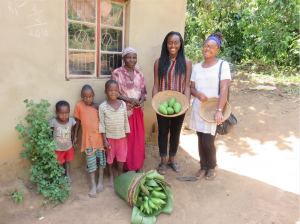
(YOU SEE THOSE AVOCADOS IM HOLDING? HUGE, RIGHT??)

4. Pit Latrines—you will need to prepare for them.

Begin the squat challenge now. I am serious. Not to be crude, but your aim needs to be on point. Bring enough Ciprofloxacin for about 4 rounds of sickness.

“What is the nastiest bathroom you have ever used?” Keith inquires during my first interview for the fellowship, in an effort to gauge my ability to handle using a pit latrine.

What he SHOULD have asked me was if I could crack open a small watermelon with my thighs.

One of the most difficult parts of using the pit latrines is not the cleanliness—actually, much to my embarrassment (or the embarrassment of the CalPhi Fraternity house?) I have found these pit latrines to be much cleaner than the nastiest bathroom I’ve ever used.

I have had to master the art of squatting while here, and after being here for about a month, I think I’ve got it. Its been so much easier to keep myself up in the latrine with my newfound core and thigh strength. This is not too say that I am a pit-latrine master—oh no. The two cases of extra-terrestrial diarrhea that have plagued my GI tract definitely wounded me, but by the grace of God, and a few antibiotics, I am alive and well today to share my testimony.

Second most difficult part about using the pit latrines is my newfound fear of lizards. I didn’t even know I was afraid of lizards until I got here. I’m not sure what it is about them that I don’t like, but I live in constant fear that a lizard will jump on me in the latrine (WHICH I HAVE WITNESSED, JUST SAYING). The worst part about being afraid of lizards is that they are probably the most harmless, even helpful, creatures here. They eat the mosquitos that could possibly carry the diseases that would ruin me. They typically don’t bite and aren’t poisonous. I am fully aware of the fact that the lizard is not going to harm me, yet I am still afraid—this is irrational. I have felt really silly this entire trip because of this fear.

IMG_0953

5. Forgive yourself.

You are here to work—this is true. But there will be times when you get frustrated with yourself, your partner, your lack of understanding of the language, and your lack of toilets. It is OKAY to be frustrated. It is OKAY to want to the amenities of your home. You are NOT a brat for wanting to sleep in your own bed from time to time, or use your own bathroom. These frustrations and desires may distract you from your work for a bit, and that is OKAY.

I began to beat myself up about so many things as we approached the half-way mark. I felt privileged and weak when I began to miss the comforts of my own home. On top of that, I began to feel like everything at home was falling apart. I receive news updates from CNN, Huffington Post, and NY Times, as well as some close friends of mine from home. The chaos that is plaguing the U.S. right now is unbelievable. I had to turn off my phone for a couple of days to stop receiving updates because I couldn’t handle the news. My frustration with people’s apathy towards black lives has reached all new heights. Hearing the news at home, as well as receiving some worrisome personal news, caused me to break down. I felt helpless—I cried in my bed for half an hour and I began to question my own strength and character.

I talked to a past fellow about these feelings and she reassured me that it is okay to feel this way. She reminded me that I need to forgive myself while in the field, because no matter how strong I thought I was supposed to be, this fellowship was still going to be a challenge in one way or another. She helped me realize that what I’m going through now builds character—it is a part of becoming an adult.

I am grateful that I was placed with someone like Deja. Deja is strong—she faces everything with a confidence that I envy, and have even tried to embody from time to time. With her help, I am very confident that I will be able to begin developing qualities that will guide me through other challenges in life from this fellowship.

Screen Shot 2016-07-21 at 5.37.23 PM

6. Prepare to be inspired! Let the experience of conducting action research change you.

In regards to the project that Deja and I are completing, I feel that everything is going great. The research we have conducted so far has been exciting! Being able to observe Bana implement its theory of change in the community has been amazing. There have even been times when Deja and I have had the privilege of being a part of the educational programs that Bana conducts. During these programs, the students are divided into groups based on their career goals, and we are assigned to talk to specific groups of girls. The amount of future surgeons, doctors, nurses, midwifes, and other health care practitioners that I have spoken to amazes me. These young girls have such big dreams, and I am honored to have witnessed the way in which Bana helps these get closer to fulfilling those dreams. It is powerful to observe the drive and passion that these young women exude at such young ages, and I am blessed to have had the opportunity to have shared my experience as a women in pursuit of a career in health care. 

Screen Shot 2016-07-21 at 5.36.55 PM