We were asked not to be too self-critical in this post, but asking me to do this is like asking me to write this through someone else’s paradigm. I began all my other drafts by writing some long, elaborate introduction about my fear of flying and connecting it to my fear of trying new things, discussing how working with Bana fits into my vocational discernment, and all the other this other insightful stuff that no one wants to read about at this very moment. I even got tired of reading over it myself. So, I resolved to keeping it blunt and honest.
Dear Future Fellows,
Here are my top 6 tips for those of you who will be blessed with the opportunity to work with Bana. I am not sure if we will be assigned to write a similar document upon our return, however, I can guarantee you that what I write down while I’m actually on the ground and living the experience will be more valuable than anything I try to remember to say to you when I return home.
1. If you’re afraid of flying—relax. It is going to be okay. I am completely terrified of flying in airplanes. Accepting the fellowship and going through the fellowship class seemed to serve as enough of a distraction up until the day Deja, Alaina, Victoria, and I were scheduled to take off for Uganda. It wasn’t until then that I was forced to figure out how I was going to remain calm while being strapped to a hunk of metal hurdling through the sky (a.k.a the airplane). I could numb myself with pills (Lorazipam) and potions (Zzz-Quil), I thought, OR I could submerge myself in the experience, similar to how a baby chick is pushed out of the nest during its first flying lessons.
I stuck to the latter. This method of submerging myself into the white-water streams of experiences has seemed to guide my decision-making process during my time in Uganda so far, and I have no regrets.
2. If you have never been to Uganda, you do not know what it looks like.
Do not pack your assumptions and pre-judgments—they will only make your baggage heavier. Do not google “Uganda,” “Mpigi,” or “Kamapala,” and base your entire idea of what you are going to see on those results. If you are from Africa, or have parents from an African nation, like myself, do not assume that you know about ALL of Africa. If you are not from an African nation, or do not have parents from an African nation, but have been to an African nation, do not assume that you know about ALL of Africa.
I came here with an idea of what the rural areas would look like based off of my faint memories of the rural areas I visited in Nigeria. Little did I know, I new very little.
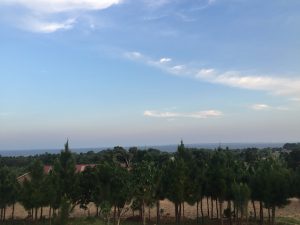
Arriving at the village was a breath-taking experience. I tried my best not to capitalize on the surrounding impoverished areas. There is poverty—this I cannot deny. However, there is also life. When we pulled up to the Bana Limited Uganda production site, the cool breeze coming in from Lake Victoria was refreshing—it was pretty hot that day. Beads of sweat formed and dripped down my face as I took everything in. The lush, green fields of vegetation were absolutely astonishing. I couldn’t help but think, “Not only am I in Africa, but I am in Uganda, and I will be in Uganda for the next couple of weeks.” (Not that there isn’t vegetation at home, but I am from California. Green just isn’t as green as it used to be ever since the drought.)
The campus is equipped with a production site, a maternity ward, a general health clinic, a guesthouse (where we stay), an office building, and other areas that appear to be sites of future buildings. Every time Jeremiah, one of our gracious hosts, and a leading executive of Bana, describes the future of Bana in regards to those unfinished buildings, his eyes light up. “We wish to expand all of this area to become…” and he takes off! It is evident that Jeremiah and Richard, the CEO of Bana, as well as all of the staff that work here, have huge plans for Bana.
3. Everyone here may or may not look like you, dress like you, or speak like you. If you are not Ugandan, don’t be afraid to lean gently into the inherent tourist in you.
I knew I was going to an African nation before we left. I knew Uganda was a nation full of Ugandan people…who are Ugandan. However, I still can’t understand my own shock and surprise whenever I look around and see people with similar complexions to my own staring back at me (if you don’t know what I look like at this point, go to my ‘About Me’ page). It isn’t an uncomfortable feeling—not at all. Quite the opposite, actually. It is just different. It is different seeing primarily black faces on the television, in marketplaces, and all around the village and other cities. I feel like I am more comfortable than I would be on a different continent, however, I still do feel like I stick out like a sore thumb at times, especially when I am greeted. Some people assume that Deja and I are Ugandans because of the color of our skin and proceed to speak to us in Luganda. These conversations are usually quickly interrupted by Jeremiah, or other employees at Bana, explaining that we are Americans (in Luganda) or by one of us explaining that we don’t speak Luganda, followed by some nervous laughter. Other people can immediately tell that we are not Ugandan.
I had to learn to accept the fact that I was tourist, even though I did not want to be seen as one (I do not like the attention that tourist tend to attract to themselves). I did not pick up an ‘English to Luganda’ book when we visited the Equator because of this. I was afraid to ask questions about the culture, the language, and the country out of the fear of being seen as some dumb American—although, this is probably never the case (and if it is, theres not much I can really do about it, so why worry?).
I eventually swallowed my pride and began to speak up. Doing so helped me learn that everyone here at Bana is looking out for our best interest. They are willing to answer any questions we have, and do so without making us feel ignorant. Yes, there are times when they will comment on or mock our American accents and how we need to stop “speaking through the nose,” however, its all harmless teasing. As long as my questions and comments are respectful, then being a bit tourist-y can’t hurt. Besides, when am I ever going to get an opportunity to travel to Uganda again? I should want to learn as much as I can.
AND EAT AS MUCH AS I CAN.
Seriously, Miss Joanne and her sous-chef, Teddy have changed my life. These women have graced us with their cooking abilities. These women would win Chopped, Master Chef, and Cut-Throat Kitchen. These Goddesses of Confection could work for Chef Ramsey himself. Meals usually come around the same time, and these women have me so hooked on their cooking that I almost panic when the food is late. If I take nothing away from this trip, I will have at least received the opportunity to dine from the one of the finest home kitchens I have ever. I could eat beans, rice, cabbage, chapat, ‘chips’, matoke, avocado (The avocados here are gigantic, by the way), and goat meat for the rest of my life.
Maybe.
They told us not to eat ‘bush’ meat, during our time here, and I haven’t. But they never said anything about street meet, and man, let me tell you…I don’t know what they use to season that meat (which is usually goat or beef), but they sure do season it well.
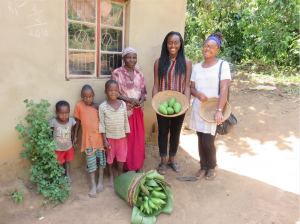
(YOU SEE THOSE AVOCADOS IM HOLDING? HUGE, RIGHT??)
4. Pit Latrines—you will need to prepare for them.
Begin the squat challenge now. I am serious. Not to be crude, but your aim needs to be on point. Bring enough Ciprofloxacin for about 4 rounds of sickness.
“What is the nastiest bathroom you have ever used?” Keith inquires during my first interview for the fellowship, in an effort to gauge my ability to handle using a pit latrine.
What he SHOULD have asked me was if I could crack open a small watermelon with my thighs.
One of the most difficult parts of using the pit latrines is not the cleanliness—actually, much to my embarrassment (or the embarrassment of the CalPhi Fraternity house?) I have found these pit latrines to be much cleaner than the nastiest bathroom I’ve ever used.
I have had to master the art of squatting while here, and after being here for about a month, I think I’ve got it. Its been so much easier to keep myself up in the latrine with my newfound core and thigh strength. This is not too say that I am a pit-latrine master—oh no. The two cases of extra-terrestrial diarrhea that have plagued my GI tract definitely wounded me, but by the grace of God, and a few antibiotics, I am alive and well today to share my testimony.
Second most difficult part about using the pit latrines is my newfound fear of lizards. I didn’t even know I was afraid of lizards until I got here. I’m not sure what it is about them that I don’t like, but I live in constant fear that a lizard will jump on me in the latrine (WHICH I HAVE WITNESSED, JUST SAYING). The worst part about being afraid of lizards is that they are probably the most harmless, even helpful, creatures here. They eat the mosquitos that could possibly carry the diseases that would ruin me. They typically don’t bite and aren’t poisonous. I am fully aware of the fact that the lizard is not going to harm me, yet I am still afraid—this is irrational. I have felt really silly this entire trip because of this fear.
5. Forgive yourself.
You are here to work—this is true. But there will be times when you get frustrated with yourself, your partner, your lack of understanding of the language, and your lack of toilets. It is OKAY to be frustrated. It is OKAY to want to the amenities of your home. You are NOT a brat for wanting to sleep in your own bed from time to time, or use your own bathroom. These frustrations and desires may distract you from your work for a bit, and that is OKAY.
I began to beat myself up about so many things as we approached the half-way mark. I felt privileged and weak when I began to miss the comforts of my own home. On top of that, I began to feel like everything at home was falling apart. I receive news updates from CNN, Huffington Post, and NY Times, as well as some close friends of mine from home. The chaos that is plaguing the U.S. right now is unbelievable. I had to turn off my phone for a couple of days to stop receiving updates because I couldn’t handle the news. My frustration with people’s apathy towards black lives has reached all new heights. Hearing the news at home, as well as receiving some worrisome personal news, caused me to break down. I felt helpless—I cried in my bed for half an hour and I began to question my own strength and character.
I talked to a past fellow about these feelings and she reassured me that it is okay to feel this way. She reminded me that I need to forgive myself while in the field, because no matter how strong I thought I was supposed to be, this fellowship was still going to be a challenge in one way or another. She helped me realize that what I’m going through now builds character—it is a part of becoming an adult.
I am grateful that I was placed with someone like Deja. Deja is strong—she faces everything with a confidence that I envy, and have even tried to embody from time to time. With her help, I am very confident that I will be able to begin developing qualities that will guide me through other challenges in life from this fellowship.
6. Prepare to be inspired! Let the experience of conducting action research change you.
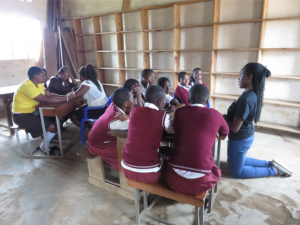
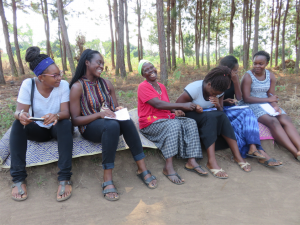
In regards to the project that Deja and I are completing, I feel that everything is going great. The research we have conducted so far has been exciting! Being able to observe Bana implement its theory of change in the community has been amazing. There have even been times when Deja and I have had the privilege of being a part of the educational programs that Bana conducts. During these programs, the students are divided into groups based on their career goals, and we are assigned to talk to specific groups of girls. The amount of future surgeons, doctors, nurses, midwifes, and other health care practitioners that I have spoken to amazes me. These young girls have such big dreams, and I am honored to have witnessed the way in which Bana helps these get closer to fulfilling those dreams. It is powerful to observe the drive and passion that these young women exude at such young ages, and I am blessed to have had the opportunity to have shared my experience as a women in pursuit of a career in health care.