
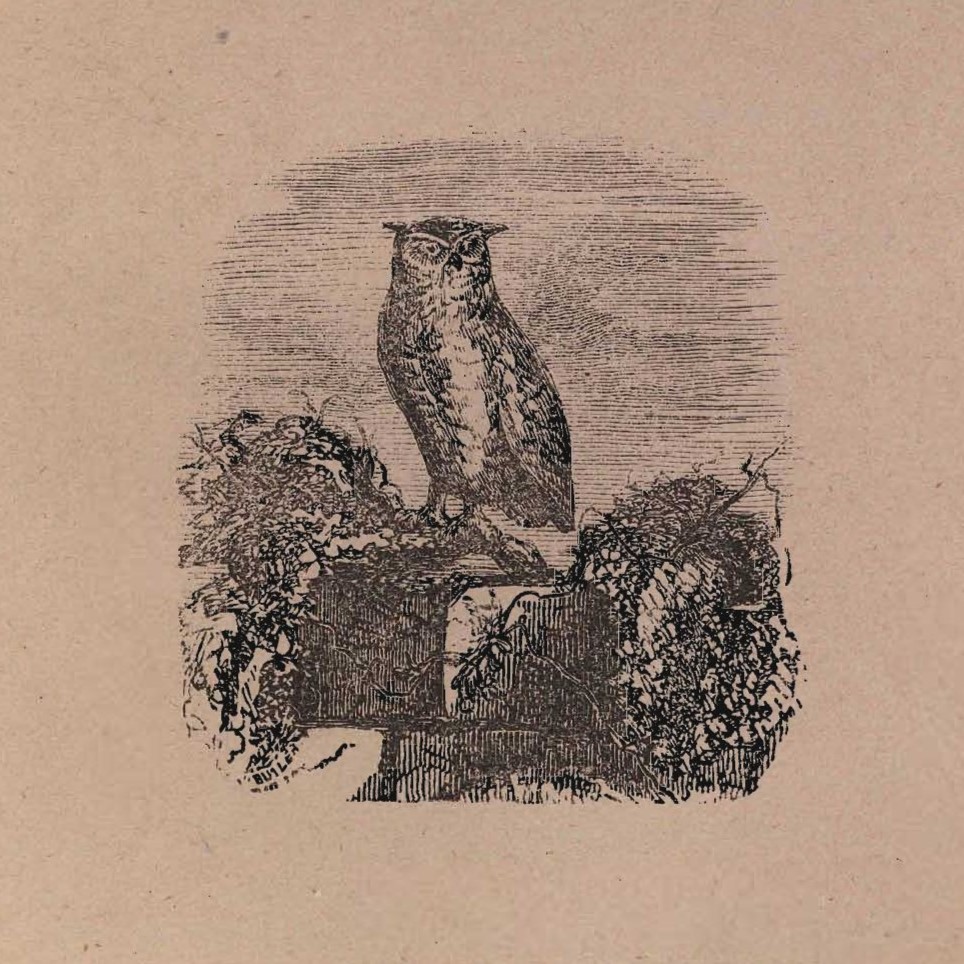
I started working as a student assistant at the SCU’s Archives & Special Collections at the beginning of 2026. This has provided me with the opportunity to familiarize myself with records, artifacts, and publications from the 19th century, when Santa Clara College was first established. I also have the privilege of being the current Associate Editor of the Santa Clara Review, SCU’s internationally published student-run literary magazine. Putting these two roles together sparked my interest: what did student publications look like when Santa Clara College was first established, especially the Santa Clara Review, the oldest Chartered Student Organization (CSO) at Santa Clara University?
Over the past month, I have had the opportunity to explore some of the earliest student writing and publications to learn more about student life at Santa Clara College. I have found that similar to the ambitious students now admitted to Santa Clara University, the young men attending Santa Clara College demonstrated their own academic prowess through student-run publications and their interest in writing.
The Owl at Santa Clara College
One of the first things I learned was that the Santa Clara Review’s original name was The Owl and its first publication was in December of 1869. The interest in literary publication and journalism at American colleges is reflected in the progression of the university’s still existing student publications including The Owl, The Redwood, and The Santa Clara–two of which were founded while the university was still known as Santa Clara College. The Owl literary magazine was “edited and printed by the boys of Santa Clara College, S.J.” while the college was still in its early days (The Owl, Vol. 1 No. 1, 1869). A 1931 edition of The Owl reminiscing on the history of student publications at the university remarked that “The Owl represents the first stage of development” in student interest in publication and writing (The Owl, 1931, page 12). The following stages include interest in yearbook publication with The Redwood and journalism through The Santa Clara, the student run newspaper.
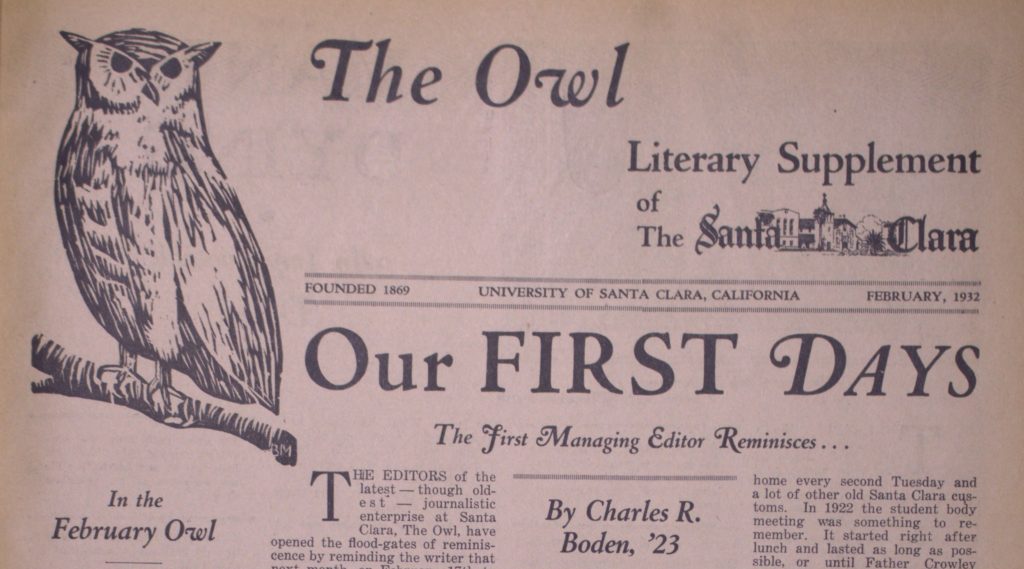
You might be curious to know what students publishing their work decided to share with other students, faculty, and their families. Similar to the Santa Clara Review of today, many types of student work could be published in The Owl, including “scientific and historical essays; tales, dramas, poetry, [and] humor,” expressing the desire of students to write for broader audiences and beyond their degree requirements (The Owl, Vol. 1 No. 1, 1869). The Owl maintained that “the doors of publication rooms are always open to any aspirant whose genius keeps pace with his aspirations” (“Idle Notes,” The Owl, Vol. 1 No. 1, 1869). The student-run publication allowed students to practice their writing and storytelling in front of audiences outside of the classroom, finding support and encouragement from the staff and faculty of Santa Clara College as well as from their families, who were able to purchase subscriptions to the magazine. As the young men continued to write, they kept in mind the objectives central to the establishment of the magazine including “mental improvement” and “to please parents and friends” (The Owl, Vol. 1 No. 1, 1869).
In the earliest volumes of The Owl, some students released their writing in sections rather than an entire work at once. The magazine was released once a month for the ten months that students were in school. This made it possible for students writing for The Owl to continue to work on their writing throughout the academic year, and encouraged readers to subscribe to the magazine for $2.50 per year. This is not so different from today: a one year subscription of SCU’s literary magazine, the Santa Clara Review, costs $20 for two volumes. Parents of Santa Clara College students were encouraged to support The Owl by subscribing to the magazine in order to read the work of their sons and to receive news from the goings on at the school. And remember, unlike today, parents did not have many other ways of keeping in touch and would not have seen their children for months at a time! Writing for the magazine allowed for students to exercise their independence and individual interests away from their families while still receiving support from their loved ones.
As I mentioned earlier, the students of Santa Clara College wrote within a broad range of genres and topics similar to the current contributions to the Santa Clara Review. The subject matter of these early volumes of the student-run literary magazine allow us to glimpse into the wide-ranging interests of Santa Clara College’s early students. For example, a “Historical Essay on the Execution of Charles I” by Frank Hubbard demonstrates the interest of students in writing about world history (The Owl, Vol. 1 No. 2, 1869). The Owl published this essay in several installments throughout Volume 1. The same issue of the Owl as Hubbard’s essay on the historical circumstances surrounding the death of King Charles I also features a poem titled “Widow’s Offering” written by Henry Newhall. This three page long poem explores the struggle of a mother to feed her children after losing her husband in war. Her sacrifice keeps her children and a starving soldier alive. After the war, that same soldier took care of the widow and her children. These two pieces published in The Owl demonstrate not only the writing skills of the students, but also their interest in historic events and diverse literary formats.
“Idle Notes”: Student Life & Naming of The Owl
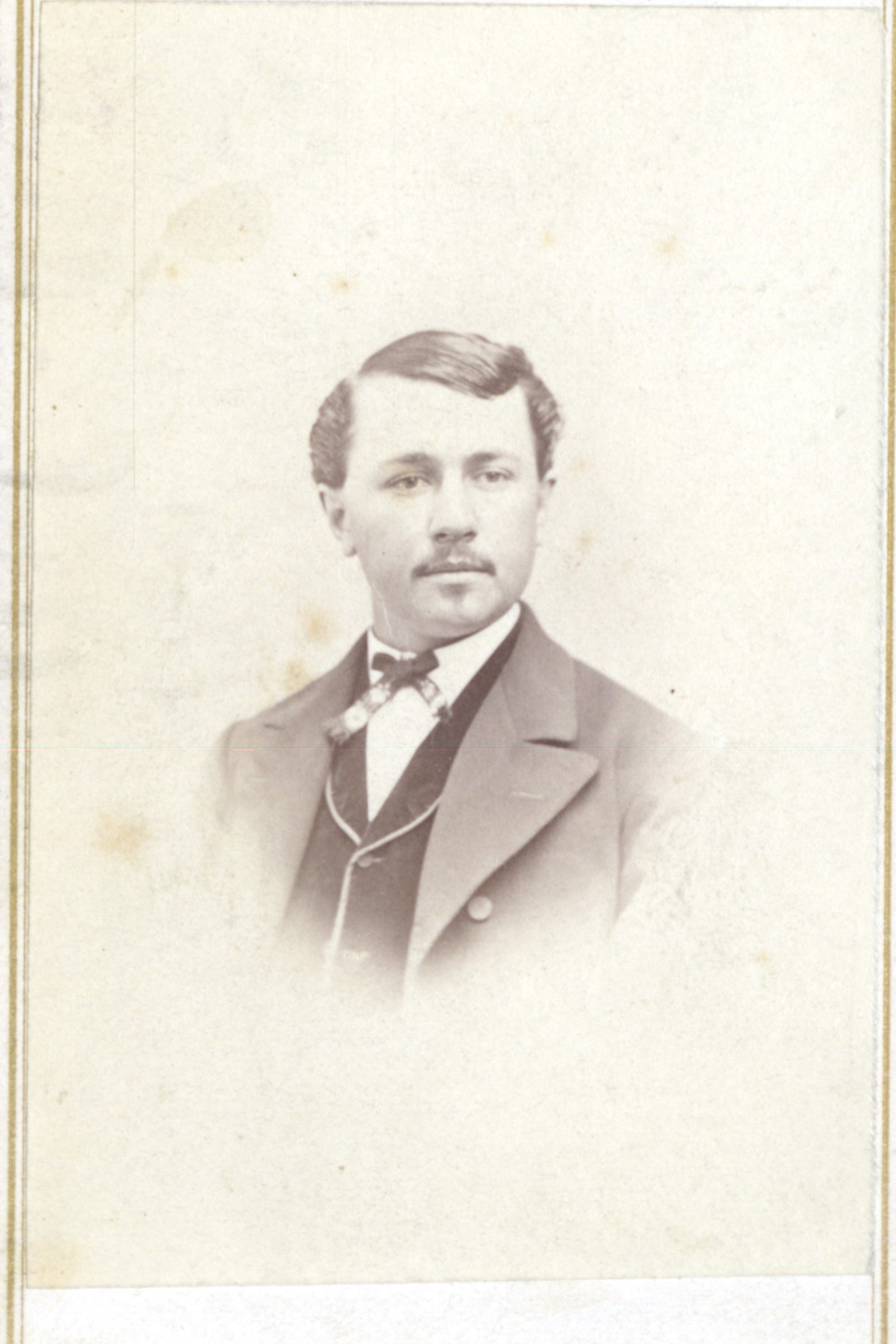
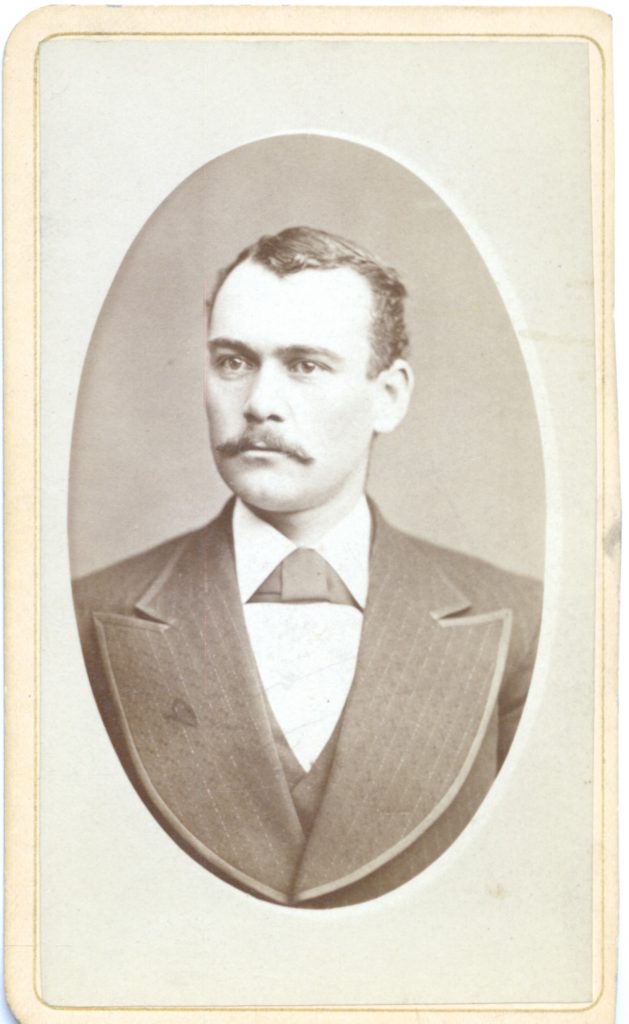
In addition to the literary pieces published, the students running The Owl included “Idle Notes,” a section of the publication that discusses their goals for the future of the magazine and other aspects of student life. In the “Idle Notes” of the first ever published volume, the Editor General Charles F. Wilcox writes about Santa Clara College life as well as what it was like to be a member of a student-run literary magazine. Charles Wilcox, a student from Maine Prairie, attended Santa Clara College from 1866 to 1871 (Alumni Association Records, 1851-1951). He received recognition for his academic efforts in chemistry, natural philosophy, and French as well as for his good conduct and diligence (Catalogue of Santa Clara College 1869-1870). As well as his involvement with The Owl, Wilcox served as the librarian for the Philalethic Literary Society from 1868 through 1869. In Volume 1 Number 1 of The Owl, Wilcox published “Sound–A Lecture” (The Owl, Vol. 1 No. 1, 1869).
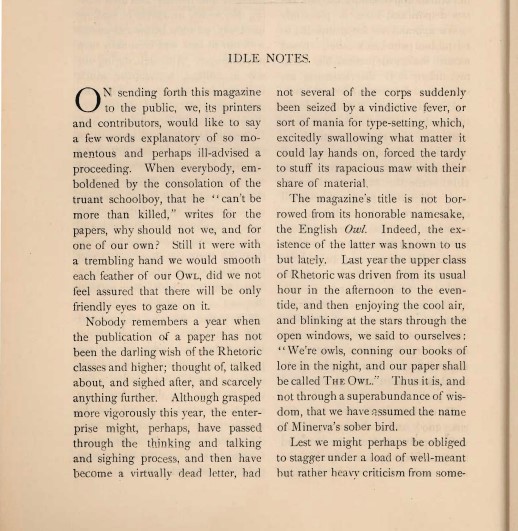
From this first ‘Idle Notes,’ readers might be surprised to learn the name was not named after the wisdom associated with “Minerva’s sober bird” (“Idle Notes”, The Owl, Vol. 1 No. 1, 1869). The Owl was created to express creativity and interest in writing, not merely to appear academically impressive. The students responsible for running The Owl, named it because they thought of themselves as “owls, conning [their] books of lore in the night”(Ibid.). In other words, the students stayed up late into the night, reading and writing with one another like night owls leading to the establishment of the name of the magazine.
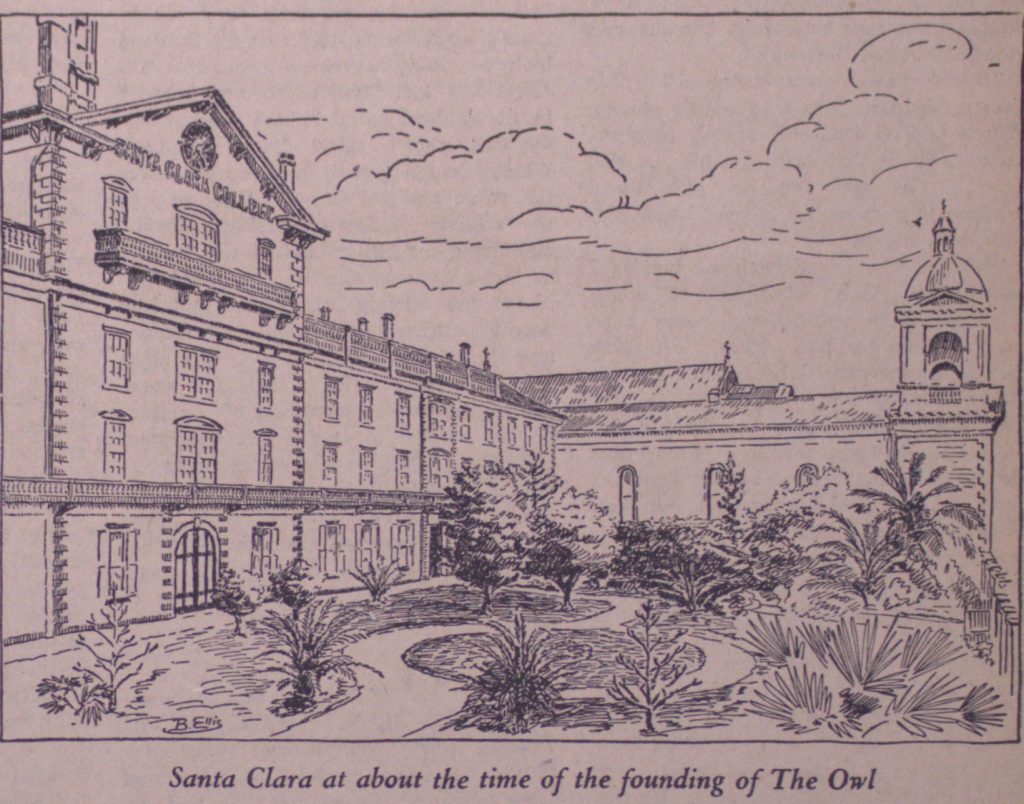
The evolution of student publications, specifically The Owl, highlights how over the years student writers had to adapt in order to express their creativity. For example, in 1875 The Owl disappeared for years before reappearing in 1931, opening space for the Redwood to emerge to fill the ambition for student writing and publication. Student writing and publication beginning in 1869 illuminate what student life was like at Santa Clara College. Reading early volumes of The Owl in tandem with other materials preserved at SCU’s Archives & Special Collections builds a more comprehensive picture of what Santa Clara College looked like in its early years after being established.
SCU’s History of Student Writing
My role as a student employee here has provided me with the unique opportunity to learn more about the history of the organizations I am involved with on campus. I was fascinated to learn how the second oldest literary magazine in California has evolved over the years as well as how its current literary pieces mirror the first ones published back in 1869. Please check out SCU’s Scholar Commons to read more early student publications like The Owl, and back issues of the Santa Clara Review too!
Works Cited
Alumni Association Records. Names of Alumni: 1851-1951. Volume 1.
Catalogue of Santa Clara College, 1868-1869.
Catalogue of Santa Clara College, 1869-1870.
PHOTO-ALPHA. John Waddell Photo Collection, 1860-1879. Box No. 44 of 50.
The Owl, Volume 1 No. 1, 1869.