
History of Sacramental Records
The practice of keeping sacramental records originates within the European Catholic tradition, as written documentation gradually became essential to the administration of parish life. Although parish registers existed earlier, the modern system took definitive shape during the Council of Trent (1545-1563). In its twenty-fourth session, the Council required parish priests to record all baptisms, specifically the names of baptized children and their godparents, to prevent forbidden marriages caused by “spiritual impediments.” This concern for regulating kinship and maintaining sacramental order became the foundation of Catholic record-keeping.
These expectations were further formalized in 1614 when Pope Paul V issued the Rituale Romanum, which provided priests with standardized templates for recording sacramental events. Baptismal entries were expected to include the date, officiating priest, parish location, gender and name of the child, parents’ names, and the identities and backgrounds of the godparents (see, Betit, 2023). Marriage and burial records received similar formal attention, eventually leading to the documentary system that Spanish missionaries would later carry to California.
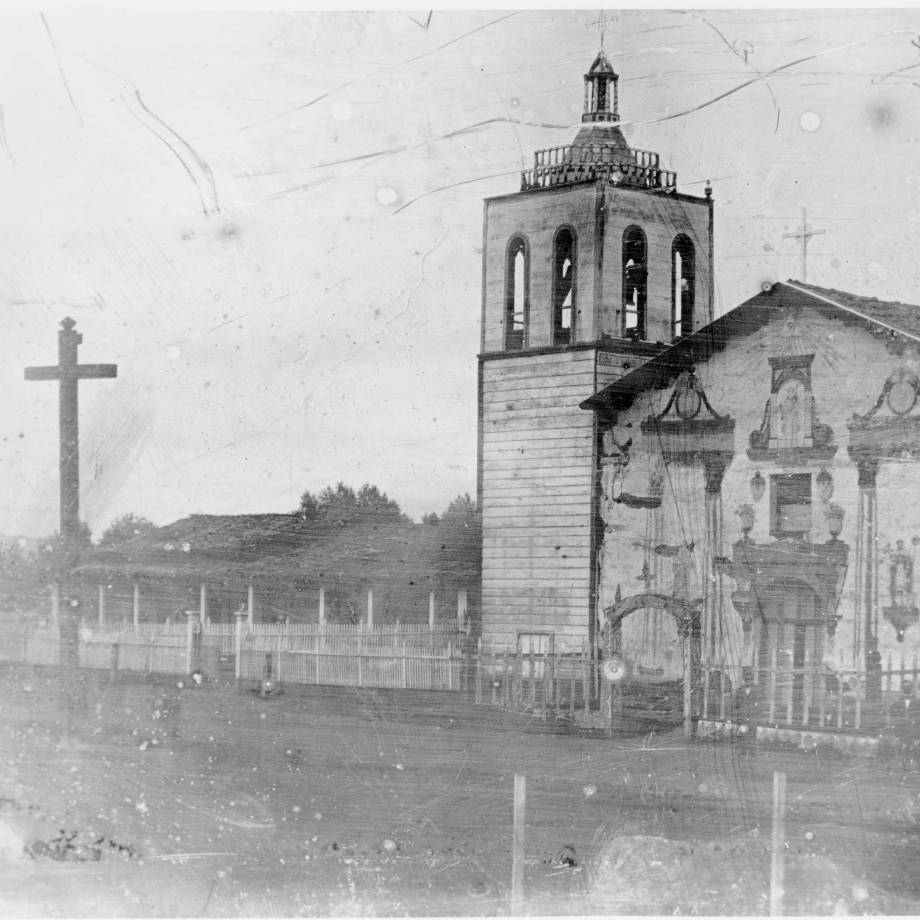
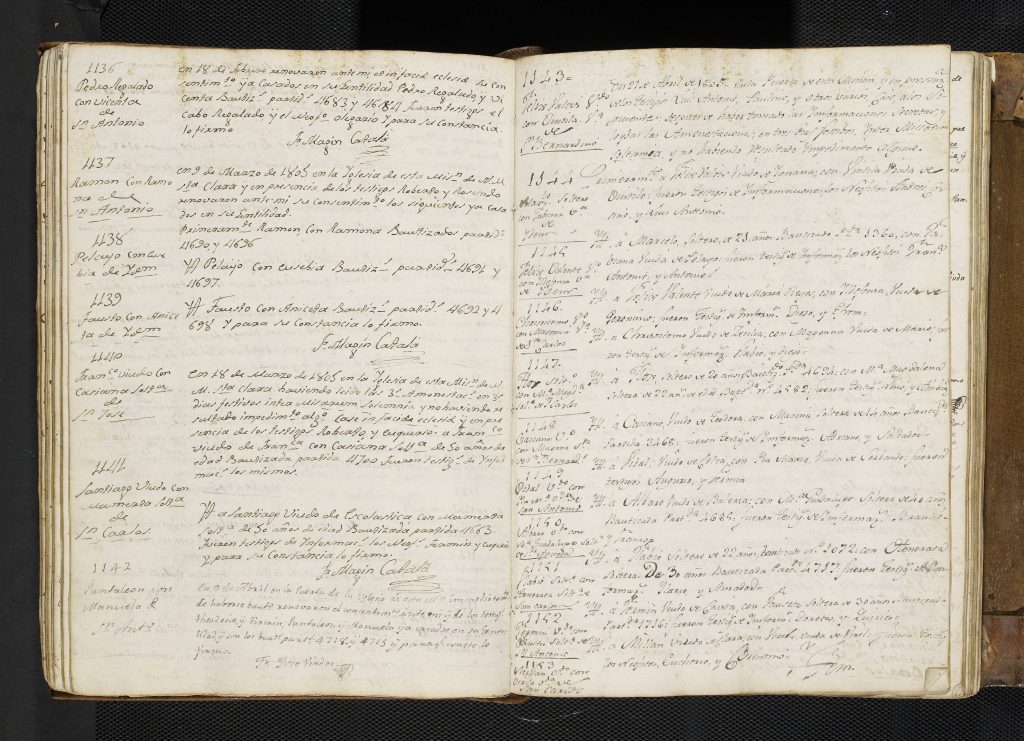
At Mission Santa Clara, the Franciscan priests who staffed the mission followed these requirements meticulously. As all Roman Catholic clergy are obliged to do, they documented every baptism, marriage, and burial they performed. The mission’s baptismal records, beginning with the first baptisms on June 6 and 7, 1777, contain names, parentage, birthplaces, and, in a little under half of occasions, the individual’s Native name.
While these records inevitably omit Indigenous voices and perspectives, they remain invaluable historical sources. Sacramental records allow researchers to trace the contours of mission life with a level of detail rarely preserved elsewhere, including movements of families and individuals and the very ways in which communities formed and evolved under the pressures of colonial rule. At Mission Santa Clara in particular, these documents aid scholars in piecing together how Ohlone communities navigated the mission system and endured the profound disruptions of colonialism.
Case Study: Marcelo
The mission sacramental records are distinctive in the way they enable scholars and students alike to trace the life of an individual through the mission system, tracking major life events with a continuity uncommon in other surviving sources. Through these records, it becomes possible to infer the role that a Native individual may have held within the mission community.

Consider Marcelo (SCL Baptism No. 1360): a prominent Ohlone man whose presence at Mission Santa Clara spanned many decades. The sacramental records provide a chronological timeline of his life. They record his birth to Pacanagua and Séunes in 1785 and indicate his origins in the Ranchería de San Bernardino. Brought into the mission system at a young age, he was baptized on June 15, 1789, at four years old. He lived and worked in the mission for decades, as evidenced by the fact that he was married four times between 1805 and 1839. The records also provide the duration of these unions, anywhere from one year to six years. As the mission death registers record the passing of each of his wives, it is clear that every marriage concluded with the death of his spouse. The records further suggest that Marcelo did not have any children who lived to adulthood. Using this piece of information from the sacramental records, alongside the fact that Marcelo repeatedly remarried, one may be able to gather that Marcelo was persistent in his efforts to have children. Although frustrated in his attempts to create a family of his own, the sacramental records show that Marcelo served as a godparent to multiple children in the early 1840s. Additionally, the records show that he served as a marriage witness. These facts are in line with other documents that say Marcelo was an alcalde—a man of high social status in the mission.
Despite the mission being secularized in 1836, it is known that Marcelo passed away in 1875 (SCL Burial No. 10653), as he was buried in the mission cemetery. While sacramental records alone can never yield the full complexity of an individual’s experience, they offer a scaffolding for reconstructing the lives of Ohlone people like Marcelo. The records also serve as a counterweight, or a way of “balancing” other archival materials. For instance, should the records contradict something found in another source, this contested detail may be worth investigating in order to gain a more nuanced understanding of mission-era history.
Limitations
While the sacramental records provide a lot of helpful and meaningful information, there remain gaps and silences that should be addressed. The majority of the sacramental records about Ohlone people were written from the missionaries’ perspective rather than from a Native perspective. They overlook the personal experiences of the Ohlone people and their cultural traditions. Instead, they essentially document only what missionaries cared about preserving: baptism, marriage, death, and other statistics. This results in biographical detail shaped by external observation rather than by the voices of Native people themselves.
Additionally, there is no information about Indigenous life before colonization, as records begin only once Native people entered the missions system. As such, there is a lack of details on Native early life and upbringing, and thus relying on the sacramental records alone provides a misinformed view of the pre-mission world. It limits the ability to fully understand Ohlone social structures and lived experiences outside of colonial control. This further supports the claim that missionary documentation reflects colonial priorities, not Indigenous perspectives.
These missionary records often reflected bias and assumptions as Indigenous people were described through a Christian lens. For example, missionaries replaced Native names with Spanish names, usually neglecting to document Ohlone individuals’ original names, thus resulting in the erasure of cultural identity. Family members are not listed in all cases, and people are occasionally missing in the records. Their family networks were often incomplete or obscured, making it challenging to reconstruct complete biographies.
Most importantly, missionaries failed to record the intricacies of Native life. Their strategies of persistence and resistance are often rendered invisible, leaving them to appear as passive subjects rather than active agents shaping and defending their own communities. Ultimately, Native people were unable to control how their lives were represented and interpreted through these documents, even as they continued to assert their identities.
Importance of Records at SCU

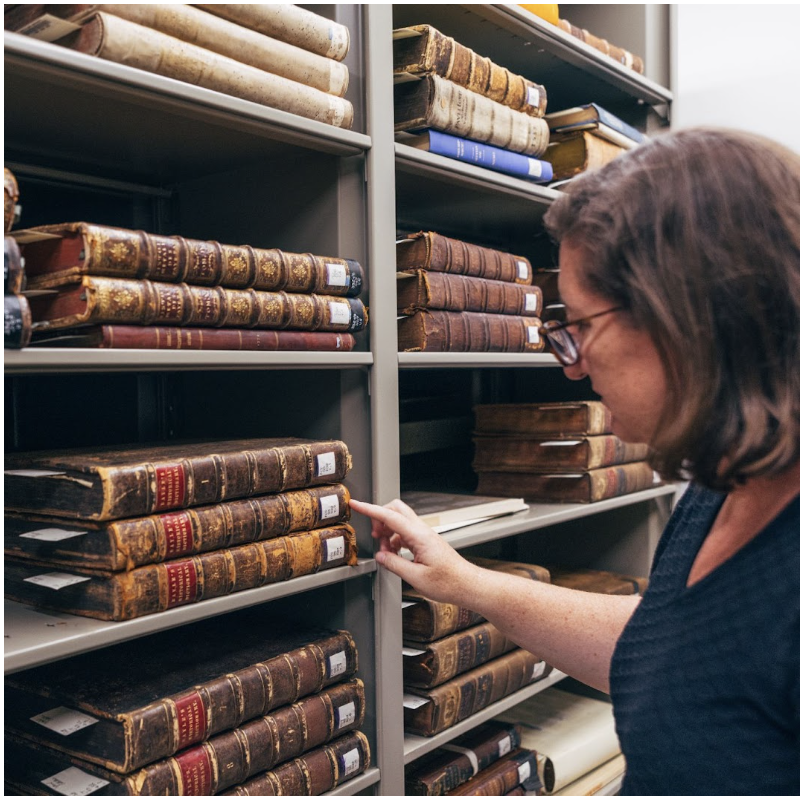
It is clear that the mission records have significant limitations. Their very nature renders them fragmentary, offering only brief and mediated glimpses into the past. The Franciscans who created them operated from deeply entrenched biases, often interpreting Ohlone cultural practices through the lens of spiritual deficiency or demonic influence. Yet despite these constraints, people today are still able to make use of these records and appreciate their importance beyond what their creators intended. Being able to engage in person with the records enhances the knowledge of the public and provides political and sentimental value to modern Native peoples.
The mission system is woven deeply into California’s cultural and historical landscape, making education about its complexities essential. Sacramental registers are indispensable in that work. The records document the sheer number of people affected by this system. The baptismal records from Santa Clara tell the story of nearly ten thousand Native individuals entering the mission; the marriage records speak of thousands entering a union together; and the burial records document the thousands that died. These records, for all of their faults, document some of the most important days in people’s lives. The effect of viewing the records, which were clearly handled with a degree of reverence, in person isn’t something that viewing them online can replicate.
While many tribes in California have received recognition from the federal government, there remain others–including the Muwekma Ohlone Tribe–who continue to seek it. A crucial component of that process involves demonstrating genealogical continuity and an enduring community identity. In this context, the sacramental records now function as evidence of a people and their persistent presence in the region, despite their original purpose of documenting religious conversion. Beyond federal recognition, being able to view and touch these records in the archive provides modern-day Native Californians another avenue of connecting with their ancestors and acknowledging the hardships they persevered through.
The missionaries created these records with a narrow scope of application in mind. The work that the SCU Archives & Special Collections does to preserve these records and make them accessible to the public goes far beyond what the mission’s fathers could have ever imagined and has been invaluable in educating people on the history of this state, its Native inhabitants, and the difficult times they persisted through.
Works Cited
Betit, Kyle J. “Using Catholic Church Records to Make Family Discoveries.” Ancestry, 25 Jan. 2023, https://www.ancestry.com/c/ancestry-blog/using-catholic-church-records-to-make-family-discoveries.
Early California Population Project. Edition 1.1. General Editor, Steven W. Hackel (University of California, Riverside and The Henry E. Huntington Library, San Marino, California, 2022.) https://ecpp.ucr.edu/index.html
“How To Use Catholic Christening and Baptism Records Around the World.” Legacy Tree, 17 Dec. 2024, www.legacytree.com/blog/catholic-christening-baptism-records.
Blog post by Rory Longmore, Muriel Oosthuizen, Emma Sahbari, and Claire Krebs (Honors 20, Fall 2025).