
After distributing my survey, I received 46 responses, 32 responses from females and 14 responses from males. I wish I received more responses from males so I had a better understanding of both males’ and females’ viewpoints on coeducation, but this is not an issue because the responses to my multiple choice questions were both insightful and eye opening.
The results from my survey surprised me and were not the results I expected to receive. For example, I expected many students to respond yes to the question “would you feel safer living in an on-campus dormitory with only your sex?” Out of my 46 responses, 39 of them answered no to this question. That means 84.8% of the people who took my survey believed co-ed dormitories are a safer environment than same-sex dormitories.
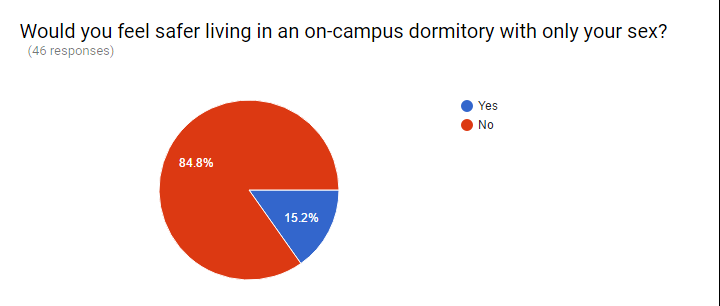
While surveying actual students, they stated they felt safer in co-ed dormitories. This made me further think about friendships and relationships between the two sexes and how they lead to happiness, comfort, and safety. For another one of my survey questions, a similar outcome happened. With my survey question “do you believe same-sex campuses are safer than co-ed ones?”, I received a majority of responses saying that co-ed campuses were believed to be safer than same-sex campuses.
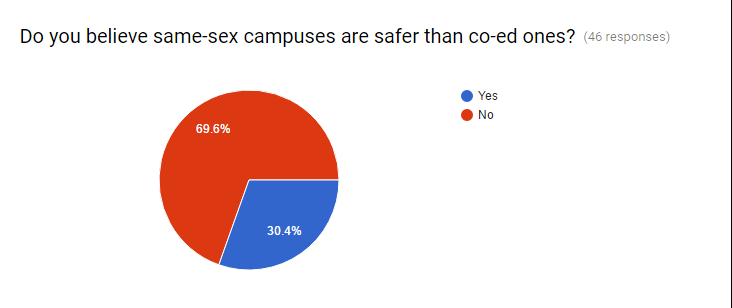
The results from my survey directly go against many of my sources arguments in favor for same-sex educational institutions. After receiving these survey results, I questioned the actual effectiveness of same-sex campuses and wondered why my survey results did not correlate with the data I found in my research about same-sex campuses. My survey led me to draw the conclusion that same-sex educational institutions seem like a great solution to many problems in education, yet are not likely to be implemented or successful in the real world. The survey I conducted made coeducation seem much more beneficial and favorable, while at the same time making same-sex education seem like an idealistic idea that would not have any success in the real world. Before conducting my survey, I had a different view on coeducation that was altered by my survey results. My survey gave me real life research to that altered my viewpoint and helped me better understand the conversation between coeducation and same-sex education.