
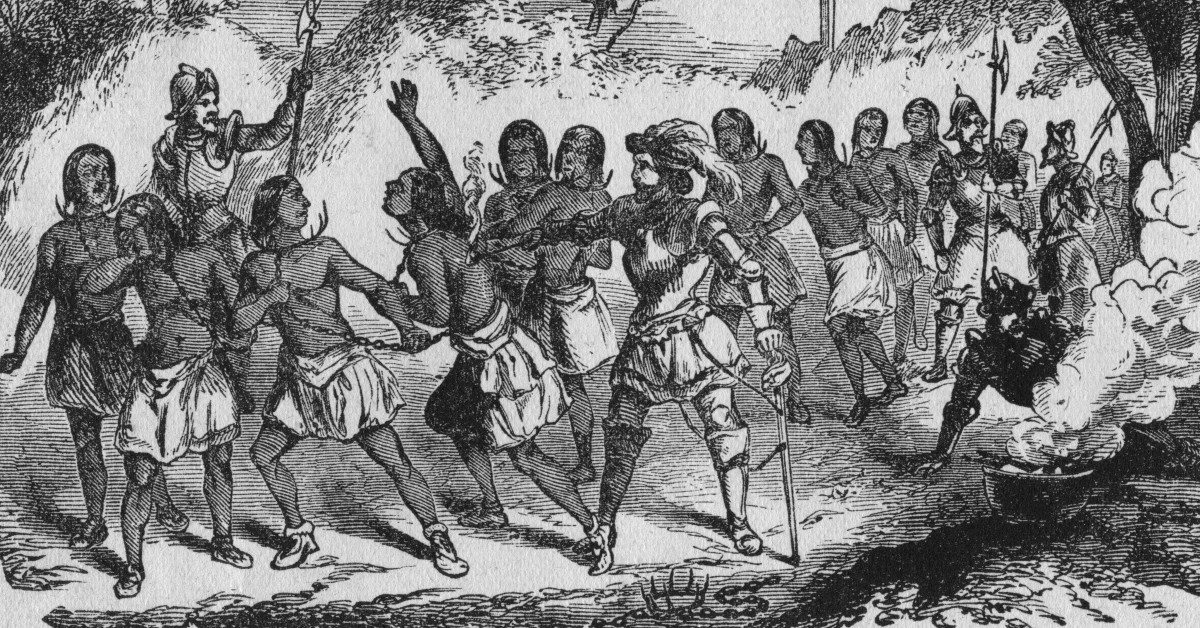
This week’s featured image portrays the forceful displacement of Indians during the colonization of the Americas. Last week, I talked about the inherent selfishness of humankind. Today, I will be diving further into the subject and analyze the comparisons between The Marrow Thieves and the real-life occurrences of the 1700s.
The Marrow Thieves touches on plenty of sensitive topics, including climate change, murder, and the mistreatment of indigenous people. The dystopian future in the book portrays a planet that is not too different from the one we have now. I find these connections very interesting, as they force the reader to think about the negative developments that are occurring in real life and that will actually lead to this apocalypse if they are not stopped, whether it’s oil rigging or destroying rainforests.
The entire book focuses on the topic of indigenous people being mistreated and connects the story of the main characters to Indians who were colonized in America a little over 200 years ago; first being friendly with each other, then being betrayed by the colonizers and forced to abandon their culture. “Tobacco. Cedar. And the thick curl of something more, something I thought I’d only ever smelled with the memory of smell,” (168) Frenchie says in the book, showing how his years of running from recruiters have almost caused him to lose memory of his culture.
Being able to immerse yourself in the possible thoughts and feelings of these characters gives you a feeling of guilt and horror. When we learn about these occurrences in history class, you don’t feel so horrible because it’s just words of explanation. Reading this, you realize the true value of the people who were hurt by this system. We have to be better.