Categories
CTW Blogs <3

Let’s Not Lose Any More

This campaign provided my group members and me with a great opportunity to educate ourselves and our peers on a topic that many may not have known about before. Economic euthanasia is a worldwide issue and cannot be changed overnight; however, educating others is the first step to making a difference, as problems cannot be solved without first admitting that they exist. Personally, I think our campaign went very well. First, for the SCU-focused campaign, we shared a survey for our groups of friends and extracurricular groups at SCU to complete.

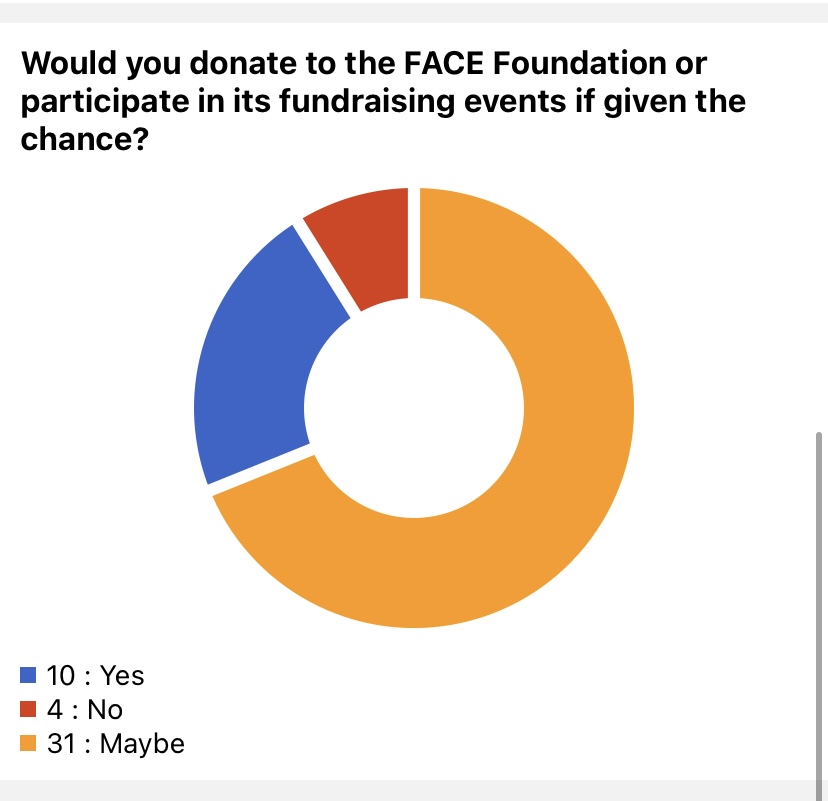
The SCU-focused survey consisted of questions about service animals, the mission of the FACE Foundation, and the ability of pets to help their owners in times of emotional stress. We garnered 45 responses, which was more than we expected and allowed us to trust the results of the survey based on statistical principles. Out of the 45 people surveyed, 44 said that their pets help them feel less stressed or angry, and 31 said they would possibly donate to FACE if given the chance while 10 said they would definitely donate to FACE if given the opportunity. While I cannot speak to each individual person who completed the survey and ask about their perception of it, I had a few friends message me to tell me that they appreciated the efforts of the organization and how much they love their pets. This was touching and made me feel like my efforts in this campaign paid off.
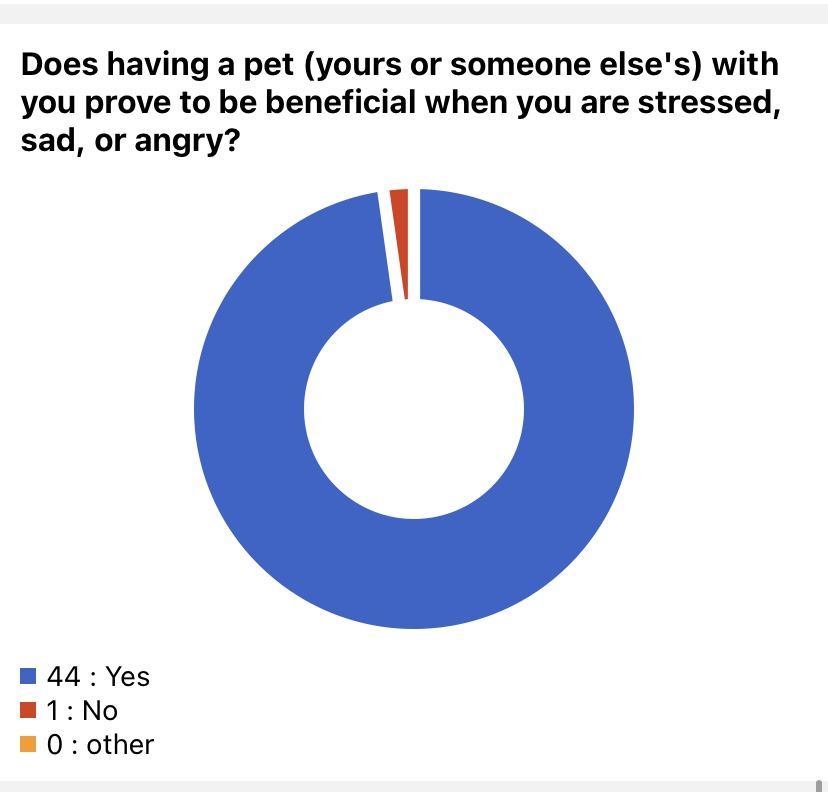
Nearly all respondents noted that pets help them when they are doing badly emotionally.
Most respondents noted that they would possibly donate to the foundation if given the chance.

At the end of the survey, we asked a question which allowed participants to fill in a response: “If you own a pet, what advice would you give to people looking to adopt?” We received many thoughtful answers to this question: -“Make sure you do research on what type of pet you are going to adopt and that you can take care of all its needs the best you can. do not go into it blindly.” -“I would highly suggest having a pet in your life because they bring so much joy to people’s lives. However, make sure you have the time to care for a pet because they require a lot of time and attention. If you have the time and the means, bringing a pet into your life will undoubtedly be an amazing addition to your life!

These two responses really embodied the purpose of the campaign; a significant contributor to the issue of economic euthanasia is the failure to realize the commitment and responsibility required to raise a pet. Knowing that college students who will likely adopt pets soon in the future are aware of these responsibilities is reassuring and FACE’s programs can only expand this awareness.
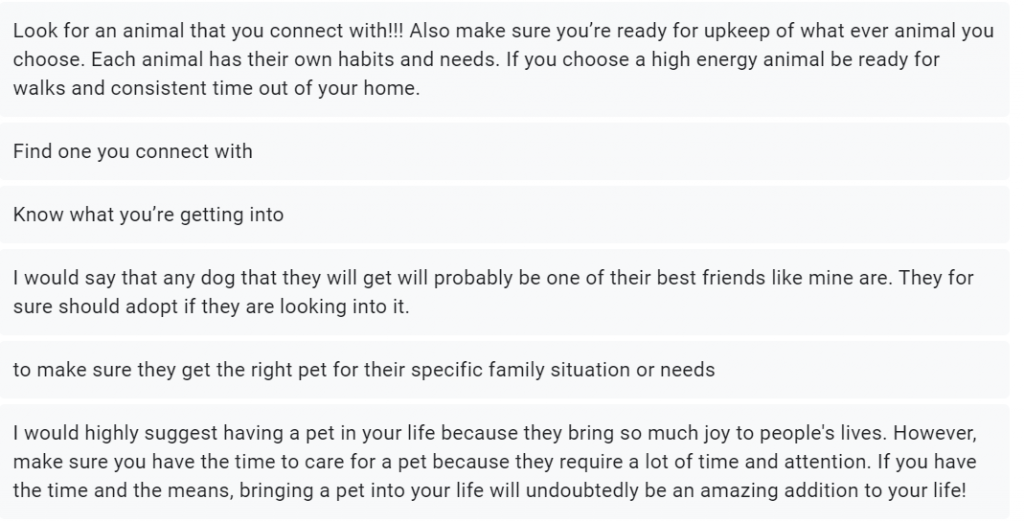
These are some of the thoughtful responses to the survey question.

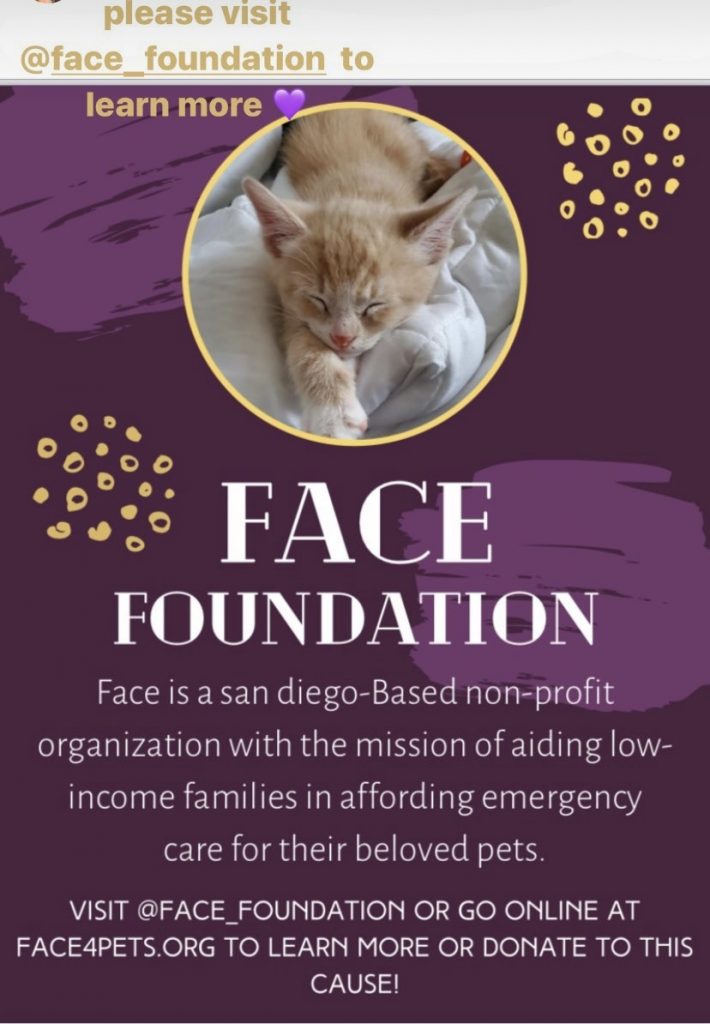
For the social media outreach component of our campaign, we created flyers which we shared over our Instagram pages. The flyer that I shared on my personal Instagram story received 560 views, which means that over 500 new people were exposed to this organization which they likely did not already know about.
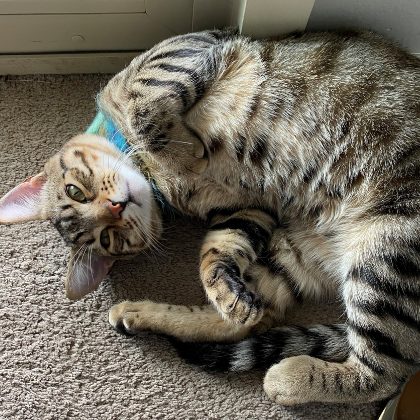
This is one of the thousands of pets saved with the help of FACE. His picture was on the flyers that were shared to our social media pages.
The Instagram story post which received 560 views.

While I cannot find the true number of people who visited FACE’s page, whether on Instagram or the internet, I hope that at least some people had the intent of learning more about the organization and possibly donating to the cause. Like I stated previously, the first step to solving a problem is admitting that there is one, and I made that problem relevant to over 500 more people with this campaign. This was a rewarding experience and I am confident that those who participated in this campaign feel like they contributed to a good cause and appreciate their pets a little more.
Categories
CTW Blogs <3

The Distraction of an Unknown World

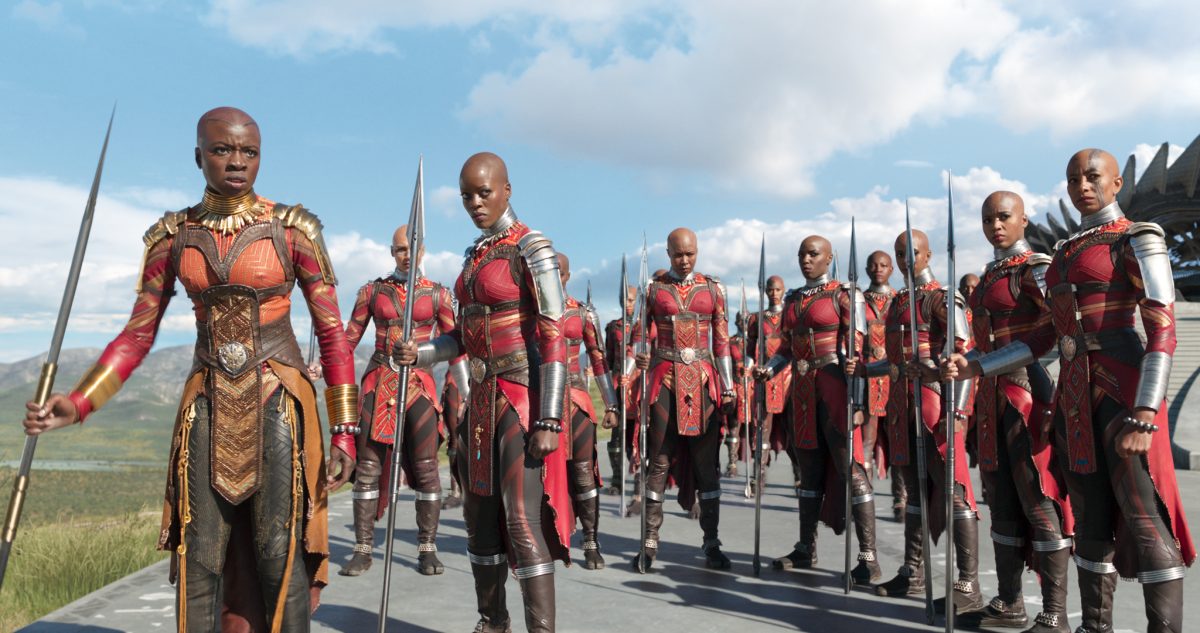
The Marvel movie “Black Panther” is an extraordinarily produced film that features brilliant actors and – even better – the destruction of countless stereotypes, one of them depicted in the image above: black women as warriors.

The Marvel universe has a tendency to star white actors in its movies; and, while embracing different cultures, say that of Americans or Russians, Black culture had not been strongly explored until the release of Black Panther. This is the first Marvel movie I can think of where a culture other than white or American is the star of the show and is appreciated in a new light. It gives its audience the ability to appreciate a culture which they may not have known a lot about, as African culture has been continually whitewashed since colonizers invaded the country many years ago.

Black Panther defeats not only the white or American stereotype of Marvel superheroes but also the stereotype that Africa may be less modern or technologically advanced than other continents. While Wakanda is not real, it allows the audience to view an Africa that does not give credit to colonists for its success and actually views white people as a bad addition to the continent than a good one.

For example, author Jelani Cobb explains the implications of the scene where Shuri, T’Challah’s younger sister, calls the white F.B.I. agent a colonizer: “When I saw the movie, the audience howled at the inversion, “colonizer” deployed as an epithet rather than a badge of cultural superiority,” Cobb says in his essay, “‘Black Panther’ and the Invention of ‘Africa'”. In this instance, Shuri is disgusted by this white man rather than afraid of him, showing a world that is Black-dominated and conquers the stereotypes of a white-dominated world that are widely accepted by society in current times.

Lastly, though there are countless more underlying meanings in Black Panther, I will explain one more stereotype: the powerful women in Black Panther defeat the societal standard of thinking that women should sit back and watch while men fight. In the film, the warriors of Wakanda are made up of exclusively women, while countless films have almost always made their warriors male. This depiction of women as powerful beings who are not discriminated against because of their sex. For example, in the final fight scene of the film, multiple of these female warriors are killed and it is not seen as any different than if it were a man dying; and instead of taking men with him to find the protagonist at the beginning of the film, T’Challah brings two women.

In conclusion, Black Panther makes many connections that take analysis and a rewatch before realization. Reading articles about the movie and watching videos that feature the directors, costume designers, or others involved in the creation of the film is a gratifying experience that educates the audience about Africa’s culture and traditions and makes the movie-watching experience just that much more rewarding.

Categories
Uncategorized

Be Better

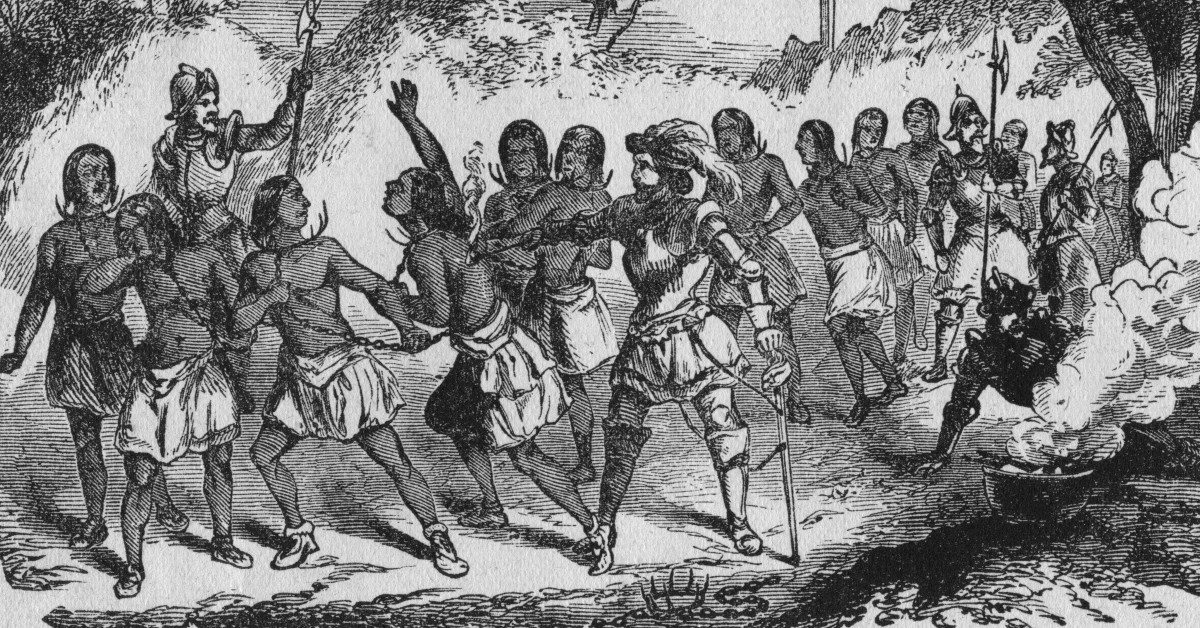
This week’s featured image portrays the forceful displacement of Indians during the colonization of the Americas. Last week, I talked about the inherent selfishness of humankind. Today, I will be diving further into the subject and analyze the comparisons between The Marrow Thieves and the real-life occurrences of the 1700s.

The Marrow Thieves touches on plenty of sensitive topics, including climate change, murder, and the mistreatment of indigenous people. The dystopian future in the book portrays a planet that is not too different from the one we have now. I find these connections very interesting, as they force the reader to think about the negative developments that are occurring in real life and that will actually lead to this apocalypse if they are not stopped, whether it’s oil rigging or destroying rainforests.

The entire book focuses on the topic of indigenous people being mistreated and connects the story of the main characters to Indians who were colonized in America a little over 200 years ago; first being friendly with each other, then being betrayed by the colonizers and forced to abandon their culture. “Tobacco. Cedar. And the thick curl of something more, something I thought I’d only ever smelled with the memory of smell,” (168) Frenchie says in the book, showing how his years of running from recruiters have almost caused him to lose memory of his culture.

Being able to immerse yourself in the possible thoughts and feelings of these characters gives you a feeling of guilt and horror. When we learn about these occurrences in history class, you don’t feel so horrible because it’s just words of explanation. Reading this, you realize the true value of the people who were hurt by this system. We have to be better.

Categories
CTW Blogs <3

The Moose Dilemma

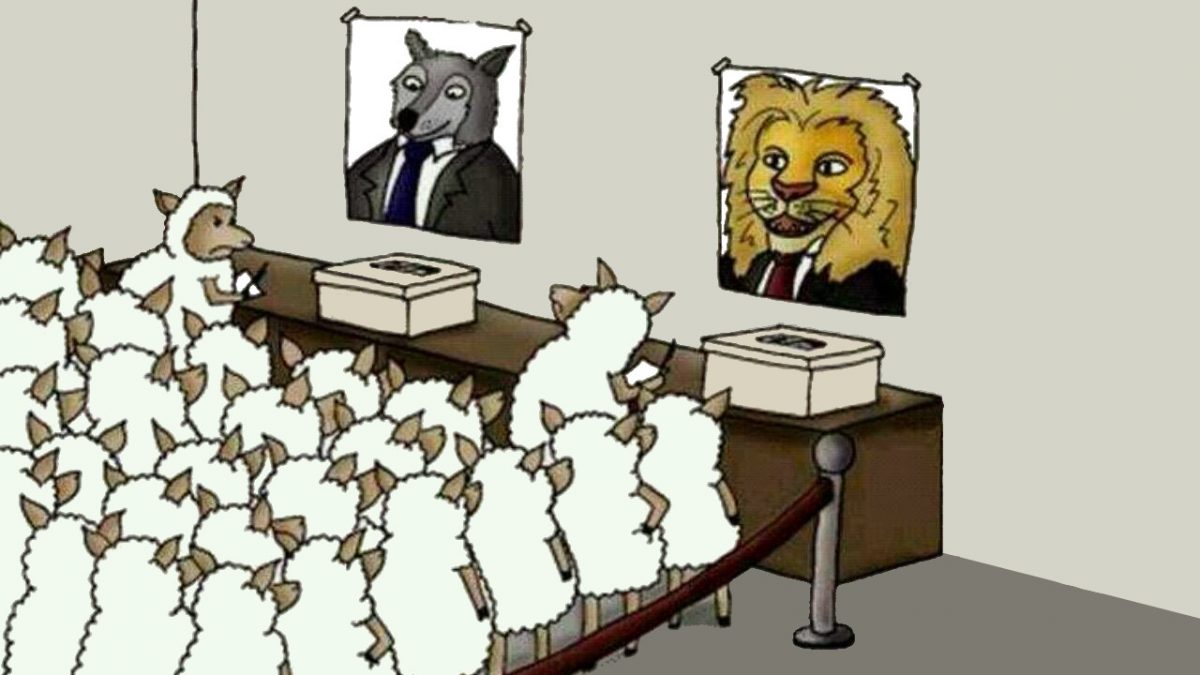
Having to choose the lesser of two evils: a conflict that nearly everyone must face on a daily basis. As you can see in the image above, many sheep are casting a ballot between a wolf and a lion. While there is no text on this image, the meaning is clear: none of the sheep want to die, but they have to choose who eats them – obviously, neither of these choices are good, but they have to choose.

I will relate this to the reading of the week: the dystopian novel The Marrow Thieves, illustrating the kidnapping and experimenting of indigenous people whose bone marrow will restore the ability of others to dream. This book is riveting in many ways; it illustrates a world that is nearly apocalyptic and not far from what Earth is fast approaching at the moment. Frenchie, the main character in the book, finds a group of indigenous people who are escaping the harvesters after his brother is taken by the marrow harvesters. Over several years, Frenchie is trained to hunt by the leaders of his camp; however, it is clear that Frenchie is more compassionate than his companions.

Now, the moose dilemma comes in. When on the hunt, Frenchie finds a moose quietly grazing before him. In this situation, Frenchie is forced to choose between two evils: whether to kill the innocent moose to feed his companions and risk wasting a large part of it, or leaving the moose alone and risking the starvation of his makeshift family.

Frenchie decides to spare the life of the moose in the end, but he faces intense debate within himself as he approaches the camp empty-handed: “Walking back to the meeting point, I swung between peace with my decision and wrenching regret,” (50). In the end, Frenchie accepts his decision when he sees that two of his peers brought back turkeys, so he didn’t have to worry about the starvation of his family. However, when faced with the Dilemma of The Moose (as I now call it), people often have to live with the regret of their choice, not knowing whether they made the right one. Frenchie got lucky this time.

When relating this conflict to the real-world, one realizes that humans must face the predicament of choosing the lesser evil nearly every single day. A less intense example would be having to choose between two restaurants that you don’t like that much for dinner or choosing whether to shower and be cold for the night, or not shower and stay dirty (beach volleyball life – and yes – I choose to shower every time).

Of course, these are modest situations when you relate them to problems that are illustrated in the novel and that are currently occurring in the real world: risking oil spills so we can have electricity, slaughtering animals so we can eat, polluting the air so our cars can have power, and draining lakes so we can have water, as well as countless more predicaments. In all, the dilemma of the moose very well characterizes the human trait of selfishness that conquers everyday life and decision-making, as well as the decisions that humans make which determine the future of Earth itself.