Categories
CTW Blogs <3

what if things were different?

*Warning: Mentions shootings, guns, etc.*

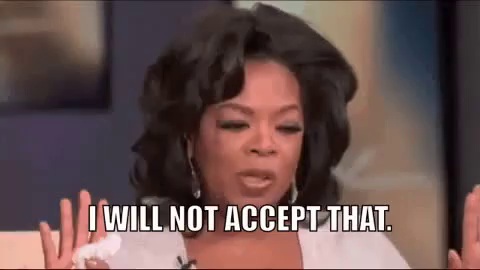
In my common application essay for college, I wrote this: “Advocacy cannot last only a week, and it cannot last only a month; advocacy must be everlasting. The minute we stop persevering – the minute we stop having faith – the world returns to how it was.” While it is quite terrifying and extremely painful, the American youth have been abandoned to fight for reform by ourselves, often being told “it’s too late”, “too bad”, or “just accept it”. I say we shouldn’t accept it anymore.

In her speech at the March for Our Lives in 2018, Emma Gonzalez expressed enormous emotion as she named the victims of the Parkland massacre, then stood in silence for six minutes to represent the time it took for the shooting to occur – 17 deaths in just a handful of minutes. “Six minutes and twenty seconds were over, she told her audience: the period of time it took Nikolas Cruz to commit the massacre,” Rebecca Mead explains in her detailed description of Gonzalez’s effective speech (and lack thereof). The hundreds of audience members looked on in shock, grief, and sadness. Ironically, Gonzalez’s silence meant even more than her words.

One assumes that the subject of dying children brings out a little bit of empathy or sadness from people, especially those in government – after Columbine, Virginia Tech, Sandy Hook, Parkland, and the hundreds of shootings in between, it is expected that reform would arise. Literal six-year-olds are being killed by guns; how can that not arouse some type of despair in people (not that children of any age dying is any less sad)? Even after countless rallies from those who don’t accept it, we’re still in the same place as twenty years ago. Instead of deciding to take away guns, they decided that we should have school shooting drills. To think – we used to think fire drills were scary. The terrified screams of my peers during those shooting drills really showed how well we adjusted to that change.
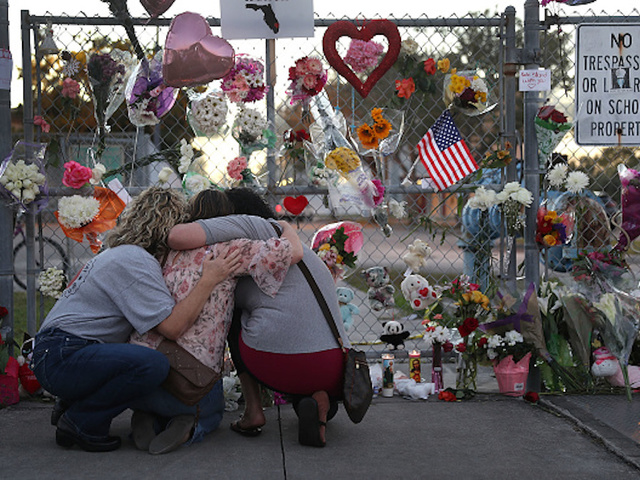
In front of a makeshift memorial for the 17 victims of the Parkland, Florida school shooting, 3 women hold each other in grief.

Why does devising plans for fighting against a shooter have to be a regular part of the school curriculum? Aren’t students supposed to be learning how to make their lives better, not fight for them? Why is it that my friends, ranging between 15 and 19 years old, are fighting more for mask-wearing and social distancing during a pandemic than most of the adults I know? It seems as though the adult generation has decided that when things get bad, they need to be accepted as the new “normal” rather than fought against.

Besides school shootings, the way adults have been dealing with the COVID pandemic is another example of unacceptable acceptance. I can’t help but well up in tears as I read the article, “An Eternal Hero: Whistleblower doctor who sounded alarm on coronavirus dies in China.” I think about how different life might have currently been if people had taken Coronavirus more seriously at its beginning.

Less than 10 months ago – when the article was written – 30 thousand cases were a multitude, unimaginable to the rest of the world. Now, the world has surpassed 30 million cases – more than 1 thousand times that. As I watch groups of people walk by in public spaces – often adults, and often not wearing masks – I feel a certain resentment towards the world. Instead of fighting to return our society to the way it was – through policy, perhaps some time inside, and simple human decency – we’ve accepted the constant existence of a virus that kills people and decided that that’s just the way it is.

Before the Pandemic was better understood and mask-wearing became a requirement, Americans resorted to raiding grocery stores and stockpiling goods.

My point is that sometimes, acceptance isn’t the right approach for certain things in the world. Things that kill people in vast amounts – like school shootings and deadly viruses – do not deserve to be on the same list that “going to the movies” or “having fruit snacks at lunch” is found. These horrors aren’t normal and shouldn’t be labeled as such. Children don’t deserve to die anymore – no one deserves to die anymore.
Categories
CTW Blogs <3 just for fun :)

Dead or Alive

When I was five years old, I was bitten by a bulldog in the yard of my parents’ veterinary hospital. My sister, in shock, ran inside. My mom then held me for dear life, struggling to prevent the dog from getting at me again and trying to loop a leash around its neck. It felt like hours passed as we screamed for help, but no one came. Suddenly, my first hero then emerged – she was a teacher at the kindergarten down the street. She had heard us screaming and ran barefoot up the hill between our two buildings, ignoring the risk of any pine needle or rock that might cause her discomfort, so she could help us. She became my hero that day. When I think about it now, almost thirteen years later, she gave no second thought to the situation, her only intention to help whoever was screaming; she didn’t even put her shoes on. I wish I knew her name so that I could thank her. My mom gave the teacher the leash which she held through the chain-link fence and ran inside with me, where my parents and their employees dressed my wound and proceeded to drive me to the emergency room. While waiting for the doctors, my neighbors brought me peanut butter and jelly sandwiches (I couldn’t eat them in case I needed surgery). They became my heroes too.

Just a few years later, I was walking around barefoot at the bottom of a waterfall when my foot slipped and a rock sliced a hefty cut into my big toe. Bleeding profusely into the water, I needed a little bit more than a bandaid. After struggling to find our family friend who had the first aid kit while my mom held my toe tightly with her hand, they were able to secure my wound (still bleeding extensively, unfortunately). Our family friend then proceeded to carry me up multiple flights of stairs to return to the trail, and my dad carried me over two miles on his back to the bus stop. On the bus, an old woman gave up her seat for us because the rest were taken. Our family friend, my father, and that woman also became my heroes that day.

It took me some time to realize it, but my mom is also one of my heroes. She will do anything to put my life before hers, whether it’s walking on the outer edge of a steep trail, or taking the outside edge of the sidewalk when we walk around our neighborhood – and I feel the same way about her. Not only will she risk her life for me, but she has been through a multitude of unpleasant experiences herself: she almost died after giving birth to me, was bitten on her face by a dog, suffered ligament tears in a ski accident that forced her into months of physical therapy, and has had more dislocated shoulders than I can count (she has had surgery by now, thank god). While suffering through bad experiences doesn’t always automatically make someone a hero, the way they deal with those experiences does. My mom’s strength through pain makes her a hero to me.

I was able to avoid further health-threatening injuries for a few years after the waterfall incident, but the journey into middle and high school introduced me to a new type of pain: depression. Searching for ways to heal the sadness within me, I did things that I will always regret. High school was better, as I found friends who distracted me from the pain I was feeling. I often wanted to let go, but I stayed for them. It wasn’t until I met Sebastian, who changed my life. Within a year of knowing him, I could already feel the sadness fading away. Now, after nearly two years of dating him, I am happier than I have ever been. While so many people were able to rescue me from physical pain, Sebastian saved me from myself.

It is evident that my heroes are real people who supported me in times of sorrow – even bringing me a sandwich in the hospital was still someone going out of their way to make me feel better. While I haven’t been in any severe incidents for a few years, I know that if anyone were to save me in the future, that they would be another hero of mine. Reading about people who perished while saving others is often gut-wrenching to me, and I know that I would want to be that person: the person who jumps in front of the bullet or storms the cockpit to save the lives of many.

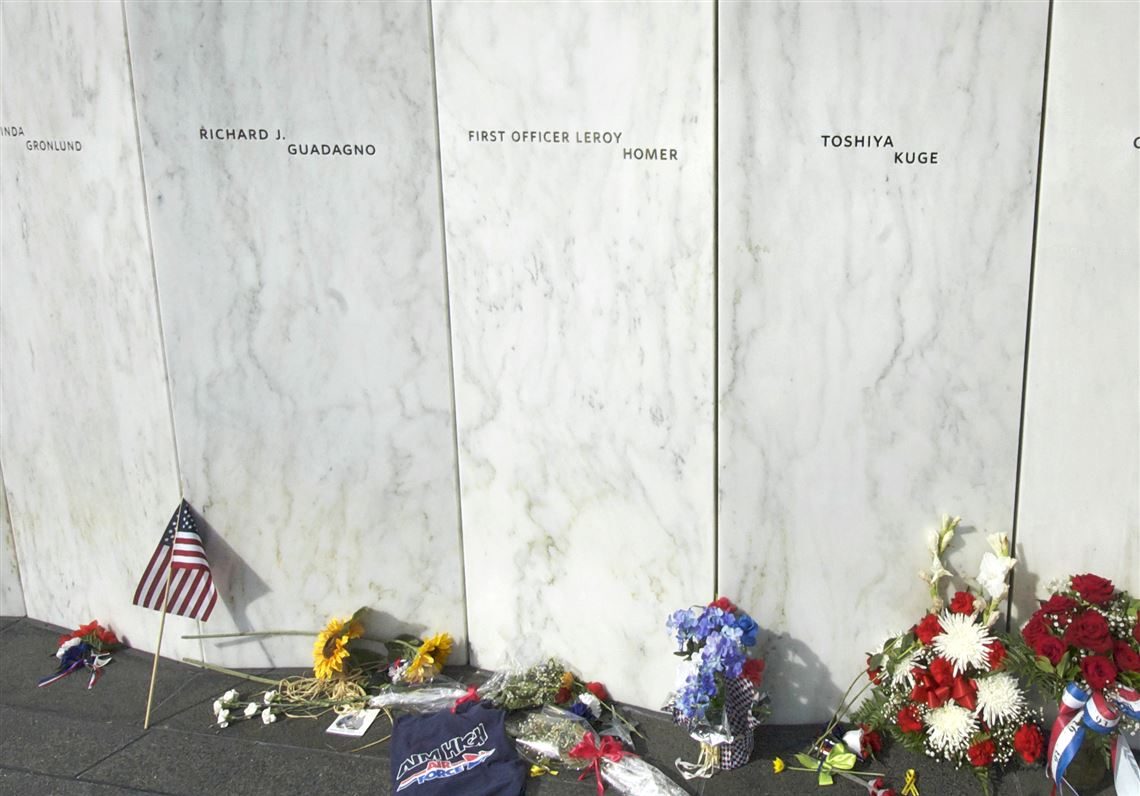
The Real Heroes are Dead, an article written by James B. Stewart in The New Yorker, explains that it is often the people who sacrifice themselves for others who are the real heroes; they don’t make it out alive. Rick Rescorla was one of these people – a Vietnam war veteran who rescued thousands of people from the collapsing buildings on 9/11, eventually succumbing himself. The first chapter of Heroes, by Allison and Goethals, makes a similar point: heroes are often people who make great sacrifices for the best of others, and in turn, face great suffering themselves. “The best heroes don’t just perform remarkably moral acts; they are willing to pay the ultimate price to do so,” (45, Allison and Goethals). While my own heroes are only people who I have interacted with and who have affected me personally, I have no doubts that those who have sacrificed themselves – whether it be Irena Sendler, the passengers of flight 93, marines who fight our wars, and many more – are heroes too, dead or alive.

Categories
CTW Blogs <3

Strength

Chapter 9 of They Say/ I say led me to a great realization – I have been trying way too hard. I have loved writing since I was a child, even creating my own book in the first grade (I still have it on my bookshelf). However, academic writing has not always come so easily to me. I find essay writing to be incredibly difficult, especially when it is based on a rubric full of requirements that I’m not so sure how to fulfill. In AP history and English classes, I would peer-review essays of my classmates and bask in amazement at their writing skills; I was horrified at the same time because I believed my own work was nothing compared to theirs. After reading this chapter, I have come to understand this: perhaps it wasn’t a lack of skill that kept me from enjoying and flourishing through essay writing, but the pressure put on me from a young age by teachers saying that I had to alter my own voice in order to be a successful writer.

This chapter of TS/ IS informs us that successful essay writing, or writing in general, doesn’t have to be a different version of your own voice. Rather, it should be a combination of your everyday voice with a more academic, refined version: “It means creating a new voice that draws on the voice you already have,” (118, Graff and Birkenstein). Knowing the point that you are trying to make and communicating it effectively is reasonably the most important part of writing, but trying too hard to sound scholarly or intelligent often causes the intention to be lost in a sea of huge words that even the writer doesn’t understand; I admit, I am guilty of this.

“Translating academic-speak into everyday-speak can function as a thinking tool that enables you to discover what you are trying to say to begin with,” (125). As a writer and student myself, it’s all too true – people often don’t know the point they’re trying to make until they begin writing.

As the chapter states and as I personally believe, it shouldn’t be necessary to become a new person every time an academic essay needs to be written. Simply, it is important to first understand what you want to say, then take baby steps to alter (notice I said alter, not completely transform) the piece until it reaches its desired academic level without sounding fake – or like a sixteenth-century English playwright (sorry Shakespeare!) I know that the other students at my competitive high school were not the only ones struggling with this problem. Hopefully, in the future, teachers begin to advise their students that academic writing should have to silence your voice – it should strengthen it.