In the past four years I developed my thinking beyond an undergraduate level, through my majors, sociology research, and the Global Social Benefit Fellowship in Brazil. However, it wasn’t until my junior year at Santa Clara University was the first time I was introduced to the word “vocation”and what it entails. Over the last year, I have developed a deep understanding of the word and how it applies to each and every person, but regardless of the amount of understanding I have on the subject, I still struggle to find its application to my personal life.
The opportunity to apply for the GSB Fellowship came at a surprise to me. My professor presented me with the idea and suggested that it would be an excellent opportunity for my future scholastic goals, as well as the opportunity to develop skills that could never be learned in the classroom. Through the application process, I learned that it would provide me with an opportunity to travel abroad, start and complete an internship, and be exposed to a culture and language that was unfamiliar to my own. 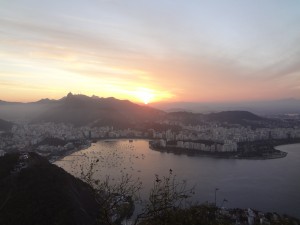 Now, nine months later, I can truthfully sit back and think about how little I knew before. This fellowship opened my mind in a whole new way.In fact, there are very few things that I could possibly do that would open my mind to this level of thought and understanding. I learned more about the world, Brazil, and myself than I could have ever expected, pushing my thoughts to new, previously undiscovered levels.
Before this fellowship, I had never heard much about social entrepreneurship beyond the idea that it was similar to non-profit organizations. Come to find out, after months of research, this was entirely incorrect. Froma surface level standpoint, social entrepreneurship is a field that is a beyond competitive, frustrating, ever-changing, high-pressure field that requires an unreasonable mind and person to enter. In the short time I conducted work alongside a social enterprise I learned that it is not the field for me. I prefer the structured, organized aspects of the corporate, for-profit business world.
Going into the field, I did my best to prepare myself for anything and everything that could be thrown my way. My biggest concern was spending some much time in a foreign country where my language was secondary and frequently not used. I anticipated going to Brazil and doing this groundbreaking research where I could see first hand where my contributions were going. I felt that it would be an opportunity to discover what it means to develop, conduct, and analyze findings in the field. Through deep analysis on Solar Ear, I had a preconceived notion that this social enterprise was developed to the point that I could depend on their effectiveness if anything went wrong. Despite multiple advisors telling me that it would not go as smoothly as I might have thought, I still persisted in thinking that the process would run smooth. I figured that getting to Brazil would be the most difficult part, however I was entirely incorrect.
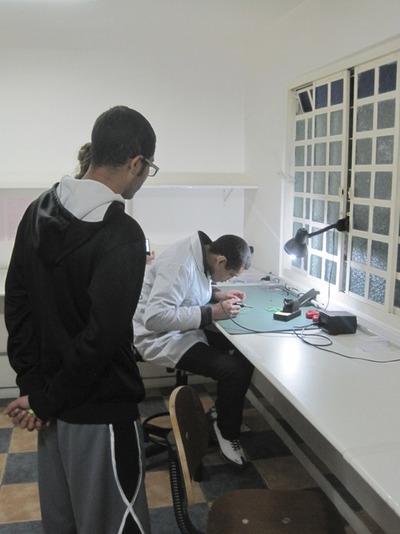
The first week at Solar Ear was an eye opening experience given that their center was not anything like I envisioned. I had expected a reasonable sized distribution factory, in the sense of how we would think about it in America, but my team and I were met with a building that closely resembled a home. 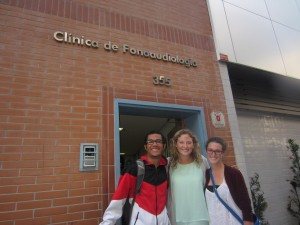 Furthermore, I expected a decent size staff, but there were only a few employees. Immediately, I was not met with what I had hoped for. Our supervisor would be late to work. Our schedule would change on an hour-to-hour basis, resulting in team frustration because we never had a solidified schedule.We did not have much work to do for our Measuring and Evaluation Tool beyond traveling to and from different institutions learning more about the hearing impaired population. Sometimes our meetings were really informative, but not necessary for the progression and adjustment of our tool. Above all, the hardest part came when we began the interview process. Once we began to conduct interviews we had limited resources when it came to translation of the Portuguese language, preventing us from necessary, vital information required in sociological research.
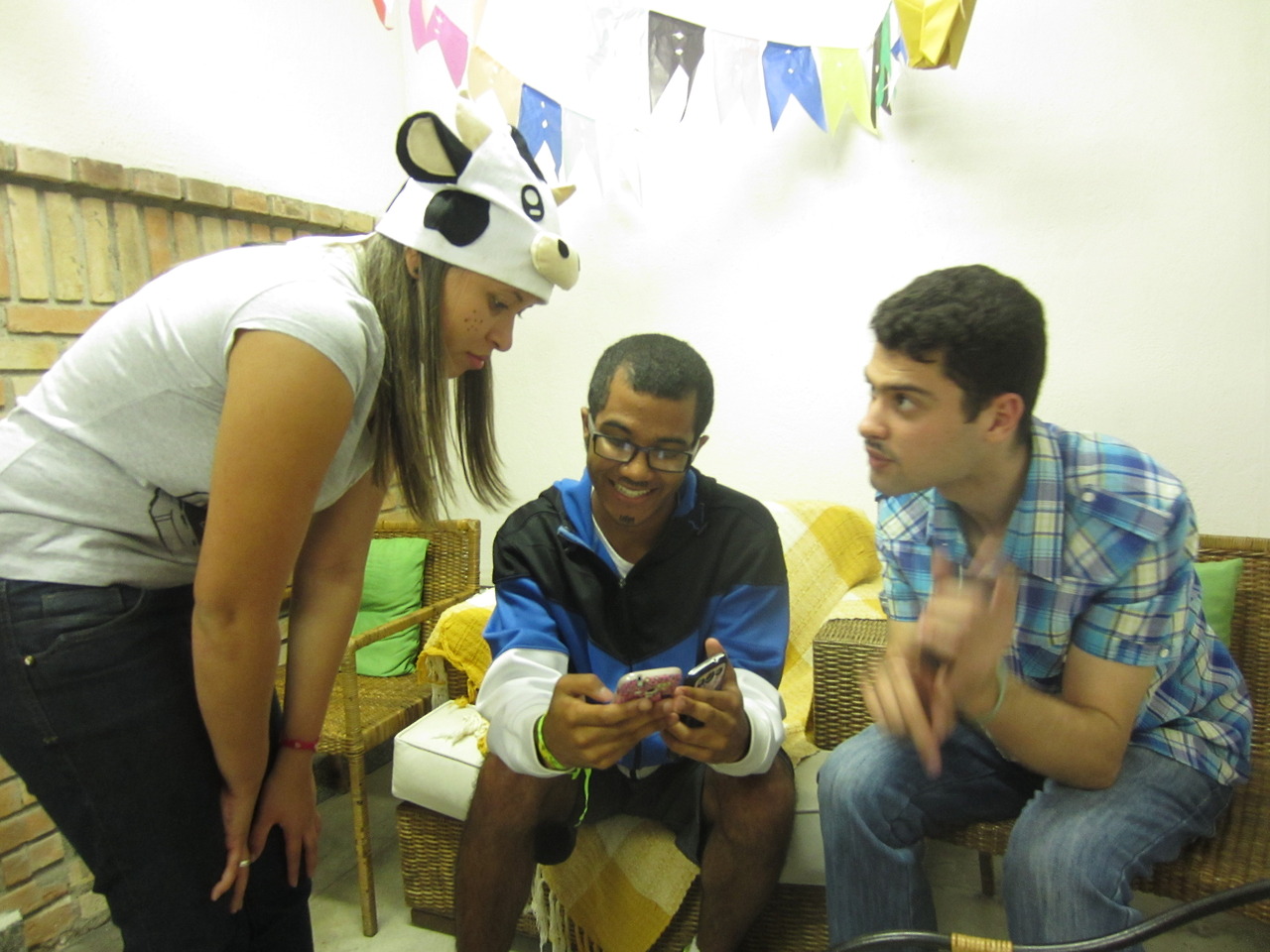
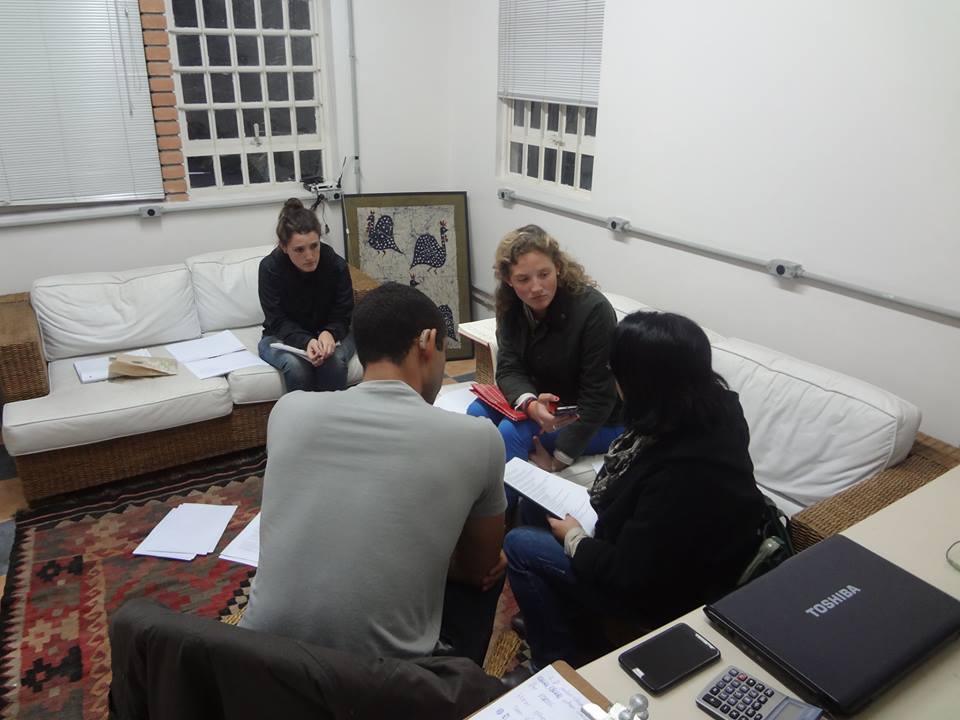
As frustrating and motivation draining the circumstances were, I knew I had to find a way to adapt as quickly as possible to be able to give my team full dedication, so we could leave Brazil feeling like we had accomplished our goal. I knew that as a team we depended on each other for motivation when the going got tougher than ever imagined. The lack of guidance once in the field allowed the team and myself to become creative, motivated, and innovative in ways that we had not previously planned for. We became more connected on an intellectual level because we had to drastically adjust our approach to the accomplishment of the tool. The mutual respect for each other and our contributions to the project brought us closer together.
Before the fellowship, I knew that graduate school was the next step in my academic life. This fellowship developed my analytical thinking about how to tackle problems. It gave me determination and perseverance to complete an academic piece of work as complex as a Measuring and Evaluation Tool. The GSB Fellowship has drastically improved my qualifications for graduate work now and in the future. Currently, I am composing my applications for graduate school. Composing my personal statement has been much easier because of the experience I could draw on from the fellowship. Although it might not apply to my desired areas of Computational Science and big data, without a doubt this fellowship has and will continue to influence my future aspirations, goals, and how I determine which direction to take my life.
In a way, the struggles I went through during my placement molded me into a better man all around. I felt like I came back thinking and conducting myself in far better ways that I had in the past. Now, I believe that I will be able to take what I know about the social enterprise realm and be able to apply it to business aspects within the company I decide to work in or if I decide to start myown company one day. The hardships, dilemmas, late nights, problem-solving skills, independent work, and teamwork thinking will follow me for the remainder of my life, making me a stronger man in all aspects of my life.
Through the relationships I created both in Brazil and with my team, I came to appreciate what it means to have a deep level of cultural understanding. I felt alive and more present than ever before as I conducted interviews with the hearing impaired, experiencing first hand what it means to be hearing impaired. The interviews opened my eyes to the true struggles of day-to-day life with hearing impairment without the necessary finances to afford proper care. Although I was surrounded by heart-breaking stories told by 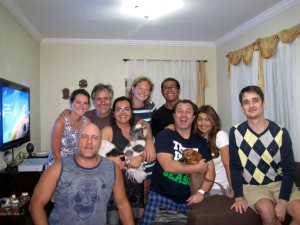 several interviewees, I took one very important idea, that no matter what might be holding you back, you have the tools necessary to better yourself and reach new levels. This idea came about when I was told that people did not necessarily need to use hearing aids because sign language was their own version of a language like English. They find it no different than speaking another language that anyone and everyone has the opportunity to learn. After witnessing this strength and resilience, I was able to self-reflect and determine how I could gain that positive, motivating mindset.
Furthermore, the courses provided within the fellowship offered me much of the needed self-reflection that I was searching for throughout my undergraduate career. I consistently desired to know what I brought to the table, why or how I made a difference, and which unique qualities differ me from my peers. Our focus on personality and vocational development opened me up to how I have developed and how I can operate in and out of the classroom environment. Most nights, the discussions on vocation and personality followed me home after class and continued on throughout several of the following days. Truthfully, I was able to apply what I learned in class to my extracurricular activities such as how to conduct and execute business as the president of Ruff Riders. Additionally, it taught me how to analyze and approach certain problems, even in the realm of mathematics and computer science.
I honestly think that the experience of the GSB Fellowship gave me a whirlwind of opportunities that I will not hesitate to investigate. Without the self-reflection, underneath the surface type thinking, and practical, on sight research experience, I do not think I would have the mentality I now believe is necessary for research at a graduate level. I learned many ways in which my current path has pointed me in the direction I want to go as well as reaffirmed that the path the lies ahead of me continues to point me in that direction. What initially seemed as a huge risk and a step out of my realm of academia, turned out to fulfill gaps of my life I previously did not know existed and redefined who I am inside and out.