Collaborative Teaching, Learning Spaces and Collateral learning, while Creating Machinimas and 3D Installations in Second Life
Course Introduction for Internet Culture:
“What to expect. This class features active, collaborative, problem- and project based learning by discovery.” Marc Bousquet, Internet Culture
Complex Multimedia Assignments are project based and may involve any, or all of the following:
Collaboration between the instructional designer, course instructor and sometimes a librarian.
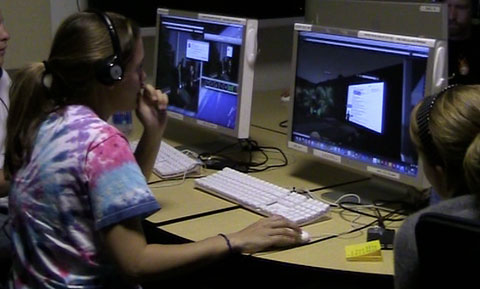
Collaboration between students where they work as part of a team or group.
Cross-training: entire team must learn all software and all skills.
All students must contribute.
Complex Multimedia Assignments can:
Help students build multimedia communication skills across multiple media.
Build team work, problem solving and collaboration skills.
Foster ownership and deeper learning.
Offer a venue for students to share their work which can make them more invested in their project.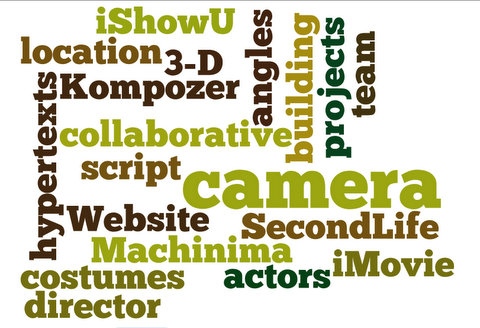
Complex Multimedia Assignments use:
Multiple technologies
Complex communication, critical thinking and problem solving skills
Self directed learning and risk-taking
Critical Aspects of a Successful Multimedia Assignment Design
Marc Bousquet
Collaboration with the instructor:
Alignment to the course learning goals and objectives found in the syllabus: Marc Bousquet’s course syllabus.
Clear description of the project assignment and instructor expectations which should answer the question: what does the successfully completed assignment look like?
Agreement on the technology to be used.
See the Media Wheel: Media WheelDesigningStudentLearning2013-Print
Time to train the students -negotiating training time – sometimes the basic training occurs in a mandatory lab outside of class
Identification of a grading rubric (taken from the assignment and assigning quantitative values to qualitative data)
Schedule supported labs (where one of the ITRS staff are present) the week assignment is due
Co-teaching in the lab where the instructional technologist and instructor are present during the multimedia instruction
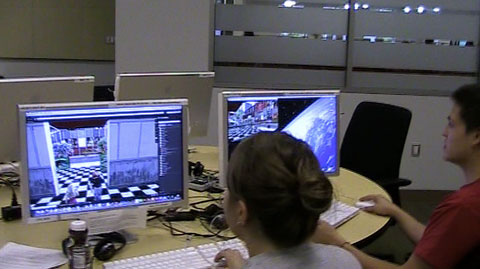
Filiming machinimas
Instructor ensures that objectives are met
Each support the skills being taught
Multimedia software is taught contextually (reflects the course and assignment) and is taught in the order they will use it -where the workshop addresses all software functions they need to use, soft skills, such as video techniques, camera angles, lighting, sets, audio, editing, etc.
Physical environment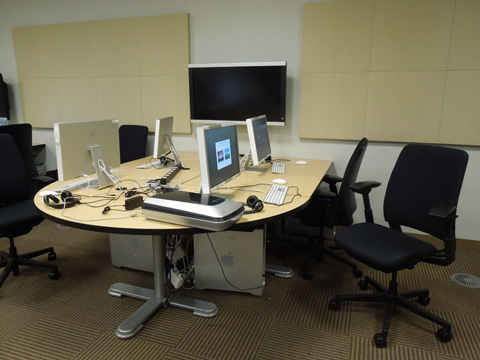
Set up of the the teaching space:
Hardware: MAC Computers
Software Latest versions and all updates current: iMovie, Camtasia, Second Life, Photoshop (used to prepare textures)
Network is robust enough for work in virtual worlds
Lab infrastructure supports the technology (set up to handle increased load on the system)
Collateral Learning
Learning that occurs outside of the skills taught- or as a result of the assignment
Student to student teaching, helping, socializing
Higher order/critical thinking skills are commonly employed such as, problem solving, creating objects, manipulating the environment, instructing others, thinking outside the box, working as part of a team – it takes the entire team to complete the project
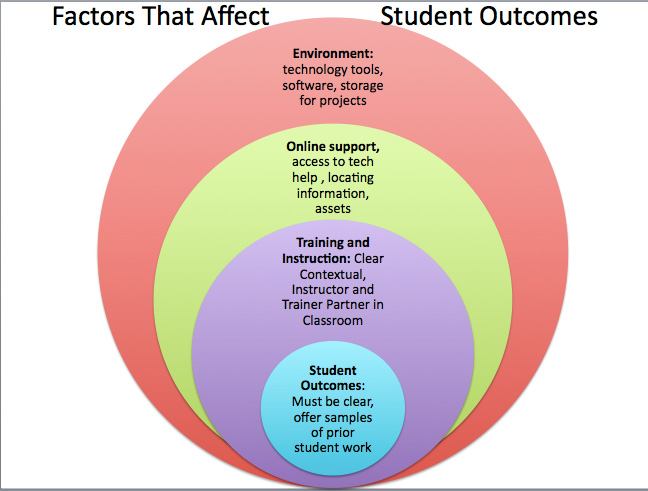
Factors That Affect Student Outcomes
When technology does not work as expected
When team is not balanced or team members do not show up or do their share
When there is no support
When things go wrong…
PUNT!
Looking at a Cosmology Course
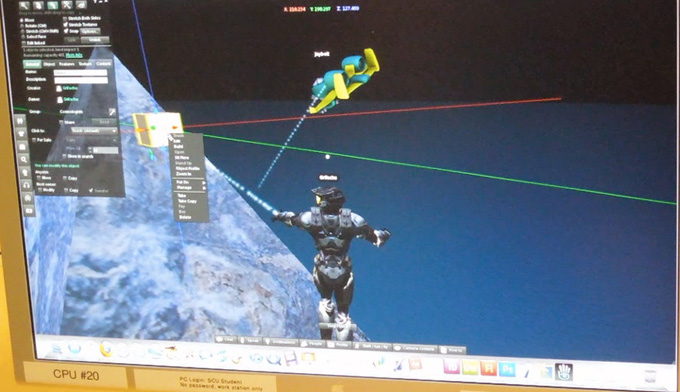
Building the cosmologies in Second Life
Students created a 3-D representation of a cosmology taken from their research and readings in the class and added note cards of their project background, and descriptions.
For more information, please contact Gloria Hofer, ghofer at scu.edu