A Transformative Time

I’m not the same person today as I was when I started this fellowship. From a vocational, spiritual, and personal perspective, I feel I have transformed and moved closer to discovering how I want to live and what I want to do with my life. Last winter when I was applying for this fellowship, I had recently gotten back to Santa Clara after studying abroad in Buenos Aires, Argentina, and was craving another international experience. My parents got me addicted to travel at a young age, opening my eyes to places from Australia to Iceland. I’d always enjoyed getting out of my comfort zone and seeking new experiences. When I heard about this fellowship, I was captivated by its mission of educating the whole student through sending him/her abroad to work abroad with a social enterprise employing entrepreneurial methods for solving complex social issues. I saw this fellowship as a unique opportunity to combine my passion for working with marginalized communities with my academic background in anthropology and international business. Saying yes to its acceptance would take me all the way to India, and the experience I had there would go on to become yet another stepping stone in shaping who I am and directing my next steps.
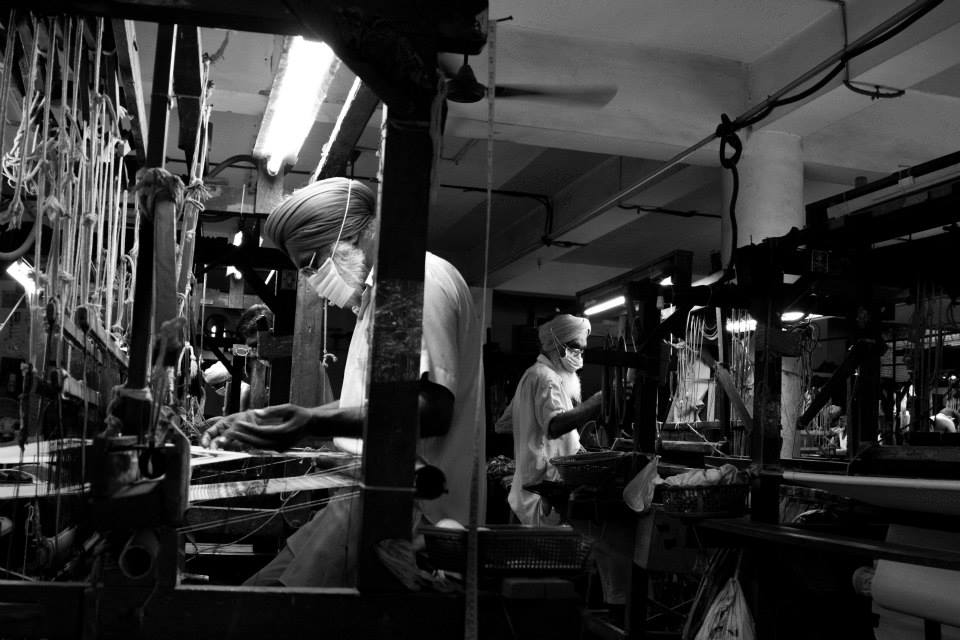
Two Punjabi men making scarves (Photo Credit: Holly McKenna)

Two Punjabi men making scarves on traditional wood looms (Photo Credit: Holly McKenna)

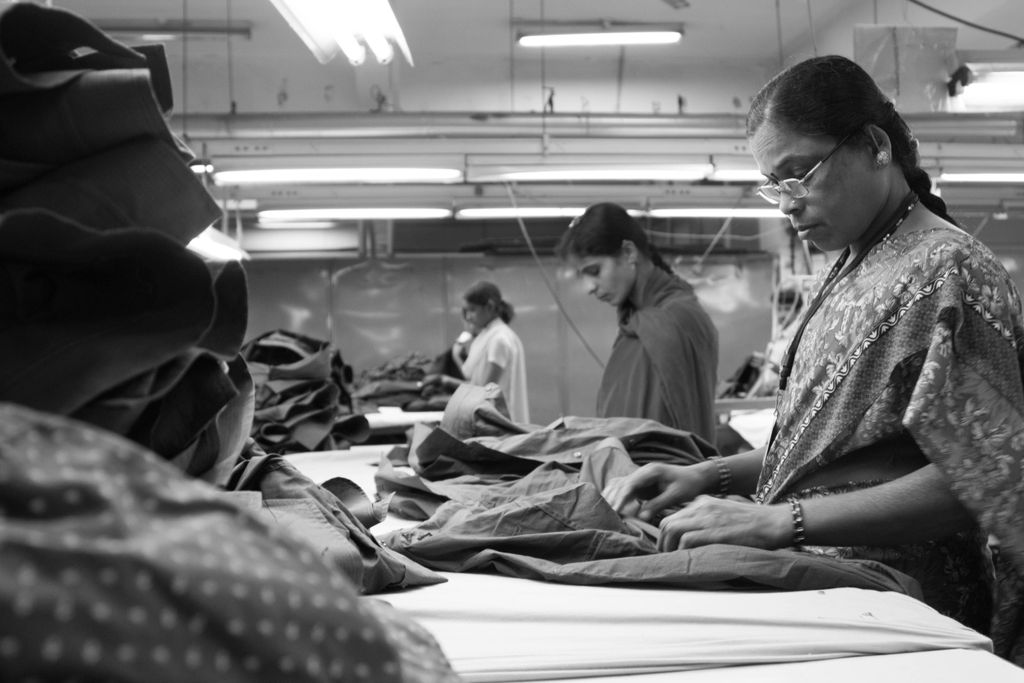
India was unlike any other place I had ever traveled to before. With around 1.25 billion people speaking several hundred languages, India is a “moving rainbow” full of bright colors and beauty that doesn’t need words to express itself. While I enjoyed seeing the “pretty side” of India, this fellowship also gave me access to conversing with workers in clothing factories that expressed the hardships and realities they faced in their day-to-day lives. Through hearing peoples’ stories and interacting with factory managers and workers, I discovered that in my future I want to work in an interpersonal setting that seeks to drive social impact. I came to appreciate how social enterprises, such as Good World Solutions (the company I worked with), address complex problems, like mitigating poor working conditions in clothing factories, with innovative solutions. While working with such a company is not easy and demands great adaptability, I found it very rewarding. I experienced deep satisfaction from engaging with people that were different than me and working alongside one another in creative ways to further benefit society. This experience stretched my thinking and made me realize the enjoyment I get from working in a foreign environment with people from entirely different backgrounds from my own. One of the key lessons I learned from both a vocational and personal perspective is how important it is to be optimistic and creative in turning nothing into something. The research my partner and I conducted in the field was constantly changing based upon what was feasible, but I feel we did a good job in turning these associated difficulties into opportunities. This fellowship has made me more adaptable and enhanced my ability to recognize opportunity. It also furthered my desire to spend a year or two after graduating to work abroad with a social enterprise. I’m at a time in my life where I want to take a risk and seek out an unconventional lifestyle. Through this experience I discovered the happiness that comes along with not always knowing what is coming next and living life on the edge.
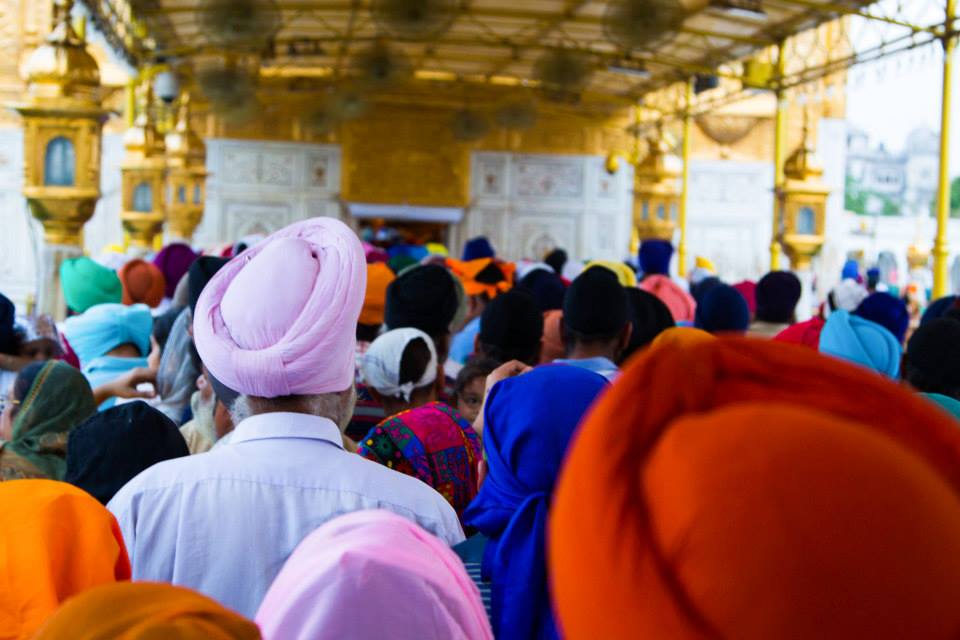
The moving rainbow that is India (Photo Credit: Holly McKenna)

The moving rainbow that is India (Photo Credit: Holly McKenna)

When I was about an hour outside of SFO flying back from India in mid August, I had a strange voice in my head telling me it would not be long before I was on another international flight bound for a project that would be more long term. I am not quite sure why I had this feeling, but I’ve learned from my travels that the more I go and become aware of the hurting world we live in, the more passion I have to get some skin in the game and do my part in helping and empowering others. I don’t necessarily feel burdened to do this, but I strive to do it out of my thankfulness for the opportunities I have had and my desire to help provide these kinds of opportunities for others. One certainly doesn’t need to go abroad to make an impact, but this is the calling that has been leading me through my life, and intend to follow it by working abroad for a year or two.

After doing this fellowship, I have now been to 40 countries across six continents. I have learned a lot in each of them, and I have also come to know how hard it is to come home. Miriam Adeney wrote about travel and engaging with people in the places you go: “You will never be completely at home again, because part of your heart always will be elsewhere. That is the price you pay for the richness of loving and knowing people in more than one place.” I feel as though I’ve left parts of myself in Thailand, Rwanda, and now India, and while I have had a lot of experience transitioning home from these places, I have had a harder time getting accustomed to life in the States this time around. I have struggled with my identity and feelings of guilt as a result of what I saw in India, and while I know I ought to act as a good steward with the resources I have been blessed with to impact others, I still wrestle with accepting the differences between my world and theirs. My heart hurts when I reflect on all of the inanimate and material things I have and think back to the women I interacted with in India, some of whom are working in oppressive factories and living in abusive homes. Through this fellowship experience and others, I have realized that one of life’s best gifts is the capability of dreaming and pursuing anything you want to do. I’ve come to know that I am an anomaly. This possibility is not the reality for much of the world, and I want to commit myself to playing my part in providing people the opportunity to dream and pursue their passion. That’s my definition of empowerment, and that’s what I want for others.
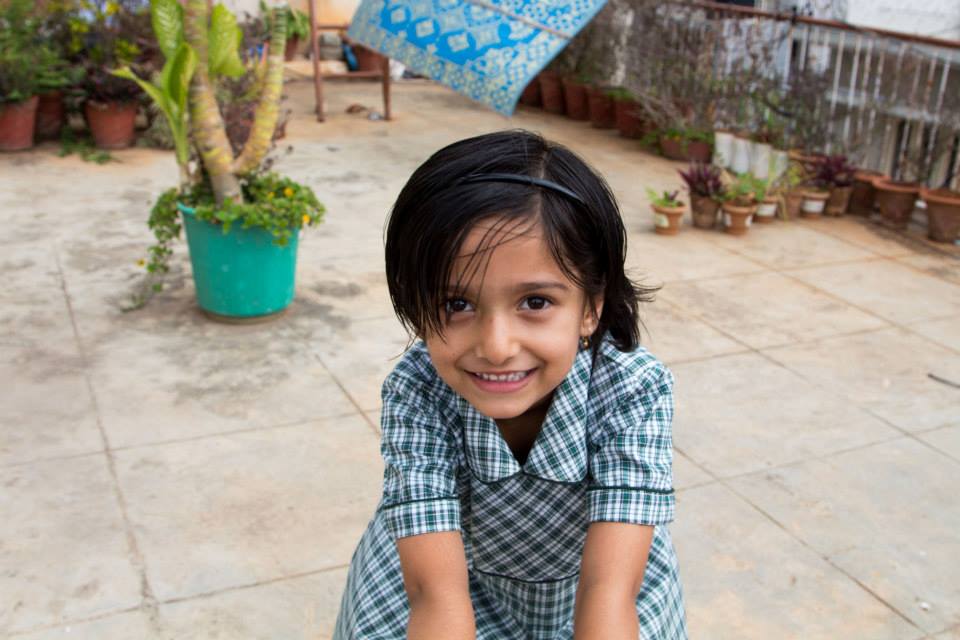
This is the future of India: an empowered generation (Photo Credit: Holly McKenna)

This is the future of India: an empowered generation (Photo Credit: Holly McKenna)

I’ve learned from this fellowship how important it is to be an introspective person, and I’ve spent a lot of time this academic term in reflective solitude. I’ve dedicated a lot of time to surfing because when I get out on the ocean I become more reflective and think about who I want to be and how I want to live. I’m reminded of how important it is to live simply and love well. I have grown a lot in my faith the last nine months, more fully studying and reflecting on how Jesus loved others, and applying his teaching to how I can love the community around me. Prayer has been a central piece in figuring out what the next step looks like, and for the time being, I have my eyes and heart set on working in Latin America for the next year or two. I realized in India how much I miss conversing in a country’s local language, and I want to become fluent in Spanish. I’m not sure whom I will be working with or where it will be, but I have been pursuing people and organizations that place a significant emphasis on empowering people. I long to get back in an international environment where I can engage with and contribute to local communities.

I could not be more thankful to Keith Warner, Thane Kreiner, Spencer Arnold, Emile McAnany, and everyone else at Santa Clara University’s Center for Science, Technology, and Society for providing me with this amazing fellowship experience. The things I have learned both about social entrepreneurship and myself have been priceless, and I’m excited to see what the future holds. I give much thanks to my family and friends as well for supporting me throughout this time and always. This experience has changed me for the better, and I highly recommend it to anyone who comes across it.
Posted in Uncategorized | Leave a comment

Piecing My Puzzle Together

The monsoon rains were coming down hard as I meandered through the muddy streets of a village outside Bangalore, India. After visiting four clothing factories, I was frustrated not to have had the opportunity to spend more time with workers to hear about their lives and build trusting relationships. The factory’s productivity was too important, so interviewing time was limited with respondents. It wasn’t until that rainy July 6th that I was able to talk with women outside of the confines of the factory, and further discover the amazing and difficult lives they lead, which would leave a lifelong impact on me.

In India’s apparel industry, labor unions are highly castigated by management, and anyone who is suspected of starting one typically gets fired and refused employment in surrounding factories. There’s a culture of fear among workers, and it’s so intense that most refuse to talk with anyone about the hardships and treatment they endure in the workplace. In southern India, where approximately 80 per cent of factory workers are women, many of whom are uneducated, the environment is ripe for mistreatment and abuse. It was only through a labor union activist in the local community that I was permitted to enter into one of these women’s homes.

2-N3NEjLAm8GiOu_DmlxTlQTOw_flBpsdQc8To-Lxk4

Women working in a clothing factory. (Photo Credit: Holly McKenna)

I took off my muddy sandals outside the door, and walked under a small doorframe into another world. The interior of the home was small yet beautiful. Ornate Hindu symbols hung on the walls and an altar donned the back of the room. The central living space was about 10×15 feet, with a small door on the left that led to the kitchen. Opposite the kitchen was a small bedroom. The fragrance of incense was in the air, and the place was spotless, as these women had prepared for our visit. The home was special because of the people who inhabited its space. Three middle aged women and a younger girl of around 20, all dressed in beautiful saris sat with us, and in true Indian style, we packed about ten of us into the living room that only sat around five comfortably. We sat shoulder to shoulder on the couch across from the women, sipping on the hot chai they had generously prepared for us. There’s a unique fellowship in India that comes from drinking chai together, and when I took the chai then, I didn’t understand its full significance. When I reflect on the moment now, I know that these women weren’t only opening their home to us. They were also opening up their hearts.

It took a while for them to become comfortable with us, as sharing sensitive things about their lives both in the factory and at home was no easy thing to delve into. There was so much fear about what might happen to them if they opened up and we misused the information. So, we started talking about lighter things: our research and experiences in India, our love of Indian food and chai, etc. When we had built a little bit of trust and the labor union advocate ensured the women it was okay to speak, they began to tell us more about their lives.

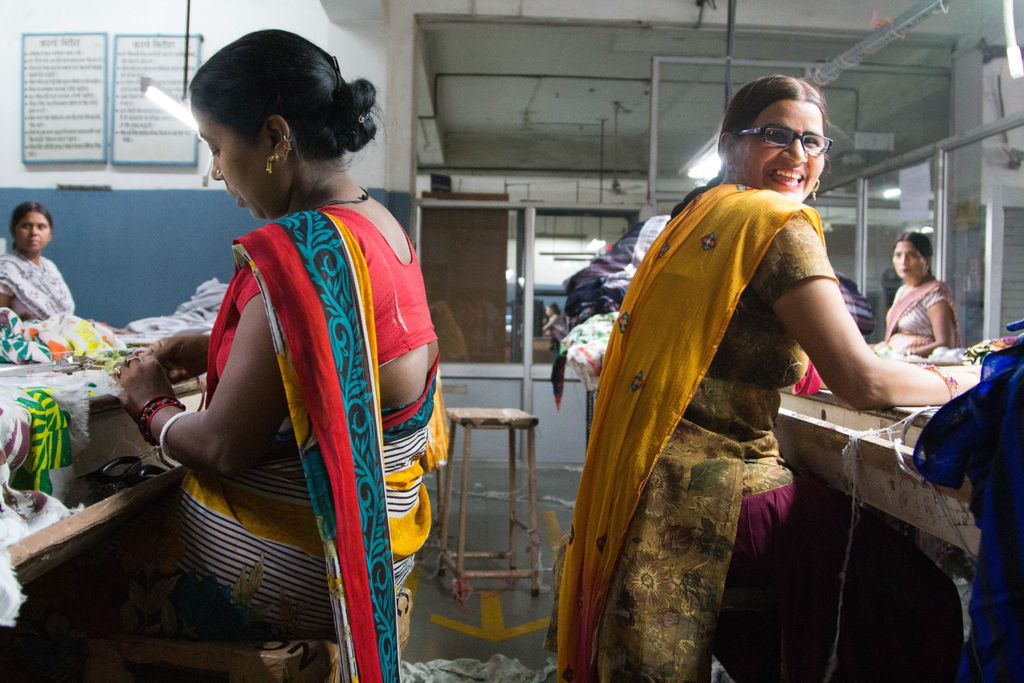
I observed a similar pattern as the three middle-aged women opened up to us. In India, the majority of marriages are still arranged, and while many of these marriages last in comparison to “love marriages”, many arranged marriages leave women stuck in abusive relationships. My heart broke, as one of them began to explain in detail the atrocities she has endured with her husband. The small amount of money she retains by working long, hard hours in a clothing factory is usually taken and spent on his addictions. In addition to this, she also spoke of the physical abuse she has gone through. Divorce is so stigmatized in Indian traditional culture that she, and many other women stuck in these kinds of relationships, do not even consider it. She spoke as though it was her lot in life to endure this kind of treatment in her home. Her only hope is for her children to have a better future, and she works tirelessly to turn this dream into reality.

Indian women have strong spirits. (Photo Credit: Holly McKenna)

Indian women have strong spirits. (Photo Credit: Holly McKenna)

The other two women had similar stories, further explaining the verbal abuse and other difficulties they deal with in the factory. The average woman that works in a clothing factory wakes up at the break of dawn to prepare food and do what it takes to get their children to school, followed by a grueling day in the workplace that lasts for 10 plus hours for all of 3 dollars a day, a small sum even on Indian standards. She goes home, prepares dinner, and continues her household chores late into the night only to do the same thing the following day. “Where is the agency and freedom to dream in the lives of these women?” I asked myself. I felt helpless and heartbroken, looking into the eyes of these women who had accepted this to be their share of life.

Gregory David Roberts wrote, “Sometimes we love with nothing more than hope. Sometimes we cry with everything except tears.” That’s how I felt after talking with these women. Who was I, as a white, privileged American male to tell them they ought to change the way they see themselves in their society. It wasn’t my culture or place to say something like that. Even more heart throbbing was talking with the younger woman, who was still not married and expressed her belief in a brighter future for herself, one where she had the freedom to dream and make a life for herself. I have long considered myself a feminist, but it wasn’t until I walked out of that house fraught with heavy emotions that I felt in myself the desire to commit my life to empowering others, especially women, and ensuring that everyone has a right to dream.

I find myself inspired by people like Che Guevara (during his youth in The Motorcycle Diaries) and Mother Teresa, people who committed themselves to live with and fight for the rights of marginalized communities. I have had a lot of life changing experiences and formative conversations with people in Mexico, Thailand, Rwanda, and the inner city of Chicago, and have found that my greatest joy in life comes from living with people and getting some skin in the game, as we strive together to ensure equal opportunities and the freedom to dream. It wasn’t until I got back from this experience that I’ve started to process and piece all of these former experiences together like a puzzle, which has revealed its image to me. And I will be forever thankful to these women for opening up their home and heart to me, and enabling me to realize my dream of helping others discover and pursue their own.

The culture of India and the world as a whole is changing rapidly. Across the globe, we are becoming more aware of inequality and mistreatment through globalization, and there’s also a common desire across nations to fight for marginalized communities, whether it be through global policy, social entrepreneurship, or other mediums. From this experience and others, I find in myself a desire to live abroad for some time, to play my part alongside local communities in driving social change. Gregory David Roberts also wrote in Shantaram, “A dream is the place where a wish and a fear meet.” It’s scary sometimes to think of what following my dream entails. But then I think of the true joy associated with it, and that gives me comfort. I couldn’t be more grateful for everything India and my past experiences in traveling have taught me in regards to vocational discernment among other things, and I can’t wait to see what the future holds. In everything I do or will do, I hope to follow after the words of Mother Teresa, “Spread love everywhere you go. Let no one ever come to you without leaving happier.”

Posted in Uncategorized | Leave a comment

To Whom Much Is Given

For the first 18 years of my life, I woke up to the crisp smell of evergreen trees and the

Mt. Hood (Northwest Center for Photography)

Mt. Hood (Northwest Center for Photography)

view of a stunning sunrise creeping over Mt. Hood. For me, home was Portland, Oregon,

and the outdoors was my cathedral.  For those who have spent time in the Pacific Northwest, you will know what I mean when I say there is something divine about it.

Amidst my love of home, however, my life was anything but stationary. My parents engrained in me at a young age that the world was not as big as I had made it out to be and that it was important to go out and experience how other people lived. We spent every summer exploring a new country and culture, and while I didn’t know it at the time, these experiences would be formative in developing my passions for adventure and understanding the tremendous needs of so many people around the world.

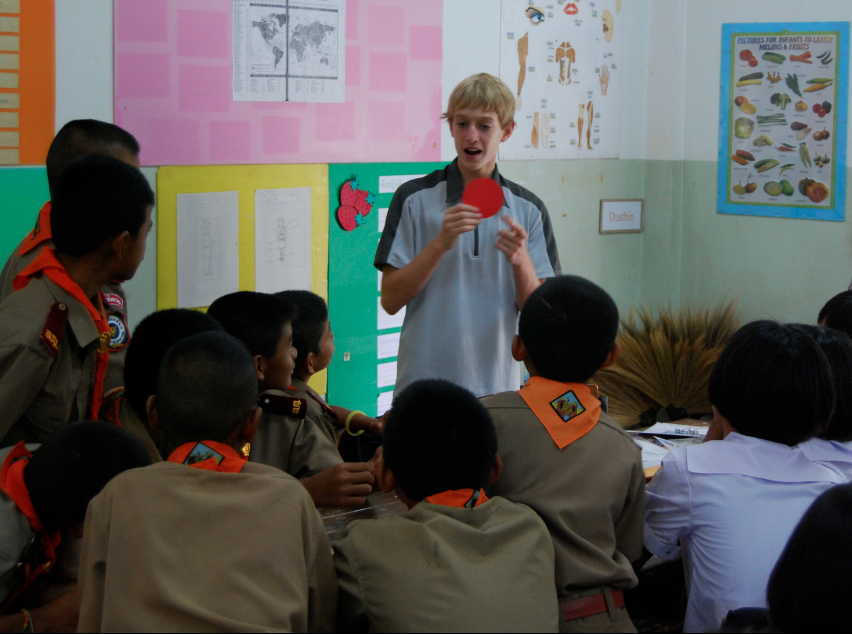
A life changing experience came during my freshman year of high school when I heard about a trip our school offered to students interested in teaching English and serving in Thailand. I went home that day and told my parents I would be spending my summer in Thailand. After a little bit of convincing and many visits to the travel clinic, I found myself a few months later in the Portland airport with an oversized backpack on my 5 foot 3 inches frame, my eyes set on seeing Asia. When I reached Bangkok, culture shock set in as I walked on overcrowded streets allowing all of my senses to take in the environment around me. After a few days, we set out for Northeast Thailand to teach English in a public high school, and during our 3 weeks in country, we taught over 2,000 Thai kids.

Teaching English in Northeast Thailand

Teaching English in Northeast Thailand

However, I like to think I learned more from them than they ever did from me. I began to find beauty in the students and the Thai way of life, as I asked people to tell me their life story and why they did the things they did. Perhaps this was my inner anthropologist coming out even though at that time I didn’t have a clue what anthropology was. My love of nature was cultivated in Thailand too. The days were long, but I enjoyed each moment, especially watching the sunrise and sunset over Thailand’s vast expanse of rice paddies. When I came home I knew I wanted to spend my life working for a social cause that might take me overseas.

I had the opportunity to deepen this desire when I raised funds to travel to Rwanda after my junior year of high school. Immersing myself into a cultural context ravaged by a genocide that had exterminated 1/7 of the country’s population was the most eye opening experience of my life. I witnessed a nation of children without parents and heard heart-wrenching testimonies from genocide survivors. A paramount conversation in my life took place with a Rwandan who was around my age. He had lost his parents in the genocide, and I asked him what he was excited about as he looked towards the future. He told me he couldn’t wait to receive an education and see where that would take him. He said that with an education he could dream and pursue a profession.

Our t-shirt design

Our t-shirt design

That conversation changed me! I realized I had been blessed with so much: a loving and supportive family, health, a great education and the resources to make a difference in the world. Being heavily influenced by Jesus and the Bible, the passage from Luke 12:48 came to mind, which says, “to whom much is given, much is expected”. A sense of ownership of power to play a part in fighting poverty and inequality swept over me, as serious social issues were made personal in my life. So when I went home, a good friend and I decided to take some action on behalf of our Rwandan friends. In Rwanda, it only costs $15 to feed a street kid, someone with no parents, lunch for an entire month! When my friend and I thought about this amount, we decided to form a business designing and selling t-shirts to raise funds for these kids.  A key part of our plan was to raise funds for all of the production costs so that 100% of the sales price of the t-shirt could be donated to feeding a child.  In this way, we connected the t-shirt customer with a child by knowing that they were feeding them for one month.  Our goal with this approach was that the sponsor would go beyond this one time purchase and begin to sponsor a child for the long-term.  In this way we would be able to achieve sustainable assistance.  In a matter of two months we were able to raise support to provide food for 150 street kids.  Equally important, the experience gave me a taste of using a business approach to address complex social issues, such as feeding the poor, and gave me confidence that I could make a real difference in the world, which was valuable as I headed off to college.

Santa Clara University Crest

Santa Clara University Crest

By the time I landed at Santa Clara University, I had witnessed extreme poverty and hunger, the effects of genocide, and a plethora of other social issues from my experiences in Thailand, Rwanda, and Oaxaca. After walking out of a psychology class that didn’t catch my interest, I stumbled into an introductory cultural anthropology course, and found myself a week later in the Student Center declaring the discipline as my major. Conducting qualitative interviews and getting to know peoples’ stories was where my interests met social issues. I was able to spend summer after freshman year living in the inner city of South Chicago. Serving schools and homeless organizations, I saw the deep need we have for change in the United States. One of the most impactful

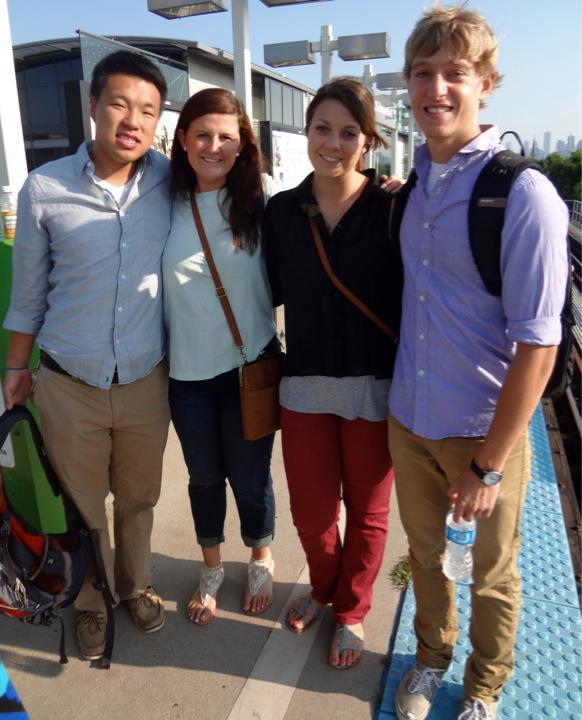
My team riding the L towards West Chicago

My team riding the L towards West Chicago

experiences of my life was living homeless in Chicago for a few days to try to gain perspective on the issues homeless people go through. To be honest, I had no idea what to do during this time, so I spent most of it talking with and hearing stories from other homeless people. Walking along Michigan Avenue, I started up a conversation with a woman who had been homeless for nearly a year. When I asked her what the hardest part

of homelessness was, she told me it’s that she feels she never gets heard. Passersby don’t lend an ear and most of society turns a blind eye on these people.  From these experiences I learned the joy that comes from living simply, but more importantly I developed a love for people and their stories, and began to see myself playing the role of an advocate and bridge between the voiceless and decision makers.

I am thankful for the way in which Santa Clara is preparing me to pursue these interests. As I move forward, I see myself getting involved in work drawing from cultural anthropology, international business, and public policy. All of these previous experiences

Good World Solutions

Good World Solutions

and interests contributed towards my desire to participate in the Global Social Benefit Fellowship, and I believe Good World Solutions posits itself a great fit for me in its mission to empower workers without a voice.

As Gandhi once said, “Be the change you wish to see in the world.” I can’t wait to do my part and jump into this experience with both feet, not knowing exactly where my steps will take me, yet incredibly motivated to do my part in changing the world around me. When I look at the life Jesus led, I realize that he gave his life away for the interest of others. That’s what I want my life to be about, giving back more than I have been given.

Posted in Uncategorized | Leave a comment