Reigniting Passions

Nearly four years ago I decided that I wanted to pursue humanitarian engineering after seeing projects college seniors in Dallas were creating for the developing world. I had no idea what the next four years would have in store for me, or if I would even still have that same passion I had discovered at Southern Methodist University. I am now one of those college seniors, and I have had many experiences at Santa Clara University that could have either further ignited that passion or totally destroyed it. The Global Social Benefit Fellowship was definitely going to be a make it or break it kind of experience for me. It was going to be not only my first time to the developing world, but also just my first time out of the country. I was going to finally be able to see a different part of the world and experience travelling and working in an unknown area. I think most people would not choose Uganda as their first place to have this travelling experience, but the extreme made me excited. I was finally going to be able to see the part of the world that I have dreamed about creating projects for since I was in high school. My fantasy was going to become a reality, which also made me nervous because what if the reason why I chose engineering was about to be shattered in just two short months.
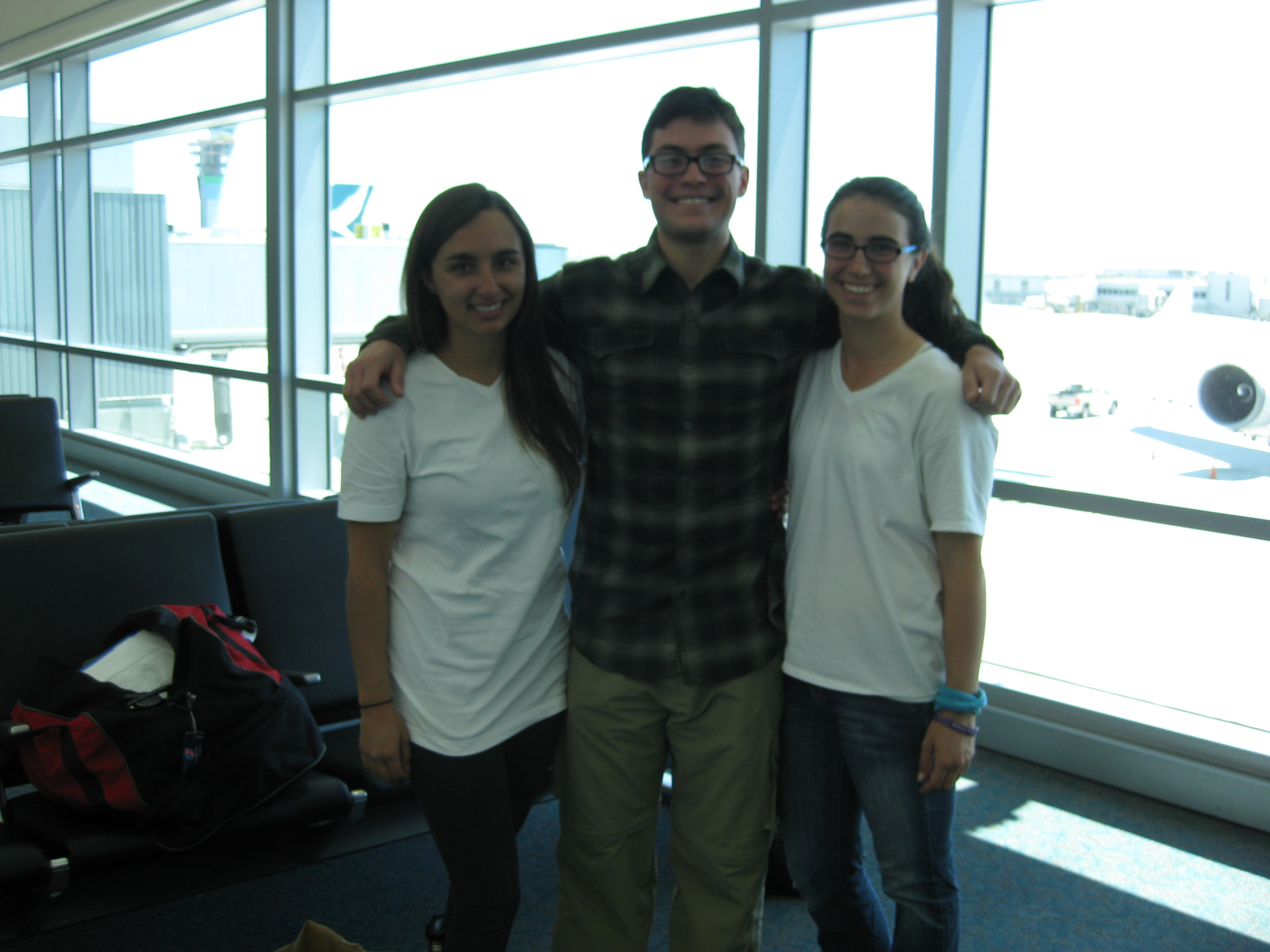
Caroline, Ty, and I about to board the plane to go to Uganda.

Caroline, Ty, and I about to board the plane to go to Uganda.

Now it has been three months since I have been back from Uganda and working with BanaPads, and I can begin to fully realize how much this nine month experience has shaped me into the person I am now as I make the “big kid” decisions about what I want to do with my life. I think it was a good thing that my action research project did not go as planned; because of it, I learned a lot about my capabilities and myself. I went in thinking that I was finally going to be able to test my engineering skills and work on a technical project for an enterprise that needs me because I have the backing of an American university and the potential to create a senior design project from my experience. I soon realized that I went into Uganda way over my head and too narrowly focused. I was humbled about how little experience I have by a local Tanzanian engineer and how I was not qualified or credible to work on projects here yet. I walked away from that seemingly harsh talk more motivated instead of depressed. He was right. I have never built anything and I have never worked with a technical firm yet; all I have done is taken classes. I realized that the GSBF was not the time for me to test my technical abilities; it was the time for me to test my personal abilities and ambitions.

I learned the importance of fostering relationships on a personal level before a business level; gaining that sense of trust is of upmost importance before any work can get done, especially as I was an outsider this summer. I also learned that I am an observer; oftentimes in meetings, I would not realize that I had not said a word the entire time because I was so curious as to what everyone else was saying and just taking the whole experience in. I got called out multiple times for being quiet and not always sharing my ideas without me even knowing how quiet I was being. I also learned that I work well under pressure. I was aware of this fact before because of school, but I realized that I could come up ideas on the spot if I have to. It was actually how I ended up with my final deliverable (the data Excel spreadsheets). All of PeerLink and BanaPads were just looking at Ty, Caroline, and I to come up with a way for us to process the handwritten spreadsheets that day at that moment. We scrambled for a little bit, but then formatted the final deliverable within a half hour. All of the formulas that I had learned about Excel came back to me and kept giving me ideas. Getting this experience of testing my physical limits of living in a rural area in Uganda and learning more about myself and my tendencies when I am tested and when I am with unfamiliar people was more impactful than I think just working on my project that I had planned to do since April.
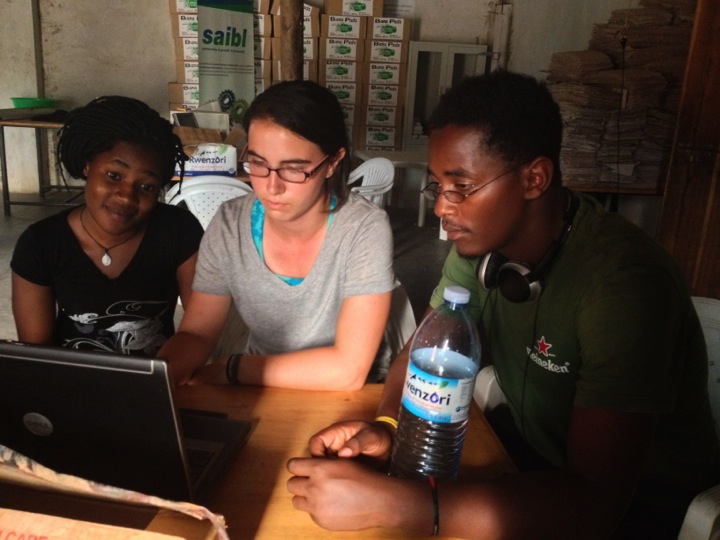
Teaching BanaPads staff how to use Excel.

Teaching BanaPads staff how to use Excel.

From this whole GSBF experience, I have reaffirmed my passion that was initially ignited four years ago, but I now have the passion with a new perspective. I don’t want to create products that can be just dropped off in developing countries to sit and fail; I want to be able to learn about the culture and the people who have a specific need and be able to incorporate a product that fits their daily lives. I want products that are sustainable; the people in the communities see a need for them and can fix and maybe even produce them by themselves. I realize now that this entails education first, which was a method that BanaPads used to introduce its product. People will not use a product if they do not understand the relevance. It is the same here in the United States, but people in developing countries to do have access to Google any time of the day to learn about the relevance on their own. Working with developing countries takes more than just technical knowledge; an outside technical person needs to be familiar with the business, cultural, social, and educational norms of the community.

This realization of needing to have well-rounded knowledge has influenced my “big kid” decisions of what I want to do next. I want to begin in a work environment that forces me to learn more than just the technical sides of projects; I want to be able to see the business sides and the customer needs sides of projects. I was fortunate enough through GSBF to be able to learn more about business and see it played out with BanaPads, and I fell in love with the intersection of business and technology and the importance of understanding both in order to get people to “buy in” to your reasoning behind a technical product. There is a necessary skill to be able to “speak the language” of the people you are working with. As a technical person, I may have a kind of language barrier of someone who has grown up working in the business world with no technical knowledge. In order to gain more insight into the business language, I have decided to partner with Ilumexico, a GSBI alumni, for my senior design project. I am again able to continue my experience of working with the developing world, but this time on a technical project so I can test my ability to be able to convey my message to people with a business background. My senior design project will just be one more experience along my path to help me get out into the working world.

I am hoping that every experience I have from here on out gets me one step closer to my final goal that I have had since the day I was observing SMU’s engineering project my senior year of high school: designing frugal and sustainable products for communities in the developing world.
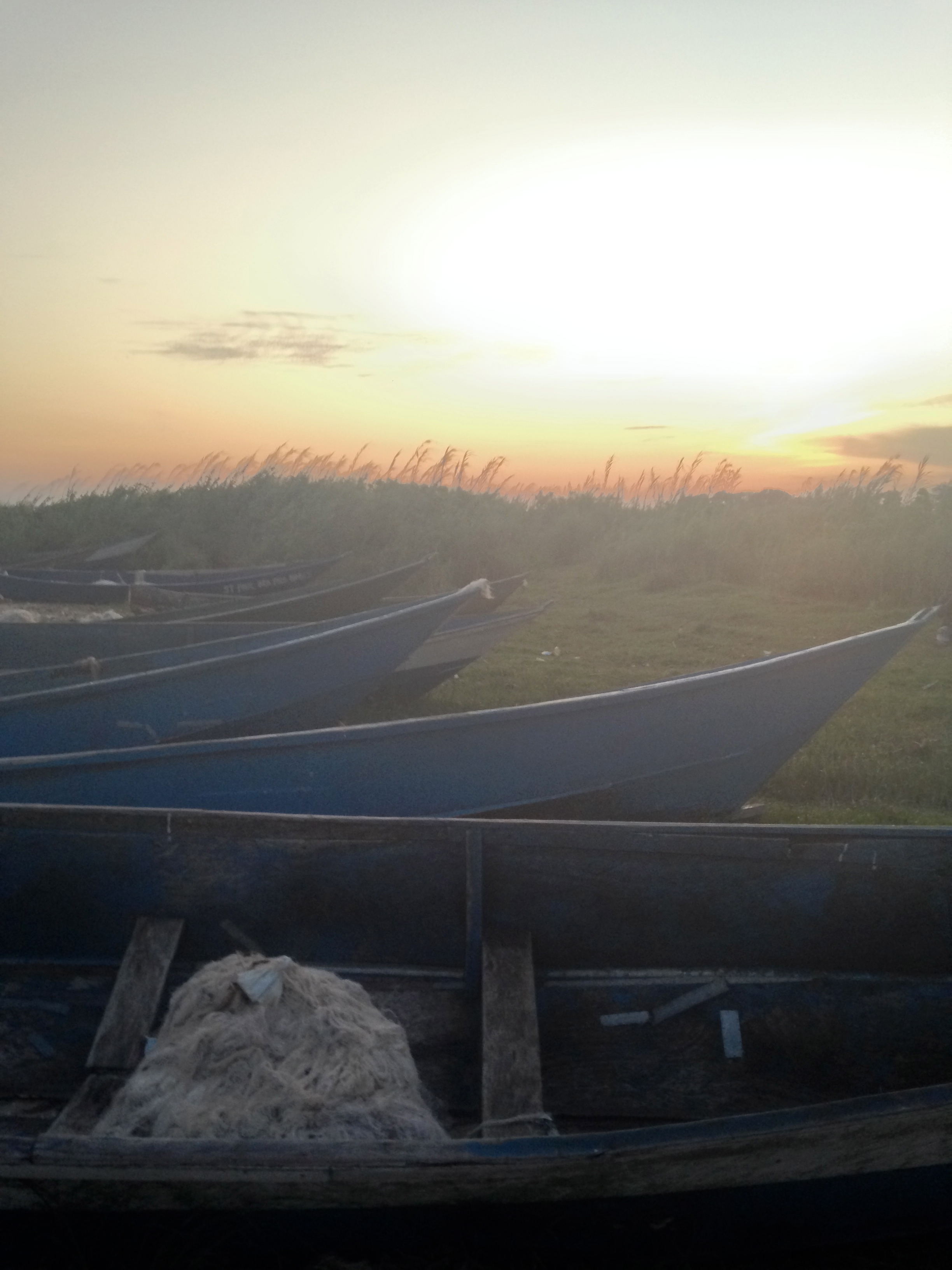
Uganda truly is the Pearl of Africa.
Uganda truly is the Pearl of Africa.
 

Posted in Uncategorized | Leave a comment

Living Life to the Fullest

Working with BanaPads Limited in Uganda and Tanzania this summer opened my eyes to a whole other world. I learned so much about an area that has always been so foreign to me, I met so many people who have inspired me in different ways, and I learned a lot about myself throughout the whole experience. From the first day we got there in June until the day we left in August, I was tested every day.

Being the introvert that I am, it was difficult for me to talk to so many new people every day and be forward enough to get the necessary data, but to also be conscious of the cultural differences between myself and the people of the Ugandan community. This was very apparent when we would have meetings with Bbaale Richard, the founder of BanaPads, or with PeerLink, a partnering organization in western Uganda. There would be so much Ty, Caroline, and I would want to discuss at one time, but we had to learn to speak slowly and take it one step at a time. This was a struggle for me, since I am a person who is constantly doing five things at once. I really had to learn to be patient and to work with the people there instead of coming in as an outsider and taking control.

Slide1

Typical Meeting with PeerLink

Throughout the two months in Uganda I had many experiences of seeing raw humanity and the strength of a human being under what Americans would consider “unlivable conditions.” Oftentimes when we were working, I would kind of forget how different everyone’s backgrounds were until we would hear stories. One of the stories that will always stick with me was when we were all at BanaPads headquarters in Mpigi and it was Bbaale, Jeremiah, Jared, and more BanaPads employees sitting at the main table. Soon they all started telling the stories of when they wore their first pair of shoes and when they wore their first pair of underwear. I could not believe it. Every single Ugandan at the table knew the exact moment for both. Most of them were in grade school or even older when they had their first pair of either. Then I was asked if I knew when I had my first pair of underwear or shoes. Embarrassed, I said I did not know because I always had both. At that time I realized how much the people sitting in front of me had struggled their whole lives to get to where they were today: to be in a position where they can now help others in their community not have to suffer as much as they did growing up.

Slide1

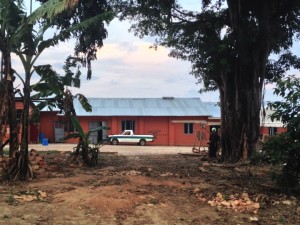
The front of BanaPads headquarters.

There are some things that I will never fully understand, like what it is like to grow up in rural Uganda, but I have met many who have overcome the difficulties associated with growing up in such a harsh environment and have seen their passion for making their community better. The people in Uganda want to help improve their community – businesses work together, households share goods and services, and people are just willing to give. This is a concept that is so foreign in America, where every business is trying to outdo all of the competition and people want to be portrayed as better than everyone else.


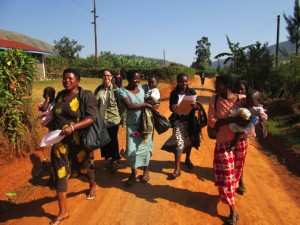
We were able to have conversations with many current Champions or Champions in training during our 7 weeks with BanaPads, and we were also present for some of the interviews the Champions in training gave to local households about menstruation. Oftentimes when we asked why the women wanted to become Champions, it was never really for the money (although that was a bonus), but it was to instill change in their communities and give the women a better life. They wanted to break the silence about menstruation, a topic that is never discussed in these areas. These women took full days away from their housework to be trained to become Champions. They were strong and passionate mothers, wanting a better life for the child that was on their backs.

Looking back, I wish I could have had more conversations with the Champions in training, but I was nervous due to the language barrier. These women, often not very educated, were so talented; Ugandans are so talented. They have learned how to live in conditions we do not understand without most of the technologies that we claim we could not live without. Most of these people have never seen a computer and would not see one unless they attended university. They endure hardships every day that we never have to consider, like lack of hygienic menstruation materials or malaria.

Slide1

Walking with Champions in training before they conduct interviews.

My experience with BanaPads really taught me the benefits of going out of my comfort zone to talk to someone. I am usually one to just sit back and observe, but oftentimes I had to be the one to talk to a local fabricator or talk to a Champion or run a meeting. Each time, I was terrified, but I was so happy afterwards because I was able to understand the people more by talking to them instead of observing. This is something I hope to continue to do now that I am home, whether it is going out of my way to make a job connection or just to get to know someone better. This experience also taught me to enjoy life. I am one to stress about absolutely everything, but the things I stress about are not important in the long run. The people of Uganda are so dedicated to relationships and just enjoying people’s company, and I think they know exactly what is important in life: friends, family, and community. Before I left, I was so caught up in school, golf, work, and my future life that I was never in the moment when I was with people. Now I realize what is important, and I am striving to reset my priorities so I can enjoy life with the people who matter most.

Slide1

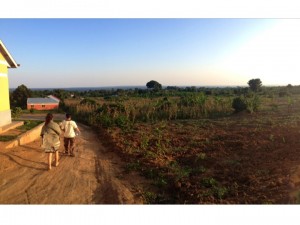
Ty and I walking back to headquarters.

Posted in Uncategorized | Leave a comment

My Path to the Technical Life

I was born and raised in Dallas, Texas with the 100 degree summer days and flat land for miles. I grew up with golf as the thing to do in my family every Sunday after mass. I started out as the little girl who would sit in the cart and then run all over the greens with my putter, but then I began to take golf seriously in high school when I fell in love with the intense competition and persistence I felt when I played. I was on my high school team at Ursuline Academy and missing about a dozen days a year due to golf actually made me a better student. I learned how to teach myself difficult material, how to communicate effectively with teachers, and how to stay on track in my classes. Golf has taught me self-discipline, hard work, and patience that have helped me in my every day life. I traveled and competed all during the summers in high school, so I was able to see so much of the country and experience all new places. I went to places in the East Coast, the Midwest, the South, and the Southwest. The only place I had yet to go was the West Coast, but golf took me there in college when I chose Santa Clara for the Jesuit atmosphere, the golf team, the engineering school, and a brand new experience.

IMG_0745

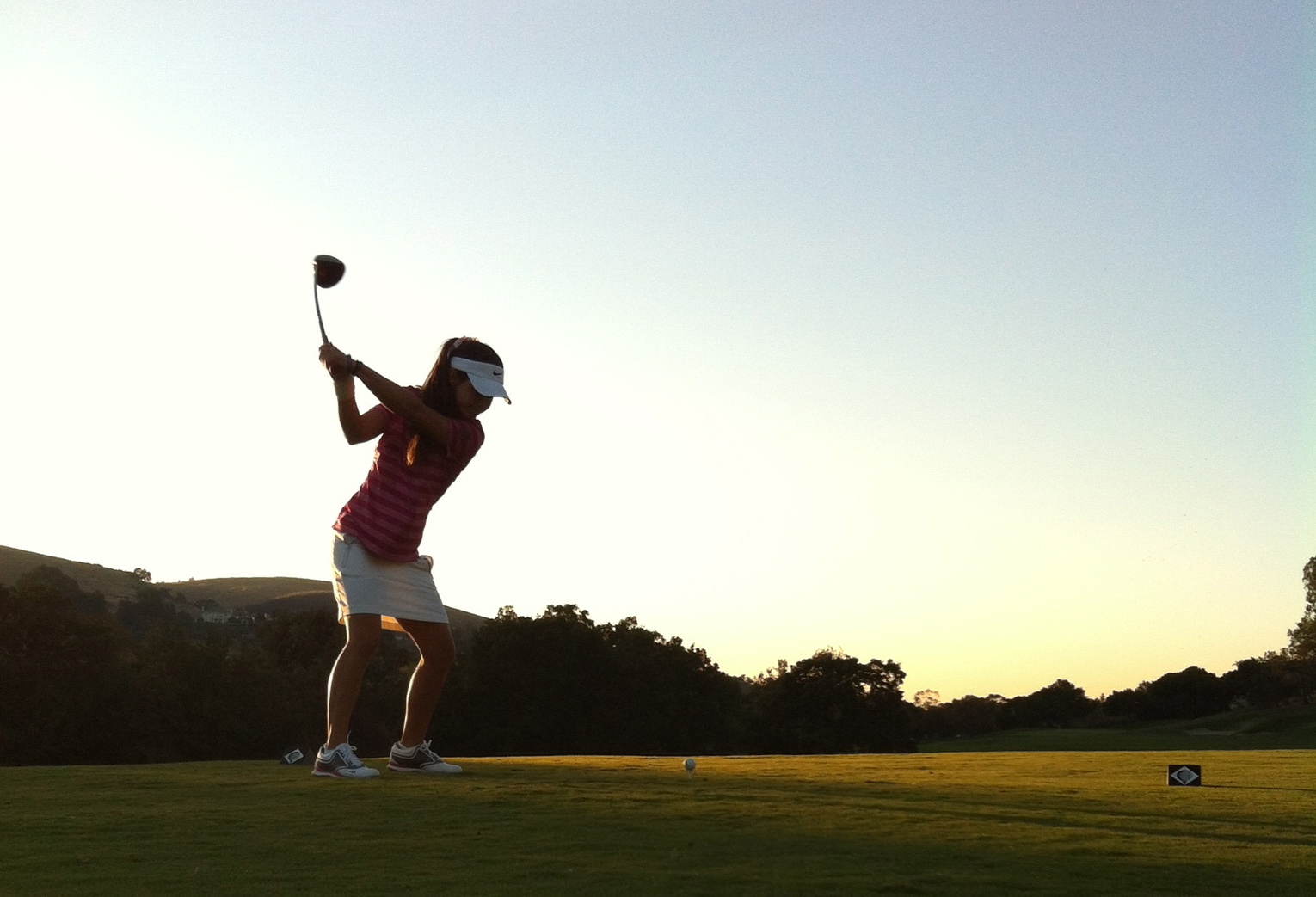
Playing golf at Santa Clara

I went to an all girls’ high school that was very focused on technology and the departments of math and science. Computer science classes were required and every student had a laptop in class every day as each class used some sort of technological applications. My school found it very important that girls were exposed to the areas of math and science without feeling they were in the minority, as was usually the case in coed schools.

Two classes I took in high school helped me discover my unknown passions that led me to choose engineering as my major and career choice. I took physics junior year when everyone else had to, and I loved it; I enjoyed being challenged by my homework. As a result, I took AP physics my senior year because no other science option seemed to interest me as much as physics did. Taking this class, I considered physics as a potential major in college, but I was not sure how I could use my major in real life besides teaching or research. I knew I wanted to do something that would make an impact on somebody’s life, but I was not quite sure how I could make this impact. Second semester senior year I took an extra elective called Digital Applications. It was a new class that focused on learning about and incorporating new and upcoming technologies to help people’s needs around the world. We learned about the United Nations Millennium Development Goals and watched a webinar series where people discussed the progress of each goal, and what future actions were going to be taken in order to reach the goals by 2015. We had a group project where we were to create an idea for a future technology to help solve one of the development goals in a part of the world. Thinking of technological impacts for the developing world ignited a passion in me that I had never felt before.

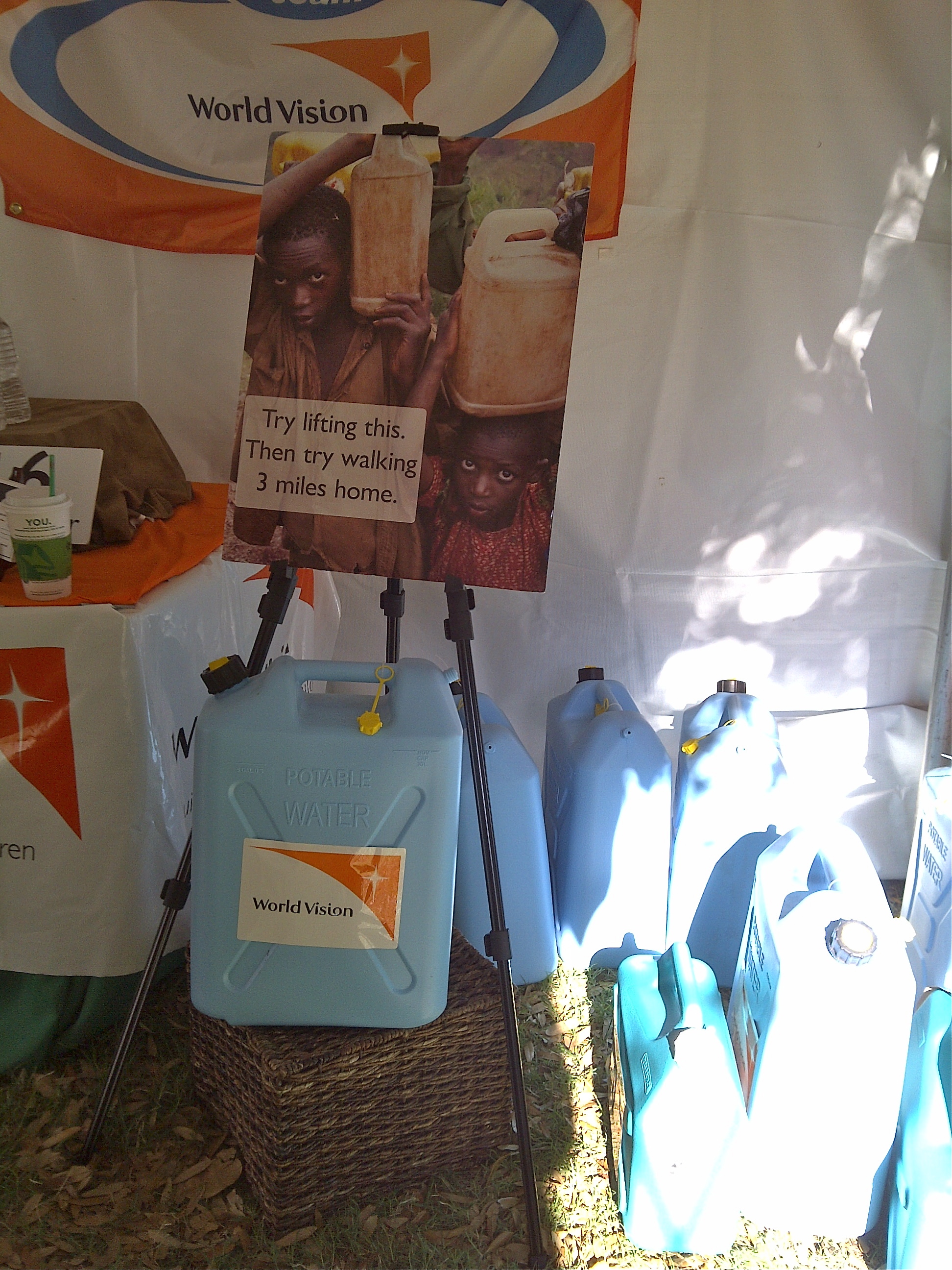
I still was not sure what I could do in college until my class took a field trip to SMU for the Hunt Engineering and Humanity Week. There was a section that focused on frugal technologies for the developing world, like water filters, housing, malaria nets, etc. I was fascinated by all of the water filtration technologies and the overwhelming need for clean drinking water. I went on a simulated “water walk” to imitate what many women do every day in order to provide water for their community. On the simulated walk, we held 5 gallon gas cans and walked with them through campus to the campus fountain; we then got in the fountain, filled the gas can and then walked all the way back with the water. Although the walk was not as long and the water was not as heavy as what happens in real life, the simulation opened my eyes to the daily life that many people in developing countries had to face. I knew after that field trip I wanted to use my math and science skills in the field of engineering so I could help people have better access to clean drinking water or other basic needs.

The display for World Vision's Water Walk at SMU

The display for World Vision’s Water Walk at SMU

When I entered Santa Clara, it was difficult for me to get involved in the many engineering clubs because I had golf practice every day. Golf was still a big part of my life and I was not going to let it go because it was one of the many reasons I chose to attend Santa Clara. I wanted to try to find a way to begin my journey in applying engineering philanthropically. I applied for the CLASP Alaska Summer Immersion for the summer after my sophomore year. After backpacking for a week outside Denali National Park, we flew to the rural village of Galena to help them transition their village into a more sustainable community as energy costs were getting too expensive. A month before we arrived in Galena, the village had the most devastating natural disaster since an earthquake in 1964: a flood wiped out over half of the village with flood levels reaching over 10 ft. Although many of the students’ jobs changed when they got there, mine did not; I still conducted energy audits in some of the village buildings in order to see where they could decrease their energy costs. Applying my knowledge of mechanical engineering to help a community in need made all of the late nights and hundreds of homework problems have a purpose again. I loved interacting with the community and working with them towards a common goal that would improve their lives.

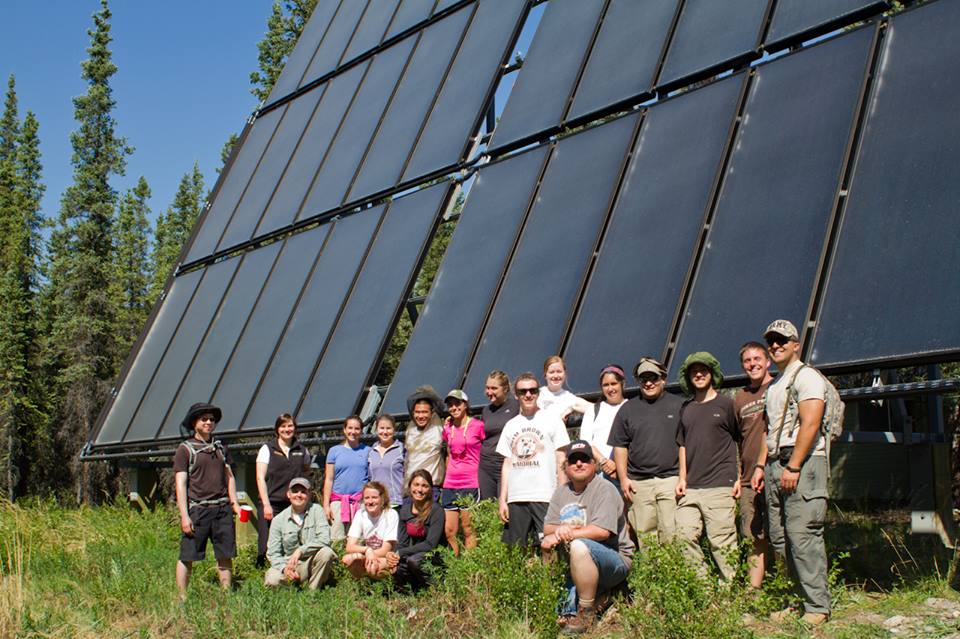
The Santa Clara group in front of solar panels at the Denali Education Center

The Santa Clara group in front of solar panels at the Denali Education Center

Now I am in my junior year at Santa Clara, and although I still am not sure what I want to do with my life, I know my passion for applying engineering to fulfill the basic needs of others.

Posted in Uncategorized | Leave a comment