Moving Forward

As the fellowship comes to a close I’m left with more questions than answers. How do I take what I learned from an amazing entrepreneur like Operation ASHA country director Jacqueline Chen and apply it to my own career? How do I find a career that makes me as passionate as the entrepreneurs-in-residence were this past summer? How do I use the talents I have to positively impact the global community that I became more connected with throughout this entire process? This entire journey has been an exercise in both trying to answer these questions and also realizing that I will spend my entire life trying to answer these questions. However, while I will always have questions, I know a lot more now about what kinds of social engagement inspire me, what I think the next steps are that I will take, and what has changed about my perception of the world.
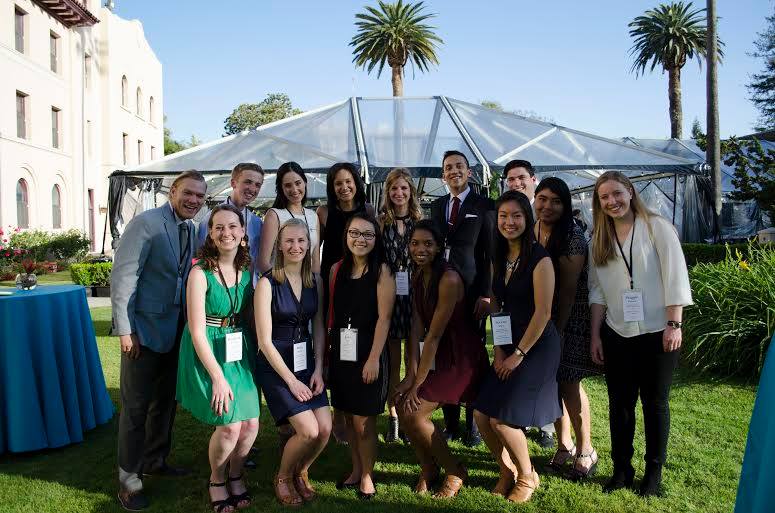
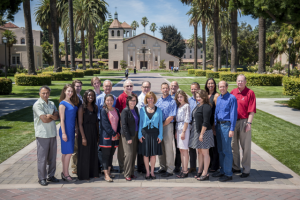
The 2015 GSBF Fellows at Magis

The 2015 GSBF Fellows at Magis

When it comes to social engagement, I don’t think the field of social entrepreneurship is what I feel most called to right now. The entire social enterprise sector I find incredibly inspiring but I don’t think being on the ground in the developing world with just myself  plays best into what I’m skilled at. For now I want to instead bring the entrepreneurial skills learned in the fellowship to a larger organization focused on shaping policy. I learned from being around Jacqueline at the office at Operation ASHA about the value of creativity and thinking outside the box. I learned from reading Heroic Leadership by Chris Lowney and then hearing him speak in class the necessity of inspiring others to be leaders and leading with love. These lessons are a toolkit for future endeavors and future leadership opportunities in a larger organization.

The desire to work at an organization focused on government policy is reflected in the next step I want to take. I have applied to law schools and plan on attending one next fall. Most of the time when I say this around people in the social entrepreneurship industry I hear at best an “oh” and sometimes even outright dismay. Yet, what has continued to inspire me is public policy and government. Structuring the large aid projects in an NGO like USAID or working towards making a fair playing field for everyone through work in the Department of Justice are all pursuits that inspired me when I first became a Political Science major. Silly as these small examples may be, I saw this in Cambodia too. The conference we went to on the relationship between Diabetes and TB that brought together different government players around the country, briefly meeting the head of the WHO’s TB program in Cambodia, and researching what political factors influence how NGO’s get funded in the country were all experiences I really enjoyed. It is very possible, and in fact likely, these experiences will not be my entire career. I could see myself working at a small legal aid firm or even something entirely different like impact investing. This reflects another great lesson of the fellowship, even the best laid plans will change and the ability to adapt to change leads to a more fulfilling experience.
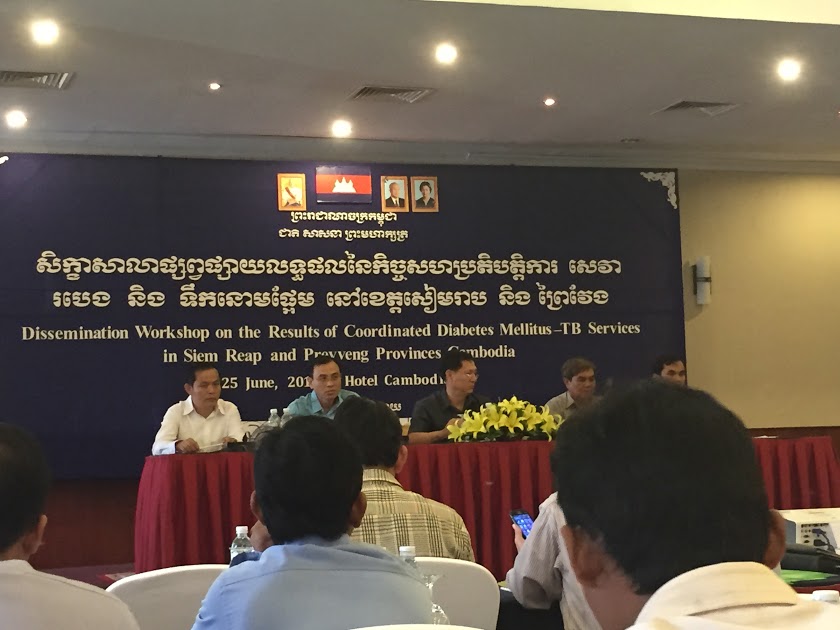
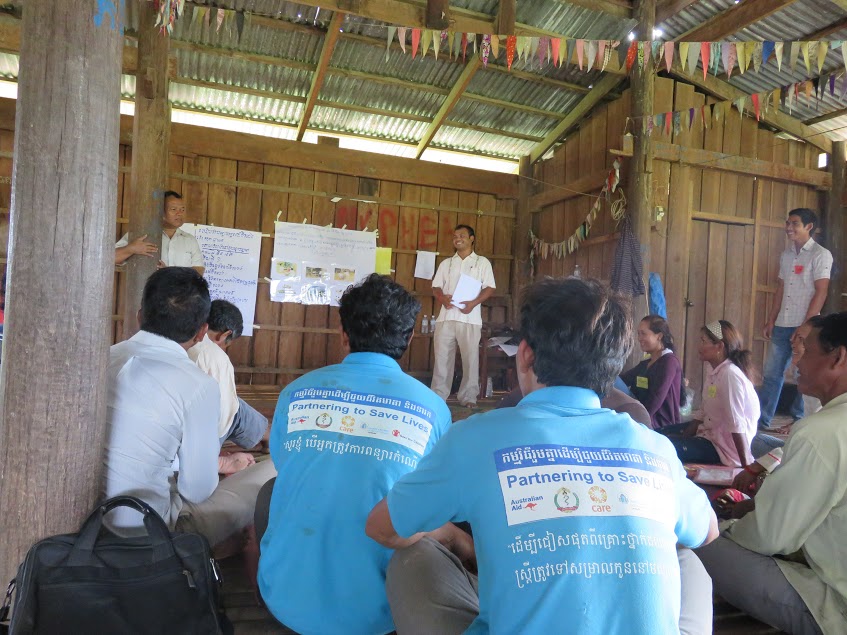
Phnom Penh Conference on TB and Diabetes

Phnom Penh Conference on TB and Diabetes

One thing that will govern this entire vocational journey is the new global perspective I have after this experience. I knew through coursework as a Poli Sci major and just by staying up to date on world news that there is poverty and turmoil in other parts of the world. However, before the fellowship this was always framed as an “us” versus “them” dynamic.  The “us” were the “1st world” countries generously doling out aid while the “them” were the “third world” countries stuck in poverty. This fellowship drives home that there is no “first world” and “third world”, there is one world where we all share far more in common than we have differences. The ingenuity in the developing world to solve complex problems is staggering and the amount we share in common with members of these communities can only be fully appreciated through a fully immersive experience working there. Going to Cambodia was my first time outside the United States and while I though I was well informed about world affairs I lacked a kinship to fellow global citizens not in the United States. That newfound kinship comes with a price. That price is likely feeling drawn my entire life back towards these problems and solutions we got to participate in so closely. That is a price I am so thankful I get to pay going forward.
Moving on to the Next Challenge
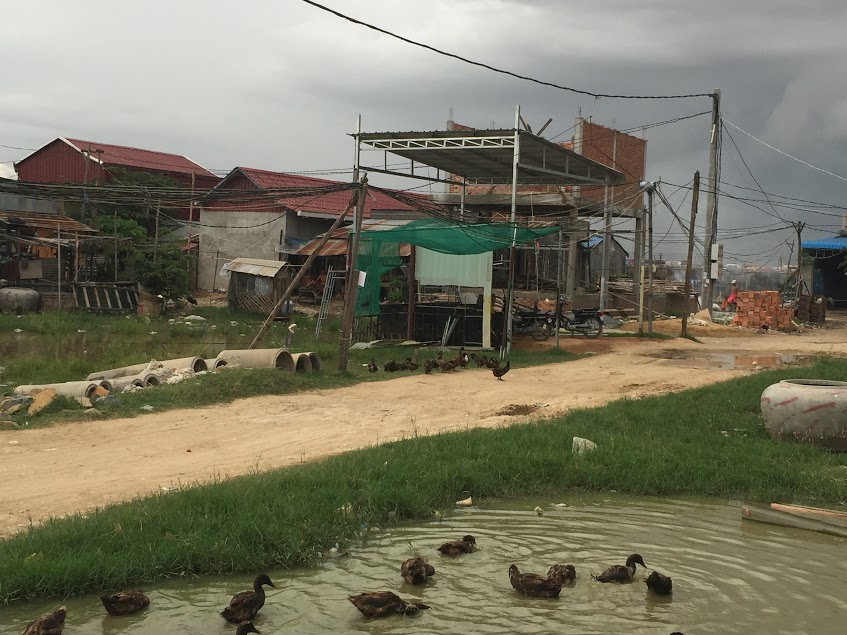
Moving on to the Next Challenge
Posted in Uncategorized | Leave a comment

Meeting Challenges with Creativity

A lesson I learned in Cambodia is that the key prerequisite for creativity is desire. People can come up with inspiring outside the box solutions to the most vexing of problems if the problems mean enough to them. Nowhere is this more apparent than the organization Operation ASHA. Operation ASHA is out to solve one of the most complex problems in the developing world, diagnosing and treating TB patients. These patients are in the far corners of rural areas, often inaccessible by car. Even when the potential patients can be reached they sometimes do not believe they need to be treated for TB, or they start treatment but, when they begin feeling better, they stop taking medication which can lead to drug resistant TB. However, to Jacqueline Chen and the rest of the Operation ASHA team, this problem is an exciting opportunity to make Cambodia a better place.

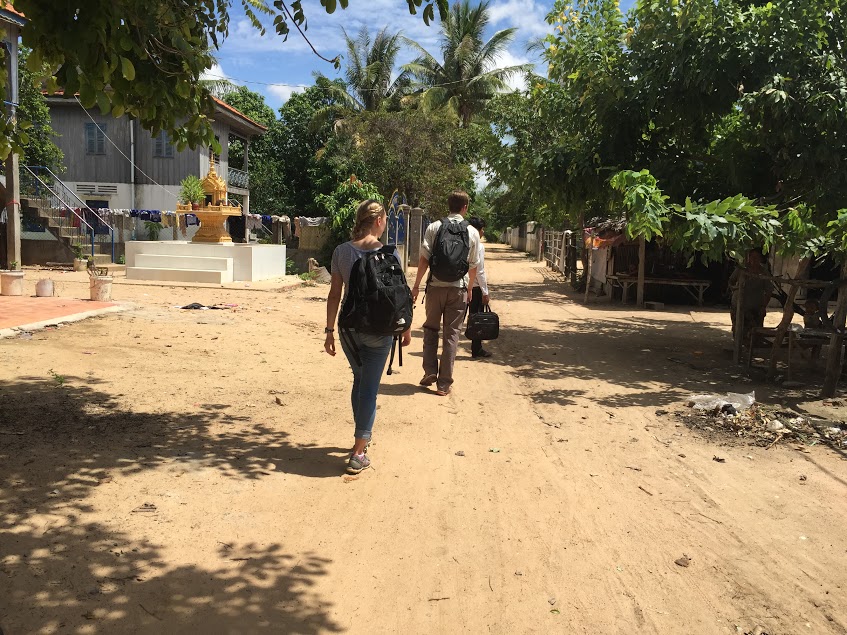
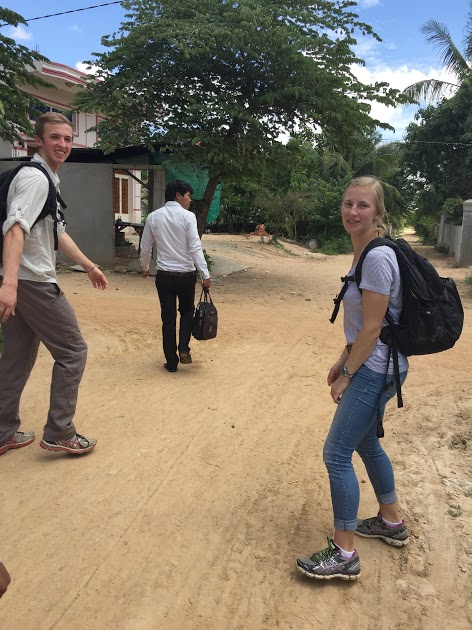
Tackling TB means reaching remote villages where the roads at best look like this

Tackling TB means reaching remote villages where the roads at best look like this

During our first day at the office, Jacqueline explained to us that the information we had about Operation ASHA in Cambodia was old news. While we had expected Operation ASHA to be operating a singular model in two provinces, Jacqueline instead showed us Operation ASHA was operating 3 models in 6 provinces. Most surprising in this update was not the growth in size but the new variations in their diagnosis and treatment methods. Jacqueline and the team had not hesitated to completely adjust the way ASHA conducted operations for the opportunity to reach more people. When stipulations in a USAID grant for the Mondulkiri province made it so Operation ASHA employees could not take sputum tests or deliver the drugs, they arranged to train government Village Health Support Group (VHSG) members to complete those tasks. When a Global Fund grant for a project in Sihanoukville prompted another pivot, they created a program where an ASHA employee would raise awareness and take sputum tests among high risk groups in community meetings. Operation ASHA in Cambodia could twist and contort itself in new ways if that is what it took to reach another community.

An example of Operation ASHA's new model in Mondulkiri, training VHSGs

An example of Operation ASHA’s new model in Mondulkiri, training VHSGs

This was my day to day inspiration. Rather than the wild and crazy being the most impactful, it was the ordinary. Everyday Operation ASHA employees were looking for creative solutions and everyday Operation ASHA employees would arrive at work before Misja and I did at 8:30 am, and many of them would still be there at 5:00 pm when we left. This wasn’t just Monday through Friday either, they also came in on Saturdays. It was a daily grind motivated by the desire to make the country they lived in a better place. Growing up the people I looked most up too were athletes. However, I wasn’t interested in the rich talented superstars, I was interested in the gritty role players who made a living off of giving 110% every single day. Operation ASHA’s team was inspirational in that same way. Their daily grit and determination to do good work showed what it meant to find something you care profoundly about and to then make a career in that cause. Because of this, one of the foremost highlights of the trip was the last day. There was a farewell dinner for us at a local restaurant and when Jacqueline and other members of the office spoke and thanked us for our work I was floored. To know they believed that we cared about the cause and to know they thought we were dedicated is a greater feeling than any academic award.

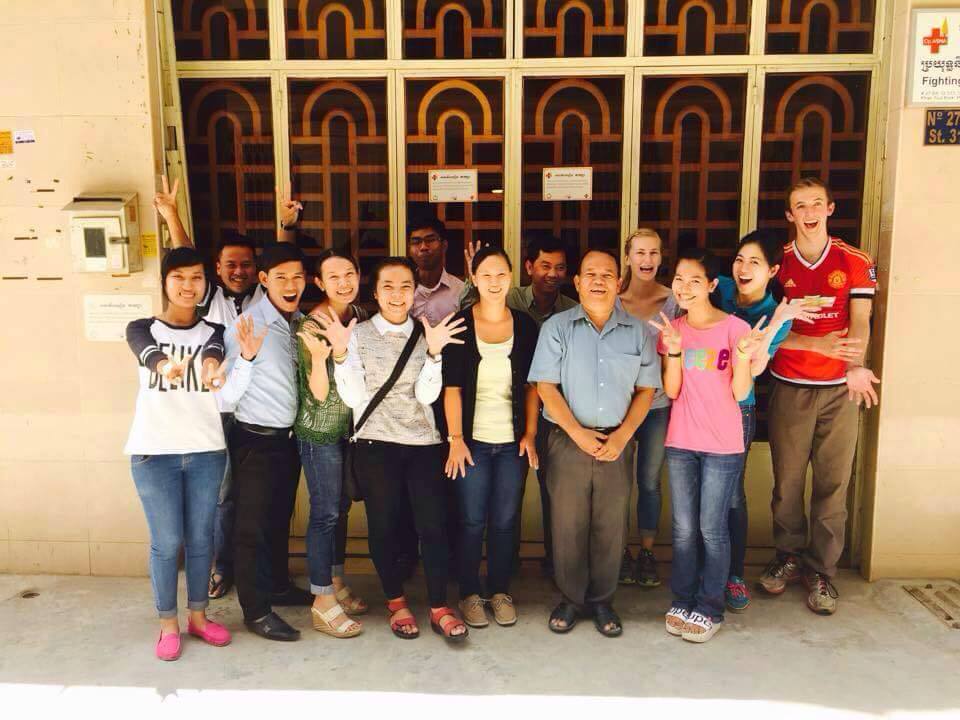
The Operation ASHA team and us on our last full day in country

The Operation ASHA team and us on our last full day in country

This experience of witnessing creative minds driven by passion was also a personal vocational lesson. I do not know right now if the developing world is where I want to work. I do know, though, that I want to experience the same day to day creative process of having to overcome challenging obstacles for the betterment of the people around me. It is not just more fulfilling but it is more enjoyable. Even though when it rained the office smelled like sewage and I consistently hit my head on the five foot nine door frames, I’ve never had more fun coming into the office. Tackling exciting and challenging projects that are of value to the community is reenergizing everyday. The entire office feels the same way and that creates a positive work energy that is hard to articulate but certainly exists. I can imagine doing many things in life in many different areas, but I cannot imagine working at a place without the same energy, the same creativity, and the same dedication.

Our last field visit before walking on towards the next big adventure

Our last field visit before walking on towards the next big adventure

Posted in Uncategorized | Leave a comment

A Long Road to the GSBF

It is hard to explain a calling to the GSBF because what underpins the entire social entrepreneurship sector seems in part to be a contradiction. There is a focus on efficiency and in many cases profitability but, at the same time, the social mission comes first. It is rare that these two coexist with each other, much less thrive on the level that some social enterprises have made possible. And this is what is hard to articulate about an interest in this complex and new sector, it is an interest in practicality, efficiency, and a critical look at the way developing nations are traditionally helped. At the same time, it is done out of a strong spiritual desire to help those who are less fortunate. That is why I think two seemingly unrelated experiences best explain my personal interest in this Fellowship; a summer working for my grandfather, focused on profitability, and a Catholic confirmation journey, focused on the suffering of others.

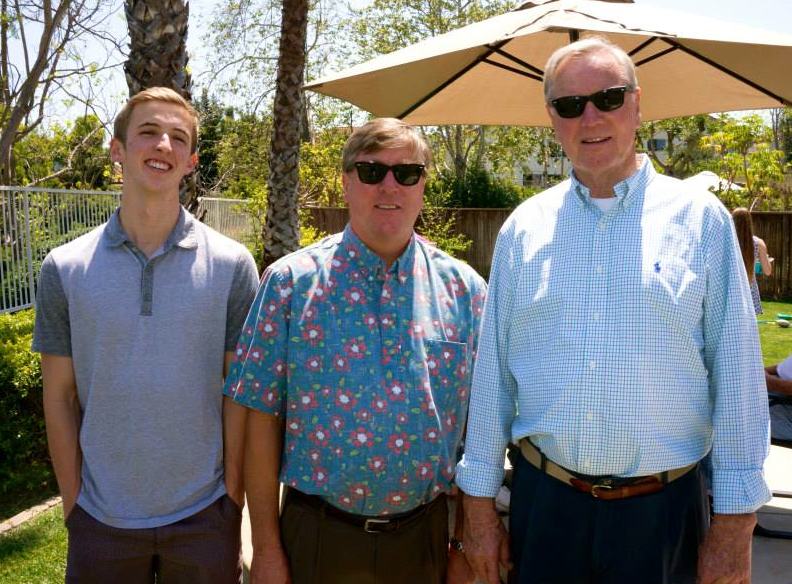
With my Father and Grandfather on Easter

With my Father and Grandfather on Easter

The summer between freshman year and sophomore year of college, before I was ever introduced to social entrepreneurship, I worked for my grandfather at his non-destructive testing facility for airplane parts. My job for 7.5 hours of the day was to stand in the back of the factory and when parts were done being tested I would put them back in their cartons, wrap the cartons in Saran wrap, and stack them to be shipped back to the customer. The last half hour of the day I got to go up to my grandfather’s office and talk with him about life and often about his business. He would try to relay as much about running a small business as possible; how to keep employees loyal, how to manage the finances month to month, how to deal with workplace politics, and other lessons learned from hard earned experience. One lesson in particular was emphasized repeatedly, how certain government interventions were making doing business incredibly difficult. Policies were intended for excellent reasons, such as ensuring workplace safety standards and protecting the environment, and there were certainly cases where these policy intentions equaled the policy outcomes. However, there were other cases where the policies resulted in his small company paying thousands in legal fees fighting frivolous lawsuits filed because of loopholes in legislation, or not being able to lay off particularly poor performing employees and hire better staff because of concerns about wrongful termination lawsuits. The policies had noble intentions, but the execution was often inefficient because the government did not fully understand at the local level what was conducive to small business growth in Sunland, California. It echoed aspects of what I was learning in Political Science about the developing world. International Organizations like the World Bank and the IMF wanted to tackle noble goals, like reducing poverty, but the execution was often lacking. A research project I did in a class on International Organizations looked specifically at World Bank lending to Africa. While extensive resources were being spent, the desired effects were lacking as the World Bank tried to implement economic policies that succeeded in the West, in African economies that were incredibly different. Like the red tape my Grandfather lamented over, these policies sounded good in theory but in practice were inefficient because of a lack of information about what was needed in the local context.

Confirmation1

The Catholic Confirmation Ceremony

Still, efficiency is only useful when applied with the right purpose and a vocational calling is not something I developed over the course of that summer. Instead, what makes me so intrigued in the idea of applying efficient solutions to social justice issues was developed a few years prior, during the Catholic Confirmation process. What I gained through being both confirmed in the Catholic Church my sophomore year of high school and then serving as a Youth Confirmation Leader my senior year of high school was that the aspect of spirituality that most appeals to me is giving back and being mindful of the condition of others who are less fortunate. Like most Catholic retreats, the retreat I helped lead my senior year culminated with a reflection time where those on the retreat could share their darkest moments. What made the deepest impression about these stories was how many people were put through a daily hell because of a lack of mindfulness. Their friends, classmates, and family were ignorant that their jokes, or their comments, or their actions, were causing someone they cared about to suffer. It was a resounding call to go back into the world cautiously, pausing to reevaluate if our daily actions were causing unintended harm that we were oblivious too. Now, over three years later in my junior year at this University I’ve come to realize that a large part of this Jesuit education is globalizing this mindfulness. Not only can our carelessness hurt those around us, but our lack of caring can cause others around the world to suffer in perpetuity. We do not need to have the solution for the problems of the developing world but we also cannot be indifferent and just accept the status quo.

CSTSStaff

The CSTS Staff at the GSBI In-Residency

Still, it took a series of fortunate breaks to learn how the lessons of my grandfather and the values of the church could ever be linked. That first break came in the Spring of freshman year here at Santa Clara University when I received an email that changed the trajectory of my college experience. It was an email from the University Honors Program office offering an opportunity to request to join the program. I followed up and sat down with the program director who outlined what it meant to be an honors student at Santa Clara University. Among various opportunities including Q and As with guest speakers and potential fellowships abroad was the requirement to take an Honors 20 class. The classes were taught about a variety of topic ranging from Stem Cell research to the War on Drugs and I chose in the Winter quarter of my sophomore year to take Technology for Social Justice. How social justice related to the innovations being made in the surrounding Silicon Valley was of interest to me but I had little idea what the class would be specifically about. Technology for Social Justice ended up being focused on social entrepreneurship. The subject matter which seemed like an intersection between financial ingenuity and a social science approach to tackling developing world problems was extremely interesting because it seemed to break away from the ineffective solutions I was learning about in Political Science. After a quarter of analyzing treadle pump distributors in Africa and India I was lucky enough to have my curiosity and interest in the subject garner an opportunity to work for the Center for Science, Technology, and Society, the home to the GSBI. There I got to take what I had learned about in theory in the Honors 20 class, and see how it was being applied daily in practice. Now almost exactly one year later I embark on this Fellowship, seemingly a culmination of this journey, where I can experience firsthand what I first learned about in Honors 20 and then saw in the GSBI.

Current GSBF Headshot

Current GSBF Headshot

Posted in Uncategorized | Leave a comment