Warning: Attempt to read property "plugins" on null in /var/www/html/blogs/wp-content/plugins/styles/classes/styles-customize.php on line 150

Looking Back – The Past Year

About a year ago I took a step into the unknown and applied for the Global Social Benefit Fellowship. I had no idea how much my life would transform over the next year, how much I would grow to learn more about myself and what direction I want my life to follow.

Before embarking on the Global Social Benefit Fellowship (GSBF), I was caught in between two worlds: the world of high pursuing silicon valley executives and the world of humanitarians. A year ago, these seemed like two exclusive worlds that could not be combined and were only combined when individuals wanted to boast their reputation. In a sense, I felt lost in that I wanted to help others, but I felt like my education at Santa Clara thus far had been setting me up to make the most money with my Computer Engineering degree. Yet each day as I focused on my degree and getting the best grades, my heart hurt every time I saw the homeless around my area or saw extreme poverty while traveling in place like Nepal and India. My heart hurt so badly that I felt like I had a calling to help solve these issues too visible in my daily life but I felt so hopeless at the same time.

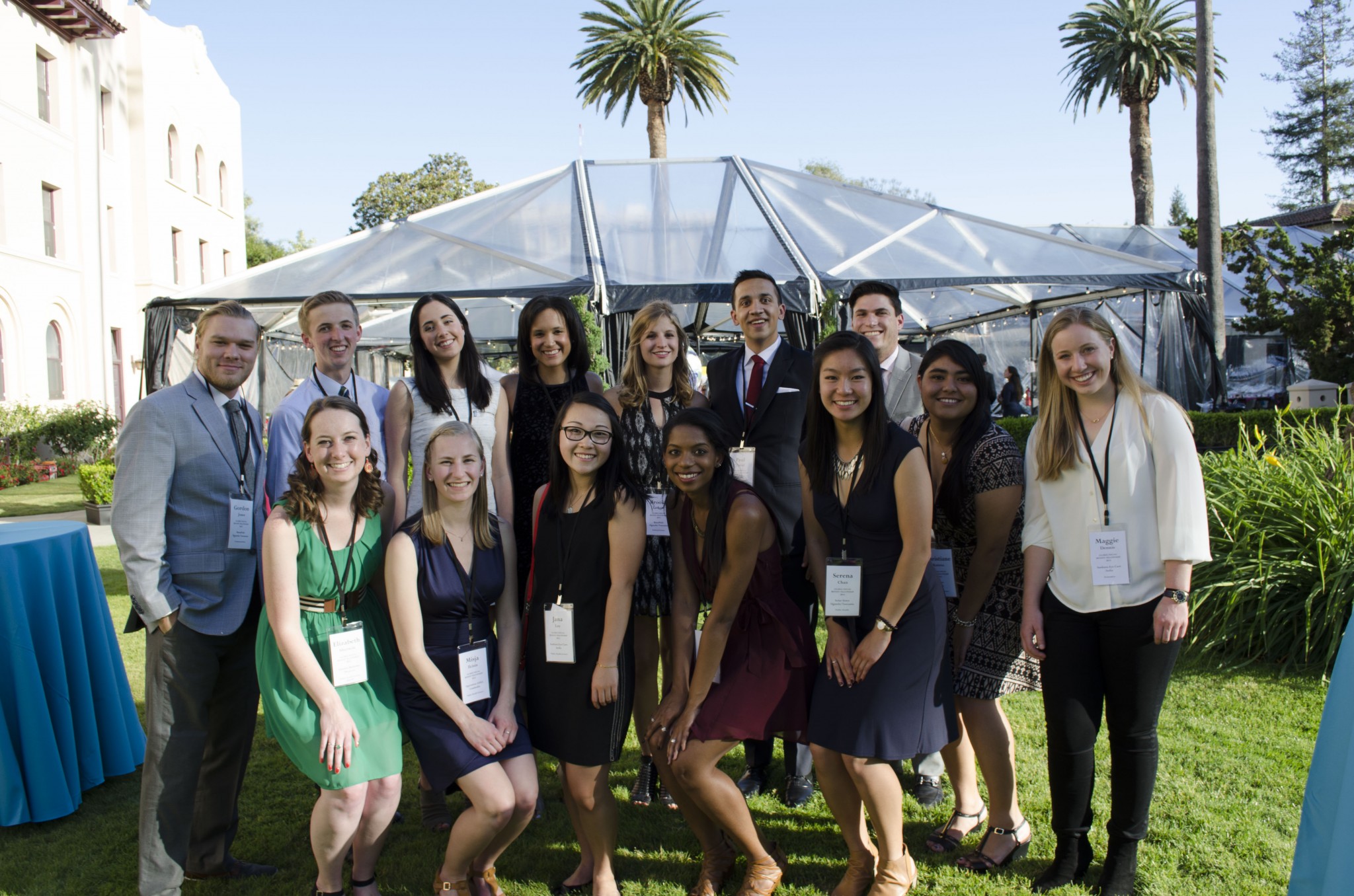
Everything changed at MAGIS, the first event I attended hosted by the Miller Center and an unforgettable and truly special one. MAGIS in a way woke up me. I looked around and saw that I was surrounded by hundreds of people who were just as passionate about social justice as I am, who saw global problems as opportunities, and who had taken their skills they learned in silicon valley and applied them to these terrifyingly complex problems with such ambition and momentum. So maybe there was hope for me, perhaps this community of social entrepreneurs, change makers, and compassionate individuals was the one I was meant to be in. The events that followed over the next few months provided me with strength and empowerment to become one of brave individuals who took their skills and faced global challenges head on to make this world a better place for everyone.
_DSC0001

The energy I got from working with individuals in this community drove me to work harder to find the intersection between software engineering and social justice. It has always been obvious to me how much potential the field of technology has to make change – it is the reason I chose the field in the first place. My bachelor’s degree in Computer Science and Engineering has provided me with the tools and skills I need but the GSBI fellowship has provided me with self-awareness which is crucial to using my skills in the right manner. GSBI has taught me how I can take my skills and education and use them to create a better world.

In a world where money is often the sole objective, it is difficult to find a software company that pursues their work with rigor and compassion and focuses heavily on creating software and technology to positively impact society. But once again, I was blessed and the opportunity fell into my lap in October of 2015. By a stroke of luck, I was contacted by ThoughtWorks, a global software consulting agency whose mission is to “better humanity through software and help drive the creation of a socially and economically just world.”

ThoughtWorks_01

To achieve their mission, ThoughtWorks provides talented software and business consultants to companies around the world and with the revenue they make, they are able to turn that profit
The energy I got from working with individuals in this community drove me to work harder to find the intersection between software engineering and social justice. It has always been obvious to me how much potential the field of technology has to make change – it is the reason I chose the field in the first place. My bachelor’s degree in Computer Science and Engineering has provided me with the tools and skills I need but the GSBI fellowship has provided me with self-awareness which is crucial to using my skills in the right manner. GSBI has taught me how I can take my skills and education and use them to create a better world.

In a world where money is often the sole objective, it is difficult to find a software company that pursues their work with rigor and compassion and focuses heavily on creating software and technology to positively impact society. But once again, I was blessed and the opportunity fell into my lap in October of 2015. By a stroke of luck, I was contacted by ThoughtWorks, a global software consulting agency whose mission is to “better humanity through software and help drive the creation of a socially and economically just world.” back towards their social impact projects. When I interviewed with ThoughtWorks, I felt as if I had found home. Everyone I talked to was kindhearted and compassionate towards each other, contrary to the stereotypical cutthroat environment a software developer normally experiences in silicon valley. They were individuals who had all felt they were called to create technology for social impact and their interview process clearly weeded out those who didn’t share the same passion. I worked hard and was lucky to receive an offer from ThoughtWorks and am excited to start the next chapter of my life with them after graduation.

Working with GSBI has reminded me how a single human being can make the largest impact. I have met individuals from around the world who have forgone their comfortable easy lives and dedicated their lives to those in need. Social entrepreneurs are more than just extraordinary people. Their companies are not just providing clean drinking water and clean cooking stoves, they are not only saving thousands of lives with their products, but they are empowering individuals to make the most out of their lives and providing them with opportunities they wouldn’t have had otherwise. Albert Einstein once said,

“I am absolutely convinced that no wealth in the world can help humanity forward, even in the hands of the most devoted worker in this cause. The example of great and pure characters is the only thing that can produce fine ideas and noble deeds.”

The great and pure character that Einstein refers to is something I feel I know more about now than I did before the GSBI fellowship – it is something that only one can understand through deep personal reflection and growth. My work with GSBI has inspired me to go forth and make the greatest impact I can with my life, with unreasonableness, awareness, and great character.
Metiabruz

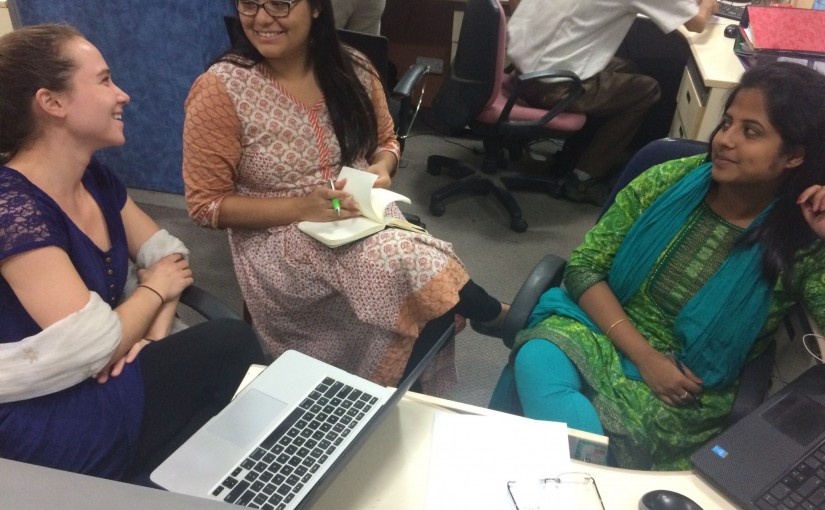
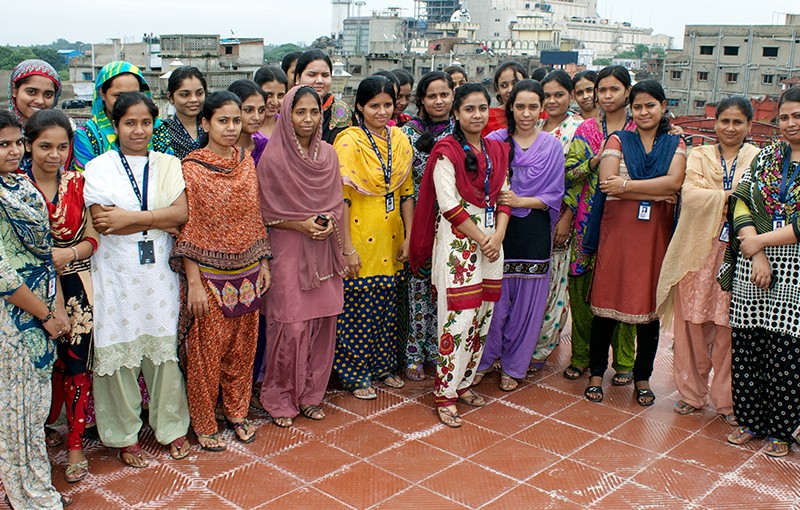
A few weekends ago I experienced a moment in my life I will never forget. And it was all made possible by a woman named Radha Basu, one who continuously changes and shapes people’s lives seemingly effortlessly. Radha Basu is a Computer Engineering professor at Santa Clara University, and upon meeting her it becomes clear how far from average she truly is. At this point in time I didn’t quite understand the powerful influence Radha had on the world, I later came to learn that she had had a large influence in bringing HP to an international level, including its establishment in Bangalore, India, which now known as the Silicon Valley of India. This particular Saturday, Radha invited us to visit with her and see the work she does in India. Shortly after hopping in the car with her, it became clear to me that behind her beautiful eyes, quiet voice and humble demeanor, this woman had committed her life to changing the world and she had done it – she was a fighter for change. Later in her life, Radha and her husband Dipak (who is equally impressive) decided to leave Silicon Valley and return to Kolkata, Dipak’s home, to bring IT to the more of the developing world. They established a nonprofit organization called Anudip which trains underprivileged and marginalized young women in IT skills. Anudip later led to the inception of iMerit, a for profit counterpart that connects the graduates from Anudip with jobs in the formal IT sector. iMerit began in Metiabruz – an area outside of Kolkata that is predominantly Muslim and traditionally underserved – and this was where Radha was taking us. Coming from the traditional Muslim culture, women were often not allowed to leave their homes or neighborhoods and employing a woman was unheard of. These women had no voice and were largely restricted. Many who had lived just twenty minutes from the bridge that crosses into Kolkata had never stepped food in Kolkata. The incarnation of iMerit shook this community and empowered these young women and the results are astonishing. Today, many women in Metiabruz are employed in iMerit’s branch there, many often earning three times the amount of the their family’s income. I will never forget that first moment as we walked into the iMerit branch in Metiabruz – being a female in Computer Engineering, this was so special. The women were working so hard and fast that they did not even look up, they were absorbed in their work, the work that had changed their life and gave them a voice. I did not hesitate to sit down with some of the girls and talk to them one on one, most if not all are educated from Anudip and speak impeccable English. Their voice is loud and confident, they don’t stumble over their words and they are happy to guide you through a demo of their work and show you what they are doing. They are proud of their work and after talking a bit more, they don’t hesitate to tell you about their dreams. One or two told me they wanted to buy a home for their parents and family,but a will tell you they want to continue working at iMerit.

If there is one thing I’ve learned about India it is that people give back far more than what we in the U.S would give for favors of a similar manner (then again I’m biased because of the humbleness and gratitude I’ve experienced in many other countries that I can’t seem to find in parts of the U.S.).

As I sit in iMerit headquarters now only two weeks after that moment, I am more than proud to say I’m apart of the iMerit and Anudip family. Everyday we are greeted with smiles and surrounded by hard working individuals looking to make their impact on the world. Each one of us dreams of leaving our mark on the world. Here at iMerit headquarters, I am surrounded by those who already have, no matter how small or big, each one has left their mark in Kolkata and it will live on in the growth of iMerit and Anudip.

Featured image taken from: http://globalsocialbenefit.institute/education.html#portfolio

In the words of Shantaram

Some words struck me today as I was reading Shantaram and trying to make sense of all the horrible things my eyes have seen over the past week and I thought I would share them…

“Why didn’t I… put a stop to it myself? … I was a stranger in that strange land: it wasn’t my country, and it wasn’t my culture. I had to know more.  had to know the language that was spoken, at the very least, before I could presume to interfere. And I’d learned the hard, the hard way, that sometimes, even with the purest intentions we make things worse when we do our best to make things better” (Shantaram, 81).


“There’s a truth that deeper than experience. It’s beyond what we see, or even what we feel. It’s an order of truth that seaprates the profound from the merely clever, and the reality from the perception. We’re helpless, usually, in the face of it; and the cost of knowing it, like the cost of knowing love, is sometimes greater than any heart would willingly pay. It doesn’t always help us to love the world, but it does prevent us from hating the world. And the only way to know that truth is to share it, from heart to heart…”

Fixing.

Its been exactly one week. One week ago today we arrived in Kolkata and went through probably the most epic culture shock I have yet to experience in my young life. The sight of young kids begging as their profession, dogs that look like their rotting away eaten by disease, dilapidated buildings, and the slum like housing structure you see all too often on the streets every single day begins to take a toll on our fragile and naive American perspectives and emotional states. With the constant honking, shouting and all other strange noises that echo throughout Kolkata we have yet to have a moment of silence. Even in our rooms, there is shouting throughout the night and fires burning that keep you awake – making our incident with the fire seem fairly normal.

Work provides no sanctuary from the chaos that ensues outside and that shakes us up on the inside. The Indian work life moves at a much slower pace than what we are used to in the states. Employees trickle in between 10:30am and 11:30am, lunch begins around 2 or 3 in the afternoon, and we don’t leave until around 8pm at night. Our office has no windows to the outside and being stuck in a small space for so long can get nauseating. To make the situation a little bit unfamiliar, no one has the same work ethic that we are so used to seeing which makes us feel abnormal and confused. There is another group of Americans here from the U.S. working another app which baffled us a bit. Why are we working harder than most to fix problems that aren’t ours – a question I seek to answer in my time here. Leaving work almost involves going through the same culture shock as when we stepped off the plane here in Kolkata. This repeated culture shock happens a lot to us. We are often directed by locals to some of the swankiest restaurants and coffee shops around. Stepping into them almost feels like stepping back into American boundaries. But when you leave the place and open the door you wake up to reality and realize there are still people sleeping outside, still children begging, and still the dirty and broken infrastructure surrounding you. Its powerful being here, it takes everything you know and every routine your used to and flips it upside down and forces you to cope with it. There is a reason I wanted to do this and iKure was not that reason. I wanted to come back to India and I wanted to help. But when I got here I found myself asking the question why. Whats the purpose of an American coming to a foreign country to fix what seems unfixable. What we see here is what American’s would call lazy but I think its complacency. I think many Indians accept what the situation is and lack the motivation to change the status quo and this is not unfamiliar, this we see all too often in the States and around the world. Why fix problems that aren’t your own. After all it is survival of the fittest.

Perhaps then it isn’t about coming in as outsiders and fixing what needs to be fixed. It is clear that handing individuals money and technology won’t change their attitudes. And maybe helping them do their jobs also won’t change anything. I think we need to look further, try and change and educate the next generation of minds growing up in the developing world to aspire to fix their country’s problems – help them understand how they can make the world a better place for themselves, their families, and their children to come. This challenge is a daunting one but not an impossible one.

Right now I sit in a coffee shop attempting to work but can’t stop from reflecting. The windows are big here so it doesn’t feel like you’re in an artificial reality – you can see what goes on outside. We are on Park Street, Kolkata’s place to be essentially with restaurants, swanky hotels, and lined with vendors selling everything from newspapers to Bengali sweets. But out my window there is a child, maybe 4 years old sitting on the ground playing in the monsoon rains entirely naked. Every person walks by not even bothering to look and no one stops to help. Police are on every corner and do not do a thing. Somehow I don’t necessarily blame them, again its all about becoming complacent, and yet something is slowly ripping my heart apart. Reasonable given I was raised in a family where every stray dog we came across was taken into our home. So what can we do when we don’t speak Bengali and are living in a hotel? For a second I did consider adopting a homeless Bengali child – but chose an alternative. I run out looking for clothes in the nearby radius to give the child but am not able to find anything but sari shops. After the frustration has proved to be too much, I call a few orphanages in hopes that one will speak english and help me do something. Finally got a hold of one and they tell me to call the child helpline – 1098. I call the helpline and how long the process takes to give them information is a struggle. Trying to explain to them where the child is when addresses in India are hard to find is invigorating. Eventually they tell us they will be coming soon to rescue the child but in India time who knows how long that takes.

The Gift of Fire Alarms

After celebrating my 21st birthday in India, I fell asleep around 11pm exhausted from the heat and chaos so typical of India. Ever since the first two days in Kolkata, the AC became too cold and uncomfortable to keep on at night so I only decided to keep only the fan on. But last night, I woke up feeling warmer than usual. I awoke around 4am to the smell of smoke which at first I thought could be anything coming from outside as its not unusual for people in here to be burning things in the street even before dawn. I was also sweating and opened my eyes to realize my fan was off, which meant the power was out. Again, not unusual. But as I opened them further I realized my room was hazy. Adrenaline kicked in and suddenly I knew something was off, the smoke wasn’t coming from any fire outside, it was from a fire inside our apartment. I opened my bedroom door to see the backup generator on fire which explained why I couldn’t turn any lights on. The fire was small but growing and I couldn’t think of what to do. Theres no 911 and theres no fire extinguisher. I can’t get enough water, no blankets, nothing to put this out and it was growing fast, the generator was melting as was the 3 foot tall box it was sitting on. I started banging on my partner Chris’ door to wake her up, and then in less than 60 seconds we began trying to yell to the family we were living beneath for help (our landlord and his family were living upstairs while we were temporarily residing on the ground floor). No answer. Our apartment was situated in a stairwell on the ground floor. There is a lock on our door, a locked gate to the first floor (where the landlord lives) and a locked gate from the stairwell to the driveway. The smoke was becoming heavy and difficult to breath so Chris and I started to grab our stuff to move out of the apartment but soon we realized that with the locked gates – there was no way to get out of the building and we were stuck in the stairwell. We started screaming louder and after what seemed like too long, the landlord and his family woke up and came downstairs. They were quick, moving as if this wasn’t an unusual event. They grabbed buckets of water and began dousing the fire until it was extinguished.

Its moments like this when I am reminded of the incredible hospitality that I have been met with so many times in Southeast Asian countries. Our landlord, who lives with his two children and his parents could not have been more hospitable and kind to us at this moment. They brought us into their rooms, his young 8 year old daughter offered her room to let us stay in and sleep. His mother brought us water, tea and biscuits. They helped us feel as safe as they could.

I can’t help but feel guilty. While we have the Miller Center of Social Entrepreneurship of Santa Clara backing us up and mobilizing quickly to get us safe and to a hotel, our landlord and his family will be caused great trouble – loss of rent for the summer, damage from the fire, and the cost of a new generator. While it may seem absurd that there is no 911 to call, no fire extinguisher and most importantly no smoke alarm, Chris and I only have to live here temporarily… we don’t have to live under these threats every day and in the end we get to go home to a “safe house” in America where everything comes much more easily.

Scary yet eye opening and almost a necessary experience for me. It is until you leave the United States until you realize how fortunate you really are, how safe you are, and how easily and cushy life is. But for most of the world, they live through daily struggles we will never have to. Even more concerning is they live under conditions where there is a lack of necessary safety precautions for unexpected and life-altering threats. We are so grateful that we woke up, that we are safe and were able to make it out. But it has become clear how much we take basic human needs for granted in America while most of the world unfairly lives without them.

The South City Mall Sanctuary

Our apartment is cozy, difficult to find off a busy road call the Prince Anwar Shah Connector. Our taxi driver got lost for an hour and a half on the way from the airport and we had to stop and ask nearly 20 people where our place was. Google maps wont help you here. We live on the bottom floor of an Indian home, upstairs live the landlord, his two children, his parents, and their house keeper (a live in maid that is very typical for all middle class families in India). They are all very kind friendly people and are constantly checking to make sure we are comfortable and everything is alright. We are not allowed to cook in our place (not that there was a kitchen) and there is no wifi. There were just two bedrooms, each with a bathroom, and a common area with a small couch and coffee table. For someone traveling outside the US for the first time, this place might seem a little dull and substandard but for India, its upper-middle class. In India, even the middle class have house keepers – someone who lives in your home and cooks and cleans for you every day. But in India theres no swiffer and it did come as a bit of a shock to us to see the house keeper on her knees with a rag mopping the floors. Yet there are so many people in India that jobs like this are necessary to keep people employed. 

After arriving at our apartment, we relaxed a bit but needed to stay awake as long possible to fight the jet lag so we went out to the only place we could, a nearby mall named South City Mall – a few kilometers down the road but getting there proved to be a challenge. Cabs and tuk tuks here have predetermined routes so getting them to stop in the middle of one can take a while. We shortly discovered that most large buildings and stores here have airport-like security screenings when you enter – body scanners, bag searches, and sometimes bag scans. What we can’t figure out yet is why though there are certain exceptions to this system.  For example, if you have a computer, you do not need to be searched but just need a small piece of paper that labels what kind of computer you own. We also learned that on occasions, they will ziptie the zippers on your bag together to stop you from shoplifting but this seems to be random selection. It wouldn’t be long before we got used to this routine of having our bags searched multiple times a day although the searches are not very thorough – I’m not actually sure they’ve ever caught anything they are looking for with them.

South City Mall would soon become our chosen place. In my experience, most Americans when they travel have one spot they choose in a developing country that has AC, wifi, and normally good food or coffee. In addition to that, it was across the road from our office. South City didn’t have wifi nor coffee, but they had AC and some damn good samosas which worked for us. For our first week at work we didn’t have any wifi or data – it would eventually take us 3 days and 8+ hours to obtain SIM cards from vodafone. But being disconnected isn’t bad at home, it just severely limits your mobility in a place like Kolkata. We only went up and down the road we lived on and ate dinner at the mall. (That being said, fast food from India is not fast food in the U.S. It is all freshly made food with good ingredients you can see in front of you, it just may not be the highest quality of ingredients or spices.) Still beats most American Indian food… 

Arrival in Calcutta

When I accepted a position as a global social benefit fellow I did not have this in mind.

In previous years, I have spent time in developing countries and thought I was used to their level of unpredictability and less than functional bathroom situation. However, the level of chaos that ensued when I entered Calcutta woke me up from the superficial dream I was in. Upon arrival in Calcutta it became clear that nothing in life here comes easily. We landed in CCU around 8am and made our way through immigration with very little problems. We managed to get money out of a very dysfunctional ATM and handed our written address to the taxi driver who then sped off. Being back on the chaotic streets of India didn’t feel too unfamiliar.

The excessive honking that radiates throughout India is sort of like every car has a pre programmed honking melody that they continuously play as they stop and go. Its not an exaggeration to say some drivers keep their hand on the horn the entire time they are driving. To add to this symphony of horns, the tuk tuks have their own sound which resembles a circus clowns honk. 

While trying to ignore the honks, I couldn’t keep my eyes off the window out of which you see daily life go by for many Indians. You see many collecting garbage in large sacks that they often resell as told in Behind the Beautiful Forevers. You see large apartment buildings overflowing with people and you see slums much lower down on the streets built with sticks and tarps. You see many bathing in the streets and even more sleeping in the dirt, exhausted from the unforgiving heat. You see tuk tuk and rickshaw drivers lounging around. You see billboards for skin whitening and women dressed in bright beautiful saris riding motorcycles saddle side . You see buildings that are falling apart and ones that are halfway constructed. And you see the image of the goddess of Kolkata and the communist symbol around nearly every corner that makes Calcutta the capital of West Bengal.

There is Beauty in the Struggle

At 12 years old I began to spend most of my time around some of the most disadvantage members of our society. In middle school, I forgot about recess, about lunch and study hours — the only place I wanted to be in my free time was in the multi handicap room at my school. My time spent with these individuals — ones that struggled to get out of bed in the morning, ones who’s parents had abandoned them, and ones that would never be able to feed or dress themselves — showed me I could never give up no matter how hard things may become. What these kids taught me in turn is this:
“If you can’t fly then run, if you can’t run then walk, if you can’t walk then crawl, but whatever you do you have to keep moving forward.” – Martin Luther King Junior
Each and every day I received more from these individuals than I could have ever given them. After four years I went on to spending my weekends helping some of them train for swimming in the junior special olympics and in the end accompanied some to the final swim meet. Despite the hardship many of these kids experienced day in and day out, the simplest things in life made them smile and their smiles lit up the room. Their happiness was so vibrant and genuine and it was infectious. I began to realize that nothing else in my life had come close to the feeling of being around those who benefited from my help.

1923211_73429836893_4920604_n

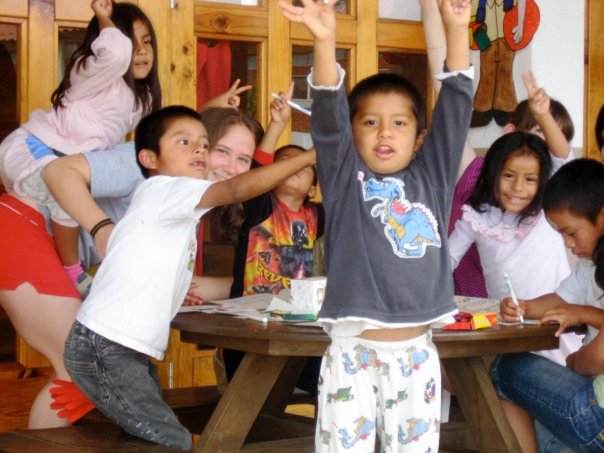
Living with children in a Guatemalan orphanage. 

My parents always told me and my siblings we had won the lottery. We were born into a good family, a stable country, and were all very healthy. When I was younger it did not really register with me at the time how unbelievably lucky I was to have a bed to sleep in, a roof over my head, and every meal handed to me. My parents worked incredibly hard every day to provide us with comfortability and privilege. I would never have realized how lucky I was if I did not see others around me who had a clear disadvantage; I met a lot of people who were simply dealt a bad hand in life. I began to help these individuals, and one by one they began to transform my life. 

Helping others soon became my passion and my mother and father are a large reason I never let this passion die. My dad is the underdog in this story. He showed me that through hard work and determination, you can achieve great things if you are willing to take the risks. My mother is my greatest role model and taught me never to take no for an answer and to demand what I believe I deserve. She can make anything happen, and I mean anything. For her, the words “can’t” and “wont” do not exist in her vocabulary and they rarely come up in mine. Overtime as my passion for helping others grew, I set goals for myself along the way and have never given up on them.

IMG_4136-min

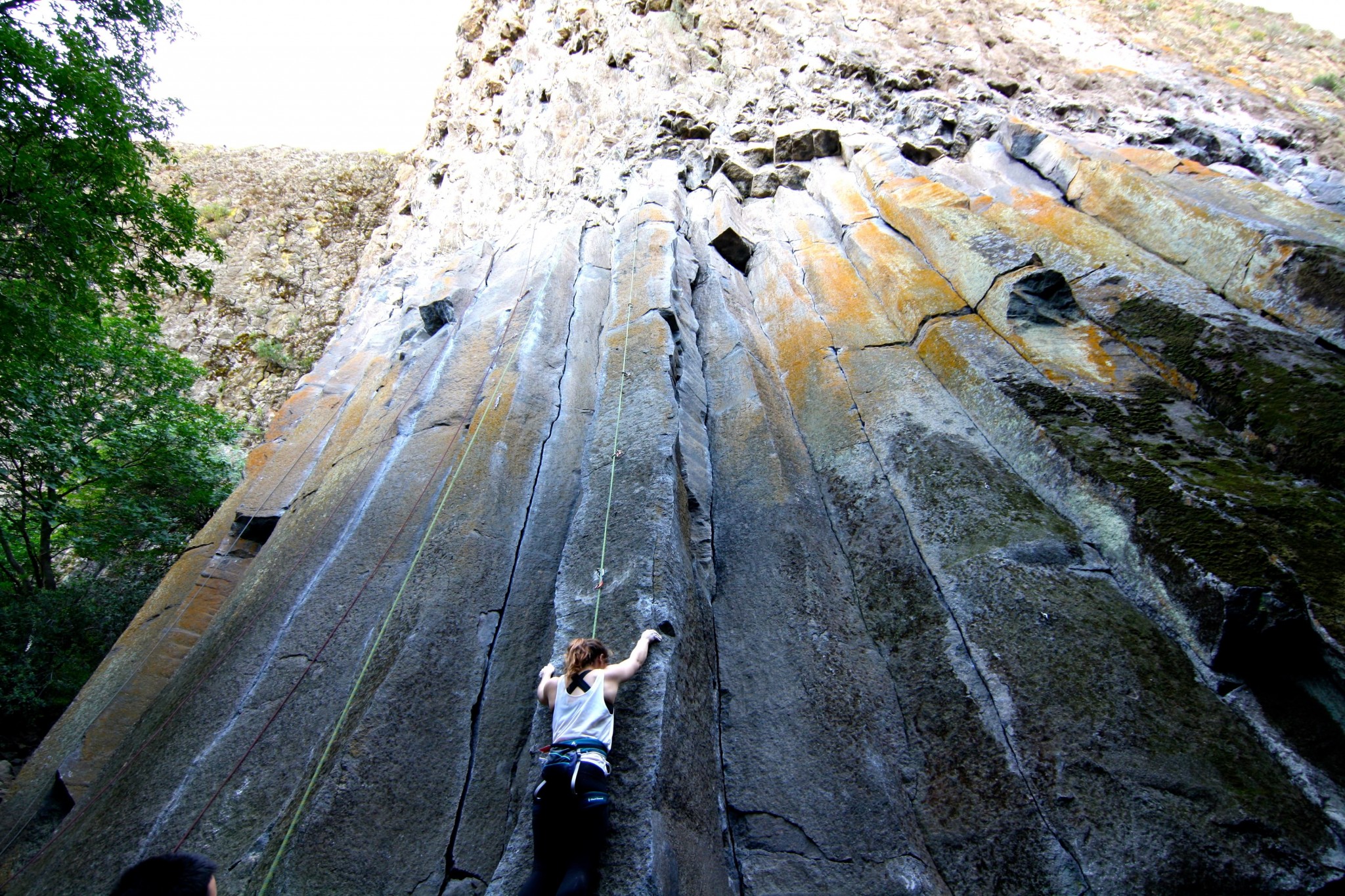
Embarking on a difficult climb in northern California. 

In 2008 I visited India for the first time. My parents took me and my siblings on this trip to show us reality and it hit hard. We spent some days in Delhi and took a long drive to Agra. Over the course of our travel I saw things I never knew existed, things I believed should not exist. Kids as young as 6 years old working as beggars, the injured and sick lying on the road and homes, made out of tarps, stacked up and exposed to the world. But what I was struck with was what became a reoccurring theme in my life – the impoverished and disadvantaged are some of the happiest and kindest people I have ever met in my life. This was true in working with disabled kids and became more evident traveling throughout India. In 2008, after returning from India, I promised myself I would return to help. Between then and now I have travelled to Guatemala, Vietnam, Cambodia, Thailand, Myanmar, and Nepal. The evident lack of resources in these countries is always difficult to accept, but at this point in my life, I refuse to accept the fact that is the way things are.

Locally, I began to help change the problems I experienced first hand. When I was growing up, I unreasonably believed men were simply better at math and sciences. My mother is the one who helped me break down this barrier. No matter how much I protested doing math homework or insisted I would never be an engineer, my mother was patient and convincing. She worked with me night after night on math homework until I reached a point where I realized I was good at math, anybody could be good at math. I give my mother a lot of credit for where I am today as one of the few female Computer Engineers at Santa Clara University. As I grew older I found that many young women today feel similar to what I felt in the early years of my life. If there is anything I learned from both my mother and older sister, its that standards or stereotypes society sets for us can easily be torn down. I found a position as a math tutor in high school and also continued to be one through college. My goal was to encourage many young women around me that they, like anybody else, could perfect their skills with hard work and effort.

1947331_10152248692991894_298425491_n (1)

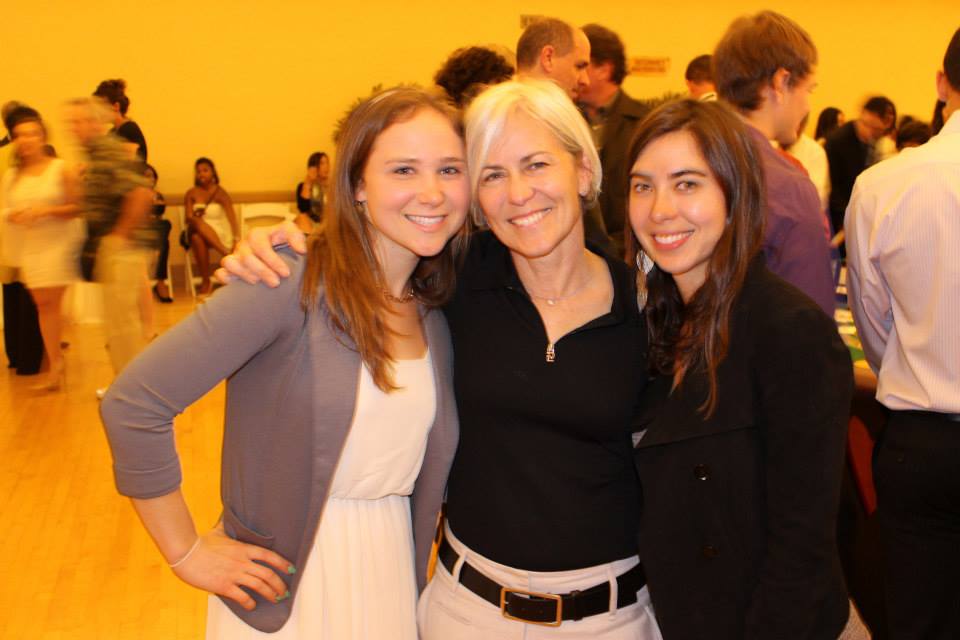
Myself, my mother, and my sister.

Over the years I have a developed a deeply profound love for others. Whether I encounter individuals briefly on a public bus, or strike up an intellectual conversation with them in a coffee shop, I feel connected to their lives, their experiences, their struggles and success. At some moment in my life, the passion to help others was ignited and it has been a raging fire ever since. Coming into college I knew I wanted to make a difference in the world. Though travel and volunteer work I saw many individuals who were fighting the odds against them and I wanted to help the fight. Before I began college it became clear that the world was converging around the technology sector. Change was happening faster than ever thanks to the Internet. I chose to major in Computer Science and Engineering because I believe it has the ability to help make the greatest impact on the world.

It was not long before I became frustrated with my situation in school. I saw a lot of young intelligent students with no motivation – their skills could change the world and none of them even seemed to realize this fact. Suddenly I realized I was not so different, I was working so hard to achieve good grades that I  let other passions such as volunteering fall far behind. For me, this didn’t sit well.

When I was growing up my parents had moved us around a lot. At the time it was not easy and today I could not be more thankful for it. Through this process I became adaptable. Adaptable to new beginnings, new people, and new settings. I learned to adjust to different school systems and most of all it taught me to be able to make the best out of a uncomfortable and sometimes stressful situation. Because of this, I became very self motivated to mold the situation around me and not let it mold me. At some point you have to stop relying on others – not everyone is going to help you out. Drawing from these experiences of change, I began to follow my intentions and not those of others. If I wanted to focus on helping others and using my technical skills for social good instead, then who was going to stop me? Suddenly my world changed and I realized there were no limits on what I wanted to achieve or how and when I wanted to do so.

So I began to balance school will my love for others. I received an internship with a local social enterprise that helps connect users with immediately accessible volunteer opportunities through the use of social networking. On the side, I help teach english to immigrants and work with animals at the Humane Society of Silicon Valley. My empathy for other humans and animals is alive more than ever today.

IMG_5489-min

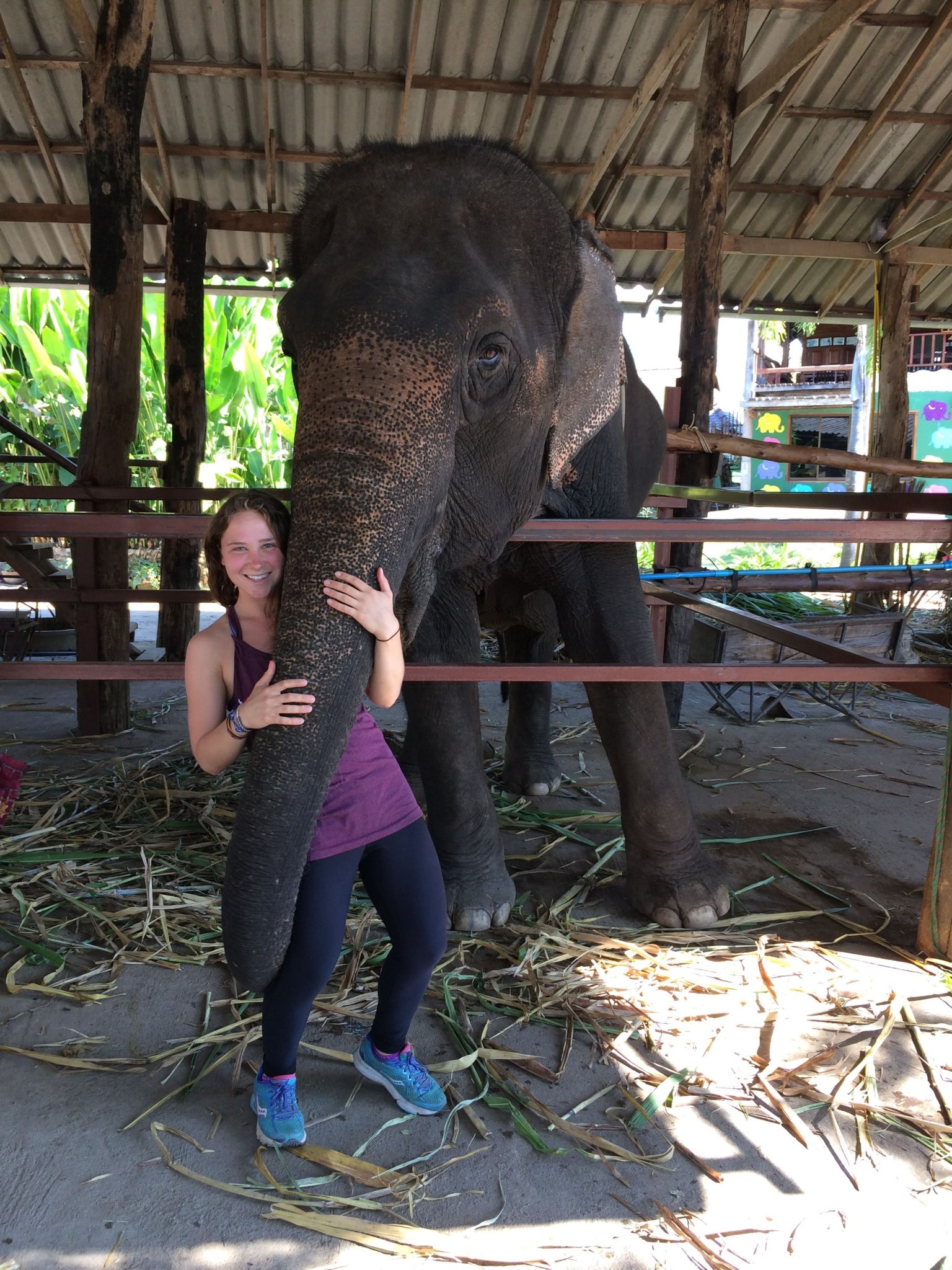
Elephant conservation center in Thailand. 

10150529_860922020600293_4085915268956324643_n (1)

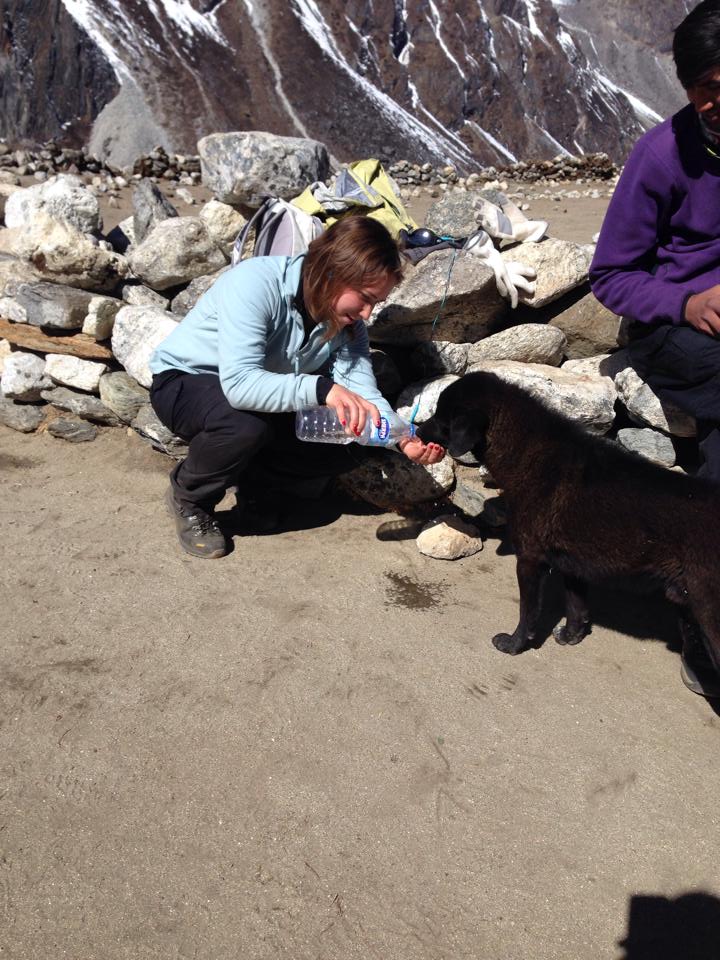
Enjoying the company of dogs while trekking in Nepal.

There is an undeniable gravitational pull I have towards humanity. My intent is to further join my technical skills with my passion for helping others.

Introduction

This is the first post of many that will appear on this site over the next year. Here I will be documenting updates from my work with iKure which is a social enterprise based in Kolkata, India. I will also be providing more information about who I am and why I’m doing this. To learn more about me, visit the vocational reflection page and to learn more about iKure, check out the iKure page.